




Quick Summary
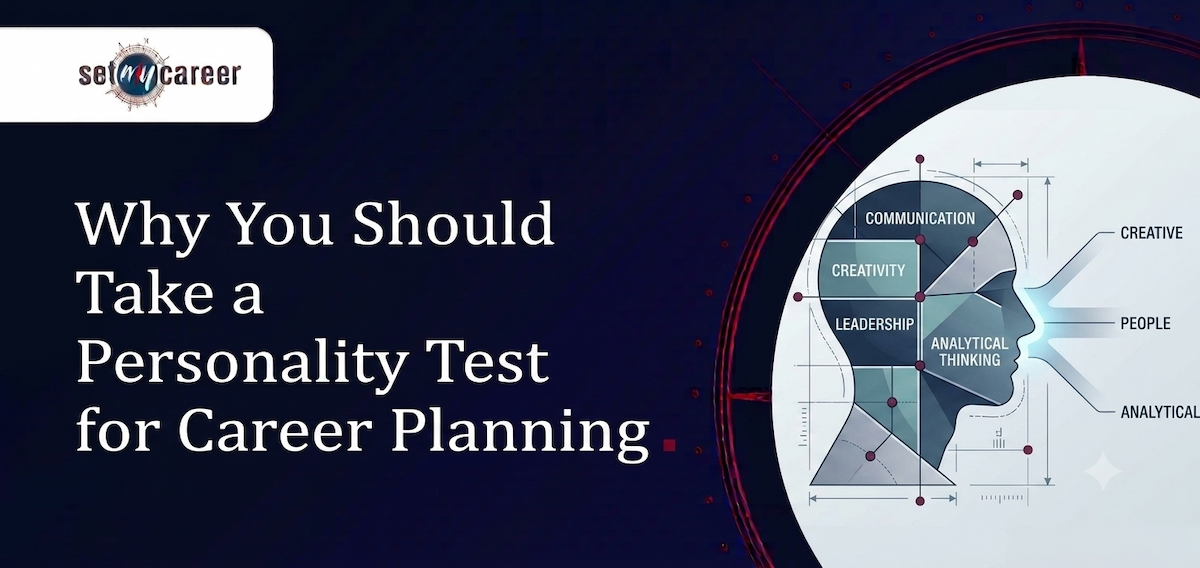
Navigating your career journey can feel overwhelming, but a scientifically validated personality test for career planning removes the guesswork by matching your unique strengths, values, and communication styles with ideal work environments. Exploring proven frameworks like the MBTI, Holland Codes, and Big Five empowers both students and professionals to make confident, data-driven decisions about academic streams or mid-career transitions. Partnering with SetMyCareer’s expert counsellors helps you translate these personalized psychometric insights into a clear, supportive, and actionable roadmap for lifelong professional fulfillment.
Introduction
Choosing a career path can often feel overwhelming, leaving you unsure of which direction to take. With so many options available, finding a job that matches your natural talents and values can feel like a guessing game. One of the most effective ways to clear this confusion is by using a personality test for career planning. By understanding your unique traits, strengths, and communication styles, you can stop guessing and start making decisions based on who you truly are.
At SetMyCareer, we have helped thousands of students and professionals build clear paths to success. In this guide, you will learn how a scientifically backed personality test for career alignment can help you identify roles where you will naturally thrive. We will break down how these assessments work, how they connect your personal traits to real-world industries, and how you can use these insights to make confident choices about your education or next job move.
Whether you are a student exploring your options, a parent guiding your child, or a professional looking for a fresh start in 2026, understanding your personality is the first step toward a fulfilling future. Let us explore how these practical, data-driven insights can help you build a career you truly love.
What is a Personality Test for Career Planning?
A personality test for career planning is a scientifically structured assessment designed to evaluate an individual's unique behavioral tendencies, strengths, and preferences. It translates these personal attributes into clear, actionable career pathways, ensuring long-term professional satisfaction by matching specific traits with compatible work environments.
Understanding how individual traits translate into vocational success is the foundation of modern career development. Standardized assessments move beyond superficial interests to measure enduring behavioral patterns. Individuals often struggle to identify why certain roles feel draining while others are energizing. A psychometric evaluation provides objective clarity, mapping cognitive processes to daily operational demands. For high school students selecting an academic stream or professionals targeting a mid-career pivot, this structural data replaces guesswork with verifiable alignment. SetMyCareer integrates these tools to ensure individuals build futures based on stable personal characteristics rather than fleeting trends.
To experience these diagnostic benefits firsthand, you can
The Science Behind Personality Profiling
Personality profiling relies on psychometrics, a field of study focused on measuring mental capacities and processes. Standard instruments use validated questionnaires to establish stable behavior metrics. These patterns remain relatively consistent throughout adulthood, making them reliable indicators for long-term satisfaction. Modern career counseling tools evaluate these metrics to predict how a candidate will handle stress, collaborate with team members, and solve complex business problems. By focusing on statistical validation rather than intuitive speculation, these assessments offer an objective mirror that reveals how an individual is wired to work.
Beyond understanding your inherent psychological traits, evaluating how aptitude tests support career selection adds another crucial layer of data to your professional roadmap.
- Reliability: The consistency of test results over time under identical conditions, ensuring the guidance remains valid as an individual grows.
- Validity: The accuracy with which an assessment measures the targeted psychological constructs, ensuring it maps directly to realistic career options.
- Standardization: The uniform administration and scoring procedures across diverse demographics, establishing a fair benchmark for comparison.
Key Benefits of Using a Personality Test for Career Choice
Using a personality test for career choice clarifies professional goals, minimizes the risk of job dissatisfaction, and highlights natural strengths. These assessments provide objective data that helps individuals identify suitable corporate cultures, choose aligned academic fields, and understand their natural workplace communication styles.
Investing time in a structured evaluation yields substantial long-term benefits for career development. It bridges the gap between self-perception and objective behavioral patterns. Rather than choosing a path based solely on external prestige or parental expectations, individuals receive a customized blueprint that respects their psychological wiring.
- Reduction of Decision Fatigue: Isolates the most compatible industries, narrowing down thousands of occupational options to a manageable selection.
- Objective Strength Identification: Pinpoints natural aptitudes that individuals might overlook, undervalue, or fail to recognize in themselves.
- Long-Term Career Satisfaction: Minimizes the risk of entering fields that conflict with personal values, energy levels, or lifestyle goals.
- Enhanced Workplace Communication: Educates individuals on how they interact with colleagues, improving teamwork, conflict resolution, and leadership skills.
| Workplace Personality Traits | Ideal Work Environment | Aligned Career Fields |
|---|---|---|
| Introverted & Analytical | Independent, quiet, and data-driven spaces | Software Engineering, Research, Financial Analysis |
| Extroverted & Expressive | Collaborative, client-facing, and active spaces | Marketing, Public Relations, Sales Management |
| Structured & Detail-Oriented | Highly organized, process-driven environments | Project Management, Quality Assurance, Logistics |
Identifying Workplace Personality Traits
Identifying specific workplace personality traits is essential for understanding how an employee behaves under pressure and contributes to group goals. Key dimensions include cognitive preferences, emotional stability, and task orientation. For instance, an individual with high conscientiousness naturally excels in systematic, detail-oriented roles, whereas someone with high openness to experience thrives in creative, unstructured environments. Recognizing these traits allows individuals to seek positions where their default behaviors are celebrated as strengths rather than viewed as friction points.
Improving Career Path Alignment
Achieving strong career path alignment is an effective safeguard against professional stagnation and burnout. When personal values and work styles align with the daily demands of a job, productivity increases naturally. Alignment ensures that professional growth feels organic rather than forced. By assessing traits early, individuals can map out educational paths and skill-acquisition plans that directly support their target roles, eliminating wasted time in incompatible academic programs or entry-level positions.
Top Career Counseling Tools and Personality Frameworks
Top career counseling tools and personality frameworks include scientifically validated assessments like the Myers-Briggs Type Indicator, the Holland Codes, the Big Five inventory, and DISC. These standardized systems evaluate behavior, motivation, and cognitive patterns to guide academic stream selection and professional path matching.
The global career development landscape relies on a handful of highly refined instruments to analyze human behavior. These frameworks dissect personality from different angles, offering unique perspectives on occupational suitability. Utilizing these tools under the guidance of certified career specialists transforms abstract psychological data into practical steps.
| Assessment Model | Core Evaluative Metric | Primary Application |
|---|---|---|
| Myers-Briggs Type Indicator (MBTI) | Four psychological preferences (Introversion/Extroversion, Sensing/Intuition, Thinking/Feeling, Judging/Perceiving) | Self-understanding and team dynamics in corporate roles |
| Holland Codes (RIASEC) | Interest-based occupational themes (Realistic, Investigative, Artistic, Social, Enterprising, Conventional) | Academic stream selection and early career matching |
| Big Five Personality Traits | Five broad dimensions of human personality (Openness, Conscientiousness, Extraversion, Agreeableness, Neuroticism) | Predicting workplace adaptability and long-term performance |
Understanding MBTI Types and Career Options
The categorization of individuals into specific mbti types helps map cognitive functions directly to practical industry roles. The system identifies sixteen distinct types based on preferences for energy focus, information gathering, decision-making, and lifestyle organization. These classifications help clarify why certain working styles are better suited to specific tasks.
- Analysts (INTJ, INTP, ENTJ, ENTP): Excel in strategic, analytical, and highly complex fields such as software architecture, research science, and corporate strategy.
- Diplomats (INFJ, INFP, ENFJ, ENFP): Thrive in human-centric, creative, and advocacy-based roles like counseling, educational leadership, and creative writing.
- Sentinels (ISTJ, ISFJ, ESTJ, ESFJ): Perform exceptionally well in highly organized, logistical, and administrative environments such as operations, finance, and healthcare administration.
- Explorers (ISTP, ISFP, ESTP, ESFP): Succeed in dynamic, hands-on, and rapidly changing environments such as emergency response, technical engineering, and dynamic sales.
The Role of the MBTI Career Assessment
The specialized mbti career assessment isolates these behavioral profiles to determine how different personalities interact with specific workplace cultures. It evaluates how a person makes decisions—whether through logical analysis or subjective values—and how they handle external structure. For example, a professional whose assessment reveals a strong preference for structured environments will likely struggle in an agile start-up but flourish in an established corporate environment. This level of insight is invaluable for long-term professional planning.
How to Choose the Best Personality Test for Career Guidance
Choosing the best personality test for career guidance requires identifying individual objectives, such as choosing high school streams or executing a mid-career pivot. Reliable assessments must offer high scientific validity, provide comprehensive interpretive reports, and be paired with expert analytical feedback.
Selecting the appropriate tool depends heavily on the individual's current developmental stage and goals. While recreational quizzes are widely available online, they lack the psychometric validation required for major life choices. Reliable career planning requires instruments that adhere to strict testing standards.
- Verify Psychometric Credentials: Ensure the tool is built on established psychological frameworks and backed by empirical research.
- Seek Actionable Output: The results must offer concrete suggestions regarding industries, role functions, and potential skill gaps.
- Assess Report Accessibility: A high-quality test provides detailed explanations of traits rather than just delivering a generic score or label.
| Evaluation Parameter | Self-Administered Free Tests | Professional Psychometric Tools |
|---|---|---|
| Scientific Validity | Low to Moderate (Informal) | High (Statistically Validated) |
| Report Depth | Basic trait summary | Comprehensive behavior and occupation analysis |
| Counseling Integration | None | Guided by certified career specialists |
Personality Test for Job Matching vs. Academic Streams
Using a personality test for job matching requires a different analytical focus compared to evaluations aimed at high school stream selection. For students, the assessment focuses on broad interests, learning styles, and potential fields of study. For active professionals, the focus shifts to workplace adaptability, leadership potential, and culture fit.
| Focus Area | Academic Stream Assessment | Job Matching Assessment |
|---|---|---|
| Target Audience | High school and university students | Working professionals and job seekers |
| Primary Goal | Selecting subjects, majors, and degrees | Identifying roles, corporate cultures, and functions |
| Outcome | Educational path clarity | Optimized placement and career pivot execution |
Integrating Personality Insights with Career Counseling
A personality assessment is a powerful starting point, but its full potential is realized only when paired with professional career counseling tools and expert interpretation. Data alone cannot account for geographic constraints, financial realities, or personal ambitions. A certified career counselor contextualizes assessment results, helping individuals synthesize psychometric data with actual job market realities. By aligning internal traits with external opportunities, this integrated approach transforms assessment scores into a concrete, executable roadmap for lifelong success.
Conclusion: Your Path to Career Clarity
Choosing a career path does not have to be a guessing game. Understanding your unique traits, strengths, and communication style is the foundation of long-term job satisfaction. Using a personality test for career planning acts as a personal roadmap, helping you align your natural talents with industries and roles where you will truly thrive.
Whether you are a student exploring your options, a graduate entering the job market, or a working professional planning a meaningful transition, self-awareness is your greatest asset. It removes the guesswork from your decision-making process and gives you the confidence to make choices that align with who you are.
Ready to discover your perfect career fit? Take our scientifically validated personality test for career success today. At SetMyCareer, our experienced counsellors are ready to help you analyze your results and design a personalized action plan tailored to your goals. Let us help you take the next step toward a fulfilling and rewarding professional future.