

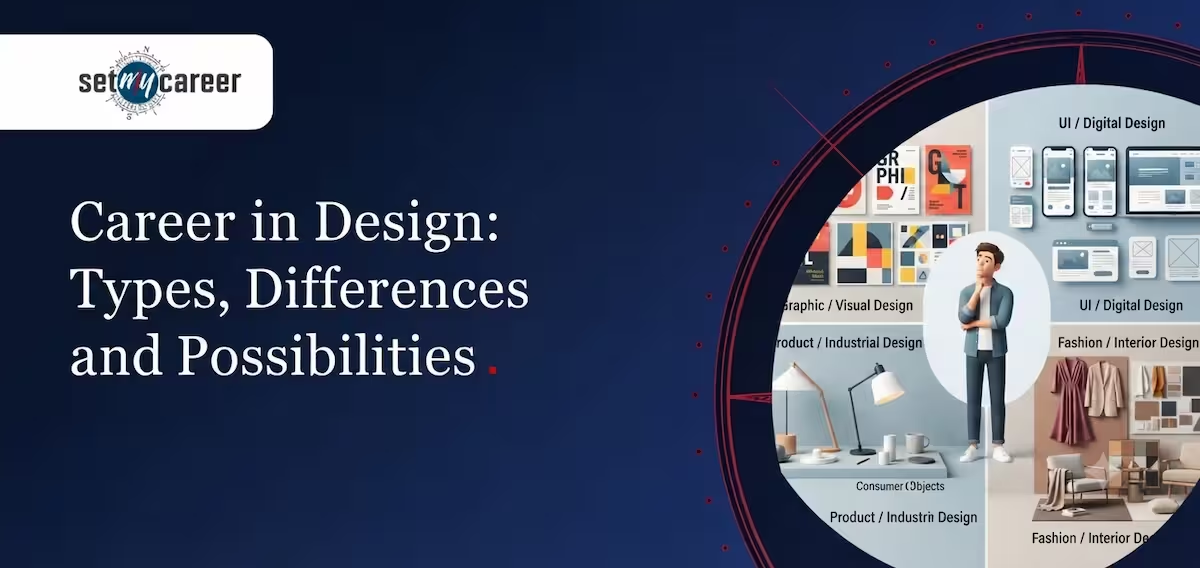
Design as a career encompasses the creative process of envisioning, planning, and producing solutions that are both functional and aesthetically pleasing across various fields such as product design, graphic design, fashion, architecture, and digital media. It is a discipline that blends artistic expression with practical thinking to meet user needs, solve problems, and enhance experiences.
Design careers offer creative career options after graduation for artistic individuals.
Design as a Career
Design involves more than decoration; it is a strategic and empathetic activity focused on innovation, usability, and communication. Designers translate ideas into tangible outcomes that impact how people live, work, and interact with the world. Careers in design require creativity, technical skills, and a deep understanding of human behavior and market trends.
Scope of Design
The scope of design is vast and continually expanding due to technological advancements and the growing importance of user experience. Key areas include industrial and product design, fashion design, interior design, architectural design, digital and visual communication, UI/UX design, and even emerging domains like sustainable and inclusive design. Designers today work in diverse industries such as technology, healthcare, entertainment, retail, and urban development.
Possibilities in Design Careers
Design careers offer multiple pathways including roles in creative studios, corporate innovation teams, freelance consultancy, entrepreneurship, and academia. The rise of digital tools and platforms has democratized design, enabling global collaboration and innovation. Opportunities for specialization, interdisciplinary work, and leadership roles continue to grow, making design a dynamic and future-ready profession with potential for personal fulfilment and societal impact.
Design Types
Design roles span a wide spectrum, each specializing in distinct aspects of creativity, functionality, and user experience. Here are key types of design roles:
1. Product Design
Focuses on creating physical goods, balancing usability, aesthetics, and manufacturability. Involves prototyping, materials knowledge, and user-centered design.
2. Graphic Design
Centers on visual communication through typography, imagery, color, and layout for print and digital media like branding, advertising, and publications.
3. Fashion Design
Involves designing clothing, accessories, and footwear, emphasizing trends, textiles, and wearable art forms.
4. Interior Design
Specializes in planning and decorating interior spaces to optimize aesthetics, functionality, and safety in homes, offices, and public spaces.
5. Architectural Design
Deals with designing buildings and structures, blending creativity with engineering, safety, and environmental considerations.
6. User Interface (UI) Design
Focuses on designing interactive digital interfaces, ensuring usability, visual appeal, and brand consistency across apps and websites.
7. User Experience (UX) Design
Works to enhance overall user satisfaction by improving usability, accessibility, and interaction with digital products or services.
8. Industrial Design
Overlaps with product design but often emphasizes mass production, ergonomics, and innovation in manufacturing processes.
9. Animation and Motion Graphics Design
Creates visual content in the form of moving images and animations for entertainment, advertising, and educational media.
10. Visual Communication Design
Encompasses broad visual messaging strategies through graphic, digital, and multimedia design to convey ideas effectively.
11. Environmental Design
Focuses on the design of physical environments to create meaningful experiences in public spaces, exhibitions, landscapes, and urban planning.
Each design role demands specialized skills and caters to different interests, making design a diverse and multidisciplinary career field.
Key Differences: Job profile, Abilities, Skills, Environments and Interests
The different design types vary considerably in job profiles, required abilities, skills, typical work environments, and core interests. Here’s an elaborated comparison:
Product Design
Job Profile: Develops physical products focusing on functionality, ergonomics, and aesthetics. Involves concept development, prototyping, and production collaboration.
Abilities/Skills: 3D CAD modeling, material science, industrial processes, user research, problem-solving.
Work Environment: Design studios, manufacturing plants, R&D labs.
Interests: Innovation, technology, usability, sustainability.
Graphic Design
Job Profile: Creates visual content using typography, images, and layouts for print/digital media; branding, advertisements, and publications.
Abilities/Skills: Adobe Creative Suite, typography, color theory, illustration.
Work Environment: Creative agencies, corporate marketing, freelance.
Interests: Visual storytelling, branding, advertising.
Fashion Design
Job Profile: Designs apparel and accessories, selecting fabrics and overseeing production.
Abilities/Skills: Sketching, sewing, fabric knowledge, trend analysis.
Work Environment: Fashion houses, studios, manufacturing units.
Interests: Style, culture, trends, wearable art.
Interior Design
Job Profile: Plans and decorates indoor spaces to enhance functionality and aesthetics.
Abilities/Skills: Space planning, materials knowledge, CAD, project management.
Work Environment: Client offices, construction sites, retail showrooms.
Interests: Architecture, comfort, lifestyle.
Architectural Design
Job Profile: Designs buildings/structures combining aesthetic appeal with safety and functionality.
Abilities/Skills: Technical drawing, structural knowledge, CAD, regulatory compliance.
Work Environment: Architectural firms, construction sites.
Interests: Urban design, construction, sustainability.
UI Design
Job Profile: Designs digital interfaces ensuring usability and aesthetics.
Abilities/Skills: Wireframing, prototyping tools (Figma, Sketch), visual design.
Work Environment: Tech firms, startups, agencies.
Interests: Interaction, digital aesthetics, user engagement.
UX Design
Job Profile: Enhances overall user experience across digital platforms through research and design.
Abilities/Skills: User research, wireframing, prototyping, usability testing.
Work Environment: Tech companies, consultancies.
Interests: Human behavior, interaction design, problem-solving.
Industrial Design
Job Profile: Designs mass-produced products focusing on ergonomics and manufacturability.
Abilities/Skills: CAD, materials knowledge, manufacturing processes.
Work Environment: Factories, design firms.
Interests: Innovation, production efficiency, functionality.
Animation & Motion Graphics Design
Job Profile: Produces moving visual content for entertainment and ads.
Abilities/Skills: Animation software (After Effects, Maya), storytelling, timing.
Work Environment: Studios, media houses.
Interests: Storytelling, creativity, visual effects.
Visual Communication Design
Job Profile: Develops effective visual messaging strategies for branding, marketing, and media.
Abilities/Skills: Graphic and digital design, branding, multimedia.
Work Environment: Agencies, corporates.
Interests: Communication, marketing, multimedia.
Environmental Design
Job Profile: Creates engaging physical environments for public spaces, exhibitions, and urban planning.
Abilities/Skills: Spatial design, landscape design, urban planning knowledge.
Work Environment: Design firms, public agencies.
Interests: Public engagement, sustainability, spatial experience.
Key Differences by Design Type
| Design Type | Job Profile Focus | Key Skills/Abilities | Typical Work Environment | Core Interests |
|---|---|---|---|---|
| Product Design | Physical product innovation | 3D modelling, materials, prototyping | Design studios, manufacturing companies | Innovation, usability |
| Graphic Design | Visual communication | Typography, Adobe Creative Suite, illustration | Creative agencies, marketing teams | Branding, storytelling |
| Fashion Design | Apparel and accessory creation | Sketching, textiles, sewing, pattern making | Fashion studios, fashion houses | Trends, culture, style |
| Interior Design | Indoor space planning and aesthetics | Space planning, CAD, materials selection | Client offices, design firms, construction sites | Comfort, lifestyle |
| Architectural Design | Building and infrastructure design | Technical drawing, building codes, CAD | Architecture firms, construction sites | Urban design, construction |
| UI (User Interface) Design | Digital interface aesthetics | Wireframing, prototyping, visual design | Tech companies, startups | Interaction, digital design |
| UX (User Experience) Design | User experience optimization | User research, usability testing, information architecture | Tech companies, consultancies | Human behavior, problem-solving |
| Industrial Design | Mass-produced product design | CAD, manufacturing processes, product development | Factories, manufacturing units, design firms | Production, ergonomics |
| Animation & Motion Graphics | Animated visual content | Animation software, timing, motion design | Animation studios, media houses | Storytelling, creativity |
| Visual Communication | Visual messaging and branding | Graphic design software, branding, visual storytelling | Advertising agencies, corporate organizations | Communication, marketing |
| Environmental Design | Public and physical space design | Spatial design, urban planning, sustainability principles | Design firms, government agencies | Public engagement, sustainability |
Each type of design appeals to different creative talents and career aspirations, offering unique challenges and rewards.
Top Design Institutes in India
The top 20 institutes, Fashion and others - offering design degree courses in India, recognized for their academic quality, infrastructure, industry connections, and placement records are given below.
National Institute of Design (NID), Ahmedabad
Indian Institute of Technology (IIT) Bombay - IDC School of Design
Indian Institute of Technology (IIT) Delhi - Department of Design
National Institute of Design, Madhya Pradesh
National Institute of Design, Andhra Pradesh
National Institute of Fashion Technology (NIFT) - multiple campuses including Delhi, Mumbai, Bengaluru
Pearl Academy - Delhi and Mumbai campuses
United World Institute of Design (UID), Ahmedabad
MIT Institute of Design, Pune
Karnavati University, Gandhinagar
Woxsen University - School of Arts and Design, Hyderabad
Amity School of Fashion Technology, Noida
Indian Institute of Fashion and Design (IIFD), Chandigarh
Indian Institute of Art and Design (IIAD), New Delhi
CEPT University, Ahmedabad (Interior and Environmental Design)
Raffles Design International, Mumbai
Srishti Manipal Institute of Art, Design and Technology, Bengaluru
Vogue Institute of Art and Design, Bengaluru
JD Institute of Fashion Technology
Apeejay Institute of Design, New Delhi
These institutes offer varied programs in product design, visual communication, fashion design, interior design, and more, equipped with advanced infrastructure and strong industry partnerships, making them top choices for design education in India.