






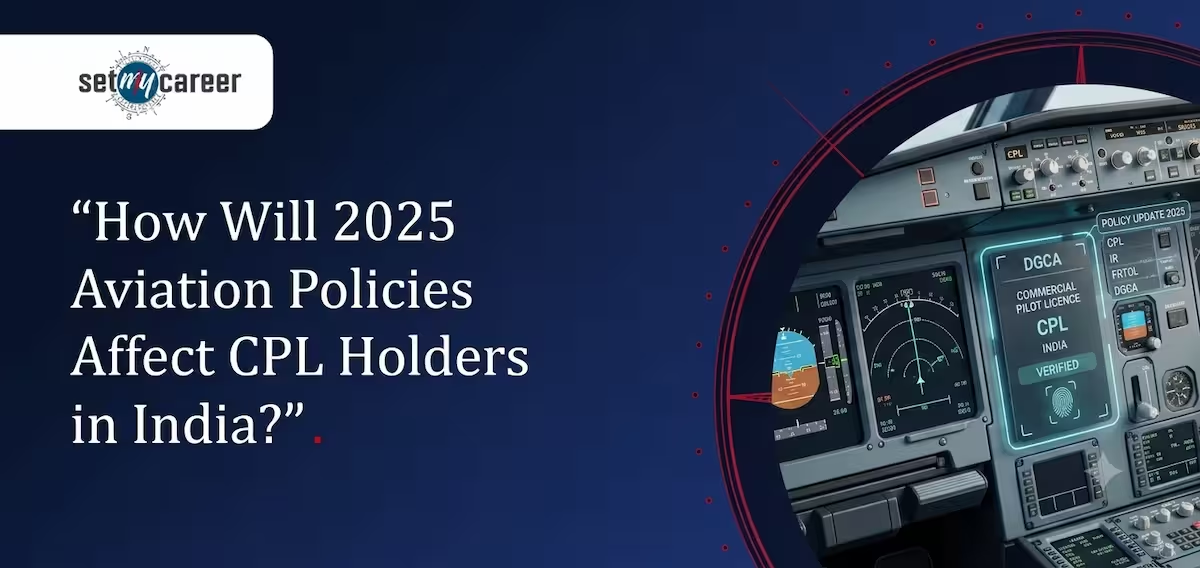
India’s aviation ecosystem is undergoing an unprecedented transformation, driven by massive fleet orders, infrastructure development, and sweeping regulatory updates. For Commercial Pilot License (CPL) holders, this dynamic environment offers a mix of historic career opportunities and complex operational hurdles. Navigating this landscape requires a deep understanding of recent structural shifts, revised training methodologies, and evolving hiring patterns across major and regional air carriers.
Aviation policies impact career options after graduation for CPL holders in the aviation industry.
Understanding the Regulatory Landscape for CPL Holders in India
In the aviation industry, thorough preparation is the ultimate antidote to operational uncertainty. For aspiring and active aviators, knowing regulatory frameworks inside and out provides the structural confidence required to build a resilient long-term career. The primary architect of these frameworks is the Directorate General of Civil Aviation (DGCA), India’s statutory aviation regulator governing pilot training, medical standards, licensing protocols, and overall flight safety systems.
Any structural shift in DGCA policies—whether modifying mandatory flying hours, restructuring instrument rating renewals, or tightening medical evaluation criteria—directly alters the employment landscape for CPL holders. Maintaining a valid license is no longer a static achievement; it requires continuous compliance with dynamic oversight frameworks. Pilots must proactively manage recurrent simulator training, medical checkups, and type-specific certifications. These rigorous local requirements increasingly align with international civil aviation safety standards while supporting the government's strategic vision to establish India as a premier global aviation hub.
Recent Policy Changes and Market Dynamics in Indian Aviation
India’s commercial aviation market is experiencing a sustained surge in passenger volumes and cargo demands. To capture this growth, the Ministry of Civil Aviation has implemented aggressive expansion targets aimed at strengthening urban trunk routes and expanding rural access. The resulting demand for qualified flight crew is shaped by several distinct industry drivers:
- Unprecedented Fleet Expansions: Major domestic carriers, including IndiGo, Air India, and expanding low-cost airlines, have placed historic aircraft orders totaling hundreds of narrow-body and wide-body jets. Integrating these fleets requires a massive, steady pipeline of specialized first officers and captains trained on next-generation flight decks.
- The UDAN Regional Connectivity Scheme: The government's flagship Ude Desh ka Aam Nagrik (UDAN) initiative continues to operationalize previously unserved and underserved regional airstrips. This focus on secondary markets has catalyzed the growth of regional carriers, creating initial entry points for low-hour CPL holders to accumulate multi-engine turboprop experience.
- The Air Freight and Cargo Sector Boom: Driven by e-commerce adoption and supply chain re-routing, dedicated cargo carriers are rapidly scaling operations within India. This expansion provides a stable alternative career path for CPL holders outside traditional passenger operations.
- Accelerated Attrition and Senior Retirements: As senior captains across legacy and private carriers reach the mandatory retirement age limit, airlines face structural pressure to accelerate upgrading first officers, creating a natural upward pull that opens entry-level positions for fresh CPL graduates.
Structural Challenges Faced by Emerging CPL Holders
While macro-level market metrics indicate strong industry growth, individual CPL holders face distinct practical hurdles when attempting to transition from flight school to a commercial airline cockpit:
- Intense Selection Competition: Although pilot shortages exist at the senior commander level, the market for entry-level, non-type-rated first officer roles remains highly competitive. Thousands of license holders frequently vie for limited openings in major airline cadet and transition programs.
- The Minimum Flying Experience Trap: A significant operational hurdle for fresh CPL holders is bridging the gap between graduation hours and airline hiring minimums. Many carriers prioritize pilots who possess substantial multi-engine hours or specific instrument flight rules (IFR) experience, making initial placement difficult.
- The Financial Strain of Self-Funded Training: Obtaining a CPL, completing multi-engine ratings, and funding type certifications can require an investment of several lakhs. Graduating with significant educational debt without immediate airline employment creates a high-pressure environment for new aviators.
- Airline Financial Volatility: The aviation industry remains highly sensitive to fuel price fluctuations, currency volatility, and shifting macroeconomic conditions. A sudden financial downturn at a single major carrier can instantly freeze recruitment cycles across the market.
- Residual Post-Pandemic Training Bottlenecks: While consumer air travel has fully recovered, global supply chain delays in simulator availability and components have created minor bottlenecks in pilot onboarding and type-rating timelines.
Strategic Opportunities in the Evolving Aviation Landscape
Despite these challenges, pilots who approach the market strategically can leverage several distinct growth sectors to advance their careers:
The Regional Aviation Stepping Stone
The expansion of UDAN-backed regional routes has turned regional airlines into highly valuable career accelerators. Operating turboprop aircraft into challenging short-field regional airports allows junior pilots to rapidly log high-quality pilot-in-command or co-pilot hours, making them highly competitive candidates for major jet operators later on.
The Clear Advantage of Independent Type Ratings
Airlines increasingly favor candidates who are already type-rated on high-volume commercial airframes, such as the Airbus A320 or Boeing 737 families. Self-funding a type rating at an approved Type Rating Training Organization (TRTO) drastically reduces an airline's internal onboarding cost and time-to-deployment, giving type-rated CPL holders an undeniable edge in competitive hiring drives.
Dedicated Commercial Air Freight Carriers
The cargo sector offers excellent career longevity, standard operational schedules, and competitive compensation packages. Pilots specializing in air freight gain extensive heavy-jet experience, often operating international logistics routes that build deep procedural capability.
Key Industry Trends Redefining CPL Career Paths
To remain competitive, CPL holders must monitor three definitive trends reshaping airline recruitment and operations:
| Industry Trend | Operational Focus | Strategic Value for CPL Holders |
| Preference for Pre-Existing Type Ratings | Reduction of airline training footprints and transition times. | Accelerates time-to-line check and drastically increases initial shortlisting probability. |
| Competency-Based Training & Assessment (CBTA) | Holistic evaluation of human factors, spatial awareness, and CRM. | Shifts selection focus from simple rote knowledge to advanced psychological and simulator performance. |
| Regional Multi-Engine Turboprop Growth | Expansion of regional networks utilizing ATR and Q400 fleets. | Provides rapid hour accumulation and early exposure to complex, multi-crew environments. |
Conclusion
India’s commercial aviation sector presents an era of high growth for commercial pilot license holders, yet success requires careful navigation of financial, competitive, and regulatory realities. Thriving in this high-stakes industry demands that pilots stay deeply informed about DGCA updates, proactively invest in target upskilling, and adapt to modern evaluation trends like Competency-Based Training.
Given the complexities of structured type ratings, cadet entries, and regional pathways, utilizing professional career counseling can provide invaluable clarity. By taking a data-driven, strategic approach to professional development, CPL holders can successfully manage market entry, build high-value operational experience, and establish rewarding long-term careers in one of the world's fastest-growing aviation markets.