





Quick Summary
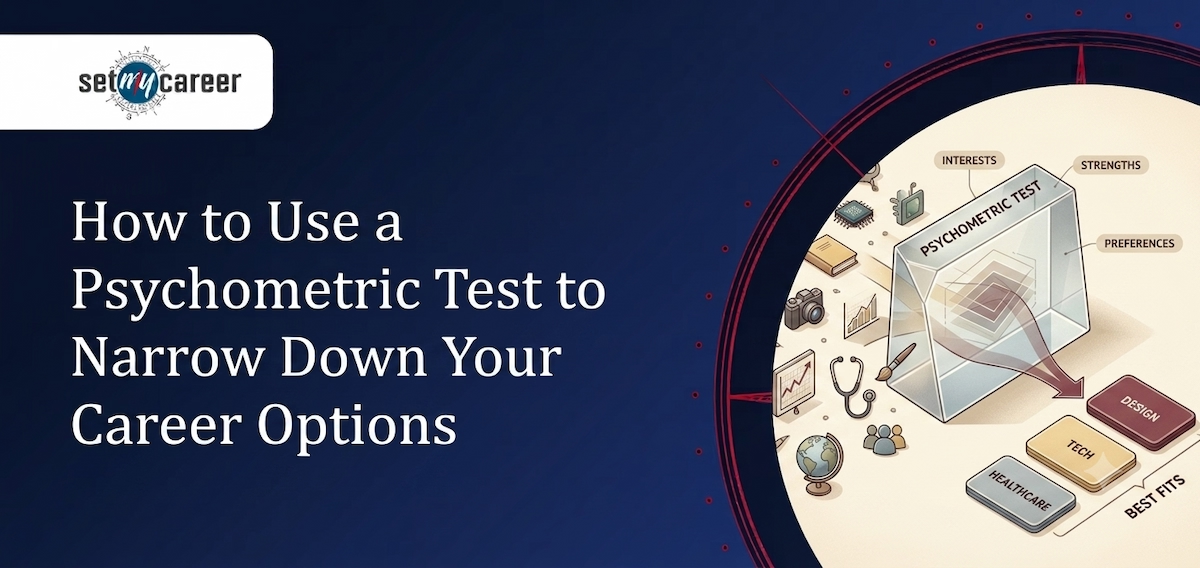
Navigating your career path doesn't have to feel overwhelming when you use a scientifically backed psychometric test as your personal compass. By objectively measuring your natural strengths, cognitive aptitudes, and core interests, these friendly assessments clear away the confusion to reveal the unique fields where you are most likely to thrive. When you combine these personalized insights with real-world exploration and expert career counseling, you can confidently design a realistic, step-by-step roadmap toward a happy and successful future.
Introduction
Feeling overwhelmed by the sheer number of career paths available today is completely normal. Whether you are a student trying to choose a college major, a recent graduate entering the job market, or an experienced professional planning a career pivot, making these big decisions can feel stressful. You do not have to rely on guesswork or well-meaning but biased advice. A scientifically backed psychometric test can serve as your personal compass, helping you cut through the confusion and identify paths that truly align with who you are.
While employers have long used these assessments for hiring, they are now widely recognized as powerful tools for self-discovery. By objectively measuring your natural strengths, behavioral traits, and core interests, a psychometric test provides a clear, unbiased picture of where you are most likely to thrive. It shifts the focus from what you "should" do to what actually matches your unique potential, giving you the confidence to take your next professional steps.
In this guide, we will show you exactly how to use these assessments to simplify your decision-making. You will learn about the main types of career evaluations, how to interpret your results to narrow down your options, and how to combine this data with real-world steps like internships and informational interviews. Let's take the stress out of planning and build a clear path forward together.
Understanding the Role of a Psychometric Test in Career Exploration
What is a Psychometric Test?
A psychometric test is a scientifically designed evaluation used to measure an individual's mental capabilities, behavioral style, and cognitive potential. These assessments provide objective data on personality traits, logical reasoning skills, and occupational interests, helping individuals align their natural strengths with suitable career paths and educational opportunities.
Understanding what does psychometric test measure is key to utilizing these tools effectively. Rather than measuring learned academic knowledge like a history exam, these systems look at how a person processes information, responds to pressure, and interacts with others. By using structured, scientifically tested frameworks, they reveal patterns of behavior that might not be obvious in daily life.
The Shift: Using Selection Tools for Self-Discovery and Career Mapping
In the past, these tests were almost exclusively used by human resources departments to filter out job applicants. However, modern career planning has transformed these selection tools into supportive assets for self-discovery. Students and career changers now use these insights to build proactive career maps before ever applying for a job.
Using these tools early helps prevent the frustration of choosing a field based purely on external expectations. By taking a proactive approach, individuals can identify potential career friction before investing time and money into specific degrees or training programs. It turns career planning from a guessing game into an informed, strategic process.
The Science Behind Psychometric Testing
Reliable career assessments are not simple online quizzes. They are built on decades of psychological research, ensuring high levels of reliability and validity. This means the test yields consistent results over time and actually measures the psychological traits it claims to measure, such as numerical reasoning, spatial awareness, or emotional intelligence.
Most trusted assessments combine a personality inventory assessment with a cognitive ability evaluation. This combination offers a balanced view of both behavioral tendencies and processing capabilities, ensuring that career recommendations are realistic and sustainable for the individual.
| Evaluation Angle | Selection & Recruitment Focus | Career Mapping & Development Focus |
|---|---|---|
| Primary Objective | Filter out candidates to find the best organizational fit. | Identify natural strengths to guide long-term growth. |
| Outcome Focus | Immediate job performance and task execution. | Alignment of passion, skill, and personality. |
| Feedback Loop | Often confidential; limited feedback provided to candidates. | Highly detailed reports designed for self-discovery. |
Core Types of Psychometric Assessments for Career Planning
Personality Tests: Aligning Roles with Your Behavioral Traits
A personality inventory assessment examines how an individual prefers to interact with the world, process information, and make decisions. These assessments categorize behavioral traits, helping individuals see how they might handle group work, leadership roles, or highly structured environments. For instance, an analytical, introverted individual might struggle in high-pressure public relations roles but thrive in research or data analysis.
These traits are relatively stable over time, making them a foundation for career planning. When daily job tasks align with a person's natural behavioral style, work feels less exhausting, and job satisfaction increases. Aligning personality with career choice is an essential step in preventing early professional burnout.
Aptitude & Cognitive Tests: Identifying Your Natural Strengths
An aptitude profiling tool or cognitive ability evaluation measures a person's potential to acquire new skills. These tests look at logical, verbal, spatial, and numerical reasoning. Understanding these innate cognitive strengths helps pinpoint fields where an individual can learn concepts quickly and perform tasks with natural ease.
For example, high spatial reasoning indicates a potential for architecture, engineering, or design, while strong verbal reasoning points toward law, writing, or education. Knowing these strengths allows individuals to target industries where their natural learning style gives them a clear advantage.
Interest Inventories: Mapping Passions to Industry Sectors
A career interest inventory focuses on what activities, environments, and tasks spark an individual's curiosity and enthusiasm. These assessments often use established models like the Holland Codes (RIASEC), which categorize interests into realistic, investigative, artistic, social, enterprising, and conventional areas.
Mapping interests ensures that a career is not just something a person can do, but something they enjoy doing. Balancing what one is good at with what one cares about is the key to a fulfilling, long-term career path.
| Assessment Type | Key Elements Tracked | Practical Career Benefit |
|---|---|---|
| Personality Inventory | Behavioral styles, communication traits, stress triggers. | Ensures work culture alignment and team compatibility. |
| Cognitive Ability Evaluation | Problem-solving speed, spatial logic, numeric reasoning. | Determines performance potential in analytical fields. |
| Aptitude Profiling | Inherent skill sets, raw technical capacity. | Highlights areas where skill development is easiest. |
| Career Interest Inventory | Core motivations, professional passions, work preferences. | Points to specific fields that sustain long-term engagement. |
Step-by-Step: How to Use Psychometric Tests to Filter Your Career Path
Step 1: Choose a Balanced Suite of Assessments
Relying on a single test can produce a one-dimensional view of your potential. To build a reliable foundation, it is best to combine different types of evaluations. Using a mix of personality inventories, cognitive tests, and interest surveys ensures that all facets of your professional potential are captured accurately.
Step 2: Create a Baseline of Your Hard and Soft Skills
Before analyzing future options, map out your current capabilities. Combine the objective data from your psychometric reports with your existing academic records, technical skills, and volunteer experiences. This step creates a realistic starting point, highlighting both your immediate marketability and areas that require further development.
Step 3: Analyze the Overlap Between Interests and Aptitudes
Look for the sweet spot where your natural talents meet your personal passions. High aptitude in a subject you dislike often leads to boredom, while high interest in a field where you lack aptitude can lead to frustration. Finding the common ground between these two areas points you toward sustainable career options.
Step 4: Generate a Targeted List of Viable Industries
Use your test data to narrow down the hundreds of available careers into a manageable shortlist of four or five target sectors. This structured approach helps prevent decision paralysis and allows you to focus your energy on researching realistic, high-potential industries.
- Check the Reliability: Always look for assessments backed by peer-reviewed research and clear testing standards.
- Look at the Intersection: Focus on career recommendations that appear consistently across both interest and aptitude reports.
- Document Your Findings: Keep a central file of your test summaries, noting recurring keywords, behavioral strengths, and work environment preferences.
- Consult a professional: Discussing your patterns with a career counselor can help clarify complex data points and turn them into concrete next steps.
How to Interpret Your Results to Narrow Down Specific Job Roles
Translating Scores Into Career Suitability
Psychometric reports often use complex charts and percentile scores that can feel confusing at first. Instead of focusing on getting a perfect score, look at the overall patterns. High percentiles in logical reasoning suggest analytical roles, while balanced scores in empathy and communication point toward collaborative, relationship-focused professions.
Understanding these scores helps you match your personal profile with the demands of specific roles. For instance, a job that requires constant public presentations might feel exhausting for someone whose personality inventory shows a strong preference for quiet, independent work environments.
Identifying 'Red Flags' and Roles to Eliminate
One of the most helpful outcomes of a psychometric evaluation is learning what roles to avoid. If your results show a low tolerance for rapid change and unstructured environments, highly unpredictable fields like startup management or emergency logistics might cause undue stress. Eliminating incompatible options is just as important as finding suitable ones.
By filtering out roles that conflict with your fundamental behavioral traits, you protect yourself from career choices that lead to chronic stress. This negative filtering process instantly simplifies your decision-making, leaving you with a clearer, more manageable list of options.
Distinguishing Between Current Skills and Future Potential
It is easy to confuse current skill levels with long-term potential. An aptitude profiling test does not measure what you currently know; it measures how easily you can master new concepts in the future. Recognizing this distinction prevents you from ruling out exciting fields just because you have not taken classes in them yet.
For example, you might score highly on numerical reasoning even if you have not studied advanced mathematics. This result shows you have the raw intellectual capacity to succeed in finance, data analytics, or computer science if you choose to pursue the necessary training.
| Factor | What It Measures | How to Use It in Planning |
|---|---|---|
| Aptitude | Inherent potential and learning speed. | Identifies fields where training will yield the fastest results. |
| Current Skills | Acquired knowledge and technical abilities. | Determines immediate entry points into the job market. |
| Personality Traits | Preferred styles of communication and work. | Guides choices around company culture and daily team dynamics. |
- Are my highest aptitude scores aligned with my primary interests?
- What work environments match my behavioral preferences (e.g., remote, collaborative, structured)?
- Do my reports highlight any specific tasks that I should avoid in my daily work?
- Which of my natural strengths have I already demonstrated in my past achievements?
Where to Find and Take Accurate Psychometric Tests
Free Career-Focused Psychometric Assessments vs. Paid Options
The internet is filled with quick personality quizzes, but finding the best psychometric test for career planning requires looking at the depth of the assessment. Free tests can offer helpful, basic starting points for self-reflection. However, they often lack the comprehensive analysis, validation data, and detailed career mapping resources found in professional, paid assessments.
Paid assessments typically provide extensive, multi-page reports and are often paired with a personalized review session with an expert counselor. Investing in a validated assessment ensures that you are making life-altering career decisions based on high-quality, scientifically sound data.
Accessing Tests Through University Career Offices and Professional Networks
Students and alumni can often access high-quality assessments at no cost through university career service offices. These departments frequently purchase institutional licenses for validated tools and offer professional guidance to help students understand their reports. Professional networks and industry associations also provide specialized assessments tailored to specific sectors.
Using these institutional pathways is an excellent way to access premium testing tools. Additionally, working with a university counselor allows you to connect your test results directly to campus internship programs, major selection, and local employer networks.
Using Practice Tests to Understand Format and Reduce Test Anxiety
Searching for how to pass psychometric test options is common, but these assessments do not have pass or fail marks. However, practicing with sample questions can help familiarize you with the structure of cognitive and logical reasoning assessments, reducing anxiety and ensuring your final results accurately reflect your true abilities.
Familiarity with the test format prevents panic on the day of the assessment, allowing you to focus on the questions rather than the timer. A calm, steady approach leads to a much more accurate reflection of your cognitive capabilities.
- Read instructions carefully: Do not rush into the questions; make sure you understand the format of each section first.
- Work in a quiet space: Complete the evaluation in a distraction-free environment to maintain focus during timed sections.
- Answer honestly: Avoid trying to guess the "ideal" answer on personality inventories; honest answers yield the most helpful career matches.
- Manage your time: On cognitive sections, avoid spending too long on a single difficult question; move on and return to it if time permits.
Navigating the Limits of Career Psychometric Evaluations
Why You Shouldn't Rely Solely on Test Algorithms
While computer-generated reports offer highly valuable structured data, they are still limited by algorithms. A test report cannot capture your personal values, family considerations, geographic preferences, or financial needs. Treating these assessments as helpful guides rather than absolute answers is essential for realistic planning.
Relying solely on an automated list of job recommendations can lead to choices that look great on paper but fail to fit your actual lifestyle. The human element of career planning remains irreplaceable when making final decisions.
Combining Test Data with Informational Interviews and Internships
The most effective career planning strategy combines scientific test data with real-world exploration. Once your psychometric results suggest a few high-potential fields, test those ideas by talking to professionals in those industries, shadowing experts, or taking on short-term internships.
Experiencing a job firsthand helps you verify whether the daily realities match the theoretical findings of your assessment. It bridges the gap between scientific prediction and real-world satisfaction.
Keeping Your Results Dynamic as You Grow Professionally
Your interests, values, and even some behavioral traits will naturally evolve as you gain life experience and professional exposure. An assessment taken at eighteen provides a snapshot of that specific stage of development, but your priorities may shift significantly by the time you reach thirty.
Viewing career planning as an ongoing, adaptive process ensures that you remain open to new opportunities. Periodically reassessing your strengths and goals allows your career path to grow alongside you, ensuring long-term professional fulfillment.
| Career Planning Resource | What It Generates | How to Validate It in the Real World |
|---|---|---|
| Psychometric Evaluation | Theoretical alignment with roles and industries. | Conduct informational interviews with industry professionals. |
| Aptitude Profile | Identification of raw learning potential. | Take introductory courses or complete online certifications. |
| Personality Report | Indication of ideal work environments. | Seek out short-term internships or job shadowing opportunities. |
- Review your reports annually: Look back at your past results to see if your primary career motivations have changed over time.
- Schedule informational interviews: Reach out to professionals in your recommended fields to learn about their daily work realities.
- Seek hands-on projects: Volunteer for tasks that stretch your high-aptitude areas to build confidence and practical skills.
- Partner with a career advisor: Collaborate with a professional counselor to turn your test data into a customized, actionable step-by-step career roadmap.
Your Next Steps Toward Career Clarity
Choosing a career path can feel overwhelming, but you do not have to rely on guesswork. A psychometric test acts as a reliable compass, translating your unique traits, cognitive strengths, and core interests into a clear, manageable list of career options. By highlighting what naturally drives you, these assessments save you time and protect you from the trial-and-error of mismatched job roles.
Remember that a test result is just the starting point of your journey. The real power lies in how you apply these insights to your real-world choices. When you pair your assessment data with personalized career guidance, you transform a simple report into a practical, step-by-step roadmap for your future.
Ready to clear the confusion and discover where you truly belong? Take the first step by exploring a professional psychometric test with SetMyCareer today. Our expert counsellors are here to help you interpret your results, understand your potential, and design a career path that brings you genuine satisfaction and success.