





Quick Summary
Navigating career decisions can feel overwhelming, but a scientifically validated psychometric test removes the guesswork by mapping your unique personality traits, natural aptitudes, and core interests. This objective evaluation empowers students, parents, and working professionals to make data-driven choices with confidence, whether you are selecting a high school academic stream or planning a rewarding mid-career transition. By combining these deep, multidimensional insights with personalized guidance, SetMyCareer serves as your trusted partner to help you design a realistic, empowering roadmap toward long-term professional success.
Introduction
Choosing a career path can feel like standing at a massive crossroads with signs pointing in a hundred different directions. Whether you are a student trying to pick a college major, a parent wanting to support your child, or a professional looking for a fresh start, making this decision is both exciting and deeply overwhelming. It is completely normal to feel unsure about where your true strengths lie or which industry will genuinely fulfill you in the long run.
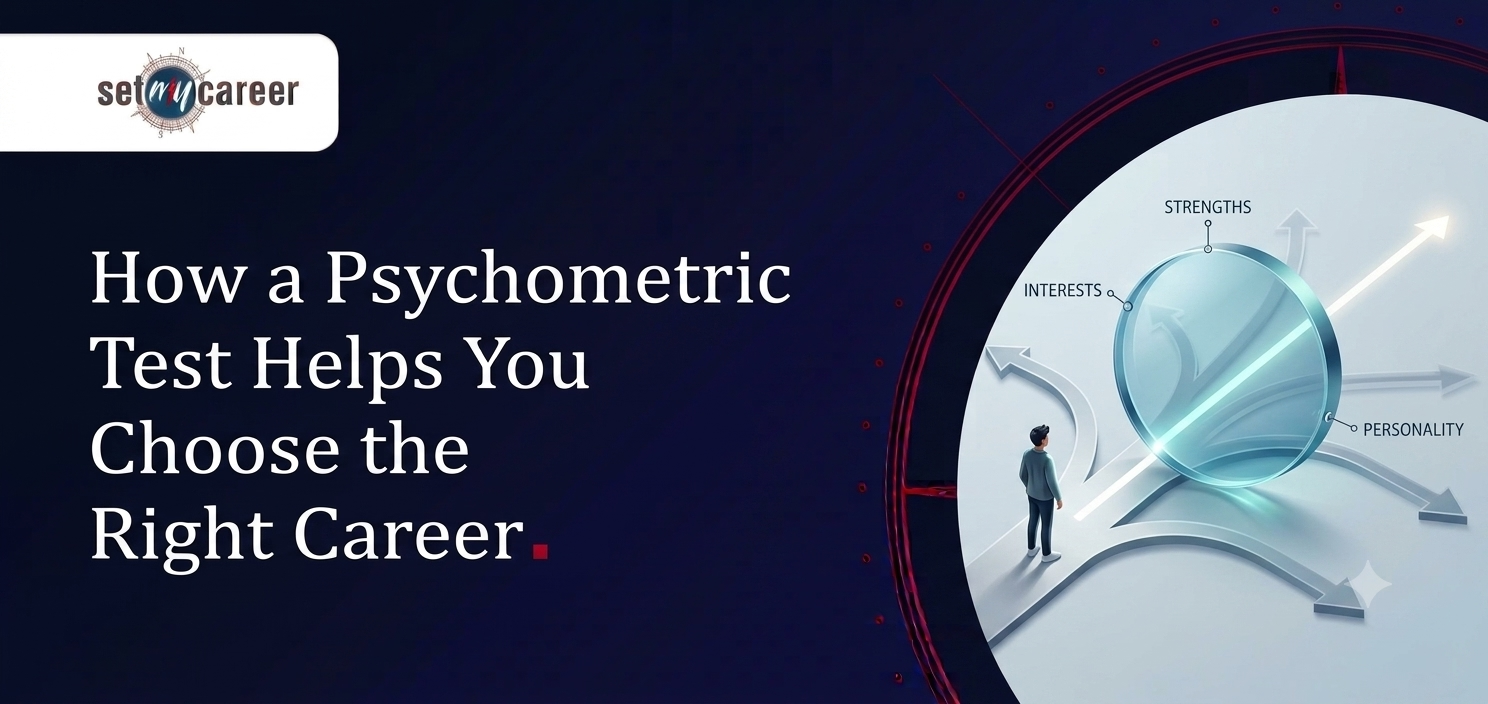
This is where a psychometric test becomes an invaluable tool for your journey. Rather than relying on guesswork or well-meaning advice, this scientifically designed assessment helps you look inward. By measuring your unique personality traits, natural aptitudes, interests, and core values, a psychometric test provides an objective, reliable blueprint of who you are and where you are most likely to succeed. It removes the anxiety of decision-making by turning confusion into clarity.
At SetMyCareer, we believe that career planning should be empowering, not stressful. In this guide, we will walk you through how a psychometric test works, the specific insights it reveals about your potential, and how you can use these results to make confident, long-term decisions. Let’s take the first step together toward discovering a career path that truly aligns with your natural talents.
What is a Psychometric Test?
A psychometric test is a scientifically validated instrument designed to measure an individual’s mental capabilities, behavioral styles, personality traits, and core occupational interests. These structured assessments offer objective, quantitative data that guide candidates toward suitable academic choices and fulfilling professional journeys, reducing career-related uncertainty and long-term dissatisfaction.
Unlike standard academic exams that evaluate acquired knowledge or subject memorization, these tools focus on intrinsic traits and raw cognitive potential. The core objective is to map out the psychological profile of an individual, highlighting where their natural talents lie and how they process new information. This diagnostic perspective allows for career guidance that is grounded in statistical reliability rather than subjective opinions, family pressures, or temporary industry trends.
The Science Behind Psychological Testing
The development of a reliable psychometric test relies on advanced psychological theory and rigorous statistical design. These tools are built upon two fundamental metrics: validity and reliability. Validity ensures that the test accurately measures the specific trait it claims to evaluate, such as numerical reasoning or emotional intelligence. Reliability guarantees that the assessment delivers stable, consistent results when retaken under similar conditions over time.
Modern career diagnostics use standardized comparison groups, known as norm groups, to evaluate an individual's performance. When a candidate completes an assessment, their scores are not calculated in a vacuum. Instead, their responses are systematically compared with a representative demographic cohort. This process provides a clear, relative understanding of their cognitive strengths and personality disposition, distinguishing professional assessments from casual, unscientific online quizzes.
Key Components of a Comprehensive Psychometric Test
A holistic career assessment cannot rely on a single metric. To construct an accurate representation of a candidate's potential, a comprehensive evaluation must synthesize data across multiple human dimensions. By examining personality, aptitude, interests, and cognitive capacity simultaneously, career advisors can identify the precise intersections where professional success and personal satisfaction meet.
The following matrix outlines the core components evaluated during a professional-grade career assessment process, detailing what each component measures and how it influences long-term occupational planning:
| Component | Primary Metric Evaluated | Career Planning Utility |
|---|---|---|
| Personality Assessment | Behavioral traits, communication style, and work preferences | Identifies ideal corporate cultures, team roles, and environments |
| Aptitude Evaluation | Numerical, verbal, and logical problem-solving speeds | Matches raw mental potential with technical role requirements |
| Career Interest Inventory | Intrinsic motivators and occupational preferences | Ensures long-term engagement and reduces professional burnout |
| Cognitive Ability Test | Information processing speed and learning adaptability | Predicts performance in complex, fast-changing industries |
Personality Assessment: Understanding Work Style
A professional personality assessment evaluates the behavioral tendencies and communication preferences that define how an individual interacts with colleagues, manages stress, and approaches daily tasks. By understanding these innate patterns, candidates can avoid career paths that conflict with their social and emotional needs. For example, highly introverted individuals may experience rapid burnout in high-pressure, client-facing sales roles, whereas they may thrive in analytical, independent research positions.
Most advanced personality diagnostics are anchored in established psychological frameworks, such as the Big Five personality model. This taxonomy evaluates five core behavioral dimensions:
- Openness to Experience: Measures intellectual curiosity, creative preference, and comfort levels with structural organizational change.
- Conscientiousness: Evaluates personal organization, self-discipline, reliability, and preference for methodical planning over spontaneity.
- Extraversion: Analyzes social energy sources, assertiveness, and comfort within collaborative, team-oriented business environments.
- Agreeableness: Measures empathy, cooperation, trust, and the natural inclination toward harmony or constructive conflict in work groups.
- Emotional Stability: Assesses psychological resilience, stress management, and the ability to remain balanced under strict project deadlines.
Aptitude Evaluation: Measuring Cognitive Strengths
An aptitude evaluation measures an individual's natural capacity to acquire specific skills when provided with proper training. This is distinct from current knowledge; it focuses entirely on raw, developmental potential. Understanding these innate strengths allows students and professionals to pursue career paths where they possess a natural intellectual advantage, making skill acquisition easier and professional execution more efficient.
Aptitude profiles vary significantly from person to person. Mapping these variations to specific job functions ensures that professionals do not struggle with the fundamental intellectual requirements of their chosen fields. The table below illustrates how specific aptitude profiles align with distinct professional sectors:
| Aptitude Type | Core Strengths Evaluated | Compatible Career Fields |
|---|---|---|
| Quantitative Reasoning | Numerical analysis, trend identification, and mathematical modeling | Actuarial Science, Data Analysis, Investment Banking, Accounting |
| Verbal Reasoning | Comprehension of complex texts, vocabulary, and written arguments | Corporate Law, Public Relations, Editorial Writing, Journalism |
| Spatial Reasoning | Three-dimensional visualization and physical system structures | Architecture, Civil Engineering, Graphic Design, Aviation |
| Logical/Abstract Reasoning | Pattern recognition, troubleshooting, and systematic deduction | Software Engineering, Cybersecurity, Strategic Consulting, Biotech Research |
Career Interest Inventory: Aligning Passions with Professions
While aptitude measures capability, a career interest inventory determines motivation. An individual may possess high numerical aptitude, but if they lack interest in business, finance, or research, they are unlikely to find career satisfaction in a purely quantitative role. Aligning occupational interests with daily responsibilities ensures high engagement, sustained motivation, and overall well-being throughout a multi-decade career.
The standard framework for analyzing career interests is the Holland Codes (RIASEC) model, which categorizes occupational interests into six distinct personality-environment types:
- Realistic (Doers): Individuals who prefer practical, hands-on tasks, working with physical objects, machinery, or outdoor environments.
- Investigative (Thinkers): Personalities attracted to research, intellectual discovery, data observation, and scientific problem-solving.
- Artistic (Creators): People who value aesthetic expression, original design, creative freedom, and unstructured work environments.
- Social (Helpers): Individuals driven by human connection, teaching, therapy, community service, and supportive counseling roles.
- Enterprising (Persuaders): Profiles that thrive on leadership, public speaking, business management, sales, and organizational influence.
- Conventional (Organizers): Minds that excel in data administration, systematic tracking, regulatory compliance, and highly structured procedures.
Cognitive Ability Test: Evaluating Problem-Solving Capacity
A cognitive ability test measures general mental ability, often referred to as the 'g-factor'. This evaluation focuses on how rapidly and accurately an individual processes new, complex information, identifies systemic connections, and adapts to unfamiliar challenges. Employers and academic institutions value this metric because it is a reliable predictor of job performance, training efficiency, and executive decision-making under high-pressure conditions.
These tests utilize non-verbal patterns, spatial matrices, and logical syllogisms to bypass cultural or educational biases. By evaluating raw cognitive speed and mental agility, the assessment highlights a candidate’s capacity to manage complex information, formulate innovative solutions, and acquire advanced specialized skills in fast-paced corporate landscapes.
Why Use a Psychometric Test for Career Selection?
Using a psychometric test for career selection removes guesswork by aligning an individual’s natural talents and cognitive strengths with highly compatible professions. This standardized evaluation minimizes the risk of employment dissatisfaction, enhances academic performance, and offers actionable direction for school stream decisions and adult career transitions.
Many individuals select career paths based on superficial criteria, such as parental expectations, societal prestige, peer choices, or current media trends. Unfortunately, this often leads to educational disengagement, poor work performance, and career burnout. Incorporating psychometric testing into the decision-making process introduces objective data into an otherwise emotional and stressful transition, as shown in the lifecycle applications below:
| Life Stage | Primary Decision Challenge | Psychometric Intervention Value |
|---|---|---|
| High School Students | Stream selection (Science, Commerce, Humanities) | Aligns academic paths with natural learning capacities and interests |
| College Undergraduates | Specialization choices and industry alignment | Identifies specific roles that fit behavioral preferences |
| Working Professionals | Career transitions, industry shifts, or leadership progression | Uncovers transferable skills and identifies root causes of burnout |
Making Data-Driven Stream Choices for High School Students
The transition from middle school to high school requires students to make early choices regarding academic specialization. Whether deciding between Science, Commerce, or Humanities, these choices have long-term impacts on future university options and career pathways. Standard school grading systems often fail to highlight a student's true potential, as exam scores can be influenced by rote memorization, teaching quality, or study environments.
A psychometric test bypasses academic grades to evaluate a student's underlying cognitive potential and behavioral preferences. For example, a student struggling with high school algebra might feel discouraged from pursuing scientific disciplines. However, a spatial and logical aptitude evaluation may reveal strong engineering potential that is simply being masked by poor algebraic training. Providing these objective insights empowers parents and students to choose academic streams with confidence, ensuring they build on their natural intellectual strengths.
Supporting Professionals During Mid-Career Transitions
Career paths are rarely linear in the modern professional landscape. Many experienced workers reach points of stagnation, where their daily responsibilities no longer challenge them, or their workplace culture causes chronic stress. When planning a career shift, professionals often struggle to identify which alternative industries are compatible with their experience, or which roles will offer genuine fulfillment.
Utilizing a psychometric test for career selection during these transitions provides a clear blueprint of transferable skills and core behavioral needs. This scientific approach helps professionals analyze their existing strengths, identify skill gaps, and explore new roles that align with their current values. This data-driven support reduces the financial and emotional risks of career pivots, ensuring that any transition leads to sustained success and professional renewal.
How to Prepare for a Psychometric Test
Preparing for a psychometric test requires mental clarity and absolute honesty rather than intensive academic revision or formulaic memorization. Individuals can optimize their results by learning general assessment structures, getting adequate rest, managing section timing, and answering personality-based queries authentically to secure a genuine diagnostic profile.
Many test-takers experience unnecessary anxiety when facing these assessments, believing that a poor score will limit their future opportunities. In reality, these tests are diagnostic rather than evaluative. There are no objectively "good" or "bad" scores; instead, there are different profiles that point toward different environments. Attempting to game the test or study for it like a traditional exam can distort the results, leading to career recommendations that do not match the candidate's actual working style.
Practical Tips for a Stress-Free Assessment
To ensure that the results are a true reflection of raw capability and natural preferences, candidates should focus on optimizing their physical and mental readiness. When considering how to prepare for psychometric test environments, implementing these practical strategies can improve focus and minimize stress:
- Ensure Optimal Physical Readiness: Sleep well for at least seven to eight hours before the assessment to maintain focus during timed cognitive sections.
- Create a Distraction-Free Environment: Complete the assessment in a quiet, private room with high-speed internet, and turn off all phone notifications.
- Read Instructions with Care: Take time to read all guidelines for each sub-section, as timing rules and question formats can vary.
- Answer Authentically: Avoid trying to guess what employers or counselors want to hear; built-in consistency scales detect and flag artificial answers.
- Manage Your Time Wisely: Do not spend too much time on a single challenging question; if you get stuck, move on and return to it later if the test allows.
Choosing the Best Online Psychometric Test
The digital marketplace offers numerous free personality quizzes and career tests, but very few meet the rigorous scientific standards required for sound academic or career planning. Selecting an unverified test can lead to inaccurate profiling, which can result in misguided academic choices or frustrating career transitions. Identifying the best online psychometric test requires looking for platforms that use proven psychological methodologies and offer comprehensive, multidimensional reporting.
To help you choose a reliable assessment tool, the following checklist outlines the essential scientific and operational standards that define a high-quality career evaluation platform:
| Evaluation Metric | Standard to Look For | Why It Matters |
|---|---|---|
| Theoretical Foundation | Based on established frameworks like the Big Five or Holland Codes (RIASEC) | Ensures the assessment uses recognized, peer-reviewed psychological science |
| Statistical Reliability | Reported Cronbach’s alpha coefficients of 0.70 or higher | Guarantees consistent and stable results across different testing sessions |
| Multidimensional Scope | Integrates aptitude, personality, and career interests into one assessment | Provides a complete, balanced profile rather than looking at traits in isolation |
| Expert Advisory Support | Provides access to certified human career counselors post-test | Translates raw data and complex scores into practical, actionable steps |
Key Criteria for Reliable Assessment Platforms
When searching for the best online psychometric test, it is important to look beyond basic reporting to ensure the platform offers real, actionable value. A high-quality career diagnostic tool should not only identify strengths but also explain how those strengths can be applied in the modern workplace. It is highly beneficial to prioritize platforms that combine scientific testing with personalized career counseling, as certified professionals can help clarify complex data, explore alternative career options, and design a customized roadmap for long-term success.
To ensure you make an informed choice, consider these essential action items when evaluating any online psychometric assessment service:
- Verify Scientific Credentials: Confirm that the assessment has been developed and validated by qualified organizational psychologists or academic institutions.
- Avoid Single-Trait Assessments: Choose comprehensive tests that evaluate aptitude, personality, and interests together, rather than relying on personality-only profiles.
- Review Sample Reports: Check sample reports beforehand to ensure the feedback is clear, detailed, and provides practical recommendations rather than generic descriptions.
- Look for Post-Assessment Support: Choose platforms that offer feedback sessions with certified advisors to help you understand your results and plan your next steps.
Conclusion
Choosing a career path does not have to feel like a guessing game. A reliable psychometric test acts as a personal roadmap, turning career uncertainty into clarity. By analyzing your unique strengths, interests, and personality traits, this scientific tool provides objective data to help you make career decisions with confidence. It removes the pressure of making a blind choice and replaces it with a structured, realistic strategy for your future success.
Your career journey is unique, and you do not have to navigate it alone. At SetMyCareer, we combine scientific psychometric testing with personalized, expert guidance to help you find a path where you will truly thrive. Take the first step toward a fulfilling future today by scheduling your psychometric test and mapping out a career that truly fits who you are.