

Quick Summary
Succeeding in today's fast-paced tech market requires a balanced combination of core technical competencies and strong interpersonal skills like communication, empathy, and collaboration. By actively identifying your skill gaps, adopting structured productivity habits, and showcasing your practical achievements using the STAR interview methodology, you can confidently stand out to top employers. At SetMyCareer, we are ready to walk alongside you with personalized, data-driven guidance to help you bridge your skill gaps and build a successful, fulfilling career path.
Introduction
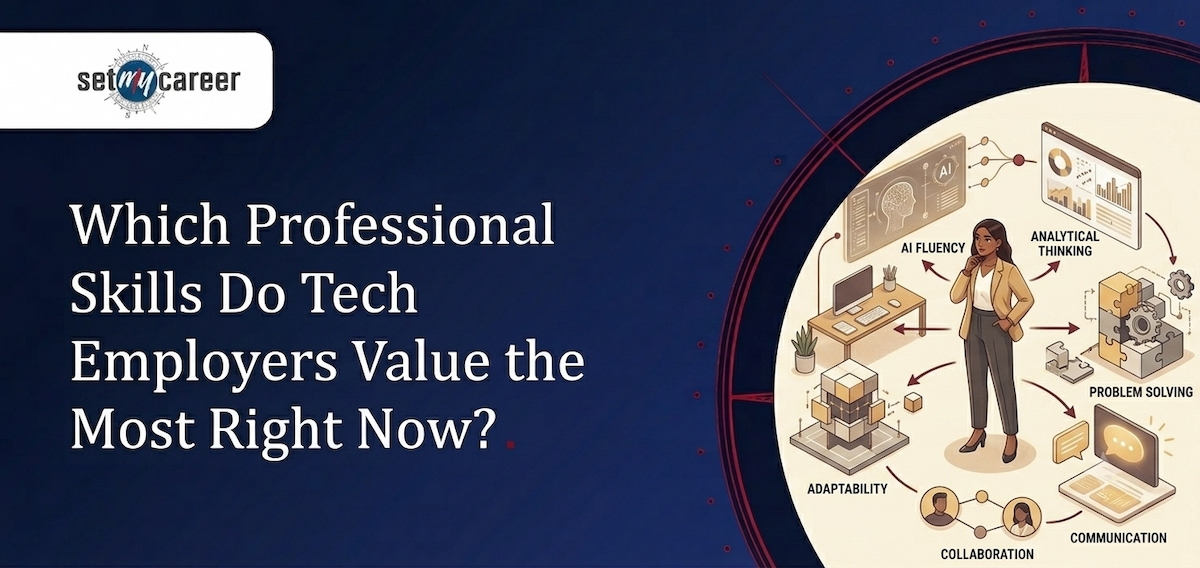
Navigating the tech job market can feel overwhelming, especially with how quickly technology and industry expectations evolve. Whether you are a college graduate looking for your first job or an experienced professional planning a career transition in 2026, you might wonder what it actually takes to stand out to hiring managers. While technical expertise is always important, employers are increasingly looking at the bigger picture. To truly succeed, you need a balanced set of professional skills that show you can work effectively with others and adapt to new challenges.
At SetMyCareer, we closely track hiring trends and employer feedback to give you practical, reliable guidance. What we see right now is a clear shift in how tech companies evaluate talent. Having strong technical abilities is only half the equation. Your ability to communicate clearly, solve complex problems, and collaborate across teams determines your long-term career growth. Understanding which professional skills are in high demand allows you to focus your time and energy on building the strengths that recruiters value most.
This guide will walk you through the essential professional skills that tech employers are looking for right now. You will discover practical ways to develop these competencies, highlight them on your resume, and present them confidently during your next interview. Let’s explore how you can build these key strengths to unlock new career opportunities and move forward in your professional journey with confidence.
What Are Professional Skills and Why Do They Matter in Tech?
Professional skills represent a combination of technical abilities and personal attributes that enable individuals to perform tasks effectively and collaborate productively in the workplace. These capabilities help employees solve complex problems, manage projects successfully, adapt to industry changes, and maintain high levels of performance across diverse organizational settings.
Understanding the Balance of Technical Competencies and Soft Skills
A balanced professional profile is the foundation of long-term career growth. While hard skills open doors to entry-level opportunities, the ability to integrate technical knowledge with collaborative habits determines how far professionals can advance. Employers in modern industries look for professionals who can translate complex technical requirements into business value, bridging the gap between developers and non-technical stakeholders.
When an organization evaluates candidate profiles, they look beyond simple execution. They seek professionals who understand how individual tasks influence the broader project. This integration of interpersonal skills and technical competencies creates a highly adaptable worker capable of managing complex situations with composure.
| Skill Category | Primary Focus | Practical Examples |
|---|---|---|
| Technical Competencies | Hard technical expertise and domain-specific knowledge required to perform job duties. | Software architecture, database administration, data analytics, cloud integration. |
| Interpersonal Skills | Behavioral attributes and collaborative habits that facilitate team interaction. | Active listening, conflict resolution, empathetic communication, clear articulation. |
Building a balanced profile requires continuous self-assessment. Rather than focusing solely on mastering the next software update, professionals must also dedicate attention to refining their delivery, response to constructive feedback, and delegation strategies. This dual focus ensures that individuals do not hit a growth ceiling as they move into senior or leadership roles.
A Comprehensive List of Professional Skills for Resume Success
A well-structured list of professional skills for resume optimization includes a strategic mix of technical competencies and interpersonal strengths. Highlighting these capabilities demonstrates your ability to execute tasks and work cohesively with teams, making your job application highly appealing to recruiters and hiring managers in competitive markets.
Core Technical Competencies in High Demand
Identifying which in demand professional skills align with targeted career paths is a major step in career planning. Modern industries depend heavily on automated systems, clean code, and data-driven decisions. Highlighting specialized technical skills demonstrates to employers that candidates can contribute to ongoing projects immediately with minimal oversight.
The current industry environment places a high value on capabilities that optimize efficiency and security. To stand out, professionals should focus on acquiring proficiency in the following areas:
- Data Analytics and Business Intelligence: The capability to interpret vast datasets and extract actionable insights that guide executive decisions.
- Cloud Computing and Infrastructure Architecture: Practical knowledge of deploying, managing, and scaling systems on platforms like AWS, Azure, or Google Cloud.
- Software Engineering Principles: Competency in modern programming languages, version control systems, and agile development methodologies.
- Cybersecurity and Risk Mitigation: Understanding threat vectors, implementing security protocols, and maintaining data privacy compliance across all digital assets.
Essential Interpersonal Skills for Collaboration
Technical proficiency is highly effective when paired with exceptional communication and empathy. As organizations move toward cross-functional team structures, the ability to build consensus and maintain clear communication channels becomes a primary indicator of project success. These attributes define how smoothly a professional integrates into an existing workplace culture.
A balanced application should feature behavioral strengths that illustrate an ability to work with others. Showing how these attributes have helped resolve past projects builds credibility with hiring managers.
| Interpersonal Skill | Workplace Application | Expected Business Outcome |
|---|---|---|
| Active Listening | Gathering requirements from clients without making incorrect assumptions. | Reduced project rework and stronger stakeholder alignment. |
| Conflict Resolution | Mediating disagreements between development and quality assurance teams. | Faster development cycles and a healthier work environment. |
| Empathetic Leadership | Supporting team members during intense project deadlines and workloads. | Lower employee turnover and higher collective motivation. |
Prioritizing these collaborative strengths turns standard technical developers into strategic business partners. Individuals who demonstrate consistent emotional intelligence and clear communication are frequently selected to lead high-priority client-facing projects and internal initiatives.
How to Improve Professional Skills for Career Growth
To know how to improve professional skills, professionals must combine structured training, regular feedback, and active workplace application. Identifying performance gaps and consistently practicing new techniques allows individuals to enhance their execution, handle advanced responsibilities, and position themselves for long-term career advancement within their chosen fields.
A Structured Approach to Workplace Productivity
Enhancing professional competencies is a continuous process that requires a focused strategy rather than occasional effort. To systematically build workplace productivity, professionals should adopt clear habits that optimize time, manage cognitive load, and reduce operational waste. Transforming these habits improves the overall quality of output and demonstrates executive presence.
To elevate daily performance, consider adopting these key operational frameworks:
- Time-Blocking and Prioritization: Segmenting the workday into dedicated focus blocks for high-value tasks while scheduling administrative duties during lower-energy periods.
- Agile Task Management: Using digital Kanban boards or scrum frameworks to map out project steps, track progress, and identify potential bottlenecks before they impact deadlines.
- Process Automation: Identifying repetitive, manual tasks and using basic scripting or software integrations to handle them, freeing up time for cognitive problem-solving.
- Constructive Feedback Loops: Actively seeking peer reviews and manager evaluations to uncover blind spots in communication and execution strategies.
Continuous Learning and Skill-Gap Analysis
A formal skill-gap analysis is a powerful tool to measure current abilities against the evolving standards of targeted industries. By evaluating where current capabilities fall short, professionals can create a targeted learning path that prevents them from wasting time on redundant training. This method ensures skills remain highly marketable.
At SetMyCareer, professionals utilize objective aptitude planning and personalized guidance to transition smoothly between different career levels. A structured analysis framework helps outline this development plan clearly:
| Development Step | Action Plan | Evaluation Metric |
|---|---|---|
| Aptitude Assessment | Identify logical reasoning, technical capabilities, and cognitive strengths. | Standardized baseline scores. |
| Skill-Gap Identification | Compare current capabilities against targeted industry roles. | List of prioritized learning goals. |
| Structured Learning | Engage in professional certification paths and practical projects. | Verified credentials and completed portfolios. |
Taking a data-driven approach to professional development removes the guesswork from career transitions. Rather than pursuing random certifications, professionals can acquire the precise capabilities that employers are searching for, accelerating their career trajectory.
Showcasing Your Capabilities in Resume Building and Interviews
Effective resume building involves matching specific professional skills with the requirements of target job descriptions. Presenting measurable achievements and illustrating how technical competencies were applied to solve business challenges helps job seekers stand out during the application screening process and subsequent face-to-face recruitment stages.
Optimizing Your Resume for Technical and Interpersonal Strengths
Strategic resume building is about translating experience into a narrative of impact and capability. Many job seekers make the mistake of listing responsibilities rather than achievements. To capture the attention of busy recruiters, applications must clearly present both technical and interpersonal strengths in an easy-to-read format.
To ensure your resume captures your true potential, implement these practical structural adjustments:
- Use Action Verbs: Begin every bullet point with strong, performance-oriented action verbs such as engineered, optimized, spearheaded, or resolved.
- Quantify Your Impact: Include numerical metrics, percentages, and dollar amounts to show the exact scale and outcome of professional contributions.
- Integrate High-Value Keywords: Align the resume language with the terms used in the target job description to pass automatic Applicant Tracking Systems.
- Create Dedicated Sections: Separate technical competencies from functional competencies so hiring managers can quickly scan your profile.
Demonstrating Value During the Interview Process
Securing an interview is the opportunity to bring a resume to life. Employers use behavioral and technical questions to evaluate how candidates handle real-world challenges, manage stress, and work within teams. Demonstrating value requires structured communication that explains thinking and problem-solving methodologies clearly.
The STAR methodology provides an exceptionally reliable structure for answering situational questions during the interview process:
| STAR Framework Stage | Objective | Key Focus Area |
|---|---|---|
| Situation (S) | Provide context by describing a specific challenge or event. | Keep details concise and highly relevant to the problem. |
| Task (T) | Outline the specific responsibility or goal that required attention. | Clearly define the objective that needed to be achieved. |
| Action (A) | Explain the exact steps taken to address the situation. | Highlight personal contributions and decision-making logic. |
| Result (R) | Share the measurable outcome of the actions taken. | Use data, percentages, or time-saved metrics to show impact. |
By preparing responses that highlight both execution and collaboration, candidates demonstrate balanced professional qualities. To reinforce this during your discussion, keep the following approaches in mind:
- Focus on Collaboration: When discussing a project, acknowledge the contributions of team members while clearly stating your unique role.
- Prepare Real Examples: Have three to four versatile stories prepared that illustrate adaptability, problem-solving, and conflict resolution.
- Ask Insightful Questions: End the interview by asking strategic questions about team dynamics, company culture, or operational goals to show sincere interest.
Taking Charge of Your Professional Growth
The tech landscape changes quickly, but the core of what employers look for remains grounded in adaptability and continuous learning. Sharpening your professional skills is not just about landing your next job; it is about building a sustainable career that brings you long-term satisfaction. Whether you are focusing on high-demand technical expertise or strengthening your communication and teamwork, every effort you make brings you closer to your professional goals.
Identifying which areas to prioritize can sometimes feel daunting. Balancing technical know-how with key interpersonal abilities requires a structured plan tailored to your unique strengths. You do not have to navigate this journey alone.
At SetMyCareer, we are here to help you map out your path with confidence. Our expert career counsellors provide personalized, data-driven guidance to help you evaluate your current abilities, close your skill gaps, and stand out to top employers. Book your personalized guidance session today, and let us build a clear, actionable roadmap for your career success.