




Quick Summary
The job market is rapidly shifting toward a skills-first hiring model, opening incredible new doors for you to thrive based on your practical abilities rather than just a traditional degree. By focusing on high-impact technical areas like generative AI and data analytics, while cultivating essential cognitive strengths like adaptability and analytical thinking, you can confidently future-proof your career. Showcasing these talents through optimized resumes and hands-on portfolios will easily set you apart, and SetMyCareer is always here to empower you with the personalized, data-driven guidance you need to take your next professional step with absolute confidence.
Introduction
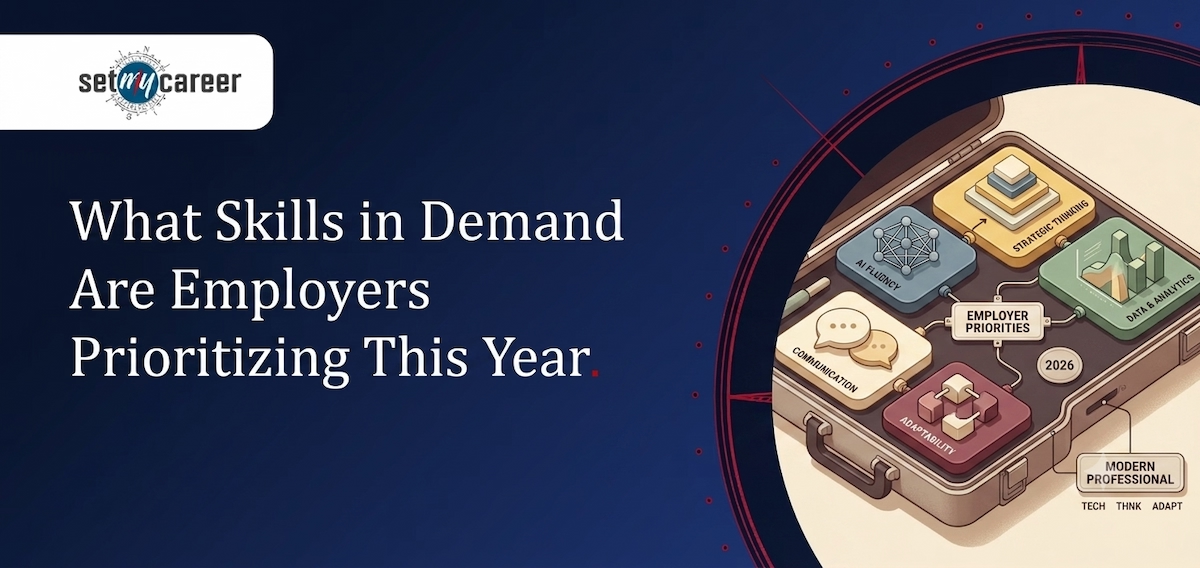
The job market is shifting in a way that directly benefits your unique strengths. Today, employers are looking past traditional degree requirements to focus on what you can actually do. If you are feeling overwhelmed by constantly changing job descriptions, you are not alone. In 2026, staying competitive means understanding the specific skills in demand that organizations are actively prioritizing to solve real-world problems.
This transition to skills-first hiring is an incredible opportunity for students, graduates, and career changers alike. It means your practical abilities, self-taught talents, and professional certifications carry more weight than ever before. By aligning your personal growth with the capabilities employers need right now, you can make your next career move with clarity and confidence.
In this guide, we will break down the top technical, cognitive, and business skills that are defining the workforce in 2026. You will learn not only what these abilities are but also how to showcase them effectively on your resume and portfolios to capture the attention of hiring managers. Let's take a look at how you can build a future-proof career path.
Introduction: The Shift to Skills-First Hiring This Year
Why Employers are Prioritizing Skills Over Degrees
Employers prioritize skills over degrees because practical capability directly impacts business productivity. Rapid technological change makes specific software and technical skills in demand more valuable than a generalized four-year credential, allowing organizations to hire candidates who can perform tasks immediately without extensive training.
This structural change in recruitment has accelerated because traditional academic curriculums struggle to match the fast pace of industry developments. A degree often represents what an individual studied several years ago, whereas verified capabilities show what a professional can accomplish today. Progressive enterprises are actively adopting skills-based hiring to discover talent that might have been overlooked because of non-traditional educational backgrounds. This system allows hiring managers to match the direct needs of a role with a candidate's actual capabilities, bypassing long orientation cycles.
To help candidates navigate this new hiring environment, career guidance professionals focus on clear action steps. The following approaches are useful for aligning individual capabilities with corporate expectations:
- Detailed Capability Analysis: Assessing your existing talents against current job requirements to pinpoint areas that need improvement.
- Targeted Skill Development: Selecting highly specific, short-term courses to close identified gaps.
- Practical Application: Working on real-world projects to build a strong base of functional experience.
- Interactive Mentorship: Consulting with experienced industry advisors to verify that your training matches employer needs.
By identifying these functional areas, candidates can easily show their value to recruiters. This approach helps job seekers move past the limitations of traditional resumes, highlighting instead what they can actively deliver to a potential employer.
The Macro Economic Trends Reshaping the Job Market
Modern economic factors are driving companies to streamline their operations and carefully evaluate their personnel costs. Rising operational costs and the rapid growth of automation have made efficient resource allocation essential. Instead of hiring large, highly specialized teams, businesses now seek versatile professionals who possess cross functional expertise. These individuals can move easily between different areas of a business, helping organizations remain agile during times of market volatility.
At the same time, the transition to hybrid and distributed work environments has altered how businesses measure productivity. In remote or partially remote settings, management styles based on direct observation are no longer practical. Instead, companies assess employees based on clear, quantifiable outcomes. This change has made workplace competencies, such as self-directed problem-solving and clear digital communication, indispensable. Organizations that use competency mapping can quickly match internal talent with project requirements, ensuring that work is completed efficiently without adding to overhead expenses.
Top Technical Skills in Demand for the Digital Era
Generative AI Integration and Prompt Engineering
Generative AI integration and prompt engineering involve using artificial intelligence models to optimize business operations and creative processes. This represents one of the most valuable skills in demand, enabling employees to draft code, generate content, and analyze data with unprecedented speed.
To use these tools effectively, professionals must understand how to construct precise, context-aware prompts that guide artificial intelligence systems toward accurate and useful responses. Simply typing basic commands is no longer sufficient; instead, businesses require specialists who can construct complex, multi-step queries to automate routine office tasks. By mastering this area, workers can significantly reduce the time spent on administrative duties, allowing them to focus on high-value strategy and creative problem-solving.
Data Analytics and Business Intelligence
In today's commercial landscape, organizations generate massive amounts of information every day. However, this raw information is only valuable if it can be translated into actionable business strategies. Specialists who understand how to clean, structure, and interpret complex data are highly sought after across all major industries, including finance, healthcare, and retail.
To build a successful career in this area, professionals need a strong foundation in modern data tools. The following technologies are fundamental to the field:
- Advanced Spreadsheet Modeling: Designing complex formulas and scenarios to forecast business performance.
- Interactive Visualization Software: Using tools like Tableau or Power BI to build dashboards that make data easy to understand for company leaders.
- Database Management Systems: Writing efficient SQL queries to extract valuable information from large corporate databases.
- Statistical Computing Languages: Utilizing Python or R to conduct deep analytical assessments and build predictive models.
By using these tools, data analysts help businesses make smarter choices, identify new revenue streams, and reduce operational waste. Organizations rely on these insights to stay ahead of competitors and quickly respond to shifting consumer preferences.
Cybersecurity Infrastructure and Threat Mitigation
As business operations continue to move online, protecting digital assets has become a primary security concern. Cyber threats are growing more sophisticated, making robust security infrastructure a top priority for corporate and governmental institutions. Consequently, individuals who can protect sensitive data, identify system vulnerabilities, and implement modern security protocols are in high demand.
Professionals in this field must understand advanced network architecture, encryption techniques, and zero-trust security concepts. Beyond managing technical systems, they are also responsible for designing clear corporate policies that minimize security risks. This combination of deep technical knowledge and organizational planning is highly valued by modern enterprises seeking to protect their digital operations.
| Technical Skill Area | Key Technical Upskilling Focus | Primary Industry Application |
|---|---|---|
| Generative AI & Prompting | Model training, LLM API integration, natural language prompts | Operational automation, content generation, software development |
| Data Analytics & BI | SQL database querying, predictive modeling, dashboard creation | Strategic business planning, market trend analysis |
| Cybersecurity | Vulnerability testing, incident response, network architecture | Data protection, regulatory compliance, risk management |
| Cloud Computing | AWS, Azure, containerization (Docker, Kubernetes) | Scalable web hosting, remote database administration |
Cloud Computing and Architecture
The widespread transition from on-premise physical servers to cloud environments has made cloud architecture an essential component of modern business. Companies need systems that are scalable, secure, and cost-effective. Cloud specialists design, build, and manage these virtual environments, ensuring that applications and databases run smoothly around the world.
Familiarity with major platforms like Amazon Web Services (AWS), Microsoft Azure, and Google Cloud Platform (GCP) is necessary for professionals in this field. Additionally, understanding container tools like Docker and Kubernetes has become standard practice. These technologies allow businesses to deploy software updates quickly and maintain stable online services, making cloud architecture a highly sought-after specialization.
Essential Cognitive and Workplace Skills Employers Prioritize
Cognitive Adaptability and Continuous Learning
Cognitive adaptability refers to an individual's ability to adjust their thinking and strategy in response to rapidly changing environments. It is a foundational future proof skill in demand that empowers professionals to learn new technologies quickly and embrace shifting workplace expectations with confidence.
Because technologies and business models change so rapidly, a static skill set can quickly become obsolete. Professionals who actively seek out new knowledge and adapt to new working conditions are highly valued. This continuous development helps individuals remain relevant throughout their careers, turning workplace challenges into opportunities for growth.
To foster adaptability, individuals can implement the following personal development strategies:
- Structured Self-Directed Study: Dedicating specific hours each week to exploring new subjects outside of your primary field.
- Cross-Departmental Collaboration: Volunteering for projects that require working with teams across different business areas.
- Feedback Evaluation: Actively seeking constructive criticism to identify and address personal skill gaps.
- Reflective Journaling: Documenting the methods used to solve difficult problems to improve future decision-making.
Developing this mental flexibility is key to managing long-term career changes. It turns unexpected industry shifts from stressful disruptions into natural steps in your professional journey.
Analytical Thinking and Complex Problem-Solving
In today's fast-paced business environment, professionals are regularly faced with complicated, multi-layered challenges. These problems rarely have simple answers, requiring individuals to look past superficial issues and identify the root causes of systemic challenges. Analytical thinking involves breaking down complex situations into manageable parts, assessing each component objectively, and developing logical, data-backed solutions.
Employers highly value team members who can systematically work through business problems without needing constant supervision. Whether optimizing an inefficient manufacturing process or resolving a drop in customer satisfaction, analytical thinkers use structured logic to address challenges. This capability reduces operational friction, helping organizations maintain high performance and avoid costly mistakes.
Cross-Functional Communication in Hybrid Environments
The shift to hybrid work has highlighted the importance of clear, deliberate communication. Without regular face-to-face interactions, teams can easily become disconnected, leading to misunderstandings and delayed projects. Successful professionals must be able to share ideas clearly across a variety of digital channels, ensuring that all team members remain aligned.
Additionally, modern projects often require collaboration between diverse departments, such as engineering, marketing, and finance. Professionals who can translate complex jargon into clear, practical language help bridge these gaps. This type of communication fosters collaboration, keeps projects on track, and ensures that everyone is working toward the same corporate goals.
| Workplace Competency | Core Practice | Expected Business Outcome |
|---|---|---|
| Cognitive Adaptability | Continuous upskilling, flexible problem-solving | Faster adjustment to technical upgrades |
| Analytical Thinking | Data-driven evaluation, root-cause analysis | fewer operational errors, smarter strategic decisions |
| Cross-Functional Communication | Clear writing, active listening, simplified explanations | Stronger teamwork, more efficient project delivery |
In-Demand Business and Execution Skills
Agile Project Management and Delivery
Modern businesses operate in fast-moving markets where speed to market is a major competitive advantage. Traditional project management methodologies, which rely on rigid planning cycles, are often too slow to keep pace with changing customer demands. Consequently, businesses rely on Agile practices to break projects into smaller, iterative phases that allow for continuous adjustments and improvement.
Project managers who understand Agile frameworks, such as Scrum or Kanban, help teams focus on delivering value incrementally. They keep teams organized, remove obstacles to progress, and maintain a steady workflow. By keeping project execution flexible and transparent, Agile practitioners ensure that companies can quickly adapt to changing market conditions and customer feedback.
Modern Sales Leadership and Revenue Operations (RevOps)
Modern sales leadership has evolved from basic persuasion into a highly technical, data-driven discipline. Revenue Operations, or RevOps, is a management methodology that integrates sales, marketing, and customer success into a single, unified pipeline. This approach removes traditional department silos, ensuring that all teams share the same customer data and operational metrics.
Professionals working in RevOps use advanced software tools to track the entire customer journey, from initial contact to long-term contract renewal. By analyzing this information, they can identify bottlenecks in the sales funnel, improve lead-generation strategies, and optimize pricing models. This analytical approach to sales management helps businesses build more predictable revenue streams and drive sustainable growth.
| Execution Skill Area | Primary Tools and Frameworks | Strategic Value to Employers |
|---|---|---|
| Agile Project Management | Jira, Trello, Scrum, Kanban | Faster product delivery and improved flexibility |
| Revenue Operations (RevOps) | HubSpot, Salesforce, marketing automation tools | Aligned teams and more predictable revenue growth |
| Digital Localization | Translation software, cultural analysis, localized SEO | Smoother entry into new international markets |
Digital Localization and Cross-Cultural Communication
As digital platforms make global trade more accessible, companies are expanding into new international markets. However, simply translating text from one language to another is rarely enough to build brand loyalty. Businesses must adapt their products, services, and marketing campaigns to fit the unique cultural contexts of different regions.
Digital localization experts understand the nuances of local laws, cultural values, and consumer behaviors in their target markets. They ensure that localized websites, applications, and promotional materials feel natural and respectful to local audiences. This cultural intelligence helps companies avoid expensive public relations mistakes and build lasting trust with customers around the world.
How to Showcase High-Demand Skills to Modern Employers
Optimizing Your Resume for Skills-Based ATS Algorithms
To optimize your resume for skills-based ATS algorithms, align your professional experience with exact keywords from the job description. Focus on highlighting verified workplace competencies and technical upskilling achievements within your work history to score highly on modern automated screening systems.
Applicant Tracking Systems (ATS) analyze digital resumes to identify the candidates who best match the specific requirements of an open role. To ensure your resume passes these automated screens, you must avoid using generic descriptions of your duties. Instead, focus on describing your achievements using clear, action-oriented verbs and quantifiable metrics. For instance, rather than simply stating you "managed projects," describe how you "implemented Scrum methodologies to reduce project delivery times by twenty percent." This approach shows recruiters exactly what you can deliver.
Earning High-ROI Certifications That Employers Value
Professional certifications are an excellent way to show employers that you have verified technical skills. Because traditional academic programs can take years to complete, specialized micro-credentials offer a fast, cost-effective way to acquire the specific talents that employers need right now.
However, not all certifications carry the same weight in the job market. It is essential to focus on programs that are highly respected by industry professionals. The table below lists several high-value credentials that can help you stand out to recruiters:
| Professional Domain | High-ROI Certification Option | Target Audience / Career Goal |
|---|---|---|
| Cloud Infrastructure | AWS Certified Solutions Architect | IT professionals moving into cloud design |
| Project Delivery | Project Management Professional (PMP) or Certified ScrumMaster (CSM) | Aspiring managers seeking to lead Agile teams |
| Data Science | Google Data Analytics Professional Certificate | Entry-level analysts building core technical skills |
| Cybersecurity | CompTIA Security+ or CISSP | Individuals aiming for network security roles |
By earning these recognized credentials, you show a clear commitment to continuous learning and professional development. They serve as objective proof of your technical upskilling, making it easier for hiring managers to verify your qualifications quickly.
Demonstrating Capability Through Portfolio Projects and Assessments
While certificates and optimized resumes are valuable, showing your work in action is often the most effective way to win over a hiring manager. A well-organized digital portfolio provides clear, physical proof of your capabilities. It lets potential employers see your problem-solving process, attention to detail, and technical execution first-hand.
Developing a professional portfolio requires a strategic approach. Consider the following steps to build a high-impact showcase of your capabilities:
- Select Representative Projects: Choose three to five of your best projects that showcase a range of different technical skills.
- Document Your Process: Explain the challenges you faced, the tools you selected, and the steps you took to complete each project.
- Highlight Quantifiable Results: Whenever possible, use metrics to show the real-world impact of your work, such as improvements in speed or cost savings.
- Keep Your Portfolio Updated: Regularly replace older projects with newer, more complex work to show your ongoing professional growth.
At SetMyCareer, career counselors help students and professionals build clear, practical portfolios that align with current hiring trends. By combining personalized guidance, data-driven insights, and career path assessment, SetMyCareer supports individuals in identifying their natural talents and selecting the most valuable skills in demand to focus on. Taking a structured, strategic approach to your professional development ensures you can navigate career changes with absolute confidence and clarity.
Taking Charge of the Skills in Demand for Your Career Growth
The job market is shifting rapidly toward a skills-first approach. Securing your place in it means focusing on the specific skills in demand. Whether you are aiming to master generative AI, strengthen your analytical thinking, or improve your cross-cultural communication, the key to career success lies in continuous, targeted learning. Employers are looking for practical capability, adaptability, and the willingness to grow alongside new technology.
Figuring out which areas to focus on can feel overwhelming, especially with so many options and paths available. You do not have to make these big decisions alone. Identifying how your natural strengths align with the skills that employers are actively seeking is the most effective way to build a sustainable, rewarding career path that truly fits you.
At SetMyCareer, we provide personalized, data-driven guidance to help you navigate your career journey with confidence. Whether you are a student planning your future or a professional looking to make a successful transition, our expert counselors are here to help. Reach out to SetMyCareer today to book a personalized guidance session and start building a clear, actionable plan to master the skills in demand for your dream career.