





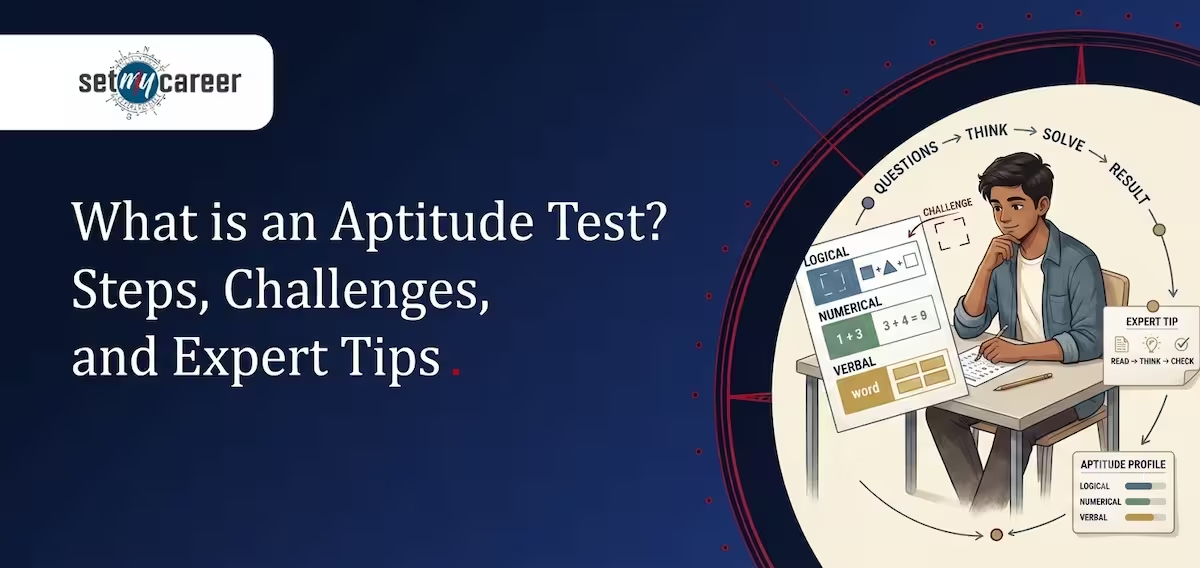
Wondering which career path actually aligns with your natural abilities? Choosing a profession can feel overwhelming, especially with countless options and rapidly changing industries. Instead of relying on guesswork or trial and error, many professionals and students turn to career aptitude tests. These assessments provide concrete, data-driven insights into your inherent strengths, cognitive abilities, and problem-solving skills.
Whether you are a recent high school graduate mapping out your academic future or a seasoned professional considering a major career pivot, understanding your baseline aptitudes is the first critical step toward long-term job satisfaction. Here is exactly how to leverage a psychometric aptitude test to uncover your potential and build a highly rewarding career.
What is a Career Aptitude Test?
An aptitude test is a specialized assessment designed to measure your natural potential to acquire skills in specific cognitive areas, such as numerical reasoning, spatial awareness, verbal logic, and creative problem-solving. Unlike a standard IQ test that measures broad general intelligence, or a proficiency test that evaluates what you already know, an aptitude test identifies the types of tasks your brain is naturally wired to process most efficiently.
Employers and educational institutions rely heavily on these psychometric evaluations to match individuals with environments where they are most likely to thrive. By aligning your inherent cognitive strengths with the daily demands of a specific industry, you dramatically reduce workplace friction and increase your chances of sustained career success.
How to Prepare for and Take a Career Aptitude Test
Taking a professional assessment requires a more strategic approach than simply clicking through a quick online quiz. Following a structured process ensures your results are accurate and actionable.
1. Choose the Right Assessment
Not all psychometric career tests are created equal. Some evaluate abstract and logical reasoning, while others lean heavily into situational judgment or mechanical comprehension. Look for validated, scientifically backed assessments offered through reputable online career counseling platforms. Ensure the test you select evaluates both cognitive strengths and workplace preferences.
2. Familiarize Yourself with the Format
While you cannot technically "study" for natural abilities, you can absolutely prepare for the testing structure. Practicing timed logic puzzles, reading comprehension exercises, and basic numerical reasoning questions will help reduce test anxiety. Familiarity with the format allows you to navigate the interface more efficiently, ensuring your score reflects your true capability rather than your test-taking speed.
3. Optimize Your Testing Environment
Treat the assessment like a professional exam. Find a quiet, distraction-free space, ensure you have a stable internet connection, and read every instruction thoroughly. Because most aptitude tests are strictly timed, managing your pace and maintaining focus without interruptions is critical to achieving an accurate baseline score.
4. Analyze the Detailed Report
Upon completion, you will receive a breakdown of your cognitive strengths and potential blind spots. Instead of just glancing at the final summary, pay close attention to the specific sub-categories where you outperformed the baseline. Understanding the nuances of your report helps clarify your precise avenues for career growth.
5. Seek Professional Interpretation
Raw data is only useful if you know how to apply it to the current job market. Consulting with a career guide or counselor can help translate your abstract numerical scores into concrete, actionable career pathways.
How to Turn Your Aptitude Test Results Into a Career Roadmap
Having your results in hand is just the beginning. The real value lies in matching those insights to the realities of the modern workforce.
Understand Your Core Competencies
Review your results to pinpoint your dominant cognitive traits. For instance, exceptionally high scores in spatial and logical reasoning often indicate a strong natural potential for engineering, software architecture, or financial modeling. Conversely, high verbal reasoning scores point toward a competitive advantage in corporate communications, law, or public relations.
Match Strengths to Industry Roles
Once you understand your strengths, begin mapping them to relevant career options:
- Analytical and Logical Skills: Data science, financial analysis, software engineering, economics, and supply chain management.
- Verbal and Written Proficiency: Digital marketing, journalism, human resources, law, and corporate communications.
- Creative and Spatial Abilities: Graphic design, architecture, product development, animation, and user experience (UX) design.
- Interpersonal and Situational Judgment: B2B sales, clinical psychology, healthcare administration, teaching, and customer success management.
Cross-Reference with Your Core Values
Aptitude dictates what you can do, but your personal values dictate what you want to do. A high aptitude for corporate finance will not lead to happiness if you strongly value creative freedom over structured corporate environments. Always balance your test results with your personal interests, desired work-life balance, and long-term financial goals.
Conduct Deep Industry Research
Once you have a shortlist of viable careers, investigate the daily realities of those roles. Look into projected job growth, average salary ranges, required certifications, and the typical corporate culture within those fields. Understanding the barrier to entry will help you plan your next educational or professional steps.
Expert Tips for Maximizing the Value of Your Career Test
To ensure your career assessment yields the highest possible return on your time investment, keep these best practices in mind:
- Answer with Absolute Honesty: It is tempting to select answers that you think sound impressive or align with a highly-paid profession. However, trying to manipulate the test invalidates the results. Artificially inflating your skills will only steer you toward a career that feels unnaturally stressful and frustrating.
- Take Multiple Assessment Types: Human potential is incredibly nuanced. Taking a combination of cognitive aptitude tests alongside personality assessments (such as the Myers-Briggs Type Indicator or the Enneagram) will give you a holistic, 360-degree view of your professional profile.
- Use the Results as a Compass, Not a Mandate: An aptitude test is a guiding tool, not a crystal ball. If your results strongly suggest a career in accounting, but your true passion lies in graphic design, do not abandon your ambitions. Instead, use the insights to understand how your analytical, detail-oriented mind can give you a unique, strategic edge in the design world.
Conclusion
A comprehensive career aptitude test is one of the most powerful tools available for understanding your professional potential. By systematically identifying your cognitive strengths and potential blind spots, you can eliminate the uncertainty that so often accompanies major career decisions. However, it is crucial to remember that test results are just one piece of the puzzle. Combining robust psychometric data with real-world experience and professional mentorship is the ultimate formula for career satisfaction.
Are you ready to stop guessing and start building a career roadmap based on your true capabilities? Platforms like SetMyCareer offer professional career guidance, advanced assessments, and expert insights to help you make informed, confident choices. Discover your potential today and take the next definitive step toward a fulfilling professional future.