




Quick Summary
Choosing between Science, Commerce, and Humanities after the tenth grade is a defining milestone, but you do not have to navigate this important decision through guesswork or social pressure. By combining honest self-reflection with scientific stream selection tests and academic performance analysis, families can clearly identify a student's natural strengths and long-term interests. At SetMyCareer, we offer the personalized career counseling and data-driven insights you need to replace academic anxiety with absolute clarity, empowering you to step into your future with confidence.
Introduction
Finishing the tenth grade is an exciting milestone, but it also brings one of your first major academic decisions. As a student or a parent, you might feel overwhelmed by the sudden influx of advice and the pressure to make the perfect choice. It is completely natural to feel anxious during this transition. After all, stream selection is not just about picking school subjects—it is about laying a healthy, confident foundation for your future journey.
At SetMyCareer, we believe this decision should be based on self-discovery and clarity, rather than peer pressure or guesswork. In this practical guide, we break down the stream selection process into simple, actionable steps. You will learn how to identify your natural strengths, understand what different academic streams actually offer, and align your interests with realistic, rewarding career pathways for 2026 and beyond.
Our goal is to replace your confusion with confidence, helping students and parents work as a team. Whether you are exploring Science, Commerce, or Humanities, you will find the trustworthy, research-backed guidance you need to make an informed decision that genuinely fits your goals. Let's take this next step together.
What is Stream Selection and Why Does It Matter After 10th Grade?
Stream selection is the systematic process of choosing a specific academic pathway—typically Science, Commerce, or Humanities—after completing tenth-grade board exams. This decision structures a student’s high school curriculum, directly influencing university eligibility, career options, and professional development opportunities in their future.
Making this choice marks a transition from a generalized general education curriculum to specialized study. While tenth grade offers a broad foundation in multiple disciplines, the subsequent years require targeted academic focus. The chosen stream dictates the subjects a student will master, the competitive examinations they can attempt, and the professional domains open to them. This choice dictates the daily academic routine and long-term satisfaction of the learner.
The Long-Term Impact on Career Pathways
Every professional trajectory stems from the foundation laid during high school. Selecting the appropriate subjects ensures that a student remains competitive for undergraduate admissions and professional certifications. For example, technical engineering programs require specific physics, chemistry, and mathematics prerequisites, while financial analysis careers often demand strong foundations in accountancy and mathematics.
Misalignment at this stage can lead to academic distress, career stagnation, or the need for difficult stream shifts later in life. By approaching the decision systematically, families can prevent unnecessary stress and optimize the student's natural potential.
The Core Streams: Science vs Commerce vs Arts
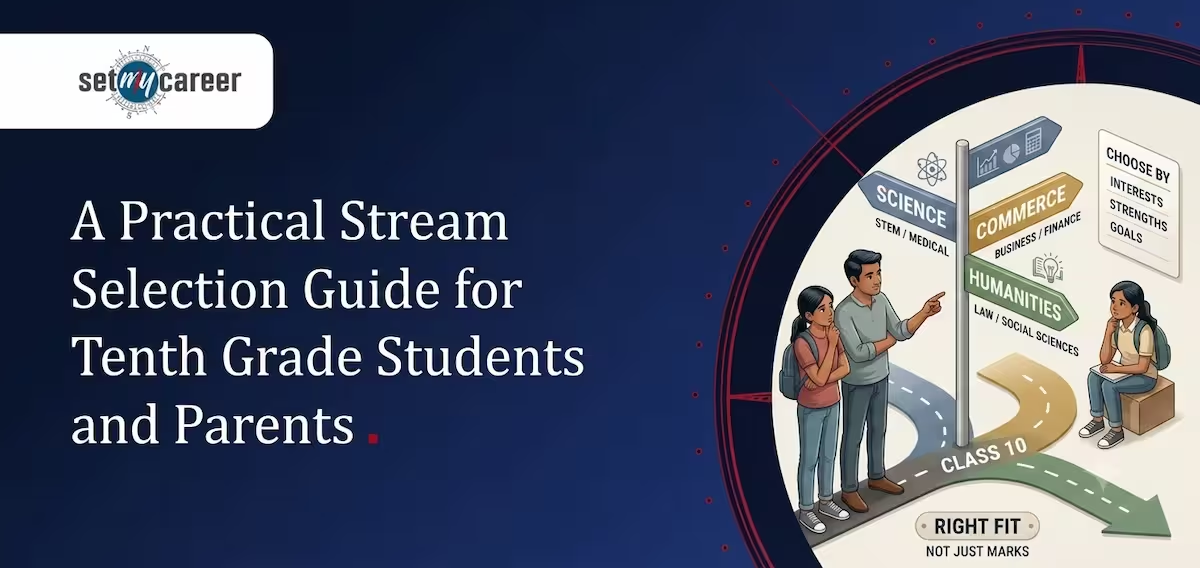
The comparison of science vs commerce vs arts involves evaluating three distinct academic tracks, each offering unique curricula, skill requirements, and career opportunities. Understanding the differences helps students match their intellectual strengths and career ambitions with the most appropriate high school coursework and university pathways.
The Science Stream: Analytical and Technical Frontiers
The Science stream caters to students with a strong analytical mindset, structural curiosity, and interest in scientific inquiry. It is divided into two primary combinations: Medical (PCB) and Non-Medical (PCM). This track demands rigorous study habits and a passion for problem-solving.
| Subject Combination | Core Subjects Covered | Primary Career Pathways |
|---|---|---|
| PCM (Non-Medical) | Physics, Chemistry, Mathematics, English, Elective | Engineering, Architecture, Data Science, Defense Services, Aviation |
| PCB (Medical) | Physics, Chemistry, Biology, English, Elective | Medicine, Biotechnology, Pharmacy, Dental Sciences, Veterinary Science |
| PCMB (General) | Physics, Chemistry, Mathematics, Biology, English | Biomedical Engineering, Research, Genetics, Biochemistry |
The Commerce Stream: Business, Finance, and Economics
The Commerce stream focuses on the mechanisms of trade, financial markets, economics, and business management. It suits students who possess mathematical aptitude, logical reasoning, and an interest in commercial operations and business strategy.
| Subject Combination | Core Subjects Covered | Primary Career Pathways |
|---|---|---|
| Commerce with Maths | Accountancy, Business Studies, Economics, Mathematics, English | Chartered Accountancy (CA), Investment Banking, Actuarial Science, Financial Analyst |
| Commerce without Maths | Accountancy, Business Studies, Economics, Entrepreneurship/Informatics, English | Business Management, Marketing, Human Resources, Hospitality Management |
The Arts and Humanities Stream: Creative, Social, and Liberal Studies
The Arts and Humanities stream offers a broad, diverse curriculum focusing on human society, culture, literature, and creative expression. It prepares students for diverse careers requiring critical thinking, communication, and deep analytical skills.
| Subject Combination | Core Subjects Covered | Primary Career Pathways |
|---|---|---|
| Liberal Arts | History, Political Science, Sociology, Psychology, English | Civil Services, Psychology, International Relations, Journalism, Public Policy |
| Creative Arts | Fine Arts, Fashion Design, Mass Media, Literature, Languages | Graphic Design, Content Creation, Performing Arts, Advertising, Linguistics |
Step-by-Step Stream Selection Process After 10th
The stream selection process after 10th requires a structured approach that combines self-reflection, academic performance analysis, and professional diagnostic tools. Following a methodical path reduces emotional stress and ensures a balanced decision based on objective reality rather than temporary trends.
1. Conduct an Honest Aptitude Evaluation
A successful academic career starts with evaluating natural abilities rather than relying solely on high exam scores. An aptitude evaluation measures specific cognitive strengths to determine where a student will naturally excel without experiencing chronic academic burnout.
- Numerical Aptitude: Capability to work with numbers, identify mathematical patterns, and solve logical problems.
- Verbal Aptitude: Skill in understanding language, expressing complex ideas clearly, and analyzing written arguments.
- Spatial Aptitude: Ability to visualize three-dimensional patterns, structures, and physical designs.
- Mechanical Aptitude: Understanding of physical laws, machinery operations, and structural design concepts.
2. Analyze Board Exams Performance and Interests
Evaluating academic outcomes in board exams is helpful, but it must be analyzed alongside student interest. While exam results reflect current preparation and academic diligence, genuine engagement with a subject indicates long-term learning potential.
- Identify subjects where studying felt engaging rather than chore-like.
- Look past final scores to assess the effort required to achieve them.
- Observe consistent academic performance trends across eighth, ninth, and tenth grades.
- Distinguish between interest in a subject and admiration for a particular teacher's style.
3. Take a Scientific Stream Selection Test for Students
A stream selection test for students is a scientifically designed psychometric tool that maps intellectual abilities, personality traits, and career interests. It replaces parental anxiety and peer influence with data-backed reports, showing clear academic pathways that align with a student's long-term capabilities.
These specialized evaluations minimize human bias. Many parents and students rely on superficial observations, which can lead to inappropriate academic selections. A formal test provides a balanced view of cognitive profiles and matches them with real-world professional requirements.
| Evaluation Parameter | What It Measures | How It Guides Stream Choice |
|---|---|---|
| Aptitude Analysis | Cognitive capabilities, logic, and problem-solving speed | Determines the academic difficulty level the student can comfortably manage |
| Interest Mapping | Activities and topics that generate high engagement | Ensures the student remains motivated throughout long study hours |
| Personality Profiling | Individual traits, communication styles, and work preferences | Aligns the student's work style with suitable future work environments |
Practical Strategies to Avoid Common Stream Selection Mistakes
The transition from general school classes to specialized streams is often complicated by common mistakes. Understanding these pitfalls allows families to focus on constructive planning and build a supportive environment during this critical decision-making window.
Overcoming Peer Pressure and Parental Expectations
Many students choose their academic stream simply because their friends are choosing it or to satisfy unfulfilled family ambitions. This often leads to academic mismatch and significant stress during higher education.
- Avoid choosing a science or commerce track solely because of social prestige or peer groups.
- Maintain open family discussions that prioritize the student's unique intellectual profile.
- Seek objective guidance from career professionals to resolve internal family disagreements.
- Acknowledge that every stream offers viable pathways to financial stability and personal success.
Balancing Subject Combinations for Future Competitive Exams
Choosing appropriate subject combinations is necessary to keep career options open. Some students inadvertently lock themselves out of future careers by picking incompatible subjects or overlooking specific prerequisites required by universities.
- Verify national eligibility criteria for professional programs like engineering, medicine, and law.
- Select a balanced elective subject that complements the core stream without creating excessive study loads.
- Consult academic advisors to clarify how high school subject choices affect university admissions.
- Analyze the requirements of state and national board exams before committing to specific subject mixes.
Navigating Your Stream Selection with Confidence
Choosing the right path after the tenth grade is a significant milestone, but it does not have to be a source of stress. Stream selection is not about finding a single, rigid path for the rest of your life. Instead, it is about opening doors to opportunities that align with your natural strengths, interests, and long-term aspirations. By working together, parents and students can turn this decision-making process into an exciting journey of self-discovery.
Remember, you do not have to make this crucial decision based on guesswork or external pressure. While research and conversations with family are excellent starting points, gaining objective, professional insights can provide the clarity you need to choose between Science, Commerce, and Humanities with complete peace of mind.
At SetMyCareer, we help you simplify your stream selection through scientific career assessments and personalized guidance tailored to your unique potential. Connect with our expert career counselors today to take your next step with clarity and confidence.