
Quick Summary
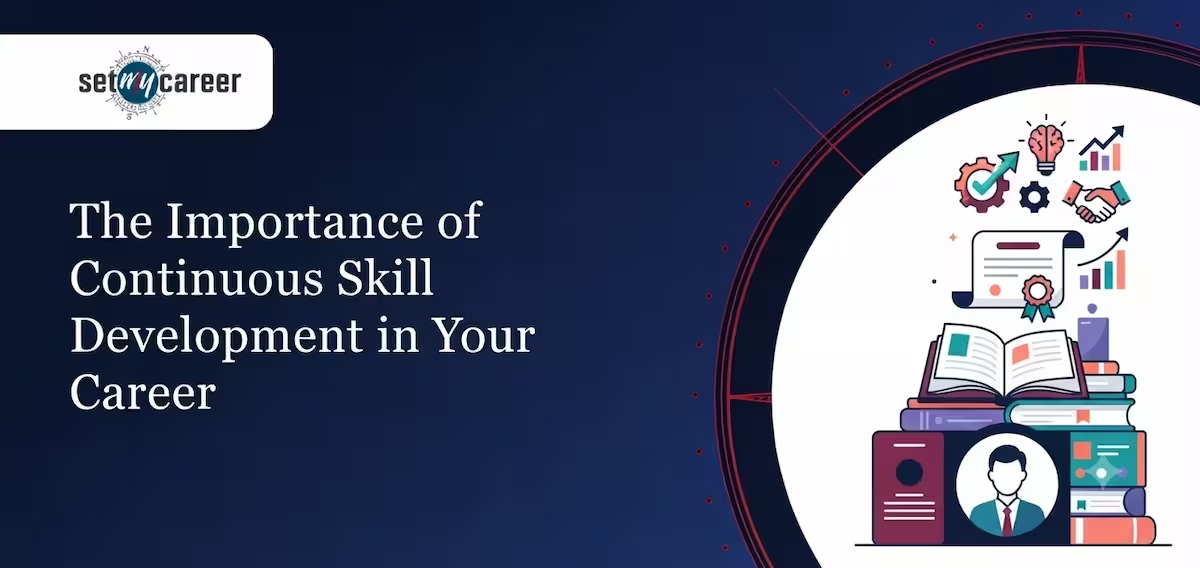
In a rapidly changing job market, embracing continuous skill development is your most powerful tool to stay confident and secure in your professional journey. Whether you choose upskilling to excel in your current role or reskilling to transition into a brand-new career, building bite-sized learning habits into your routine will safeguard your future. At SetMyCareer, our dedicated counsellors are ready to help you map out a personalized growth plan tailored to your unique strengths and goals.
Introduction
Landing your dream job or reaching a major milestone in your career is an exciting achievement. However, as we look ahead to 2026 and beyond, the workplace continues to change quickly, and the skills that helped you secure your current role might not be the ones that help you advance tomorrow. Feeling a bit overwhelmed by shifting job descriptions and new industry technologies is completely normal. The secret to staying confident, capable, and secure in your professional journey lies in continuous skill development.
Embracing learning does not mean you need to spend all your free time studying or earning expensive new degrees. Instead, it is about making small, consistent efforts to update your knowledge, adapt to new tools, and improve how you collaborate with others. At SetMyCareer, we believe that learning is a lifelong adventure that opens exciting new doors, protects you from unexpected job market shifts, and helps you discover professional paths you might not have considered before.
In this guide, we will share practical, realistic ways to build learning into your busy routine without feeling burnt out. You will discover how to identify the most valuable skills for your unique goals, find accessible learning resources, and take control of your professional growth with confidence. Let us explore how you can turn learning into your greatest career strength.
Understanding Continuous Skill Development in the Modern Workplace
What is Continuous Skill Development?
Continuous skill development is the ongoing process of acquiring new capabilities, refining existing strengths, and expanding professional knowledge throughout an individual's career. It involves proactive, self-directed learning to adapt to changing industry demands, technological advancements, and evolving workplace practices to maintain long-term employability.
The modern employment landscape demands that professionals view their education as an active, ongoing pursuit rather than a finished phase of life. In the past, earning a degree or completing a single certification could sustain a professional for decades. Today, rapid technological shifts and changing business models mean that job requirements change on a yearly basis. Embracing a mindset of continuous development allows workers to remain competitive and effective in their roles.
The Role of Lifelong Learning in Career Adaptability
Lifelong learning serves as the foundation for modern career adaptability. When individuals commit to ongoing education, they develop the resilience needed to adjust to organizational changes, market downturns, and shifts in consumer behavior. This adaptability ensures that professionals are not caught off guard when their industries undergo structural shifts.
Fostering career adaptability through consistent learning offers several practical advantages for professionals at all stages:
- Enhanced Career Agility: Enables individuals to transition smoothly between different roles or industries when market conditions shift.
- Increased Confidence: Empowers workers to accept challenging assignments and leadership roles without the fear of being underqualified.
- Heightened Problem-Solving Skills: Exposes learners to diverse methodologies, allowing them to approach workplace challenges with fresh perspectives.
- Improved Job Performance: Keeps daily contributions aligned with the latest industry standards and best practices, leading to higher-quality output.
To visualize how continuous educational efforts address common modern workplace hurdles, review the comparison below:
| Workplace Challenge | Continuous Learning Solution | Expected Professional Outcome |
|---|---|---|
| Automation of routine tasks | Acquiring advanced analytical skills | Transition to high-value strategic roles |
| Outdated technical knowledge | Enrolling in software and tool certifications | Maintaining high operational efficiency |
| Inability to lead diverse teams | Studying emotional intelligence and modern management | Eligibility for senior leadership promotions |
The Key Drivers: Why Skill Development Matters for Your Career
Why Skill Development Matters for Professional Advancement
Why skill development matters lies in its power to unlock career advancement, prevent professional stagnation, and build long-term job security. Regularly updating one's skill set ensures that professionals remain valuable contributors, making them eligible for promotions, salary increases, and leadership opportunities within their chosen fields.
Professionals who actively expand their knowledge base send a clear message to employers: they are dedicated, self-motivated, and prepared to grow alongside the organization. This proactive stance separates high-performers from those who simply maintain the status quo. When leadership roles open up, management naturally looks to individuals who have demonstrated a commitment to broadening their horizons.
The Importance of Upskilling for Job Security
Understanding the importance of upskilling is essential for safeguarding one's career against industry disruptions. As technology automates administrative duties, professionals must focus on developing high-level skills that machines cannot easily replicate, such as strategic planning, cross-functional communication, and complex decision-making.
By connecting skill growth to long-term objectives, professionals experience continuous learning career growth that translates into tangible professional milestones. For example, a marketing specialist who learns data analytics can transition into a marketing manager role, utilizing data-driven insights to design successful campaign strategies.
Understanding how quickly skills lose their relevance is key to planning timely educational activities. The table below outlines the estimated shelf-life of skills across various occupational fields:
| Industry / Sector | Core Skills in Focus | Estimated Skill Shelf-Life | Recommended Action Plan |
|---|---|---|---|
| Information Technology | Software Engineering, Cloud Computing | 1.5 to 3 Years | Annual technical certification updates |
| Marketing & Sales | Digital Advertising, SEO, Data Analysis | 2 to 4 Years | Semi-annual tool training and strategy reviews |
| Business Administration | Project Management, Financial Modeling | 5 to 7 Years | Leadership development and methodology workshops |
Upskilling vs Reskilling: Choosing the Right Path for Growth
What is the Difference Between Upskilling vs Reskilling?
Upskilling vs reskilling represents two distinct paths for professional growth: upskilling focuses on deepening existing skills to excel in a current career track, whereas reskilling involves learning entirely new skills to transition into a completely different job role or industry sector.
Understanding this distinction is key to managing a career trajectory effectively. For instance, when a financial analyst learns advanced Python scripting to automate their daily spreadsheets, they are upskilling. Conversely, if a retail manager studies web development in order to switch careers into software engineering, they are reskilling. Recognizing which path aligns with personal career aspirations ensures that educational investments yield the maximum return.
Determining the Best Path for Your Career Transition
Choosing between these two approaches requires a clear assessment of one's professional goals, current market trends, and personal strengths. An objective self-assessment, often supported by professional career counseling, can clarify which route is most beneficial.
Consider the following indicators to determine whether to upskill or reskill:
- Choose Upskilling if: The current industry is stable, the existing role offers clear upward mobility, and the day-to-day work remains personally fulfilling.
- Choose Reskilling if: The current industry is facing long-term decline, technology is replacing core tasks, or personal interests have shifted toward a new field.
- Assess Resource Availability: Reskilling often requires a larger commitment of time and financial investment compared to targeted upskilling.
- Evaluate Current Strengths: Determine which transferable skills, such as leadership or communication, can be carried over into a new career domain.
To help guide this critical decision-making process, the following decision matrix highlights the key differences and typical application scenarios for both paths:
| Feature | Upskilling Approach | Reskilling Approach |
|---|---|---|
| Primary Objective | Enhance performance and advance in the current career track. | Prepare for a transition into a brand-new role or industry. |
| Target Audience | Professionals looking to grow within their current department. | Individuals seeking a complete career change or restructuring. |
| Average Timeframe | Short to medium term (weeks to a few months). | Medium to long term (six months to two years). |
| Typical Example | A graphic designer learning 3D modeling software. | A customer service representative training to be a data analyst. |
Practical Strategies for Integrating Professional Development into Your Routine
How Can Professionals Build a Sustainable Learning Habit?
Building a sustainable learning habit requires setting clear, measurable goals, scheduling dedicated time for education each week, and leveraging micro-learning resources. By treating professional development as a non-negotiable routine rather than an afterthought, individuals can achieve steady growth without experiencing burnouts or career exhaustion.
Consistency is far more valuable than intensity when developing new capabilities. Attempting to study for ten hours over a single weekend often leads to fatigue and poor retention. Instead, dedicating twenty to thirty minutes each day to reading industry journals, practicing a new tool, or listening to educational podcasts produces superior, lasting results over time.
Designing a Personalized Career Growth Action Plan
An actionable growth plan serves as a personal roadmap, turning broad professional aspirations into structured, daily habits. This plan must align with both immediate job requirements and long-term career visions to ensure the effort expended supports real-world progress.
A structured approach to designing a personalized career growth action plan involves several straightforward steps:
- Perform a Skill-Gap Analysis: Compare current capabilities with the requirements of desired future roles to find areas needing improvement.
- Establish Clear Metrics: Define what success looks like, such as earning a specific certification or mastering a new software program by a set date.
- Identify Quality Resources: Select structured online courses, reputable books, or professional mentorship programs that fit the preferred learning style.
- Integrate Learning into Daily Tasks: Seek out opportunities to apply newly acquired knowledge directly to current workplace projects to reinforce learning.
To illustrate how a working professional can structure their busy week to accommodate consistent development, consider this weekly action plan template:
| Day of the Week | Focus Area | Actionable Task | Time Commitment |
|---|---|---|---|
| Monday | Industry Insights | Read top industry newsletters and research papers during transit. | 20 Minutes |
| Wednesday | Technical Skill Building | Complete one module of a structured online technical course. | 45 Minutes |
| Friday | Networking & Peer Learning | Engage with professional communities or discuss ideas with a mentor. | 30 Minutes |
| Saturday | Application & Practice | Work on a personal project or apply new tools in a sandbox environment. | 60 Minutes |
Overcoming Common Barriers to Continuous Learning
Managing Time Constraints and Heavy Workloads
The most common obstacle to regular professional development is a perceived lack of time. Balancing demanding job responsibilities, personal obligations, and family life leaves very little room for traditional education. However, overcoming this challenge does not require clearing out large blocks of free time. Instead, it involves changing how learning is structured and consumed.
By utilizing micro-learning techniques, professionals can absorb educational content in short, bite-sized formats. Listening to educational audiobooks during a morning walk, watching short instructional videos during lunch breaks, or reviewing flashcards between tasks allows individuals to make steady progress without disrupting their schedules. Additionally, negotiating with employers for dedicated development time during regular work hours can yield highly beneficial results for both the employee and the company.
Addressing the Financial Costs of Professional Education
Another major barrier is the cost associated with high-end certifications, university courses, and professional bootcamps. Fortunately, the democratization of education online has made high-quality learning resources more accessible than ever before. Many top-tier universities and industry leaders offer comprehensive courses completely free of charge, with optional fees only required for physical certificates.
Furthermore, many organizations set aside annual professional development budgets for their workforce. Employees can present a clear, business-focused proposal to their managers outlining how a specific course or certification will improve their work performance and benefit the company's bottom line. In many cases, employers are glad to sponsor these educational endeavors, as it directly improves the internal capabilities of their teams.
Conclusion
Investing in continuous skill development is one of the most reliable ways to secure your professional future. Careers are no longer static; they evolve as technology and industries change. By choosing to learn actively, you protect yourself against market shifts and open doors to exciting promotions, transitions, or entirely new fields. Most importantly, it builds the confidence you need to take complete ownership of your professional journey.
Identifying the right areas to focus on can feel challenging with so many options available. You do not have to navigate this path alone. Taking a structured, personalized approach helps you save time and focus on the specific capabilities that align with your unique strengths and long-term aspirations.
At SetMyCareer, we are here to help you map out a clear, actionable growth plan. Connect with our expert career counsellors today to discover which skills will drive your career forward and how you can build them effectively.