
Quick Summary
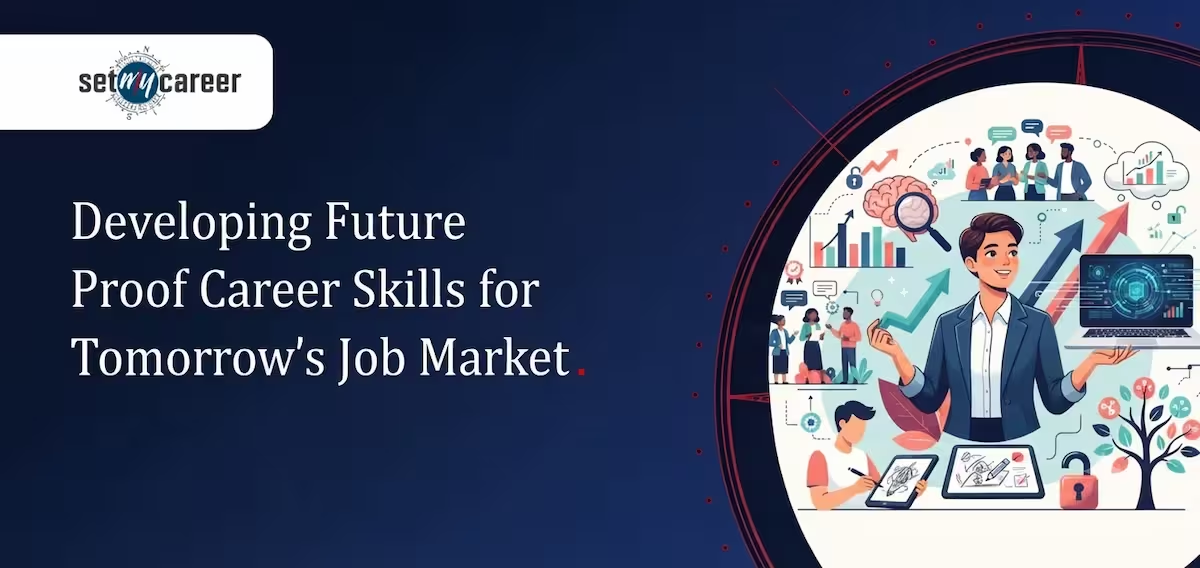
As the job market rapidly evolves, securing your professional future relies on developing future-proof career skills that combine technological adaptability with irreplaceable human strengths like emotional intelligence and critical thinking. By actively assessing your unique talents and embracing continuous learning, you can easily navigate industry shifts and transition into high-growth fields with absolute confidence. At SetMyCareer, we are ready to support you with expert career counseling and personalized, data-driven guidance to help you map out a clear, rewarding path for long-term success.
Introduction
The job market is shifting rapidly, leaving many students, professionals, and parents wondering what the workplace will look like in the coming years. It is completely natural to feel a bit anxious about these changes. However, instead of worrying about automated systems or evolving industries, you can take control of your professional journey today. The key lies in identifying and building future proof career skills that remain highly valuable no matter how technology or industries change.
At SetMyCareer, we believe that preparing for tomorrow is not about predicting every single technological advancement, but about developing a resilient, adaptable mindset. In this guide, you will discover the essential human and technical capabilities that employers will value most as we approach 2026. We will break down these skills into simple, actionable steps, helping you make informed career decisions and build a stable, rewarding professional path with confidence.
What Are Future Proof Career Skills?
Future proof career skills are highly adaptable career skills and competencies that remain valuable despite rapid technological advancements, economic shifts, and automation. These include a blend of technical expertise, cognitive flexibility, emotional intelligence, and continuous learning habits that allow professionals to pivot easily across different emerging job roles.
Traditional career development often focused on learning a single trade or mastering a static set of tools. Today, rapid automation and shifts in company structures mean that specific software tools or technical procedures can quickly become obsolete. Focus is moving away from static job requirements toward continuous growth and professional adaptability.
Building these capabilities enables professionals, students, and career changers to protect their employability. By acquiring transferable strengths, individuals can remain assets in their chosen fields even as administrative tasks and routine manual labors are automated. This balance helps professionals stay valuable across different sectors.
| Traditional Career Skills | Future Proof Career Skills | Workplace Impact |
|---|---|---|
| Single-software proficiency | Technological adaptability and tool integration | Enables employees to adopt new systems with minimal training. |
| Repetitive administrative execution | Analytical problem-solving and critical thinking | Focuses effort on strategic choices rather than manual processes. |
| Individual task execution | Collaborative communication and empathy | Improves teamwork in hybrid and remote office setups. |
| Static professional knowledge | Continuous learning and skill-gap analysis | Keeps skills fresh through changing market standards. |
Building a forward-looking skillset offers distinct advantages for career growth:
- Long-Term Employability: Minimizes the risk of career disruption caused by technical automation or corporate restructuring.
- Higher Professional Value: Commands better compensation packages due to the rare combination of human and technical strengths.
- Pivoting Flexibility: Allows for easier transitions between different industries without starting from scratch.
- Reduced Career Stress: Builds confidence in one's skills, making economic shifts less intimidating.
What Skills Are Future Proof in the Modern Economy?
The skills that are future proof combine deep human capabilities with technological fluency. These include critical thinking, complex problem-solving, active emotional intelligence, data literacy, and a high capacity for learning. Employers prioritize these adaptable career skills because they cannot be replicated easily by artificial intelligence software.
Recognizing which talents protect against shifting market needs is key to long-term professional security. Both corporate leaders and academic advisors stress that the modern economy requires a combination of cognitive dexterity and digital competence. It is no longer enough to specialize in one narrow area without understanding how to integrate technological changes into daily operations.
Skills for 21st Century Jobs
Preparing for the future workforce means focusing on skills for 21st century jobs. These include data-driven decision-making, digital communication, and cultural competency. As hybrid work setups become standard practice, professionals who can coordinate across diverse, international teams remain highly sought after. These capacities bridge the gap between human creativity and software efficiency.
Emerging Job Skills to Watch
Keeping an eye on emerging job skills ensures that professionals remain ahead of the curve. While technical knowledge changes rapidly, learning to collaborate with artificial intelligence, utilizing green technology metrics, and understanding cybersecurity basics are highly valued. These competencies represent the best future proof career skills that will define successful careers in the coming years.
| Emerging Job Skills | In-Demand Skills 2024 | Target Occupations |
|---|---|---|
| AI Prompt Engineering | Collaborative Technology Integration | Marketing, Software Design, Content Strategy |
| Data Analytics and Visualization | Quantitative Reasoning and Reporting | Finance, Operations Management, Product Development |
| Green Tech and Sustainability Management | Environmental Compliance Assessment | Corporate Planning, Engineering, Policy Advising |
| Cybersecurity Best Practices | Information Integrity Management | IT Administration, Corporate Operations, Risk Mitigation |
The Core Pillars of Adaptable Career Skills
To establish a resilient career path, individuals should focus on core areas that act as anchors during market volatility. These core areas consist of cognitive, emotional, and technological pillars that form the foundation of lifelong professional success. By focusing on these primary pillars, individuals can build a secure career structure that adapts to any external market trends.
Cognitive Flexibility and Analytical Thinking
Cognitive flexibility is the mental ability to switch between two different concepts or think about multiple concepts simultaneously. In professional spaces, this trait allows people to adapt when project goals change or when industries transition to new paradigms. Cultivating analytical thinking ensures that complex issues can be disassembled into manageable parts, allowing for logical, structured troubleshooting in any business scenario.
Emotional Intelligence and Relationship Building
While machines excel at processing information, they cannot replicate genuine human connection. Emotional intelligence remains an indispensable asset that shields workers from automation. It includes self-awareness, empathy, and social coordination, allowing professionals to lead teams, resolve workplace disputes, and manage client relations with care.
Empathy and interpersonal capabilities can be broken down into five primary components that benefit modern teams:
- Self-Awareness: The ability to recognize one's own emotions and how they affect overall performance.
- Self-Regulation: Managing disruptive impulses and adapting to changing professional circumstances with composure.
- Empathy: Understanding the feelings and viewpoints of colleagues, which improves collaborative trust.
- Social Skills: Directing team dynamics and building strong relationships within remote and hybrid offices.
- Intrinsic Motivation: Maintaining a passion for high-quality outcomes driven by personal growth goals.
How to Future Proof Your Career Through Strategic Planning
To future proof your career, identify high-growth industries, evaluate your current strengths, and build adaptable career skills through regular training. Partnering with professional career guidance services helps you align your natural talents with sustainable market demands, ensuring long-term employment stability and successful professional transitions.
Professional stability does not happen by accident. It requires systematic evaluation, structured guidance, and proactive skill development. Whether you are a student selecting high school streams or an experienced professional considering a career change, strategic planning provides a clear roadmap to sustainable employment.
Aptitude-Based Planning and Career Mapping
Aligning career choices with natural aptitudes forms the foundation of career security. Using structured tools and professional career assessments, such as those offered by SetMyCareer, helps individuals identify cognitive strengths and behavioral traits. This scientific approach removes the guesswork from stream selection and career path planning, ensuring that individuals invest time and energy in fields where they are naturally suited to excel.
Continuous Learning and Skill-Gap Analysis
Analyzing personal skill gaps is a practical method to remain competitive in today's job market. This process involves comparing current capabilities against the specific demands of emerging roles, allowing professionals to identify which training programs or certifications will deliver the highest career return on investment.
| Current Capabilities | Target Role Requirements | Identified Skill Gaps | Actionable Resolution Step |
|---|---|---|---|
| Basic Excel and Word usage | Data-driven Operations Manager | Advanced analytics and SQL | Complete an online certification in data querying |
| Traditional face-to-face selling | Digital Sales and Account Director | CRM management and digital lead gen | Attend a specialized training program for modern sales tools |
| General written communication | AI-assisted Content Editor | AI collaboration and optimization | Take a practical course in prompt engineering |
Conducting an organized evaluation of one's professional abilities can be completed in four straightforward steps:
- Identify the Target Position: Research the specific requirements and emerging responsibilities of your desired role.
- List Existing Proficiencies: Create an honest catalog of your technical credentials and human-centric skills.
- Identify the Mismatches: Cross-reference your catalog with target demands to find empty areas in your skillset.
- Draft a Learning Schedule: Dedicate regular hours to specialized online courses, peer mentoring, or practical workshops.
Practical Daily Habits for Continuous Learning
Continuous education is most effective when integrated into daily life. Developing sustainable habits ensures that updating your skills remains a natural part of your professional routine, preventing burn-out while encouraging steady advancement.
- Micro-Learning: Devote 15 to 30 minutes each morning to learning a new tool or reading industry publications.
- Cross-Functional Collaboration: Partner with colleagues from other departments to learn how different aspects of the business work.
- Feedback Loops: Ask supervisors and peers for regular feedback on areas where technical or interpersonal skills can improve.
- Active Project Implementation: Put newly learned concepts to work immediately in personal or low-stakes professional initiatives.
| Future Proof Path | Primary Technological Demand | Primary Human Skill Demand | Industry Growth Outlook |
|---|---|---|---|
| Renewable Energy Systems | Power grid monitoring technology | Project coordination and community leadership | Extremely high global investment expected |
| Digital Healthcare Advising | Telehealth systems and digital medical records | Patient empathy and clear communication | Strong demand due to aging demographics |
| AI System Optimization | Machine learning model evaluation | Analytical ethics and structured critical thinking | Rapidly expanding across corporate sectors |
| User Experience Architecture | Design systems and interaction metrics | Behavioral analysis and customer empathy | Steady growth as services move online |
Building Your Future-Proof Career
Equipping yourself with future proof career skills is one of the most valuable investments you can make for your professional journey. While technological advancements will continue to reshape industries, core human strengths like adaptability, critical thinking, and emotional intelligence remain irreplaceable. By focusing on continuous learning and developing these versatile capabilities, you can confidently navigate any shifts in the job market.
It is completely natural to feel overwhelmed by the rapid pace of change or uncertain about which skills to prioritize. You do not have to figure this out alone. Building a secure career path is a step-by-step process, and having the right support can make all the difference in transforming hesitation into clear, actionable goals.
At SetMyCareer, we are committed to helping you discover your strengths and align them with the opportunities of tomorrow. Our expert career counselors provide personalized guidance to help you identify, develop, and leverage the exact skills you need to thrive. Get in touch with us today to book a career counseling session and take a confident step toward a secure, rewarding future.