

Quick Summary
Reaching a mid-career milestone is the perfect time to realign your professional path with your evolving goals, and doing so successfully in 2026 starts with a clear, structured plan. By utilizing diagnostic career assessment tools and performing a thorough skill gap analysis, you can easily identify and map your valuable transferable skills to exciting new industries. You do not have to navigate this transition alone; SetMyCareer is here to empower you with personalized, data-driven career transition strategies and expert counseling, giving you the confidence to step into a rewarding and sustainable new role.
Introduction
Reaching the middle of your career is a major milestone, but it often comes with a surprising realization: the path you chose years ago might no longer align with who you are today. Perhaps you are seeking greater fulfillment, a better work-life balance, or a role that leverages your evolving strengths. Making a career transition at this stage can feel daunting, especially when you have financial commitments and years of experience to protect. It is completely normal to feel hesitant, but this pivot is also an incredible opportunity to redefine your professional future on your own terms.
As your career guidance partner, we understand the unique challenges mid-level professionals face. You do not have to start from scratch or make reckless leaps. This guide provides a structured, step-by-step career transition plan designed specifically for experienced professionals looking to make a smart, calculated pivot in 2026. You will learn how to audit your transferable skills, identify viable industries, bridge qualification gaps, and position yourself effectively to land your target role with confidence. Let us help you navigate this change smoothly and turn your career aspirations into a practical reality.
Understanding the Mid-Career Pivot in 2026
The modern workplace is evolving at an unprecedented pace. Technological integration, changing economic landscapes, and shifting personal priorities are driving professionals to re-evaluate their long-term career trajectories. Mid-career is no longer a time to settle; instead, it represents a prime window for strategic realignment.
Why Mid-Career Professionals Choose a New Path
Mid-level career shifts are rarely impulsive decisions. They are typically driven by a conscious desire to achieve alignment between professional output and personal values. Professionals with a decade or more of experience often find that their initial industry choices no longer offer the growth, creative freedom, or work-life balance they require. The decision to undertake a career transition is a calculated move to secure long-term career sustainability and professional fulfillment.
These shifts are often prompted by external industry disruption, making proactive career planning an excellent self-preservation strategy. By choosing a deliberate path forward, experienced workers avoid the risk of skill obsolescence. The following factors frequently influence the decision to pursue a career transition:
- Evolving Value Systems: A desire to engage in work that offers higher social impact or personal meaning.
- Financial Optimization: Moving into high-growth sectors that offer superior compensation structures and long-term equity.
- Workplace Flexibility: Transitioning from rigid, on-site industrial roles to asynchronous or hybrid knowledge-work environments.
- Preventative Adaptation: Outrunning automation by moving from routine-based tasks to strategic, creative, or advisory roles.
Step 1: Self-Assessment and Goal Definition
A successful transition begins with a structured self-assessment. Without an objective inventory of current strengths and motivations, any career move risks repeating the mistakes of the past. Defining clear goals ensures that the next steps are grounded in reality rather than mere escape-oriented thinking.
What is a Career Assessment Tool?
A career assessment tool is a structured diagnostic instrument designed to evaluate an individual's unique cognitive strengths, personality traits, occupational interests, and work values. These tools provide objective data that aligns personal profiles with viable industry sectors, reducing the uncertainty of professional redirection.
Using formal diagnostic frameworks removes guesswork and subjective bias from the career planning equation. These evaluations look beyond simple job titles to dissect why certain work environments energize a professional while others lead to burnout. Incorporating standardized metrics allows transitioners to target industries where their natural aptitudes match the baseline requirements for high performance.
| Assessment Category | Primary Focus | Strategic Benefit for Career Transition |
|---|---|---|
| Aptitude Testing | Measures cognitive strengths, problem-solving speed, and logical reasoning. | Identifies untapped potential for highly technical or analytical roles. |
| Personality Profiling | Analyzes behavioral preferences, communication styles, and work environments. | Ensures the target industry culture matches personal working styles. |
| Interest Inventories | Maps personal preferences to broad occupational categories. | Uncovers hidden industries that align with lifelong passions and hobbies. |
Outlining Your Counselling Session Objectives
While diagnostic tools offer data, interpreting that data requires expert guidance. Engaging in a professional career counselling journey transforms raw test results into an actionable career plan. Establishing clear counselling session objectives ensures that every interaction with an advisor yields concrete, measurable progress toward the desired career transition.
A structured engagement with a SetMyCareer advisor helps demystify the complexities of market demands and personal capability. The primary goals during these advisory sessions should focus on the following key outcomes:
- Result Validation: Reviewing career assessment tool data to ensure it aligns with lived professional experiences.
- Industry Viability Verification: Assessing if the desired target industry is economically robust and receptive to mid-career entrants.
- Obstacle Identification: Uncovering potential barriers such as salary adjustment expectations, geographical limitations, or credential requirements.
- Action Plan Construction: Co-creating a phased, realistic timeline with clear milestones to track transition progress.
Step 2: Conducting a Skill Gap Analysis
The bridge between a legacy career and a target industry is built on transferable value. However, professionals must objectively determine where their current capabilities end and the requirements of the new domain begin. A disciplined analysis protects career transitioners from entering a new field underqualified.
What is a Skill Gap Analysis in Career Planning?
A skill gap analysis in career planning is a systematic evaluation process that compares an individual's existing professional competencies against the technical and soft skills required by their target industry. This diagnostic identifies specific knowledge deficiencies, guiding targeted upskilling and training efforts.
This audit prevents professionals from wasting time and money on irrelevant courses. By focusing strictly on high-priority deficiencies, transitioners can fast-track their readiness for the new job market. The analysis separates skills into functional categories, making it easy to see which abilities transfer directly and which require structured upskilling.
| Required Skill Category | Current Skill Level (Legacy Role) | Target Industry Requirement | Actionable Bridging Strategy |
|---|---|---|---|
| Technical Software | Basic Spreadsheet Analysis | Advanced Data Visualization (Tableau/SQL) | Complete a targeted, hands-on certification program. |
| Project Methodologies | Ad-hoc Task Management | Agile and Scrum Frameworks | Obtain a Professional Scrum Master (PSM) designation. |
| Domain Expertise | Traditional Print Marketing | Digital Performance Marketing | Execute mock campaigns and build a personal portfolio. |
Mapping Transferable Skills to Your Target Industry
Many mid-career professionals make the mistake of believing they must start from scratch when changing directions. In reality, a large percentage of leadership, management, and operational skills translate perfectly across sectors. The goal of a career transition is to frame these legacy strengths in the terminology of the new target market.
Understanding how to categorize and communicate these assets is a core element of a successful career transition strategy. Transferable competencies generally fall into several key operational buckets:
- Strategic Leadership: The ability to manage budgets, lead cross-functional teams, and execute high-level business objectives.
- Process Optimization: Experience in identifying operational inefficiencies, reducing waste, and improving delivery timelines.
- Client Relations: Mastery of stakeholder management, conflict resolution, consultative selling, and relationship retention.
- Data Interpretation: The capacity to read performance metrics, extract actionable insights, and make evidence-based business decisions.
Step 3: Designing a Successful Career Transition Strategy
Transitioning without a strategy is merely jumping from one job to another without long-term direction. A structured approach ensures that the pivot is sustainable, financially viable, and aligned with long-term professional fulfillment.
What is a Successful Career Transition Strategy?
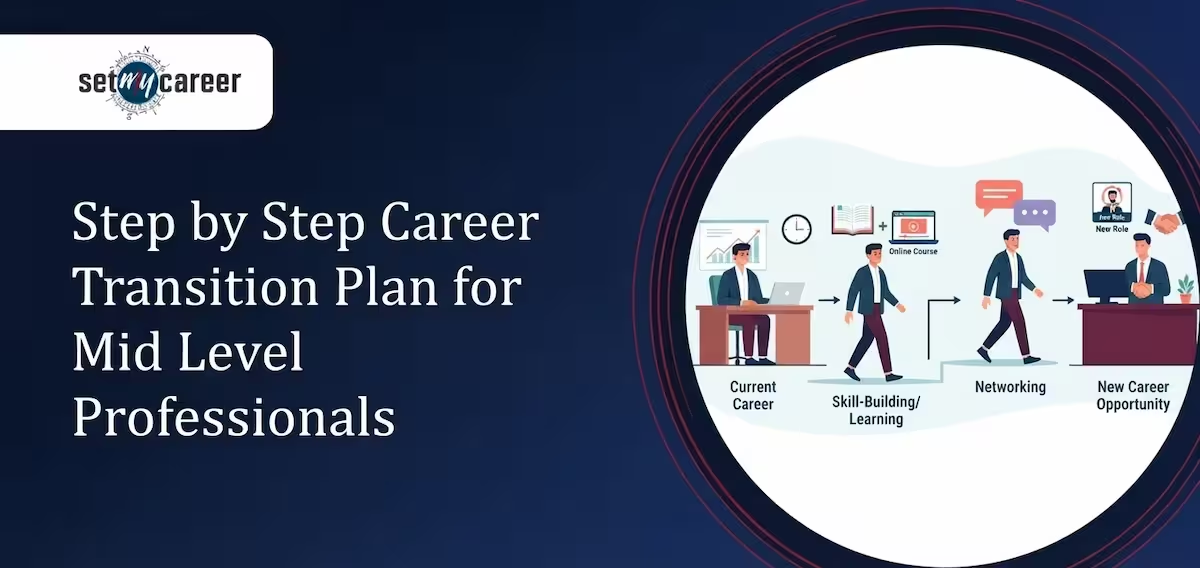
A successful career transition strategy is a structured, phased roadmap that aligns self-assessment insights, skill development initiatives, professional rebranding, and active networking. This systematic approach minimizes income disruption while moving an individual from their legacy industry into a sustainable and personally rewarding new role.
Executing this roadmap requires a balance of education, personal positioning, and industry integration. It ensures that candidates present themselves not as desperate career changers, but as seasoned professionals bringing unique, multi-disciplinary value to their new employers.
| Transition Phase | Primary Goal | Key Deliverables |
|---|---|---|
| Phase 1: Discovery | Define target industries and validate fit. | Career assessment tool reports and counseling insights. |
| Phase 2: Upskilling | Bridge critical knowledge deficiencies. | Industry-recognized certifications and portfolio projects. |
| Phase 3: Positioning | Rebrand digital assets and build networks. | Optimized LinkedIn profile, targeted resume, and professional network connections. |
| Phase 4: Launch | Secure active opportunities in the new domain. | Interviews, strategic informational chats, and job offers. |
| Outdated Approach | Modern Transition Strategy | Impact on Placement Speed |
|---|---|---|
| Submitting generic resumes to public job boards. | Targeted outreach based on a rigorous skill gap analysis. | Significantly reduces application-to-interview response times. |
| Downplaying decades of unrelated experience. | Framing legacy achievements as strategic, transferable assets. | Establishes higher baseline credibility and justifies premium compensation. |
| Relying solely on formal academic degrees. | Acquiring micro-credentials combined with practical portfolio proof. | Accelerates entry into the target market while reducing educational costs. |
Managing Career Transition for Older Workers
A career transition for older workers requires a specialized approach that addresses the unique realities of the labor market. While mature professionals possess deep wisdom, leadership experience, and crisis-management capabilities, they must intentionally address potential employer concerns regarding adaptability, technology adoption, and salary expectations.
By emphasizing adaptability and demonstrating an active commitment to modern working methods, experienced professionals can position their age as a premium asset. The following strategic actions help older workers navigate this pivot successfully:
- Showcase Tech Adaptability: Highlight proficiency with modern collaboration platforms, artificial intelligence tools, and project management applications.
- De-emphasize Graduation Dates: Format resumes to focus on the most recent fifteen years of impactful work, preventing age bias during automated screening.
- Adopt a Consultative Mindset: Offer fractional, contract, or consulting services to new target companies to prove capability with lower initial risk for the employer.
- Leverage an Established Network: Tap into lifelong professional relationships to bypass automated application systems and secure warm introductions.
- Emphasize Emotional Intelligence: Highlight mentorship capabilities, dispute-resolution skills, and executive presence developed over decades of workplace interaction.
Executing Professional Rebranding Across Channels
To successfully execute a pivot, professionals must undergo a comprehensive process of professional rebranding. Recruitment professionals search for candidates who fit specific profiles; if a digital footprint still points entirely to a legacy industry, new opportunities will remain out of reach. Aligning public-facing profiles with the expectations of the target industry is a fundamental requirement of how to make a career transition.
This process is not about hiding past accomplishments, but about curating them to tell a cohesive story of evolution and readiness. The rebranding effort should focus on the following core digital channels:
- LinkedIn Optimization: Rewrite the headline to reflect the target role, update the summary to explain the strategic transition, and highlight transferable skills in the endorsement section.
- Resume Restructuring: Shift from a strictly chronological layout to a hybrid functional-chronological format that showcases key technical competencies near the top.
- Portfolio Development: Build a simple, public website or slide deck containing case studies, project examples, or sample strategic plans that demonstrate capability in the new domain.
- Thought Leadership: Share, comment on, and write articles about trends in the target industry to signal active participation in the professional community.
Your Next Steps to a Successful Career Transition
Making a mid-level career transition is a significant milestone that requires courage, clear planning, and a strategic approach. While the prospect of changing directions can feel overwhelming, leveraging your years of professional experience gives you a distinct advantage. By breaking the process down into manageable steps—from identifying your transferable skills to targeted networking—you can turn your professional aspirations into a realistic, rewarding reality.
You do not have to navigate this pivotal journey alone. Successful transitions are built on accurate insights, structured planning, and reliable support. Taking the time to map out your goals now will save you months of trial and error, helping you secure a role that truly aligns with your strengths and long-term aspirations.
If you are ready to take the next step but want expert guidance to ensure you are on the right path, SetMyCareer is here to support you. Our experienced career counsellors provide personalized, data-driven strategies designed specifically for mid-level professionals. Book your consultation session today, and let us help you build a clear, actionable roadmap for your career transition.