




Quick Summary
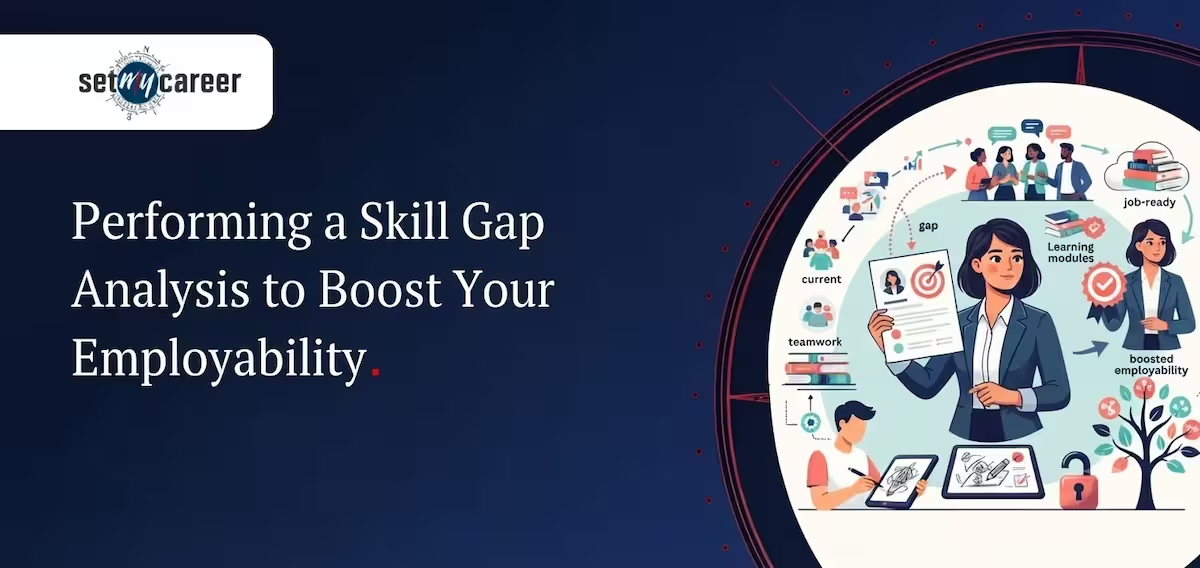
Performing a skill gap analysis is a practical and empowering way to map your professional growth by comparing your current strengths with the evolving demands of your target industry. By identifying and prioritizing your unique development areas, you can build a realistic, step-by-step upskilling roadmap that saves you time and directly boosts your employability. At SetMyCareer, our expert advisors are ready to guide you through this journey, helping you replace career uncertainty with a clear, data-backed plan for long-term success.
Introduction
Searching for a new job, planning a career transition, or trying to help your child choose the right path can often feel overwhelming. You might find yourself sending out endless applications without receiving callbacks, leaving you to wonder what is missing. The truth is, the job market changes rapidly, and there is often a misalignment between what employers are looking for and the skills candidates currently possess. This is where performing a skill gap analysis becomes your most valuable tool. Rather than a test of your abilities, it is a practical, structured way to identify exactly where you stand and what you need to learn to reach your career goals.
Think of a skill gap analysis as a strategic map for your professional growth. By comparing your current strengths against the specific demands of your target industry in 2026, you can pinpoint the precise technical and soft skills that will make you stand out to hiring managers. Whether you are a college graduate preparing for your first interview, a parent guiding your teenager, or an experienced professional aiming for a promotion, this process removes the guesswork from career planning and helps you focus your energy on learning what truly matters.
In this guide, we will show you how to conduct your own skill gap analysis through straightforward, manageable steps. You will discover how to research current hiring trends, honestly evaluate your existing skillset, and create a realistic action plan to build your employability. Let's take the stress out of career planning and help you move forward with clarity and confidence.
What is a Skill Gap Analysis and Why Does It Matter?
A skill gap analysis is a systematic process used to compare an individual's current abilities against the professional demands of their target role. This assessment identifies missing competencies, allowing professionals and students to build targeted learning plans that align perfectly with modern hiring requirements.
Understanding the difference between current capabilities and market expectations is a highly practical way to approach career development. Many job seekers face frustration because they apply for roles using outdated qualifications or static resumes. By performing a structured analysis, individuals gain an objective view of their professional standing. This shift from guesswork to data-backed planning helps protect candidates from career stagnation and job application fatigue.
For students choosing a career stream or professionals planning a industry transition, this analytical approach provides exceptional clarity. It highlights the precise technical competencies and soft skills needed to thrive. Rather than spending significant resources on generic courses, individuals can target their educational investments directly where they will yield the highest return.
Embracing this process offers several outstanding benefits for career management:
- Targeted Resource Allocation: Focuses time and financial investments only on courses and certifications that address verified weaknesses.
- Enhanced Employability: Directs attention to the specific skills that modern recruiters actively look for during candidate screening.
- Proactive Career Defense: Identifies emerging market demands early, allowing professionals to adapt before their current roles undergo significant shifts.
- Objective Confidence: Replaces self-doubt with concrete data, proving exactly which strengths exist and outlining a clear plan to build the rest.
To help visualize this shift in demand, the table below illustrates how traditional professional expectations compare to modern requirements across various business sectors:
| Functional Area | Traditional Skills Focus | 2026 Future Skills Focus |
|---|---|---|
| Marketing & Sales | Basic copy writing, generic campaign planning, and cold outreach. | Data-driven market segmentation, AI-assisted content optimization, and predictive analytics. |
| Finance & Accounting | Manual ledger management, basic spreadsheet formulation, and historical reporting. | Automated financial modeling, cloud compliance tracking, and predictive risk assessment. |
| Human Resources | Manual resume screening, paper-based onboarding, and basic conflict resolution. | People analytics, digital talent acquisition platforms, and remote workforce engagement strategies. |
| Operations & Logistics | Static inventory tracking, manual scheduling, and reactive maintenance planning. | Supply chain automation tools, real-time logistics tracking, and data-backed efficiency modeling. |
Defining the Career Skill Gap Assessment
A career skill gap assessment is a structured evaluation that measures your technical knowledge and interpersonal strengths against specific industry standards. By highlighting areas that require immediate improvement, this evaluation helps job seekers focus their efforts on high-impact learning opportunities.
Unlike standard performance reviews that look backward at past successes or failures, a career skill gap assessment looks entirely forward. It acts as an objective diagnostic tool that strips away personal bias. Instead of relying on subjective feelings about competency, the assessment uses external industry benchmarks to define readiness. This ensures that every hour spent on career preparation directly builds market value.
This process also helps parents and educators guide young adults. By analyzing the distance between a student's current academic performance and the practical demands of their desired industry, families can make informed decisions about degree programs, vocational paths, and supplementary certifications. This systematic approach reduces the stress of career planning and replaces anxiety with a structured, step-by-step pathway to success.
Step-by-Step Guide: How to Do a Skill Gap Analysis
Learning how to do a skill gap analysis involves researching target roles, evaluating your current qualifications, and pinpointing the exact differences between the two. This systematic comparison provides a clear roadmap to bridge educational shortages and elevate your market value.
This process is highly accessible and requires no advanced tools. Anyone can execute a successful assessment using simple documents, online research, and focused self-reflection. Breaking this process down into distinct, logical actions ensures that the work remains manageable and produces highly practical data.
Step 1: Future Skills Identification and Goal Setting
The foundation of any successful career evaluation is future skills identification. Before assessing current abilities, individuals must establish a clear target by identifying the specific competencies that will define their desired field over the coming years. This requires moving beyond general job titles and focusing heavily on the specific tasks, tools, and methodologies that employers demand.
To identify these future trends, job seekers should study current job postings, industry research papers, and professional associations. Observing the skills listed by successful professionals on networking platforms also provides realistic, real-time data about what it takes to succeed in the field.
The following resources are highly effective for identifying future trends and required competencies:
- Industry Association Publications: White papers and annual trend reports published by professional bodies outline emerging technologies and changing methodologies.
- Modern Job Specifications: Analyzing ten to fifteen current job descriptions for the target role helps identify recurring technical requirements and software preferences.
- Professional Network Analysis: Reviewing the profiles of individuals who have secured promotions in target companies reveals common certifications and technical competencies.
- Global Economic and Labor Reports: Reports from respected international organizations outline broader employment shifts, helping candidates choose stable, long-term paths.
Step 2: Conducting a Competency Assessment of Current Skills
Once the target expectations are clear, the next stage is a thorough competency assessment of current abilities. This stage requires complete honesty. Candidates must look objectively at their existing strengths and areas of weakness, separating their comfortable daily routines from the actual demands of the external job market.
This evaluation should cover both hard skills, such as software proficiency and technical certifications, and soft skills, such as communication styles, team leadership, and problem-solving. To maintain objectivity, individuals can look at past performance reviews, feedback from colleagues, academic transcripts, or practical projects they have completed.
To organize this self-reflection, job seekers can use a standardized rating scale. This helps turn qualitative thoughts into clear, actionable data, as shown in the assessment matrix below:
| Skill Area Evaluated | Current Level (Scale 1-5) | Required Level (Scale 1-5) | Objective Evidence of Current Level |
|---|---|---|---|
| Technical Data Analysis | 2 (Basic understanding) | 4 (Advanced capability) | Only used basic spreadsheet filters; no experience with advanced visualization tools. |
| Project Management | 3 (Competent execution) | 4 (Advanced capability) | Co-managed two small marketing campaigns; familiar with standard task tracking tools. |
| Interpersonal Communication | 4 (High capability) | 4 (Advanced capability) | Regularly deliver successful presentations to internal stakeholders; positive manager feedback. |
| Coding & Automation | 1 (No exposure) | 3 (Competent execution) | No previous coding experience; all manual workflow steps completed individually. |
Step 3: Identifying Skill Gaps for Jobs and Prioritizing Growth
The final phase of the analysis involves identifying skill gaps for jobs by subtracting current competency scores from target expectations. The resulting differences represent the exact gaps that need to be filled. However, attempting to resolve every deficiency at once can feel overwhelming. Therefore, setting priorities is essential for sustained progress.
Prioritization should be based on two main criteria: how urgently the skill is needed for basic employment, and how much of an impact it will have on long-term career growth. High-priority items are those that prevent a candidate from passing initial resume screenings, while lower-priority items are skills that can be learned on the job or over a longer period.
The table below provides a structured way to categorize and address these identified gaps:
| Identified Gap Priority | Gap Category | Immediate Operational Action | Expected Professional Outcome |
|---|---|---|---|
| High Priority (Immediate Action) | Foundational Technical Tools | Enroll in intensive certification programs; build practical projects to demonstrate basic competence. | Passes initial resume filters and automated technical screenings. |
| Medium Priority (3 to 6 Months) | Supporting Methodologies | Participate in online workshops; shadow senior colleagues; take on small voluntary tasks. | Improves performance in technical interviews and practical case studies. |
| Low Priority (Long-term Development) | Complementary Competencies | Read industry blogs regularly; attend local professional meetups; listen to expert discussions. | Builds broader professional knowledge and supports long-term promotion potential. |
Upskilling Strategies and Reskilling Programs for Career Growth
Upskilling strategies and reskilling programs provide organized learning pathways to acquire new capabilities or update existing ones. Engaging with these initiatives helps individuals transition into evolving industries, bridge technical deficiencies, and secure long-term career sustainability in a shifting workforce.
While upskilling focuses on deepening existing capabilities within a current field, reskilling programs prepare individuals to step into entirely new roles. Both approaches are essential in a modern economy where job requirements shift rapidly. Having access to clear, structured development pathways ensures that professionals can respond actively to industry changes rather than simply reacting to them.
The table below outlines the key differences between these two learning pathways, helping individuals select the approach that best matches their personal career goals:
| Feature | Upskilling Strategies | Reskilling Programs |
|---|---|---|
| Primary Goal | To improve and expand existing skills within a current professional field. | To learn entirely new skills to transition into a different role or sector. |
| Target Audience | Established professionals looking to earn promotions or adapt to new tools in their current field. | Individuals making a major career transition or those whose jobs are being automated. |
| Average Timeline | Short to medium term (typically several weeks to a few months of part-time study). | Medium to long term (often requiring six months to a year of structured training). |
| Typical Action Plan | Taking advanced certifications, attending focused workshops, or learning new software features. | Enrolling in comprehensive bootcamps, earning new diplomas, or completing formal retraining programs. |
Regardless of the chosen path, balancing technical competence with strong interpersonal skills is essential. The most successful professionals combine technical knowledge with strong soft skills. Focusing on these soft skills during professional development ensures that individuals can collaborate, communicate, and lead effectively as they advance.
Investing in the following highly valuable soft skills will support long-term professional success:
- Emotional Intelligence: The ability to understand, manage, and constructively respond to the emotions of team members during times of transition.
- Critical Problem-Solving: Analyzing complex situations objectively to develop practical solutions that avoid unnecessary risk.
- Cognitive Adaptability: Maintaining a positive, flexible attitude when learning new software systems or adjusting to restructured workflows.
- Cross-Functional Collaboration: Communicating complex ideas clearly to teams with different professional and technical backgrounds.
Designing Your Personal Upskilling Roadmap
Creating an upskilling roadmap requires turning theoretical career goals into daily habits. A successful plan should be realistic, measurable, and designed around your existing schedule. Rather than committing to unrealistic study goals that lead to burnout, consistency and steady progress are the keys to long-term growth.
To maintain momentum, professionals should break down large certification programs into smaller, daily milestones. This approach ensures steady, manageable progress. It is also highly beneficial to work with experienced career advisors who can validate your roadmap and help ensure your efforts match current industry expectations.
To build and maintain momentum, consider these highly practical upskilling strategies:
- Incorporate Micro-Learning Habits: Dedicate twenty to thirty minutes each day to structured reading, video tutorials, or practical coding exercises.
- Pursue Practical Application: Apply newly acquired skills immediately by working on personal projects, helping with open-source work, or volunteering for internal tasks at your current job.
- Seek Professional Mentorship: Connect with experienced mentors who can offer practical feedback and suggest high-value learning resources.
- Conduct Regular Progress Reviews: Re-evaluate your competency levels every quarter to update your learning plan as you develop new skills.
Taking Charge of Your Career Growth
Conducting a skill gap analysis is one of the most proactive steps you can take to secure your professional future. Instead of guessing what qualifications will make you stand out to employers, this structured approach gives you a clear, data-backed roadmap. It transforms the often overwhelming task of professional development into manageable, actionable steps that directly boost your employability.
Remember, career growth is a continuous journey, not a sprint. You do not need to master every new tool or methodology overnight. By identifying your key areas for improvement today, you can focus your time, energy, and resources on the specific learning opportunities that will yield the greatest return for your career goals.
If you are ready to bridge the gap between where you are and where you want to be, you do not have to navigate this process alone. At SetMyCareer, our expert advisors are here to help you analyze your current skill set, identify market demands, and build a personalized plan for long-term success. Reach out to us today to schedule your career counseling session, and let's build your path forward together.