



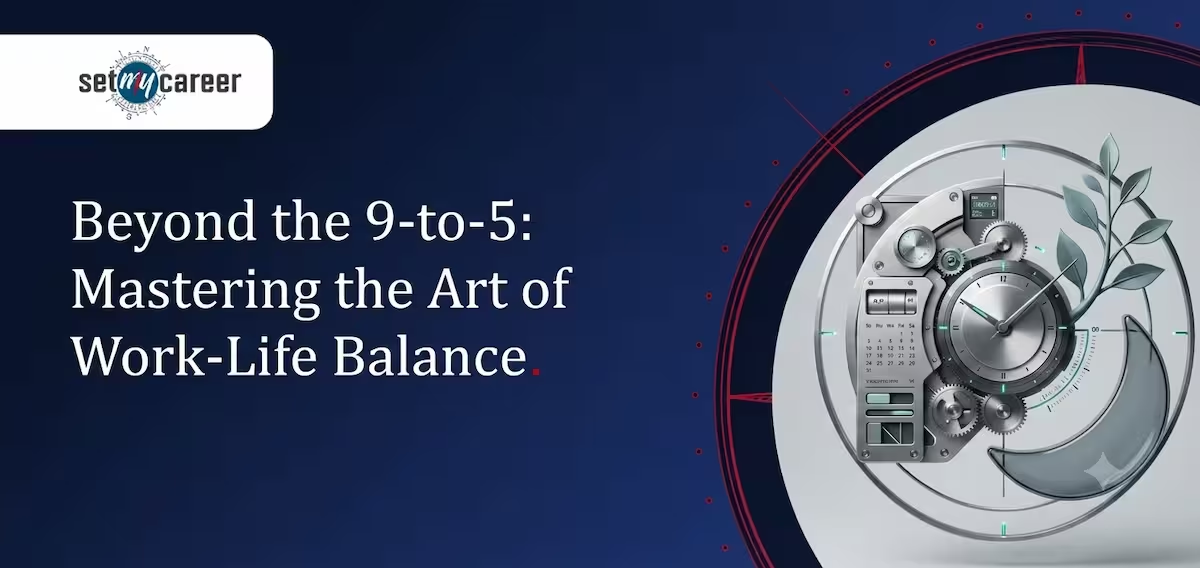
Navigating the tension between a demanding career and a fulfilling personal life is one of the toughest challenges modern professionals face. We constantly juggle strict deadlines, family obligations, and our own well-being, often feeling like we are falling short in at least one area. When the pressure to excel at work begins cannibalizing the time we need to recharge, it creates a fast track to burnout, chronic stress, and deep career dissatisfaction.
Career coaching can help professionals master work-life balance for sustained career success.
Achieving a sustainable equilibrium is no longer just a corporate buzzword or a luxury reserved for top executives; it is a foundational requirement for your physical health and long-term career success. A healthy work-life balance empowers you to allocate your time, mental bandwidth, and physical energy intentionally. It allows you to aggressively pursue your professional ambitions while fiercely protecting the time necessary to nurture your relationships, engage in personal hobbies, and maintain your holistic well-being.
Overcoming Common Challenges in Maintaining Work-Life Balance
Striking the perfect harmony between your job and your personal life is a complex endeavor. The friction usually stems from deeply ingrained workplace cultures, unspoken employer expectations, and the double-edged sword of modern technology.
The most pervasive challenge we face right now is the complete blurring of boundaries between professional hours and personal time. The rapid normalization of remote work and the fact that we carry our offices in our pockets via smartphones make it incredibly difficult to fully disconnect. When you are constantly checking emails at the dinner table or answering Slack messages on a Saturday, you remain in a persistent state of high alertness. This "always on" mentality prevents your nervous system from relaxing, which significantly elevates stress levels and can act as a direct catalyst for severe anxiety and depression. To protect your mental health and keep these issues from spiraling, establishing rigid physical and digital boundaries is absolutely non-negotiable.
Beyond digital distractions, ever-increasing workloads present a massive hurdle. Driven by a desire for rapid Career Development, many ambitious individuals voluntarily take on far more responsibility than they can reasonably manage within a standard workweek. This relentless hustle often results in working late into the night, skipping lunches, and systematically neglecting the personal downtime required to function at a high level.
Actionable Strategies for Achieving Work-Life Balance
Prioritizing Tasks Effectively
You cannot do everything, and you certainly cannot do it all at once. To regain control of your schedule, you have to learn how to aggressively differentiate between tasks that are genuinely urgent and those that are merely important. Utilizing frameworks like the Eisenhower Matrix can help you categorize your daily workload, allowing you to focus your peak energy on high-impact projects while delegating or eliminating low-value busywork. Ruthless prioritization manages your time efficiently and drastically reduces daily overwhelm.
Setting and Enforcing Firm Boundaries
Creating clear, impenetrable lines between your working hours and your personal time is vital for your sanity. If you work from home, try to designate a specific physical space strictly for business so you can physically walk away at the end of the day. Digitally, you need to turn off work-related notifications outside of your contracted hours. Removing company email from your personal phone or utilizing "Do Not Disturb" modes creates a psychological separation that allows you to actually relax and recharge.
Embracing Workplace Flexibility
The traditional nine-to-five desk job is no longer the only path to productivity. Whenever possible, advocate for flexibility in your work arrangements. Whether that means negotiating a hybrid remote work schedule, shifting your core hours to avoid a stressful commute, or utilizing a four-day workweek, flexible arrangements empower you to mold your professional obligations around your personal responsibilities, rather than the other way around.
Leveraging Proven Time Management Techniques
How you manage the hours you are at work directly impacts how much free time you have later. Implementing structured time management methodologies can instantly enhance your output. The Pomodoro Technique—working in highly focused 25-minute sprints followed by a 5-minute break—keeps your mind fresh and wards off fatigue. Similarly, time blocking ensures you have dedicated periods on your calendar for deep, uninterrupted work, minimizing the chaos of multitasking.
Work-Life Integration: A Modern Alternative
For some professionals, trying to build a rigid wall between the office and home feels restrictive rather than freeing. This is where work-life integration—a concept rapidly gaining traction in modern corporate culture—offers a highly effective alternative. Instead of strictly compartmentalizing your day into "work time" and "life time," work-life integration focuses on finding a natural, fluid synergy between the two.
This approach acknowledges a simple reality: because of technological advancements, the lines between our personal and professional lives are permanently blurred. Rather than fighting for a strict separation, integration allows you to harmonize your commitments. For example, you might step away from your desk at 3:00 PM to attend your child’s school play, and then log back on at 8:00 PM to finish drafting a proposal while the house is quiet.
Work-life integration champions ultimate flexibility and deep self-trust. It recognizes that Tuesday might require an intense, 10-hour focus on a massive product launch, while Thursday might allow you to sign off early to hit the gym or visit family. By focusing on outcomes rather than rigid hours, you can remain fully present for important personal milestones without ever dropping the ball on your career responsibilities.
Key Benefits of a Healthy Work-Life Balance
Enhanced Mental Well-Being
When you regularly unplug and step away from the demands of your job, you give your brain the necessary space to decompress. Maintaining a healthy equilibrium drastically lowers cortisol levels, reduces chronic stress, and acts as the most effective preventative measure against severe occupational burnout.
Improved Physical Health
Your physical body pays the toll for chronic overwork. A balanced daily routine allows you to carve out non-negotiable time for regular exercise, proper meal preparation, and adequate sleep. Simply put, people who aren't chained to their desks tend to move more, eat better, and sleep sounder, contributing directly to long-term physical vitality.
Stronger, More Resilient Relationships
Relationships require time, energy, and genuine presence to thrive. When you aren't mentally reviewing a spreadsheet during family dinner, you can invest deeply in your loved ones. Dedicating quality, uninterrupted time to your partner, children, and friends builds a supportive personal network that makes your life outside of the office deeply fulfilling.
Increased Professional Productivity
It sounds counterintuitive, but working fewer hours often results in better work. Individuals who are well-rested and free from the crushing weight of work-related anxiety bring more focus, creativity, and critical thinking to their jobs. By protecting your downtime, you actually increase your efficiency and output during your working hours.
Conclusion
Prioritizing your well-being alongside your career ambitions is not a sign of weakness; it is a strategic requirement for sustainable success. A truly fulfilling life requires a delicate blend of professional achievement and rich, uninterrupted personal happiness. If you find yourself consistently struggling to navigate this dynamic, seeking out career counselling for working professionals can provide you with the tailored guidance and objective perspective needed to course-correct. By aggressively managing your time, embracing flexible work models, and enforcing strict personal boundaries, you can build a healthier, highly productive, and deeply satisfying life.