



Quick Summary
Finding your ideal career path doesn't have to be overwhelming when you use a scientifically validated career assessment test to uncover your unique cognitive strengths and behavioral traits. By translating these objective insights into an actionable strategy—including a targeted skill gap analysis, customized resume, and confident interview preparation—you can easily navigate your next professional pivot. At SetMyCareer, we partner with you to turn this personalized data into a reliable, step-by-step roadmap through expert career counseling so you can take your next professional step with absolute confidence.
Introduction
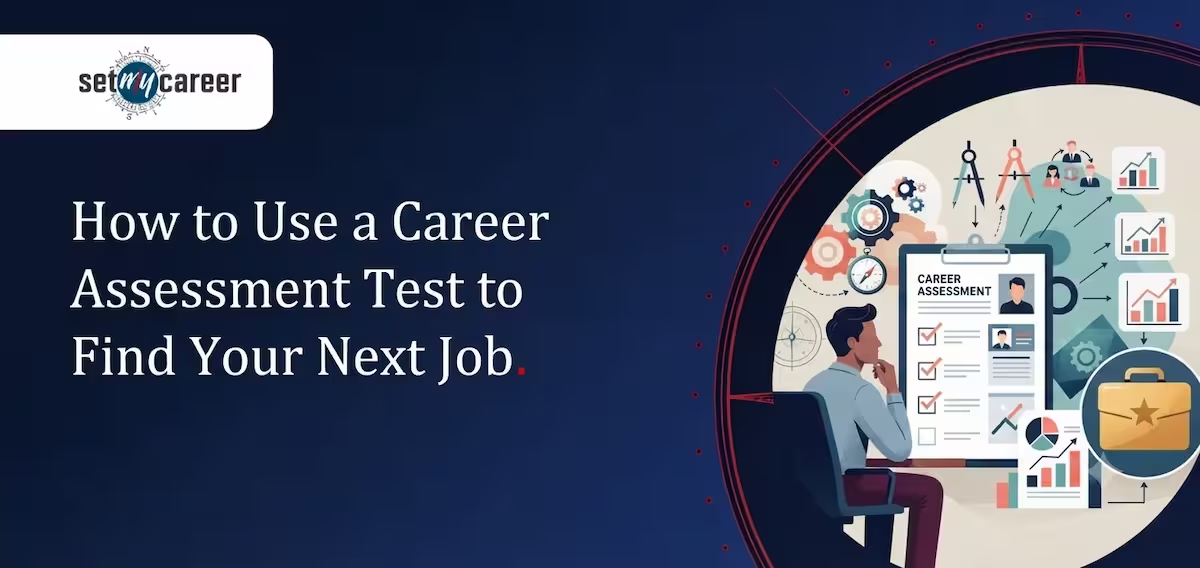
Finding a job that truly fits your personality, strengths, and goals can feel overwhelming. With so many paths to choose from, it is easy to feel stuck or unsure of your next move. A professional career assessment test is designed to remove this guesswork by analyzing your unique skills, interests, and work preferences, giving you a clear, data-backed starting point for your journey.
At SetMyCareer, we believe that successful careers are built on self-awareness, not chance. Taking a career assessment test is a powerful first step, but the real value comes from knowing how to apply those findings to the real world. In this guide, we will show you how to translate your unique results into a practical, step-by-step job search strategy for 2026.
You will learn how to identify industries that match your profile, tailor your resume to highlight your natural strengths, and speak about your skills in interviews with genuine confidence. Let’s explore how you can turn your test insights into a reliable roadmap to secure your next rewarding role.
What Is a Career Assessment Test and How Does It Work?
A career assessment test is a structured, scientifically validated tool designed to evaluate an individual’s cognitive abilities, professional interests, behavioral traits, and personal values. By mapping these core indicators, the evaluation reveals highly compatible vocational paths, simplifying long-term career planning and strategic career transitions.
These assessments act as an objective mirror, revealing strengths and work preferences that might not be obvious during daily routines. Rather than relying on guesswork or peer influence, individuals gain access to standardized data that explains how they solve problems, how they react under pressure, and what work environments will allow them to perform at their best. This systematic methodology ensures that career choices are aligned with authentic capabilities rather than temporary trends.
The Role of Aptitude Testing in Measuring Core Strengths
Aptitude testing focuses on measuring natural cognitive abilities and problem-solving capacities rather than acquired knowledge. These tests evaluate numerical reasoning, spatial awareness, verbal comprehension, and logical thinking. By identifying these baseline strengths, the evaluation helps determine how easily an individual can master new skills in a specific professional domain.
For instance, high spatial reasoning suggests success in architecture or engineering, while strong verbal reasoning correlates with success in law, communications, or strategic management. Understanding these cognitive baselines prevents individuals from pursuing fields that run counter to their natural cognitive styles, reducing workplace friction and career burnout.
| Evaluation Category | Primary Objective | Core Metrics Tracked | Professional Application |
|---|---|---|---|
| Aptitude Testing | Measures cognitive potential and logical reasoning capabilities. | Numerical, spatial, verbal, and abstract reasoning. | Determines technical capability and ease of upskilling in specific fields. |
| Personality Profiling | Identifies behavioral tendencies and workplace preferences. | Interpersonal traits, stress tolerance, and leadership styles. | Identifies cultural fit and ideal team dynamics. |
The Science Behind Personality Profiling in the Workplace
Personality profiling analyzes how individuals process information, make decisions, and interact with colleagues. Utilizing respected psychological frameworks, these profiles help predict job satisfaction and performance. By understanding these behavioral traits, individuals can target roles that match their communication styles and work habits.
When combined with cognitive data, behavioral profiling offers a complete picture of an individual's potential. This integrated approach ensures that a candidate is both technically capable of performing a role and behaviorally suited to the work environment. Utilizing these combined insights provides several advantages:
- Enhanced Self-Awareness: Helps professionals understand their decision-making frameworks and blind spots.
- Improved Team Integration: Assists in identifying team roles where the individual can contribute most effectively.
- Targeted Leadership Development: Points out specific areas where communication and management styles can be refined.
- Informed Career Alignment: Matches personal values with organizational cultures to ensure long-term job satisfaction.
Types of Career Evaluations for Different Life Stages
Professional paths are rarely linear, and the tools used to evaluate direction must match an individual's current career stage. Whether a student is selecting their first area of study, a mid-career professional is planning a transition, or an executive is seeking to refine their leadership style, targeted evaluations provide the necessary clarity. Choosing the correct tool ensures the insights gathered are highly relevant to the decisions at hand.
The Value of a Career Assessment Test for Adults Seeking a Transition
Making a professional shift in mid-career requires a different approach than choosing a path as a student. A career assessment test for adults focuses heavily on transferable skills, work-life balance preferences, and potential skill gaps. It acknowledges existing professional experience while identifying alternative industries where those established strengths can be applied effectively.
For adults, the evaluation process serves as a tool to minimize the risks associated with major career changes. It highlights how competencies developed in one industry can solve problems in another. This prevents the need to start from scratch, allowing transitioning professionals to move laterally or upward into new, more rewarding fields.
| Professional Stage | Primary Assessment Focus | Common Career Challenges Addressed | Expected Outcome |
|---|---|---|---|
| Early Career / Students | Disclosing raw interests, primary academic aptitudes, and work-style preferences. | Indecision regarding college majors or initial entry-level job targets. | Clear academic maps and structured career entry points. |
| Mid-Career Professionals | Evaluating transferable skills, leadership traits, and occupational alignment. | Burnout, industry stagnation, or the desire for a meaningful pivot. | A practical roadmap for lateral transitions or vertical promotion. |
| Senior Executives | Strategic decision-making habits, emotional intelligence, and organizational influence. | Adapting to cultural shifts, legacy planning, and organizational scaling. | Refined leadership tactics and organizational alignment strategies. |
Evaluating Options: Free Career Assessment Test Online vs. Professional Evaluations
A free career assessment test online offers basic initial insights into general interest patterns, whereas a professional evaluation provides comprehensive, scientifically validated psychometric data. Professional options deliver deeper analysis, personalized consulting support, and targeted action plans that free online tools cannot replicate.
While basic online tests can be a helpful starting point for self-reflection, they often lack the depth required for making major life decisions. These free tools usually rely on self-reported preferences without verifying consistency or cognitive aptitude. Professional evaluations, such as those provided by SetMyCareer, use verified psychometric principles to ensure accurate results, which are then analyzed alongside a trained career guide to create a practical, personalized action plan.
- Data Validity: Professional assessments use peer-reviewed questions that limit bias and self-reporting errors.
- Depth of Analysis: Paid, guided options compare individual results against national and international occupational benchmarks.
- Personalized Guidance: Professional platforms combine data with expert consultation to translate results into real-world steps.
- Comprehensive Action Plans: Strategic evaluations identify specific skill gaps and provide clear upskilling recommendations.
How to Use a Career Path Finder to Map Your Next Move
A career path finder acts as a strategic planning tool, turning raw psychometric data into practical career options. Instead of simply listing job titles, these systems analyze the overlap between your interests, cognitive strengths, and personality traits. This structured approach helps narrow down thousands of potential jobs into a manageable list of roles where you are highly likely to succeed.
Using these tools systematically allows professionals to explore alternative career options they may not have considered. By identifying the underlying tasks and skills associated with different roles, individuals can look past job titles to find opportunities that match their preferred way of working. This methodical search reduces the trial-and-error approach that often leads to career dissatisfaction.
Conducting a Skill Gap Analysis for Targeted Upskilling
Once a target role is identified through a career path finder, the next step is to evaluate any differences between your current abilities and the requirements of that position. This process, known as a skill gap analysis, helps you identify the technical knowledge, certifications, or behavioral adjustments needed to qualify for the target role.
By identifying these gaps early, professionals can plan their continuing education more efficiently. This targeted approach prevents spending time and money on unnecessary certifications, focusing resources instead on learning the specific skills employers are looking for.
| Target Job Area | Identified Skill Gap | Impact on Job Performance | Recommended Action Plan |
|---|---|---|---|
| Data Analytics Management | Advanced statistical programming and team leadership. | Limits ability to lead complex data projects and manage technical teams. | Complete targeted certifications in Python/SQL and attend executive leadership courses. |
| Corporate Communications | Digital media analytics and public relations crisis management. | Hinders measurement of communication campaign reach and effectiveness. | Enroll in specialized industry bootcamps and obtain modern PR certifications. |
| Product Management | Agile product development methodologies and UX design principles. | Slows product launch schedules and limits collaboration with design teams. | Pursue Scrum Master certification and complete foundational UX design modules. |
Selecting the Best Career Assessment Test for Your Goals
Finding the best career assessment test requires matching the tool's design with your specific career questions. The ideal platform should use scientifically validated methodologies and offer detailed reports that cover multiple aspects of your professional profile. It should also provide clear, actionable guidance rather than generic advice.
For the best results, look for assessments that evaluate three core areas: cognitive aptitude, behavioral tendencies, and occupational interests. Platforms that combine these three factors offer a more accurate and useful perspective for making major career choices. At SetMyCareer, this multi-dimensional approach forms the foundation of our career planning services, giving individuals a reliable roadmap for their professional journey.
- Methodological Rigor: Choose tests built on established psychological frameworks like the Big Five or Holland Codes.
- Detailed Reporting: Ensure the results provide specific details on behavioral styles, cognitive strengths, and potential work environments.
- Actionable Career Paths: The tool should connect your results to current, real-world industries and job profiles.
- Professional Guidance: Look for platforms that pair the assessment with expert counselling to help interpret the findings.
Translating Your Results Into a Real-World Job Search Strategy
The true value of a career assessment test lies in how you apply its findings to your job search. Having a clear report is only the beginning; success comes from using these insights to improve your resume, customize your applications, and prepare for job interviews. This strategic approach helps you present your natural strengths as valuable assets to potential employers.
Instead of sending out generic applications, job seekers can use their assessment results to target specific roles that match their profile. This focused strategy saves time and energy, allowing candidates to speak with real confidence during the hiring process. Aligning your application materials with your verified strengths makes you a much more compelling candidate.
Tailoring Your Resume and Cover Letter to Your Strengths
A resume should be more than a chronological list of previous duties; it should highlight your unique value. Use your assessment results to rewrite your experience sections, emphasizing achievements that demonstrate your natural strengths. For example, if your report highlights high analytical aptitude, focus on achievements involving data-driven problem solving and process optimization.
This approach helps your resume stand out to recruiters and applicant tracking systems. By using language that reflects your natural working style and professional strengths, you write a clear and convincing story about what you can bring to the role.
| Identified Strength | Standard Resume Description | Improved, Strength-Based Phrasing |
|---|---|---|
| Logical Reasoning & Analytics | Responsible for managing weekly team performance reports. | Analyzed weekly team performance metrics to find inefficiencies, saving the team four hours of administrative work each week. |
| Collaborative Leadership | Managed a cross-functional marketing team. | Guided a cross-functional marketing team by encouraging open discussion, resulting in a 15% increase in project delivery speed. |
| Strategic Adaptability | Handled changing client requirements during projects. | Adjusted project plans quickly in response to changing client needs, keeping deliverables on track and maintaining high satisfaction rates. |
Presenting Your Assessment Insights Confidently in Interviews
Job interviews are an opportunity to explain not just what you can do, but how you work. Sharing insights from your career assessment test allows you to discuss your strengths and development areas with objectivity and self-awareness. This level of honesty is highly appealing to hiring managers, who value employees who understand their own working style.
When asked about your strengths, use the specific language from your profile to explain how you handle challenges and work in teams. Back up these statements with real examples from your career. This approach shows that your self-awareness is grounded in objective data, making your answers more convincing and memorable.
- Use Behavioral Examples: Connect your assessment results to past situations where those specific strengths helped you succeed.
- Discuss Areas for Development Constructively: Use your skill gap analysis to show how you are proactively learning new skills and working on development areas.
- Explain Your Ideal Work Environment: Explain how your work-style preferences match the company’s culture and values.
- Clarify Your Decision-Making Process: Describe how your cognitive strengths, such as logical or conceptual thinking, help you solve problems at work.
Conclusion
Finding the right job does not have to be a guessing game. A reliable career assessment test gives you the clarity you need by mapping your unique strengths, interests, and personality traits to viable job roles. Instead of feeling overwhelmed by endless possibilities, you can use these personalized insights to narrow your focus and target opportunities where you will truly thrive.
Remember, the results of a career assessment test are most powerful when you put them into action. Use your report as a practical roadmap to tailor your resume, identify skill gaps, and approach your job search with a clear sense of direction. You do not have to figure this out alone, and taking that first step is often the most empowering part of the process.
Ready to take the guesswork out of your professional journey? Take our comprehensive career assessment test today. At SetMyCareer, our expert counselors are ready to help you analyze your results and build a practical, step-by-step plan to land your next job with confidence.