





Quick Summary
Boosting your earning potential is not just about working longer hours; it is about strategically aligning your unique hard and soft skills with what modern employers actively value. By embracing adaptability and following a step-by-step personalized upskilling roadmap, you can confidently turn your everyday capabilities into highly valued career assets. At SetMyCareer, we are ready to guide you through this journey with expert counseling and data-driven insights, empowering you to secure the high-paying opportunities you deserve.
Introduction
Have you ever felt like you are putting in maximum effort at work, but your paycheck does not reflect your dedication? It is a common and frustrating experience, especially when you are trying to build a stable, rewarding career. The key to increasing your earning potential is not simply working longer hours; it is about ensuring your unique job skills align directly with what employers are actively looking for and willing to pay a premium for today.
At SetMyCareer, we know that identifying and translating your talents into market value can feel overwhelming. That is why we are here to simplify the process. In this guide, we will help you evaluate your current job skills, spot high-demand areas in the 2026 job market, and create a practical roadmap to boost your income. By taking a strategic look at what you bring to the table, you can make clear, confident decisions that support both your professional growth and your financial goals.
Whether you are a student planning your future, a graduate taking your first steps, or an experienced professional ready for a transition, understanding this balance is your path to success. Let’s explore how you can turn your everyday capabilities into highly valued career assets that set you apart.
What Are Job Skills and Why Do They Matter Today?
Job skills are the specific talents, knowledge, and capabilities individuals possess to perform their work tasks effectively. These abilities determine an employee's performance and value in the labor market, helping them secure employment, adapt to technological shifts, and achieve consistent advancement within their chosen career paths.
Many professionals focus solely on putting in more hours, but modern employers reward capability rather than mere attendance. Understanding the specific components that make up a person's vocational toolkit is the first step toward commanding a higher wage. When individuals evaluate what they do well, they can better position themselves to negotiate promotions or seek higher-paying opportunities. SetMyCareer approaches this development by evaluating natural talents and linking them to measurable economic outcomes.
The Division Between Hard Skills and Soft Skills
To build a balanced career profile, one must distinguish between technical execution and personal management. Hard skills represent the teachable, quantifiable, and technical competencies acquired through formal schooling, training programs, or hands-on experience. These are the tools that allow a person to perform specific vocational tasks. In contrast, soft skills are the behavioral traits and interpersonal styles that dictate how an individual works with others and manages their daily workload. While technical capabilities open doors to job interviews, interpersonal traits help professionals maintain long-term employment and secure management promotions.
A well-rounded professional should strive to possess a balanced mix of both areas. For instance, an excellent software developer must write clean code (a technical capability) but must also communicate effectively with client stakeholders to understand project requirements (an interpersonal capability).
Below is a breakdown comparing these two distinct categories across common workplace scenarios:
| Category | Definition | Key Examples | Impact on Career Value |
|---|---|---|---|
| Hard Skills | Teachable, measurable technical abilities and knowledge. | Data analysis, Python coding, accounting, SEO. | Direct eligibility for specialized technical job roles. |
| Soft Skills | Interpersonal habits and traits that guide work interactions. | Active listening, leadership, empathy, collaboration. | Long-term retention, management potential, and cultural fit. |
To build a competitive career, focusing on a diverse set of competencies is highly recommended. The following list highlights several hard skills that modern organizations frequently seek when recruiting talent:
- Data Interpretation: The capability to analyze complex datasets and extract actionable insights for business decisions.
- Software Development: Building, maintaining, and refining functional code across popular programming languages.
- Financial Modeling: Constructing detailed projections to assess the viability of business initiatives.
- Technical Writing: Translating complex technical specifications into easily understood documentation.
Current Employment Trends Shaping Market Demand
Employment trends are the shifting patterns in labor markets driven by technological progress, economic adjustments, and organizational demands. These developments influence which capabilities employers prioritize, defining which talents remain highly sought after and which competencies require urgent modernization to maintain professional relevance.
The modern labor market changes quickly. Automation, artificial intelligence, and the global shifting of work environments have restructured traditional career paths. Professionals who fail to monitor these broader economic patterns risk seeing their current capabilities become obsolete. Conversely, those who stay informed about emerging shifts can proactively position themselves for rapid career growth.
The Rise of Career Adaptability in Modern Industries
Career adaptability refers to a professional's capacity to modify their strategies, master new technologies, and pivot their career paths in response to changing workplace environments. It is no longer sufficient to learn a single trade and remain comfortable for decades. Employers prioritize individuals who view change not as a disruption, but as an opportunity to acquire new abilities. Building this flexibility helps workers survive economic downturns and secure positions in brand-new, emerging sectors.
SetMyCareer emphasizes that adaptability is a skill that can be studied and cultivated. It requires a willingness to step outside one's comfort zone, experiment with new digital tools, and seek out challenges that test current limitations. The table below illustrates how adaptability transforms common workplace challenges into significant growth opportunities:
| Employment Trend | Associated Challenge | Career Adaptability Action | Professional Benefit |
|---|---|---|---|
| AI Integration | Displacement of repetitive cognitive tasks. | Upskilling in prompt engineering and tool management. | Future-proofing against automation risks. |
| Remote Workforce Growth | Fragmented team communication. | Mastery of digital collaboration and async workflows. | Access to high-paying global opportunities. |
| Data-Driven Planning | Overwhelming business metrics. | Learning foundational business intelligence programs. | Enhanced decision-making clarity. |
Cultivating high levels of career adaptability typically involves adopting specific behavioral habits. Professionals who successfully manage industry changes regularly focus on the following core activities:
- Continuous Industry Research: Monitoring market publications and sector-specific reports to identify emerging industry tools.
- Active Network Engagement: Interacting with peers in professional associations to learn about shifting project methodologies.
- Experimental Learning: Utilizing sandbox environments, trial software, and personal side projects to test unfamiliar digital systems.
- Embracing Constructive Feedback: Seeking out professional reviews to discover overlooked weaknesses and areas for personal improvement.
A Comprehensive List of Job Skills for Career Success
A comprehensive list of job skills for career success includes a strategic blend of technological proficiency, deep analytical reasoning, and flexible interpersonal capabilities. Prioritizing these targeted competencies allows motivated professionals to meet rising industry demands, drive operational efficiency, and secure high-value employment opportunities.
Building a successful career path requires knowing which abilities hold the highest economic value. Professionals must carefully analyze their current capabilities against the expectations of top-tier employers. By focusing development efforts on highly valued competencies, workers can maximize their immediate earning potential and enjoy greater long-term job security.
Most In Demand Job Skills Across High-Paying Sectors
As companies incorporate advanced technology into their daily business operations, the profiles of top employees are shifting. High-paying sectors such as technology, finance, and advanced healthcare look for candidates who can operate at the intersection of technical execution and analytical problem-solving. These roles require a dedication to continuous upskilling and an understanding of how distinct tools contribute to overall organizational efficiency.
The table below outlines some of the most in demand job skills across leading modern industries, alongside typical certification pathways:
| Industry Sector | In-Demand Skillset | Estimated Growth (Next 5 Years) | Key Certification Focus |
|---|---|---|---|
| Information Technology | Cloud Architecture & Cybersecurity | High (25%+) | AWS Solutions Architect / CISSP |
| Marketing & Sales | Growth Marketing & Analytics | Moderate to High (18%) | Google Analytics / HubSpot Inbound |
| Business Operations | Agile Project Management | Moderate (12%) | PMP / Certified ScrumMaster |
Marketable Skills That Drive Immediate ROI
Marketable skills are those capabilities that can be quickly monetized and applied across a wide range of organizations. These skills are highly attractive because they directly influence a business's revenue generation, customer retention, or operational cost savings. Acquiring even one of these competencies can dramatically alter a professional's career trajectory, providing immediate leverage during salary negotiations.
Focusing on high-yield marketable skills is an exceptional way to ensure swift career advancement. The following list showcases several high-impact capabilities that can deliver quick returns on your educational investment:
- Conversion Rate Optimization (CRO): Analyzing user behavior on digital platforms to improve customer acquisition rates.
- Cloud Infrastructure Administration: Setting up and securing online server systems to support distributed applications.
- Agile Facilitation (Scrum): Managing software and product development teams using iterative project delivery systems.
- Commercial Negotiation: Structuring enterprise contracts and partnerships to maximize financial gains and mitigate risks.
How to Learn New Job Skills Effectively
Learning new job skills effectively involves carefully assessing current career gaps, choosing targeted educational resources, and actively applying theoretical concepts through practical projects. This highly structured approach accelerates competency acquisition, reinforces knowledge retention, and establishes verifiable proof of expertise for prospective employer partners.
Acquiring new capabilities can sometimes feel overwhelming, particularly for busy professionals juggling multiple personal and vocational duties. However, skill development does not require a return to formal multi-year university programs. By leveraging structured online platforms, structured mentorship, and targeted hands-on exercises, individuals can rapidly develop high-value capabilities in relatively short periods.
Creating a Personalized Skill-Building Roadmap
An effective learning strategy begins with clear goal setting and a systematic assessment of one's natural strengths and weaknesses. Attempting to master too many distinct domains simultaneously often leads to cognitive fatigue and incomplete learning outcomes. Instead, professionals should focus on building a deliberate, step-by-step upskilling schedule designed to address their most pressing professional limitations. SetMyCareer helps professionals build these customized learning roadmaps, ensuring that every hour of study directly supports long-term career growth.
The following table highlights the essential stages of a successful upskilling framework:
| Upskilling Phase | Core Objective | Actionable Strategy | Verifiable Milestone |
|---|---|---|---|
| 1. Identification | Locate specific professional gaps. | Use objective career assessment tools. | A curated list of desired competencies. |
| 2. Learning | Acquire structured knowledge. | Enroll in accredited online courses. | Obtaining industry-recognized credentials. |
| 3. Application | Solidify skill understanding. | Build a portfolio of real-world projects. | A public repository or professional case study. |
To convert theoretical knowledge into functional capabilities, professionals must move beyond passive reading or video viewing. The list below highlights several highly effective strategies for reinforcing newly learned concepts:
- Build Real-World Mock Projects: Design and complete a realistic work project that mirrors actual industry requirements.
- Contribute to Open-Source Initiatives: Collaborate on shared public repositories or community initiatives to gain peer feedback.
- Seek Experienced Mentor Feedback: Share your initial work with seasoned industry experts to correct hidden errors early.
- Teach the Concept to Others: Consolidate your understanding by explaining complex topics to peers or writing instructional articles.
Align Your Skills for Long-Term Career Success
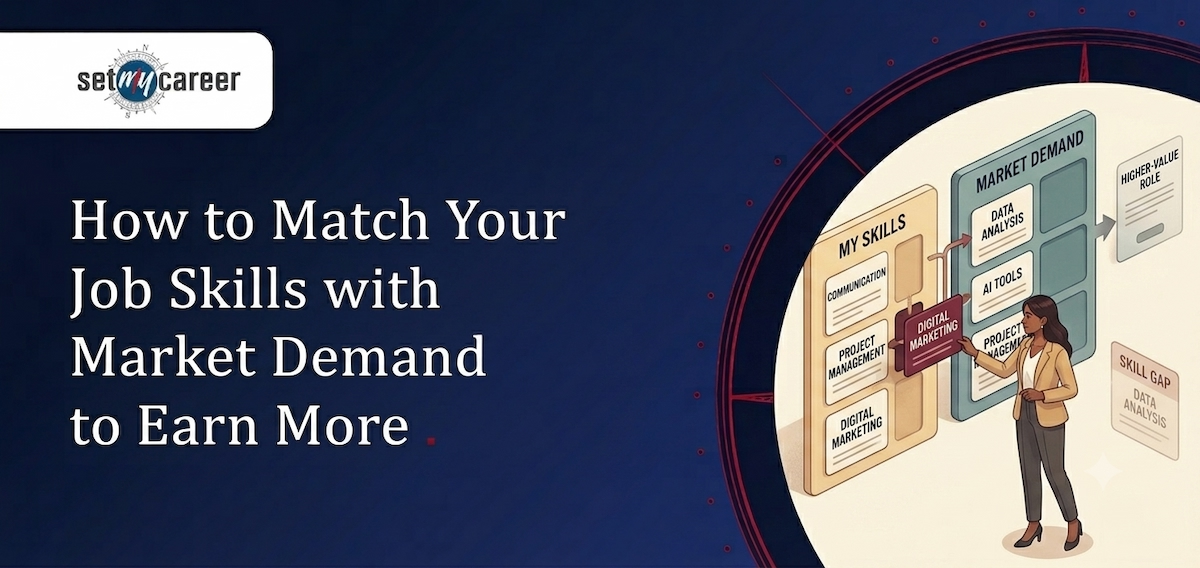
Matching your job skills with current market demands is one of the most reliable ways to increase your income and secure your professional future. When you understand what employers are actively looking for, you can focus your energy on developing high-value capabilities that yield real financial rewards. This alignment turns your daily hard work into clear, measurable career growth.
Upgrading your professional toolkit does not have to happen overnight. By taking a strategic approach—evaluating your current strengths, identifying industry trends, and committing to targeted learning—you can steadily build a profile that stands out to top employers. Every relevant skill you acquire brings you closer to your ideal role and the compensation you deserve.
You do not have to navigate this path alone. At SetMyCareer, we help you identify the most profitable job skills for your specific field and design a personalized roadmap to reach your goals. Take the guesswork out of your career planning. Reach out to our expert counsellors today, and let us help you map out a clear path to higher earnings and lasting professional satisfaction.