


Quick Summary
Making a successful career change does not mean starting from scratch; instead, you can leverage your valuable transferable skills to pivot into a fulfilling new field with confidence. By creating a structured career transition roadmap, targeting targeted reskilling programs, and highlighting your real-world achievements, you can easily bridge technical gaps while protecting your hard-earned professional standing. Embracing this strategic approach allows you to bypass entry-level traps and step into a rewarding new role that truly aligns with your goals, passions, and lifestyle.
Introduction
Feeling stuck or unfulfilled in your current role is incredibly common, but the thought of making a career change after years of hard work can feel terrifying. You might worry that switching paths means throwing away your hard-earned experience, taking a massive pay cut, or starting over from the very bottom of the ladder. It is completely natural to feel overwhelmed by these doubts, but transitioning to a new field does not mean you have to press the reset button on your professional life.
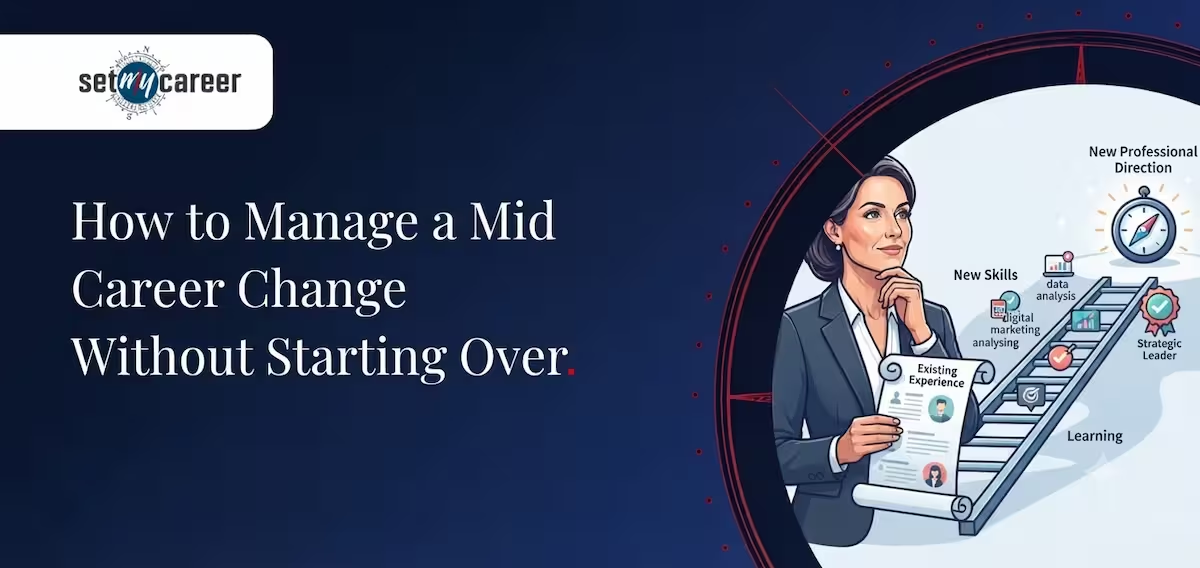
Your years of experience are not lost; they are actually your greatest asset. The secret to a successful transition lies in identifying your transferable skills—such as leadership, communication, or project management—and framing them to fit your new goals. In this guide, we will show you how to strategically map out your transition, leverage your existing network, and bridge any skill gaps without losing your professional standing.
Whether you want to pivot into a new industry or completely redefine your path in 2026, you can make this shift smoothly and confidently. Let us explore the practical, step-by-step strategies that will help you align your work with your true strengths while protecting the progress you have already made.
Understanding the Modern Career Change: Why It is Never Too Late
The traditional narrative of climbing a single corporate ladder for forty years has faded. In the modern business landscape, professional redirection is a natural phase of personal development. Individuals seek new career avenues for various reasons, including shifts in market demand, the pursuit of better work-life balance, or the desire for work that aligns with personal values. Embracing a career change is not a sign of instability; rather, it demonstrates adaptability and proactive career management.
Demystifying Mid Career Change Strategies
Mid career change strategies are structured methodologies designed to help experienced professionals transition into new industries without losing their accumulated professional value. These strategies focus on auditing existing competencies, aligning them with market opportunities, and targeting roles that bridge the gap between past experience and future growth goals.
When executing these strategies, professionals must shift their mindset from searching for a direct job match to searching for functional overlaps. Instead of viewing past years as isolated to a single industry, successful transitions analyze operations, personnel management, and objective-driven performance indicators. This systematic approach reduces the downtime associated with entering a new market and helps maintain salary parity.
| Career Aspect | Traditional Linear Career Path | Modern Career Change Path |
|---|---|---|
| Primary Objective | Vertical progression within a single industry or department. | Horizontal and vertical shifts to align with market evolution and strengths. |
| Skill Valuation | Highly specialized, industry-specific technical knowledge. | Versatile, cross-functional capabilities paired with continuous adaptation. |
| Adaptability | Low; high vulnerability to industry disruptions or automation. | High; structured to repurpose talents as new industries emerge. |
| Network Focus | Deep but narrow connection base within one specific field. | Broad, diverse professional network spanning multiple sectors. |
Successfully Switching Careers at 30 and Beyond
Deciding on switching careers at 30 or later presents unique opportunities. At this stage, professionals possess real-world experience, refined emotional intelligence, and a clear understanding of what they do not want in a job. The challenge is typically not a lack of talent, but rather the practical management of financial commitments and personal responsibilities while shifting focus.
To navigate this transition smoothly, individuals should conduct a systematic self-assessment and structural research. This structured preparation helps mitigate the risks associated with a professional pivot. Before taking decisive action, executing a detailed assessment of professional readiness is highly beneficial:
- Perform a Financial Audit: Calculate monthly living costs to establish a realistic transition budget, ensuring at least three to six months of expenses are covered.
- Analyze Current Pain Points: Determine whether the desire to shift stems from a dislike of the current role, the company culture, or the industry itself to avoid repeating the same patterns.
- Investigate Market Viability: Identify industries showing sustained growth, high hiring volumes, and a clear demand for experienced personnel.
- Engage in Low-Risk Exploration: Attend industry webinars, shadow professionals, or take short-form courses to test interest before resigning.
Designing a Step-by-Step Career Transition Strategy
A structured career transition strategy serves as a blueprint for professional evolution. Moving from one field to another without a plan can lead to fragmented job search efforts and prolonged unemployment. By treating the transition as a project with clear milestones, professionals can make progress systematically while retaining their confidence and professional credibility.
Step 1: Auditing Your Transferable Skills
Transferable skills are core competencies, such as communication, project management, and data analysis, developed throughout an individual's professional journey that apply directly across diverse job sectors. Identifying these skills allows transitioning professionals to build a bridge between their previous employment and their target roles.
These capabilities represent the true currency of a professional transition. When applying for a role in a completely new domain, highlighting specialized, obscure software from a previous industry holds little value for a recruiter. Instead, demonstrating how those tools were used to streamline processes, lead cross-functional teams, or increase revenue establishes immediate value.
| Originating Field | Core Transferable Skills | Potential Target Field | Positioning Value Proposition |
|---|---|---|---|
| Hospitality & Retail | Customer experience management, conflict resolution, team coordination. | Corporate Customer Success | Maximizes client retention rates and improves service delivery through empathy and rapid problem-solving. |
| Education & Teaching | Instructional design, public presentation, curriculum development. | Corporate Talent Development | Designs and implements internal training structures to upskill employees and boost productivity. |
| Finance & Banking | Quantitative analysis, regulatory compliance, risk assessment. | Business Operations Analysis | Identifies operational inefficiencies and provides data-driven strategies to reduce costs. |
| Engineering | Systems thinking, structured problem-solving, project management. | Product Management | Translates user needs into actionable technical specifications while managing product lifecycles. |
Step 2: Researching Reskilling Programs and Upskilling Channels
While transferable skills form the foundation of a transition, some technical knowledge gaps are inevitable. Enrolling in target reskilling programs can bridge these gaps effectively. Structured education demonstrates a commitment to the new field and provides the necessary foundational knowledge to perform tasks on day one.
Modern professionals have access to a wide array of learning channels, ranging from self-paced online courses to intensive bootcamp certifications. When choosing an educational path, focus on programs that offer practical applications rather than theoretical knowledge alone. Selecting the right upskilling program requires examining several performance indicators:
- Industry Alignment: Confirm that the curriculum covers the exact technologies and software listed in current job descriptions for target roles.
- Practical Output: Prioritize programs that require capstone projects, case studies, or a physical portfolio to demonstrate capabilities to potential employers.
- Time and Flexibility: Select a learning format—whether part-time, evening classes, or intensive cohorts—that balances with current employment commitments.
- Alumni Placement Rates: Research the career outcomes of previous program graduates to evaluate the training provider's market reputation.
Step 3: Executing a Professional Pivot with Confidence
A professional pivot is successful when planning transitions into action. This phase requires updating professional branding, including LinkedIn profiles, resume formats, and networking pitches, to reflect future potential rather than past tasks. The goal is to make it easy for hiring managers to see how well-suited an applicant is for the role.
During this stage, updating the resume to a functional or hybrid format is often more effective than using a standard chronological resume. This design highlights relevant skills and project work at the top of the document, while placing the employment timeline in a secondary position. This format shifts the initial focus from the industry name to the candidate's actual capabilities.
| Transition Phase | Primary Focus | Key Activities | Target Timeline |
|---|---|---|---|
| Phase 1: Alignment | Self-reflection and career research. | Aptitude assessment, talent mapping, selecting potential fields. | Weeks 1 to 4 |
| Phase 2: Bridging | Skill development and education. | Enrolling in reskilling programs, obtaining certifications. | Months 2 to 5 |
| Phase 3: Positioning | Branding and network activation. | Optimizing resume, updating online profiles, conducting informational interviews. | Month 6 |
| Phase 4: Entry | Targeted applications and interviewing. | Applying to selected vacancies, preparing case studies, landing a role. | Months 7 to 9 |
How to Make a Career Change Without Starting Over
To make a career change without starting over, professionals must strategically position their existing experience as highly valuable to the target industry. This involves translating industry-specific accomplishments into universal business outcomes, leveraging professional networks, and acquiring targeted certifications that demonstrate an immediate ability to deliver measurable results.
The mistake many people make is approaching the job market as an entry-level candidate. An individual with ten years of experience in logistics transitioning into tech sales is not a novice sales representative; they are an experienced logistics professional who deeply understands the pain points of supply chain clients. This specialized expertise is highly valuable and cannot be easily replicated by an entry-level graduate.
Mapping Out Your Career Transition Roadmap
A career transition roadmap is a personalized, tactical plan designed to manage the practical details of a major career shift. This guide outlines every phase of the process, ensuring that time, energy, and financial resources are used efficiently. A well-designed roadmap helps candidates stay focused on long-term goals even when dealing with short-term challenges.
By breaking down the transition into clear, manageable steps, professionals can avoid feeling overwhelmed. This roadmap should outline exactly what activities are required each week, from skills training to networking outreach, ensuring continuous progress without disrupting current personal and professional commitments.
| Milestone | Specific Objective | Success Metric | Contingency Plan |
|---|---|---|---|
| Skill Benchmarking | Identify technical gaps between current abilities and target roles. | Completed skills inventory list matched to three job descriptions. | Consult with an industry mentor or professional career counselor. |
| Network Building | Establish connection points with professionals in the target industry. | Ten high-value connections made on professional platforms. | Join local professional chapters or attend sector-specific virtual events. |
| Credential Acquisition | Complete a recognized qualification or industry certification. | Certificate of completion added to professional profiles. | Pivot to micro-credentials or short-term specialized workshops. |
| Application Testing | Submit customized applications to test how the market responds. | Receive initial callback or recruiter screening invitation. | Revise resume structure, focusing more on transferable metrics. |
Overcoming Common Pitfalls During a Job Transition
Many career transitions encounter obstacles due to predictable, avoidable missteps. Understanding these common challenges helps candidates proactively adjust their approach. By preparing for these obstacles ahead of time, professionals can protect their career progression and avoid setbacks.
One common issue is relying too heavily on online job portals, which often filter out non-traditional resumes using automated screening tools. Direct outreach, informational interviews, and warm introductions are often much more effective paths to landing a role. Transitioning professionals should be mindful of several common challenges:
- Relying on Jargon: Failing to translate industry-specific terms into clear, universal business terminology on resumes.
- Neglecting Soft Skills: Overemphasizing technical tools while failing to showcase leadership, adaptability, and collaborative strengths.
- Omitting Network Outreach: Applying to positions online without seeking internal referrals or informational conversations within target companies.
- Accepting Low Offers Quickly: Assuming a change of industry requires accepting entry-level wages, rather than negotiating based on total professional experience.
Conclusion
Navigating a mid-career change does not mean erasing your hard-earned progress. Your years of experience, professional relationships, and transferable skills are valuable assets that give you a distinct advantage. By focusing on your strengths, identifying skill gaps, and planning your transition strategically, you can successfully pivot into a new role without starting from the bottom of the ladder.
It is completely normal to feel hesitant about making such a significant shift. However, with the right strategy and support, you can turn this transition into an empowering growth opportunity. You deserve a career that aligns with your current goals, values, and passions.
If you are ready to take the next step but want to ensure you are making the right moves, you do not have to do it alone. Book a personalized guidance session with our expert career counsellors today. Let us help you map out a clear, confident plan for your career change and secure the fulfilling future you have earned.