





Quick Summary
Navigating a career transition can feel overwhelming, but framing your unique journey as a powerful asset is the secret to unlocking your next opportunity. By mapping out your transferable skills, actively up-skilling to close knowledge gaps, and utilizing a strategic three-step response framework, you can confidently demonstrate how your diverse background brings fresh, unmatched value to prospective employers. You do not have to walk this path alone; with the personalized counseling and expert insights from SetMyCareer, you can master your professional narrative and step into your new career path with absolute confidence.
Introduction
Stepping into an interview room is always a bit nerve-wracking, but when you are navigating a career transition, explaining your pivot can feel especially challenging. You might worry that hiring managers will view your changing path as a lack of focus rather than a valuable asset. It is completely natural to feel this way, but changing your career path is a positive step that shows adaptability, courage, and a commitment to your personal growth.
The secret to a successful interview lies in how you frame your unique story. Instead of feeling defensive about your past roles, you can learn to connect your previous experiences directly to your future goals. By highlighting your transferable skills and explaining the logical reasons behind your choice, you can help employers see that your diverse background makes you a uniquely qualified candidate.
In this guide, we will walk you through practical, step-by-step strategies to explain your career transition with confidence and clarity. You will learn how to structure your story, address common interviewer concerns, and present your journey in a way that highlights your strengths so you can secure your next role in 2026 and beyond.
Why do professionals choose a career path pivot?
A career path pivot is a strategic shift from one industry or role to another, driven by a desire for alignment with personal values, professional growth, or market demands. Professionals choose this path to utilize their existing strengths in a more fulfilling, sustainable, and rewarding work environment.
Making the choice to seek a different path is a courageous step. It reflects self-awareness and a commitment to long-term career satisfaction. Often, professionals find that their current industry no longer aligns with their evolving values, or they feel their talent is underutilized. Recognizing this need for change is the first stage of positive professional development.
Identifying the Catalyst for a Mid Career Change
A mid career change does not happen overnight. It typically stems from a series of events that highlight a gap between current daily realities and desired professional achievements. This shift is often triggered by changes in industry health, organizational restructuring, or a profound realization that personal values no longer align with the company's trajectory.
Understanding these catalysts allows individuals to approach the transition with strategy rather than frustration. By clearly mapping the source of discontent, professionals can identify which aspects of their work they want to keep and which they want to leave behind. This clarity helps in formulating a precise path forward.
To illustrate how these catalysts shape future decisions, observe the typical transition patterns below:
| Primary Catalyst | Immediate Work Impact | Strategic Career Action |
|---|---|---|
| Industry Stagnation | Limited upward mobility and plateauing salary scales. | Targeting high-growth industries using existing leadership competencies. |
| Technological Disruption | Automated processes reducing the demand for traditional skill sets. | Up-skilling in digital platforms to align with modern expectations. |
| Value Realignment | Disconnect between daily work tasks and personal ethics. | Transitioning to mission-driven organizations or social impact sectors. |
Conducting a Comprehensive Skills Gap Analysis
Before applying for positions in a new domain, executing a detailed skills gap analysis is a practical necessity. This process helps candidates look objectively at what they already know and where they must expand their knowledge to meet the standards of their target field. It transforms an overwhelming transition into a structured series of educational milestones.
By examining job descriptions in the target field, professionals can discover the exact terms and tools that are in demand. This exercise ensures that when a candidate enters an interview room, they speak the specific language of the industry with confidence. It also prevents the mistake of applying for roles for which they are not yet fully prepared.
The structured process of executing this analytical assessment involves several step-by-step actions:
- Document Current Competencies: Create an exhaustive list of your current soft skills, technical expertise, and operational knowledge.
- Deconstruct Target Job Postings: Analyze ten to fifteen job descriptions in your new field to identify the most frequently requested qualifications.
- Cross-Reference Skills: Highlight which of your current skills map directly to these new requirements to identify clear matches.
- Create an Actionable Learning Plan: Address remaining educational gaps through targeted coursework, professional certifications, or practical project-based learning.
How to make a career transition successfully?
To make a career transition successfully, professionals must audit their existing skills, gain targeted knowledge, and build a strategic networking plan. This structured approach helps bridge professional gaps, aligns past achievements with future roles, and demonstrates clear value to hiring managers in the target industry.
The path to a new professional identity requires both practical steps and a shift in perspective. Successful candidates do not hide their past; instead, they treat it as an advantage. By showing how lessons from another industry can solve problems in a new one, transitioning professionals position themselves as innovative candidates who bring valuable, unique perspectives to the table.
Mapping Out Your Transferable Skills
A major key to success in any career shift is identifying and explaining your transferable skills. These are core capabilities—such as communication, leadership, technical execution, and project management—that remain highly valuable regardless of the industry. When framed correctly, these skills act as a bridge between your past achievements and your future potential.
Instead of discussing your history in industry-specific jargon that might confuse recruiters, describe your accomplishments in universal business terms. For example, a teacher managing thirty students is highly skilled in classroom control, but in a corporate context, they are skilled in stakeholder management, presentation delivery, and instructional design.
The following table demonstrates how professionals can translate their background competencies into terms that resonate with new hiring managers:
| Previous Industry Role | Core Adaptable Competency | Target Domain Application |
|---|---|---|
| Retail Store Manager | Inventory control and team motivation. | Operations Specialist managing complex supply chain schedules. |
| Classroom Educator | Curriculum design and group facilitation. | Corporate Trainer leading onboarding and talent development. |
| Technical Support Specialist | Root-cause troubleshooting and active listening. | Customer Success Manager reducing client turnover rates. |
Up-skilling and Bridging the Knowledge Gap
Identifying your knowledge gaps is only useful if you take practical steps to close them. Up-skilling shows prospective employers that you are highly self-motivated and serious about your new direction. Taking courses, obtaining professional certifications, and seeking mentorship are great ways to prove your commitment and build immediate credibility.
Acquiring knowledge does not always require returning to school for an expensive, multi-year degree. Targeted, strategic learning is often faster and more practical. Focus on building the specific, highly demanded skills that are valued in your target roles.
Professionals should consider the following actionable pathways to expand their skill set and show commitment:
- Pursue Industry Certifications: Enroll in recognized, short-term courses that award professional credentials in your new target domain.
- Complete Hands-on Projects: Build a portfolio of independent work, case studies, or mock assignments that prove you can apply your knowledge.
- Seek Strategic Volunteering: Offer your skills to local non-profits or community projects to gain practical, real-world experience in your new role.
- Engage in Peer Mentorship: Connect with established professionals in the field to learn about current trends and industry practices.
Career Transition Interview Preparation Strategies
What does career transition interview preparation involve?
Career transition interview preparation involves translating your past achievements into terms your new industry values, researching target company needs, and practicing your career story. It requires a clear strategy to link your previous professional experiences directly to the requirements of the new role.
Preparation is the foundation of confidence. When transitioning to a new field, your preparation must go beyond standard interview answers. You need to anticipate doubts a hiring manager might have about your non-traditional background and address those concerns directly, highlighting how your unique experience is an asset.
To organize your preparation effectively, use the structured phases outlined below to track your progress:
| Preparation Phase | Primary Goal | Recommended Action Method |
|---|---|---|
| Company Research | Understand current pain points. | Read company reports, study their products, and analyze their competitors. |
| Story Alignment | Connect past experience to target needs. | Draft a narrative that links your previous skills to the new job duties. |
| Skepticism Planning | Address concerns about your experience. | Prepare clear examples that show you can learn quickly and adapt to change. |
Addressing the Pivot Safely and Professionally
One of the most delicate parts of an interview is explaining why you decided to leave your previous career. It is important to focus on the future rather than criticizing the past. Frame your decision as a positive, proactive choice for growth rather than an escape from an unpleasant work environment.
When you speak about your transition with excitement and a clear purpose, it helps recruiters view your decision in a positive light. It shows them that you are moving toward a field you are truly passionate about, rather than just trying to escape a difficult situation in your previous industry.
The following guidelines help keep your interview responses highly constructive, positive, and focused on your goals:
- Do connect the shift to positive career growth: Explain that your decision is driven by a desire for new challenges and learning opportunities.
- Don't criticize your past industry: Avoid speaking negatively about low pay, poor leadership, or difficult working conditions in your previous role.
- Do show respect for your professional background: Highlight how your previous work helped build a solid foundation of business skills.
- Don't apologize for changing paths: Speak about your transition with pride and confidence, showing it as a deliberate step in your growth.
Explaining a Career Transition in an Interview
How do you excel when explaining a career transition interview scenario?
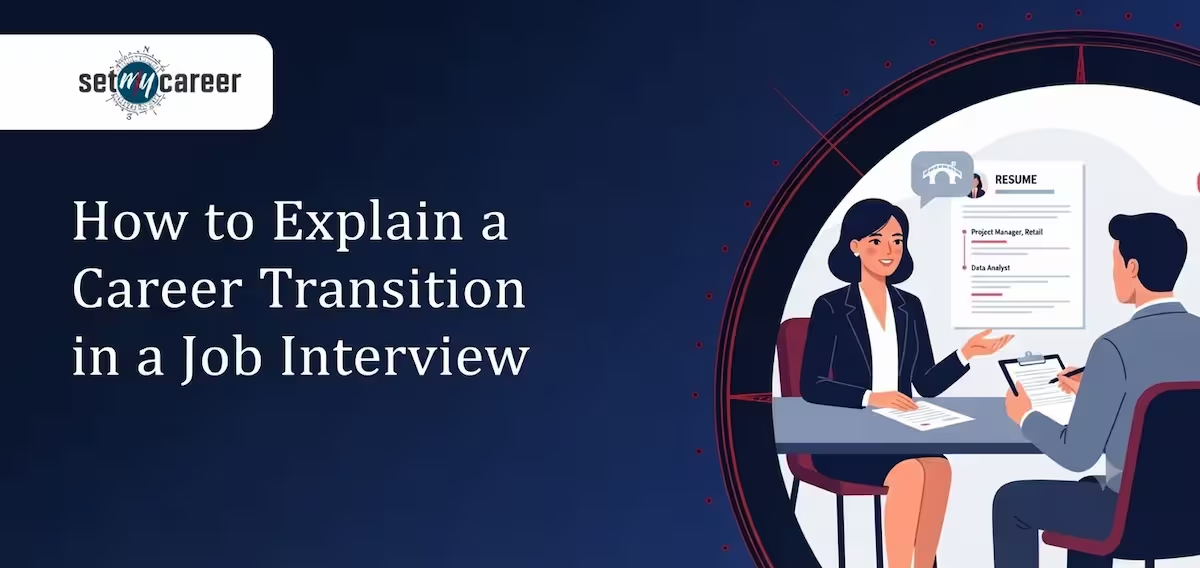
Explaining a career transition interview scenario requires a positive narrative that connects your professional past to your future. Candidates must highlight their adaptable strengths, explain the logical reasons behind their career pivot, and demonstrate how their diverse experience brings fresh value to the hiring team.
When explaining your professional journey, clarity is key. The interviewer wants to know that your shift is part of a deliberate, well-planned career strategy, rather than a sudden decision. By sharing a clear, step-by-step narrative, you can show them that your career transition is a logical and positive step forward.
The Three-Step Framework for Your Response
Structuring your response makes it easier for hiring managers to follow your journey. The most effective framework involves three distinct parts: your career foundation, your decision to pivot, and your future alignment. This approach helps keep your answer concise, organized, and focused on the value you bring to the role.
By structuring your answer this way, you can address the employer's needs early in the conversation. It shifts the focus from what you lack in direct industry experience to the valuable, adaptable perspective you can bring to their team immediately.
You can use the structured framework below to help craft your own personalized interview script:
| Framework Step | Core Focus | Example Verbal Script |
|---|---|---|
| The Foundation | Summarize your key skills. | "I built a strong foundation in data analysis and cross-team collaboration during my five years in logistics." |
| The Pivot | Explain the reason for your change. | "I realized my true interest lies in using these analytical insights to improve digital marketing strategies." |
| The Connection | Align your skills with their needs. | "I am excited to use my background in inventory data to help optimize your e-commerce product performance." |
Overcoming Concerns About Lack of Direct Experience
It is natural for hiring managers to have questions about your lack of direct experience in their industry. However, you can address these concerns by showing them how your unique background is actually an advantage. Diverse teams often bring fresh perspectives and innovative ideas that people with traditional backgrounds might miss.
Instead of trying to hide your lack of industry-specific tenure, address it directly by highlighting your agility and ability to learn quickly. Share examples of past times when you had to adapt to new environments, learn complex systems, or deliver results under challenging conditions.
The following practical approaches can help ease a recruiter's concerns and highlight your unique value:
- Share Adaptability Success Stories: Give examples of times when you had to quickly master new software, tools, or business regulations.
- Showcase Independent Projects: Share portfolios, case studies, or volunteer work that proves you can do the job successfully.
- Demonstrate Deep Industry Knowledge: Show that you understand their market by referencing current trends, competitors, and industry challenges.
- Focus on Problem-Solving Skills: Explain how your unique background helps you see solutions to problems that others might miss.
Taking the Next Step in Your Career Transition
Stepping into a new industry is a bold and commendable move. When you sit down for an interview, remember that your diverse background is an asset, not a drawback. By focusing on your transferable skills, connecting your past achievements to your future goals, and presenting your story with clarity, you can show employers exactly why your unique path makes you the ideal candidate.
Planning a career transition can sometimes feel overwhelming, and it is completely normal to feel unsure about how to frame your journey. You do not have to navigate this pivotal moment alone. Having the right support and a clear, structured strategy can make all the difference in how confidently you present yourself to potential employers.
If you are ready to turn your professional shift into a success story, SetMyCareer is here to help. Our experienced career counsellors can guide you through identifying your strengths, mapping out your next steps, and practicing your interview narrative. Get in touch with us today to schedule a personalized guidance session and take control of your career journey with confidence.