



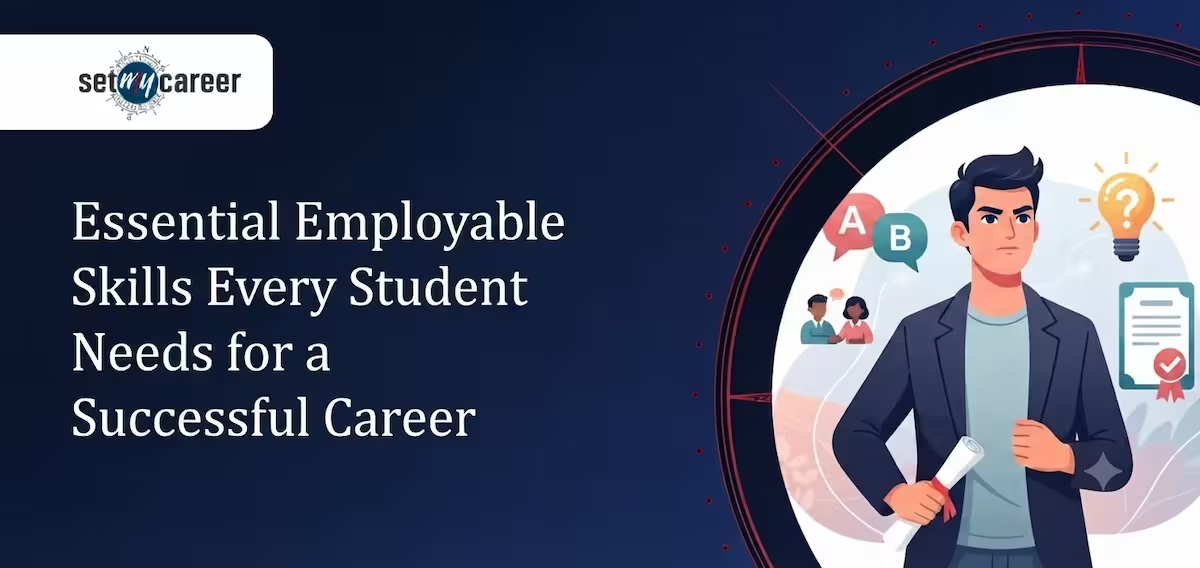
As students prepare to transition from the classroom to the professional world, it quickly becomes clear that academic knowledge alone isn't enough to guarantee success. While a degree proves you have the technical foundation for a specific field, employers are looking for something much broader. They want professionals who can navigate complex office dynamics, communicate ideas clearly, and adapt when projects don't go according to plan.
Career counselling helps students develop essential employable skills for the job market.
Career guidance for students focuses on developing essential employable skills for future success.
This is where employability skills come into play. Often referred to as soft skills or transferable skills, these core competencies are what truly help candidates stand out in a crowded job market. By intentionally developing abilities like emotional intelligence, cross-functional collaboration, and strategic problem-solving, you can significantly enhance your employability and build a foundation for long-term career resilience.
What Are Employability Skills?
Employability skills are a unique combination of interpersonal traits, communication abilities, and cognitive habits that enable you to function effectively in a workplace. They dictate how you manage your daily workload, how you collaborate with colleagues, and how gracefully you handle unexpected challenges.
It helps to contrast them with hard skills. Hard skills are job-specific technical abilities—like knowing how to write Python code, operate medical equipment, or balance an accounting ledger. Hard skills might secure you an interview, but employability skills are what get you hired, keep you employed, and ultimately drive your promotions. Because they are not tied to one specific industry, these transferable skills will travel with you throughout your entire career trajectory.
The Strategic Importance of Employability Skills
Developing a strong repertoire of soft skills is crucial for navigating the modern workplace. Here is why employers prioritize these traits when building their teams:
- Driving Workplace Success: Technical skills allow you to do the baseline tasks of your job, but soft skills help you thrive in the environment. They enable you to integrate into company culture, meet deadlines under pressure, and navigate office challenges without constant supervision.
- Accelerating Career Advancement: Management roles rarely go to the person who is simply the best at technical execution. Leadership positions are awarded to individuals who can mentor others, manage conflict, and communicate a clear vision.
- Ensuring Adaptability in a Shifting Market: Entire industries are being transformed by new technologies and economic shifts. When your specific technical skills become obsolete, your ability to learn quickly, stay flexible, and pivot your career relies entirely on your employability skills.
- Enhancing Interpersonal Effectiveness: Almost no professional operates in a vacuum. Whether you are dealing with difficult clients, presenting to stakeholders, or collaborating with a remote team, your ability to build strong working relationships is non-negotiable.
- Maintaining a Competitive Edge: When recruiters compare two candidates with identical academic backgrounds and technical certifications, the deciding factor is almost always their soft skills. Displaying high emotional intelligence and strong communication gives you a distinct advantage over technically comparable peers.
8 Most In-Demand Employable Skills for Career Success
While every industry has its own unique demands, certain traits are universally valued by hiring managers. Mastering the following employability skills will make a tangible difference in your professional trajectory.
1. Strong Communication Skills (Verbal and Written)
The ability to convey information clearly is arguably the most sought-after skill in the corporate world. Effective communication is not just about speaking confidently during presentations; it encompasses writing concise, professional emails, breaking down complex data for non-technical audiences, and practicing active listening. When you listen to understand rather than just waiting for your turn to speak, you prevent costly misunderstandings and build deeper trust with your colleagues.
2. Teamwork and Cross-Functional Collaboration
Modern business relies heavily on collaboration. Employers value professionals who can check their egos at the door and work toward a collective goal. True teamwork involves sharing credit, supporting peers when deadlines approach, and working seamlessly with people from diverse cultural and professional backgrounds. The ability to disagree constructively and resolve minor conflicts without managerial intervention is a hallmark of an excellent team player.
3. Problem-Solving and Critical Thinking
No job perfectly matches its description every single day. Things break, strategies fail, and unexpected variables arise. Companies need employees who can analyze a situation, identify the root cause of an issue, and propose viable solutions rather than just pointing out the problem. Critical thinking allows you to evaluate information objectively, make sound decisions under pressure, and continuously optimize existing processes.
4. Time Management and Organizational Proficiency
In a work environment filled with constant digital distractions and competing priorities, managing your time effectively is vital. Strong organizational skills involve knowing how to prioritize high-impact tasks, set realistic boundaries, and meet deadlines consistently. Employers appreciate team members who can balance multiple responsibilities autonomously without compromising the quality of their output.
5. Adaptability and Workplace Flexibility
The pace of modern business is relentless. Strategic pivots, new software implementations, and sudden leadership changes are routine occurrences. Adaptable employees don't panic when the parameters of a project suddenly change. Instead, they embrace flexibility, view challenges as learning opportunities, and remain productive during periods of transition.
6. Emotional Intelligence (EQ)
Emotional intelligence is the ability to recognize, understand, and regulate your own emotions while simultaneously empathizing with the emotions of others. High EQ prevents minor frustrations from escalating into workplace drama. It allows professionals to handle constructive criticism gracefully, maintain composure during high-stress situations, and foster a psychologically safe environment for their peers.
7. Leadership and Self-Initiative
You don't need a managerial title to demonstrate leadership. Employers look for candidates who take ownership of their roles, identify areas for improvement, and take the initiative to solve problems before being asked. Showing self-direction and a willingness to guide newer employees proves that you are ready for greater responsibilities and future promotions.
8. Professional Networking and Relationship-Building
Networking is far more than collecting connections on LinkedIn. It is the intentional practice of cultivating mutually beneficial professional relationships. Being able to connect authentically with mentors, industry peers, and colleagues from different departments broadens your perspective, opens doors to hidden job opportunities, and provides a valuable support system throughout your career.
Conclusion: Building a Foundation for Lifelong Career Growth
Technical knowledge will always be the baseline requirement for entering your chosen field, but your employability skills are what will carry you through a successful, lifelong career. As industries evolve and job descriptions shift, your ability to communicate effectively, think critically, and collaborate with diverse teams will ensure you remain an invaluable asset to any organization.
Developing these competencies is an ongoing journey that requires self-awareness and practice. By intentionally honing your problem-solving abilities and emotional intelligence today, you are future-proofing your career for tomorrow. If you are looking for personalized guidance on how to identify your strengths, build critical workplace skills, and map out a fulfilling professional path, SetMyCareer is here to support you. Reach out today to start enhancing your employability and take the next confident step in your career journey.