




Quick Summary
Choosing your academic stream after the 10th grade is a wonderful opportunity for self-discovery, but it is easy to feel overwhelmed by peer pressure or exam marks. By focusing on your unique aptitude, personality, and interests, you can look beyond traditional boundaries to select a fulfilling pathway in Science, Commerce, or Humanities that truly aligns with your potential. As your trusted career guidance partner, SetMyCareer is here to support you and your parents with scientific assessments and personalized counseling, transforming this major milestone into a confident, exciting step toward your future success.
Introduction
Finishing your 10th-grade exams is a major milestone, but it often brings a wave of anxiety about what comes next. Deciding between Science, Commerce, and Humanities is one of the first big decisions you will make for your future. It is completely normal to feel overwhelmed by the endless advice from friends, family, and social media. However, rushing into your stream selection after 10th based on temporary trends or peer pressure can lead to unnecessary academic stress and career misalignment down the road.
At SetMyCareer, we believe that choosing a stream should be an exciting journey of self-discovery rather than a source of pressure. Your decision should align naturally with your unique strengths, interests, and long-term goals. To help you and your parents navigate this transition with confidence, we have put together this guide highlighting the most common missteps to watch out for. Avoiding these pitfalls is the first step toward building a fulfilling academic journey.
In this article, you will learn how to evaluate your genuine aptitude, look beyond your immediate report cards, and align your choices with the evolving career opportunities of 2026 and beyond. Let’s explore how you can make a well-informed decision that sets a strong, reliable foundation for your future success.
Common Pitfalls in Stream Selection After 10th
Making a decision about your academic future immediately after the high school board exams can feel like walking through a high-pressure environment. Many students make choices that do not align with their long-term potential simply because they lack the perspective to see beyond the immediate future. Identifying these common mistakes is the first step toward making a calculated, confident choice.
Making Decisions Based on Peer Pressure or Trends
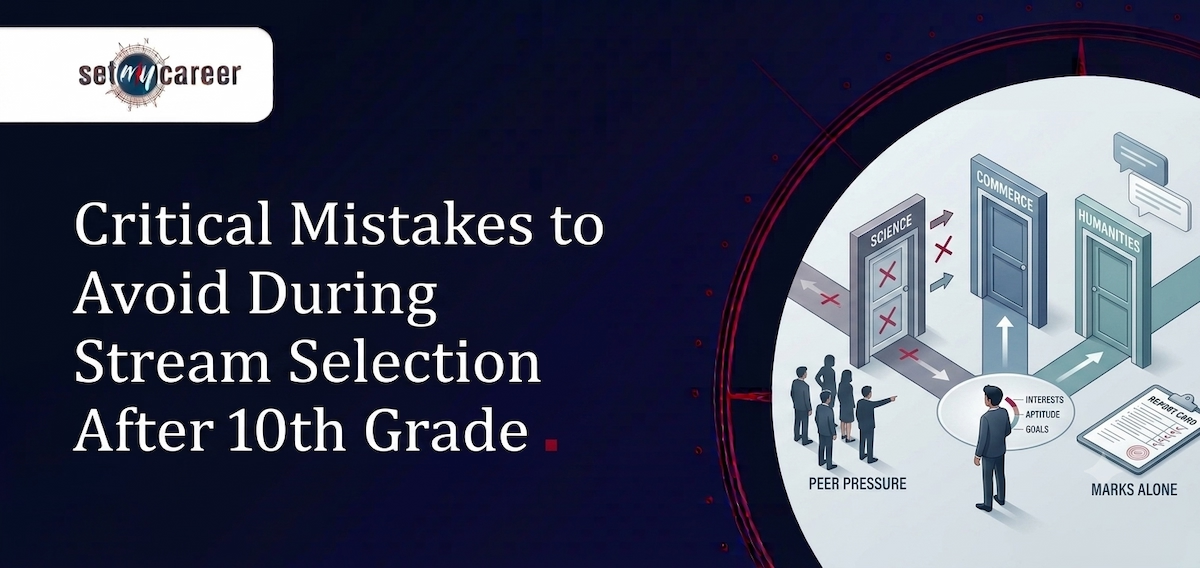
Choosing a stream simply because a close group of friends has opted for it is one of the most frequent errors students commit. Human beings naturally seek belonging, and during teenage years, the desire to stay with peers is remarkably strong. However, copying your peers' choices often leads to academic dissatisfaction because everyone possesses unique learning capacities and career goals.
Similarly, following popular social media trends or rushing toward sectors that are currently hyped as the "only profitable option" can be misleading. A stream that is highly sought-after today might undergo massive changes due to automation or economic shifts by the time you graduate. It is far more rewarding to build your foundational strengths in an area where you have genuine potential, rather than chasing a temporary wave that may not suit your work style or natural abilities.
Relying Solely on 10th Board Exam Marks
Many families assume that achieving a high percentage in a specific subject automatically qualifies a student to pursue that field for the next two years. For instance, scoring high marks in mathematics or science on a 10th-grade report card is often seen as a green light for engineering or medicine. However, school-level exams often test memory and basic application, whereas higher secondary education requires intense abstract reasoning, conceptual depth, and analytical processing.
Conversely, a student who scores average marks due to exam-day stress or a temporary lack of focus might be discouraged from choosing their preferred stream. Your report card represents a single point in time, whereas your genuine aptitude is built on consistent interest, cognitive patterns, and problem-solving styles. Relying purely on grade sheets without evaluating your actual interest in the core subjects can lead to academic mismatch and unnecessary stress during your 11th and 12th grades.
To avoid these pitfalls, examine the common warning signs that indicate you might be heading toward an unsuitable choice:
- Ignoring Everyday Skill Gaps: Choosing the science stream with a weak foundation in basic mathematics and logical reasoning simply because of family prestige.
- Focusing Only on Job Titles: Selecting a path based on high-paying designations without understanding the daily duties, academic pathway, or lifestyle associated with that industry.
- Replicating Sibling Success: Trying to copy the exact academic path of an older sibling or relative without considering your own unique personality and intellectual strengths.
- Lack of Real-World Research: Making a final selection without looking at the syllabus, textbook chapters, or actual subject structures for classes 11 and 12.
Decoding Your Options: Science Commerce or Arts
Understanding the fundamental differences between the major streams is necessary before committing to a specific academic path. Each stream offers a unique set of subjects, requires a distinct mental approach, and leads to different professional avenues in the job market. Evaluating these options side-by-side helps students understand where their natural intellectual style fits best.
| Stream Type | Primary Core Subjects | Core Thinking Styles Required | Modern Career Paths (2026 & Beyond) |
|---|---|---|---|
| Science | Physics, Chemistry, Mathematics, Biology, Computer Science | Logical reasoning, scientific inquiry, experimental analysis, mathematical deduction | Data Science, Biotech Research, Robotics Engineering, Environmental Science, Medicine |
| Commerce | Accountancy, Economics, Business Studies, Applied Mathematics | Quantitative reasoning, structured logic, systemic organization, commercial awareness | Investment Banking, Financial Tech, Corporate Law, Actuarial Science, Business Analytics |
| Humanities / Arts | History, Psychology, Political Science, Sociology, English Literature | Critical thinking, qualitative analysis, empathetic observation, creative writing | User Experience (UX) Design, Public Policy, Clinical Psychology, Digital Journalism, International Relations |
What is the Science Stream?
The science stream is an academic pathway focusing on the study of the physical and natural world through empirical observation and systematic experimentation. This stream typically branches into physical sciences (physics, chemistry, mathematics) and biological sciences (physics, chemistry, biology), preparing students for careers in medicine, engineering, and advanced research.
Choosing this stream requires a strong interest in understanding how things work, from microscopic cells to massive physical structures. The academic rigor in this discipline is demanding and requires continuous practice, lab work, and analytical calculation. Students who enjoy solving puzzles, conducting experiments, and testing hypotheses generally find this environment highly engaging and rewarding.
What is the Commerce Stream?
The commerce stream is an academic discipline centered on the study of business, trade, financial markets, and fiscal transactions. It equips students with practical knowledge of accounting, economics, business studies, and financial management, laying a strong foundation for professional careers in corporate governance, banking, entrepreneurship, and investment analysis.
This pathway is highly practical and directly connected to how the modern global economy operates. It is an excellent choice for individuals who are organized, comfortable with numbers, and interested in learning how companies manage resources, maximize profits, and navigate regulations. If you enjoy tracking business news, analyzing consumer trends, or understanding economic policies, commerce offers an incredibly rich and stable future.
What is the Humanities and Arts Stream?
The humanities and arts stream is a diverse academic discipline focusing on human society, culture, behavior, and creative expression. This pathway studies subjects like history, political science, philosophy, psychology, literature, and sociology, preparing students for successful careers in civil services, law, journalism, design, and public policy formulation.
In the contemporary job market, the humanities stream has gained immense recognition as organizations place higher value on emotional intelligence, complex communication, and cultural awareness. This stream is ideal for students who love reading, analyzing social behavior, discussing historical events, or exploring creative problem-solving. It offers the flexibility to combine creative interests with professional scientific fields like neuro-psychology, digital media, or international development.
How to Choose Stream After 10th: A Step-by-Step Approach
Selecting your stream does not have to be an overwhelming process driven by guesswork or anxiety. By breaking down the decision into a systematic, objective process, you can align your classroom learning with your natural capabilities. This structured method ensures that your stream selection after 10th is both enjoyable and sustainable over the long term.
Evaluating Aptitude, Personality, and Interests
To identify the best stream after 10th, you must look at three core pillars: what you are naturally good at (aptitude), how you react to different environments (personality), and what you genuinely enjoy doing (interests). When these three components align, academic performance improves naturally, and study stress decreases significantly.
| Dominant Aptitude | Associated Personality Traits | Suggested Stream Alignment |
|---|---|---|
| Numerical & Spatial Reasoning | Detail-oriented, objective, systematic, values precision | Science (PCM) or Commerce with Applied Mathematics |
| Verbal & Social Aptitude | Empathetic, expressive, communicative, collaborative | Humanities, Liberal Arts, or Commerce with Communication Electives |
| Scientific & Mechanical Aptitude | Inquisitive, hands-on, observant, persistent | Science (PCB / PCMB) or Technical Vocational streams |
| Analytical & Financial Aptitude | Organized, strategic, practical, objective | Commerce with Accountancy and Economics |
To put this evaluation into action, follow this step-by-step approach to self-discovery:
- Document Your Strengths: List the tasks, games, or subjects where you consistently perform well without feeling drained. Note whether you prefer solving puzzles, writing essays, or organizing events.
- Examine the Syllabus Content: Look at the actual textbooks for Class 11 and 12. Read a few chapters of economics, physics, or psychology to see if the concepts spark your curiosity.
- Connect to Real-World Careers: Research what a typical workday looks like for professionals in fields like software engineering, finance, counseling, or design to see if their lifestyle matches your expectations.
- Seek Objective Assessments: Take scientifically designed psychometric tests to gain an unbiased, data-backed understanding of your cognitive profile and personality type.
Exploring Future-Ready Career Options
The job landscape is undergoing transformation due to rapid technological integration. As you plan your academic path, look at the career options that will be highly relevant in the coming years. Modern industries value interdisciplinary skills, meaning that your choice of stream should serve as a flexible foundation rather than a narrow restriction.
For example, a student choosing commerce can branch into technology by studying business analytics, while a humanities student can work in artificial intelligence by specializing in linguistics or behavioral psychology. Seeking professional career guidance after 10th allows you to view these emerging opportunities clearly, helping you select a path that keeps you competitive, adaptable, and highly employable in the future global market.
Subject Combinations and Academic Planning
Once you understand which broad stream fits your personality, the next essential step is selecting the right subject combinations. Modern educational frameworks offer a high level of flexibility, allowing you to customize your high school curriculum to match your personal strengths and career aspirations perfectly.
| Broad Stream Category | Traditional Subject Combinations | Modern Flexible Combinations | Primary Career Advantages |
|---|---|---|---|
| Science Focused | Physics, Chemistry, Mathematics, English, Physical Education | Physics, Mathematics, Computer Science, Economics, English | Excellent for Computational Finance, Data Analytics, and Software Design |
| Commerce Focused | Accountancy, Business Studies, Economics, English, Physical Education | Accountancy, Economics, Applied Mathematics, Psychology, English | Ideal for Behavioral Economics, Consumer Research, and FinTech |
| Humanities Focused | History, Geography, Political Science, English, Fine Arts | Political Science, Psychology, Economics, Applied Mathematics, English | Perfect for Public Policy, Market Research, Law, and Urban Planning |
Traditional vs. Modern Subject Combinations
In the past, choosing a stream meant being locked into a rigid set of subjects. Science students only studied laboratory sciences, and humanities students were entirely separated from quantitative courses. Today, progressive academic planning allows you to blend disciplines, creating a customized educational experience.
For instance, pairing a core subject like economics or psychology with mathematics can significantly boost your career options. This hybrid approach helps you build both quantitative reasoning and qualitative understanding, making you highly adaptable. Exploring these varied combinations early on ensures that you do not accidentally close doors to exciting, high-growth career opportunities.
Long-term Career Planning and Board Preparation
Your high school years require a smart balance between scoring well on board exams and preparing for competitive entrance tests. Selecting a set of subjects that matches your natural learning style reduces the risk of burnout. It ensures you can maintain high energy levels and stay motivated throughout this demanding phase.
A well-structured academic plan also leaves room for building practical skills, participating in extracurricular activities, and working on projects outside the classroom. By planning your academic journey systematically, you turn these two years of high school into a rewarding experience of personal growth, rather than a stressful period of continuous memorization.
Stream Selection Guide for Parents
Parents play a major role in shaping a student’s academic and career choices. While parents bring valuable life experience and structural wisdom, the career landscape has changed significantly over the last two decades. Understanding how to guide your child effectively without imposing personal aspirations is key to their long-term happiness and professional success.
Supporting Your Child Without Imposing Choices
The transition from Class 10 to Class 11 is an emotional journey for young minds. During this time, pressure from family expectations can cause high anxiety, leading to poor choices. Parents can support their children best by creating an open, judgment-free environment where they can discuss different career paths freely.
Instead of deciding *for* your child, guide them by encouraging self-discovery and exploring options together. Ask open-ended questions about what they enjoy studying, provide resources for research, and celebrate their unique talents. Your role is to act as a supportive mentor, helping them research options and build the confidence to make their own well-informed choices.
To keep the home environment constructive and supportive, focus on these positive actions:
- Encourage Safe Exploration: Let your child talk to professionals in different fields, attend webinars, or take introductory online courses to explore their interests.
- Focus on Individual Growth: Avoid comparing your child’s marks or choices with siblings, neighbors, or cousins, as every individual has a unique developmental path.
- Acknowledge Changing Markets: Accept that new, highly successful career paths exist today that did not exist twenty years ago, particularly in technology, creative fields, and social sciences.
- Prioritize Emotional Well-being: Watch for signs of academic stress or anxiety, and make sure your child knows their value is not defined solely by their exam scores.
Utilizing Professional Career Guidance After 10th
Sometimes, despite having long family discussions and researching online, finding the right path remains difficult. This is where professional guidance becomes highly valuable. Expert career counseling removes the guesswork by using scientific psychometric assessments to evaluate a student's cognitive strengths, learning styles, and core personality traits accurately.
| Scenario | Unintended Pressure (Avoid This) | Constructive Support (Adopt This) |
|---|---|---|
| Discussing Stream Options | Insisting on a specific stream because of family tradition or social status. | Discussing the child’s interests and researching diverse career paths together. |
| Handling Academic Results | Showing disappointment over average grades in subjects the child finds difficult. | Identifying specific areas of struggle and finding targeted learning support or alternatives. |
| Planning Future Careers | Demanding a final, high-paying career path choice immediately after Class 10. | Encouraging exploration of multiple growing industries and developing versatile, adaptable skills. |
| Using Career Counseling | Avoiding professional counseling, believing that parents always know best. | Partnering with professional counselors at SetMyCareer for objective, data-driven insights. |
At SetMyCareer, the primary objective is to make stream selection a smooth, encouraging, and clear process for both students and parents. By combining advanced psychometric evaluations with personalized, empathetic counseling sessions, SetMyCareer helps families move from confusion to absolute clarity. This expert guidance ensures that every student starts their higher secondary education on a path designed specifically for their natural talents and future success.
Choosing Your Path with Confidence
Choosing a stream after 10th grade is one of the first major decisions you will make for your future. It is completely normal to feel a bit overwhelmed by the choices, opinions, and expectations surrounding you. However, by avoiding common mistakes—like following your friends blindly, ignoring your personal strengths, or letting external pressure dictate your choice—you can turn this decision into an exciting stepping stone toward a fulfilling career.
Remember, there is no single "best" stream; there is only the stream that is right for you. Your unique blend of skills, interests, and personality traits is the best guide you have. Take the time to explore your options, research different career paths, and understand what studying each subject actually looks like in practice.
If you are still feeling uncertain about your stream selection after 10th, you do not have to navigate this journey alone. Professional guidance can help clear the confusion and give you the clarity you need. At SetMyCareer, our experienced career counselors use scientific assessments to help you match your natural strengths with the right academic path. Get in touch with us today, and let's take the first step toward building your successful future together.