






Quick Summary
Navigating a career transition can feel overwhelming, but a well-crafted resume objective serves as your personal elevator pitch to successfully bridge the gap. By highlighting your transferable skills and translating your past achievements into terms your new employers value, you can confidently show hiring managers how you will solve their immediate problems. Using a simple three-part formula—identifying who you are, what you bring, and your target contribution—helps you write a concise, high-impact introduction that opens new doors. At SetMyCareer, we are here to support you with the personalized guidance, expert counseling, and data-driven insights you need to take this exciting next step with absolute confidence.
Introduction
Starting a career transition can feel both exciting and overwhelming. You are stepping into the unknown, and your existing CV might not seem to fit your new direction. How do you convince a hiring manager that your past experiences make you the perfect fit for a completely different role? The secret lies at the very top of your application: a well-crafted resume objective. This small but powerful section acts as your personal elevator pitch, instantly connecting your unique transferable skills to your new career goals.
At SetMyCareer, we understand that shifting industries requires a strategic approach. Employers in 2026 look for adaptability, and your resume objective is the first tool to show them you have what it takes to succeed. Instead of highlighting what you lack in industry-specific experience, a strong intro focuses on your proven achievements and your passion for your new path. In this guide, you will learn how to write a compelling objective that grabs attention, translates your past skills into terms your new employers value, and positions you as a strong candidate.
You do not have to navigate this transition alone or feel discouraged by a blank page. With some clear, practical adjustments to your resume, you can confidently open doors to exciting new opportunities. Let us explore how you can rewrite your professional story and make hiring managers eager to meet you.
What is a Resume Objective?
A resume objective is a brief, targeted opening statement that outlines your immediate career goals, key transferable skills, and the value you bring to a specific role. Positioned at the very top of your CV, it captures attention and aligns your experience with an employer's needs.
For many years, the opening statement on a CV was viewed as a simple declaration of what a candidate wanted from an employer. In the modern recruitment landscape, this approach has evolved significantly. Employers receive hundreds of applications for a single vacancy, making the top third of a resume the most critical piece of visual real estate. An effective objective acts as a strategic bridge, particularly for those who are entering the workforce for the first time or moving into a new industry.
Rather than focusing solely on personal ambitions, a modernized objective explains how a candidate's background solves an employer's immediate problems. It frames the candidate’s intentions in a way that highlights immediate utility, making it an excellent choice for career changers, recent graduates, and those seeking lateral organizational moves.
Resume Objective vs. Career Summary Statement
While both elements serve as introductory profiles, they cater to different stages of professional development. A career summary statement—often referred to as a professional profile statement—is designed for individuals with a linear career path and several years of direct industry experience. It consolidates past achievements, technical expertise, and years of service into a highly concentrated overview.
In contrast, an objective focus is forward-looking. It details how foundational skills will be applied to a new domain. For individuals utilizing a resume objective for career change, this distinction is key. The objective prioritizes adaptability and potential, whereas a summary prioritizes historical continuity.
| Feature | Resume Objective | Career Summary Statement |
|---|---|---|
| Primary Focus | Future goals and transferable skills mapping. | Past achievements and direct industry experience. |
| Best Suited For | Career changers, entry-level applicants, and graduates. | Experienced professionals with a stable career path. |
| Core Value | Demonstrates adaptability and direct alignment with new roles. | Validates established expertise and depth of knowledge. |
How to Identify and Translate Transferable Skills
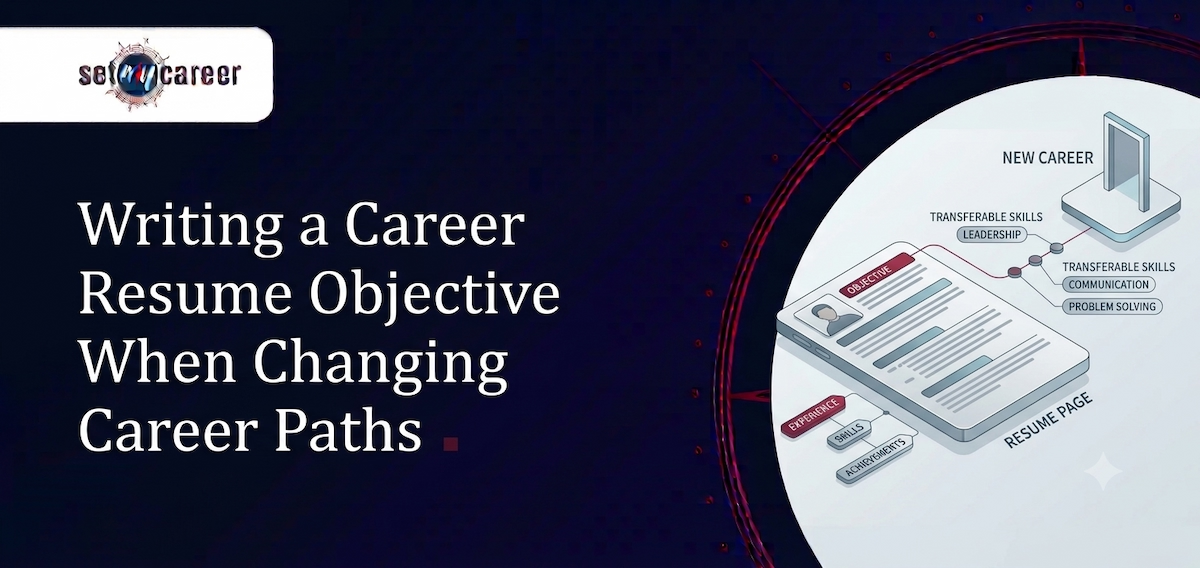
A successful transition relies on the ability to identify skills that remain valuable across different industries. Transferable skills are core competencies developed in one context that apply directly to another. For individuals shifting careers, these skills form the foundation of their value proposition.
To begin this process, candidates should perform a skill-gap analysis. This involves comparing the requirements of the target industry against their current capabilities. By identifying overlaps, candidates can build a compelling skills inventory summary that forms the backbone of their new resume strategy.
Creating a Skills Inventory Summary
A skills inventory summary involves categorizing past achievements into functional areas that resonate with hiring managers in the new field. This exercise prevents the resume from reading like a simple list of duties and instead presents it as a collection of adaptable capabilities.
- Methodological Skills: These include project coordination, budget management, resource allocation, and workflow optimization, which are valued across all corporate sectors.
- Interpersonal and Leadership Abilities: Skills such as stakeholder management, team building, conflict resolution, and cross-functional collaboration are universal.
- Analytical Competencies: Data interpretation, problem-solving, market research, and trend analysis are highly sought after in modern business environments.
- Technical Adaptability: Proficiency with software suites, database management, and digital communication tools indicates a candidate can learn new platforms quickly.
Once these skills are categorized, they must be translated into the language of the target industry. For instance, a teacher transitioning to a corporate training role should translate "classroom management" into "group facilitation and instructional delivery." This alignment ensures that hiring managers instantly recognize the candidate’s readiness.
| Original Industry Term | Core Competency | Translated Corporate Term |
|---|---|---|
| Lesson Planning (Education) | Instructional Design | Curriculum Development & Training Strategy |
| Guest Relations (Hospitality) | Client Satisfaction | Customer Success & Account Management |
| Patient Triage (Healthcare) | Crisis Resource Allocation | Risk Management & Priority Coordination |
| Retail Sales Targets (Retail) | Revenue Generation | Business Development & Performance Metrics |
Good Resume Objective Examples for Diverse Paths
Examining well-structured templates is an excellent way to learn how to write a compelling introduction. Good resume objective examples balance clarity, ambition, and a clear focus on the employer's needs. The following examples demonstrate how to construct these statements for different career stages.
Entry Level Resume Objective Examples
For individuals with limited professional experience, entry level resume objective examples must emphasize academic achievements, technical training, and an eagerness to contribute to organizational goals. The focus should be on potential and foundational training.
- Finance Graduate: Analytical Finance honors graduate with academic training in financial modeling and quantitative risk assessment. Seeking to apply rigorous data analysis and forecasting skills to support portfolio management decisions at a leading investment firm.
- Software Engineering Graduate: Computer Science graduate skilled in Java, Python, and agile software development methodologies. Aiming to contribute clean coding practices and strong collaborative problem-solving skills to the development team at an enterprise software provider.
- Digital Marketing Graduate: Creative Marketing graduate with hands-on experience managing simulated digital campaigns and tracking web analytics. Eager to utilize audience segmentation and SEO strategy skills as a Junior Digital Marketing Specialist to increase brand engagement.
Resume Objective for Career Change Examples
When drafting a resume objective for career change, the narrative must pivot from past job titles to future utility. These examples illustrate how professionals can frame their career shifts as strategic advantages.
- Hospitality Manager to Human Resources Specialist: Detail-oriented Operations Manager with seven years of experience in staff recruitment, conflict mediation, and shift scheduling in hospitality. Seeking to leverage strong relationship-building and workforce coordination skills in an HR Coordinator role.
- Sales Professional to Project Manager: Results-driven Account Manager with six years of experience tracking client deliverables, managing budgets, and leading cross-functional pitches. Aiming to apply structured communication and milestone-tracking expertise to a Project Coordinator position.
- Educator to Corporate Instructional Designer: Experienced educator with eight years of curriculum design and educational technology integration experience. Looking to apply instructional design models and adult learning principles to create impactful employee development programs.
| Target Role | Key Transferable Skill Highlighted | Stated Goal |
|---|---|---|
| HR Coordinator | Conflict mediation, staff onboarding | Enhance employee engagement and smooth HR processes |
| Project Manager | Milestone tracking, budget management | Deliver complex client initiatives on schedule |
| Corporate Trainer | Adult learning theory, presentation skills | Optimize workforce performance and onboarding programs |
How to Write Your Professional Profile Statement Step-by-Step
Writing a professional profile statement or objective requires a systematic approach. The goal is to produce a concise three-line summary that encourages the hiring manager to keep reading. By following a structured process, candidates can ensure their opening statement remains professional, clear, and impactful.
The first step is to carefully analyze the target job description. Candidates should identify the primary keywords, core technologies, and key soft skills listed in the posting. These terms should be naturally integrated into the statement to ensure the resume aligns with applicant tracking systems and matches the initial screening criteria.
The Three-Part Formula for Success
To write an effective objective, candidates can use a simple, three-part formula: Professional Identity + Core Value/Transferable Skill + Target Role Contribution. This structure keeps the statement focused and prevents it from sounding generic.
- Keep it Concise: The objective should be between two and three sentences long, or about 30 to 50 words. Anything longer can distract from the main points.
- Avoid Vague Buzzwords: Instead of using empty phrases like "highly motivated self-starter," candidates should focus on concrete skills, such as "certified Scrum Master" or "proficient in SQL."
- Focus on Employer Benefits: The statement should explain how the candidate’s skills will help the organization, rather than what the candidate hopes to get from the job.
- Tailor Every Application: Candidates should customize their objective for each role, ensuring it directly addresses the specific challenges and requirements of the target position.
| Formula Component | What to Include | Example Phrase |
|---|---|---|
| Part 1: Who You Are | Professional title, years of experience, or academic background. | "Data Analyst with three years of experience..." |
| Part 2: What You Bring | Top transferable skills, technical proficiencies, or key accomplishments. | "...skilled in SQL database optimization and regression analysis..." |
| Part 3: What You Aim to Do | The value you plan to deliver to the target company. | "...to improve reporting efficiency and support strategic growth." |
Conclusion: Crafting a Resume Objective That Works for You
Writing a resume objective for a career change is all about translating your past achievements into a language your future employer understands. By focusing on your transferable skills and clearly stating how you plan to add value to your new industry, you turn your application into a powerful tool. Your resume objective is no longer just an introduction—it is your pitch, proving that your unique background makes you a valuable asset to the company.
Making a major career shift is a courageous step, and you do not have to navigate this transition alone. If you are struggling to define your transferable skills or want to ensure your profile stands out to recruiters, personalized guidance can make all the difference. At SetMyCareer, our expert counselors are ready to help you map out your transition strategy, identify your core strengths, and build the confidence you need to succeed. Get in touch with us today to take the next step toward your new career path.