






Quick Summary
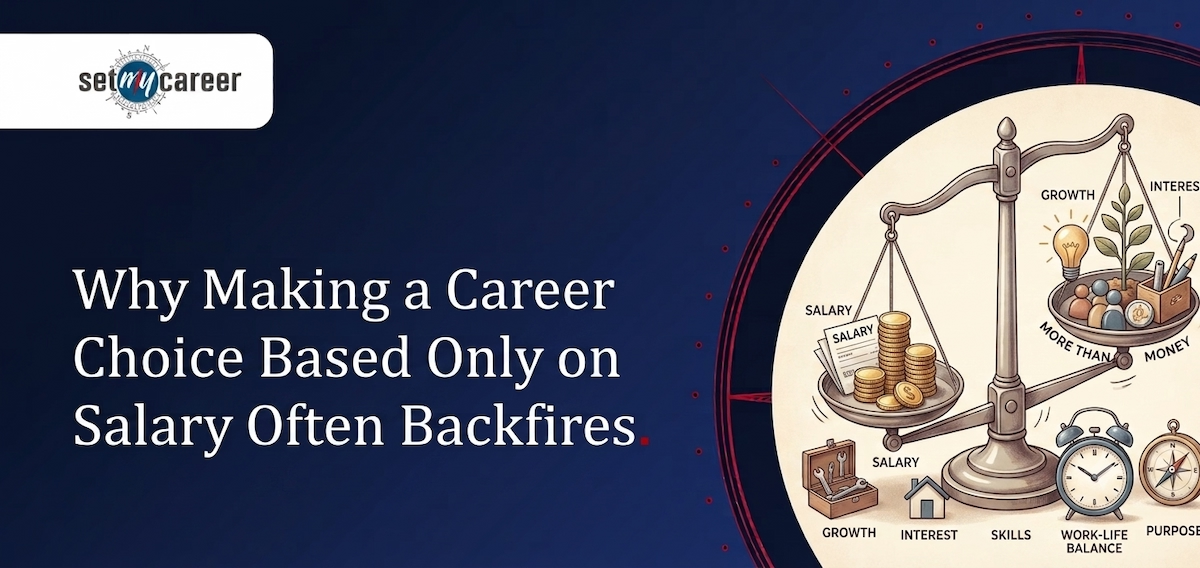
While a high paycheck is highly attractive, making a career choice based solely on salary can lead to the 'unhappy premium'—a costly cycle of professional burnout, chronic stress, and lifestyle inflation. To build a truly successful and sustainable career, it is essential to look beyond the numbers and prioritize work-life integration, organizational value alignment, and continuous skill acquisition. By focusing on your unique strengths and values, you can secure long-term financial growth and genuine personal fulfillment, and the expert guides at SetMyCareer are always here to help you confidently navigate this rewarding journey.
Introduction
It is incredibly easy to be swayed by a high starting salary when making a major career choice. Whether you are a student planning your future, a parent wanting financial security for your child, or a professional eyeing a career transition, a large paycheck feels like the ultimate proof of success. We are naturally taught to chase the highest offer on the table. However, choosing a job based solely on the numbers on your offer letter often leads to unexpected challenges that money simply cannot solve.
While financial stability is essential, treating salary as the only metric for a successful career choice often leads to professional burnout, chronic stress, and a drop in performance. When your daily tasks do not align with your natural skills and interests, even the most impressive paycheck begins to lose its appeal. This guide will help you understand the hidden costs of a salary-first mindset, explore key non-monetary elements like work-life balance, and provide you with a practical framework to make a balanced, fulfilling decision.
Finding the right path does not mean you have to sacrifice your financial goals. Instead, it is about aligning your career with your unique strengths and values to build a sustainable, rewarding future. Let us look closer at why looking beyond the monthly paycheck is the smartest decision you can make for your professional journey in 2026.
Introduction: The Illusion of the High-Paying Career Choice
The Psychology Behind Chasing the Highest Starting Salary
The initial salary offer remains one of the strongest motivators in professional decision-making. Individuals are naturally conditioned to prioritize immediate financial returns when making a critical career choice. This prioritization often stems from deep-seated psychological patterns and external societal pressures that equate wealth directly with professional capability and personal worth.
Several key factors affecting career choice influence this financial focus:
- Social Validation and Status: Society often evaluates personal capability based on raw financial figures, which influences candidates to seek high-paying jobs for immediate recognition.
- Cognitive Simplification: Comparing a single number (salary) is far easier than evaluating abstract elements like cultural fit or growth potential.
- The Optimism Bias: Job seekers frequently overestimate their capacity to tolerate stressful or toxic environments in exchange for financial gain.
This narrow focus often overlooks the long-term compounding effects of career satisfaction and professional sustainability. By focusing exclusively on starting figures, candidates risk selecting fields that conflict with their innate capabilities and personal values.
Defining 'Career Choice' Beyond the Monthly Paycheck
A career choice is a long-term professional pathway selected based on an individual’s skills, values, interests, and growth potential. It extends beyond immediate monetary compensation to encompass personal fulfillment, daily work-life balance, and sustainable alignment with one's broader life purpose and long-term economic stability.
Evaluating a career option requires moving away from short-term financial gains and toward holistic metrics that impact daily life. Sustainable career satisfaction relies on factors such as autonomy, skill progression, and career goal alignment.
| Factor | Salary-First Approach | Balanced Career Approach |
|---|---|---|
| Primary Driver | Gross monthly pay and signing bonuses | Skills alignment and long-term development |
| Daily Motivation | Financial milestones and material rewards | Task engagement and collaborative environment |
| Health Impact | Often high stress with elevated burnout risk | Sustainable stress levels and psychological safety |
When individuals prioritize a balanced approach, they establish a solid foundation for continuous professional satisfaction and persistent performance.
The Hidden Costs: Why a Salary-First Career Choice Backfires
The Fast Track to Professional Burnout and Chronic Stress
Accepting a position solely for high financial compensation without considering personal alignment frequently leads to professional burnout. When daily tasks do not resonate with a worker's interests, the energy required to perform them increases exponentially. This constant cognitive friction drains mental reserves, leading to chronic exhaustion, anxiety, and a feeling of professional detachment. Over time, the pressure to maintain high-output levels in an unsuited role manifests as physical illness, eroding any financial advantages gained from the high salary.
The Trap of the 'Golden Handcuffs'
The phenomenon of the "golden handcuffs" occurs when professionals become dependent on high-paying jobs that they find unfulfilling or stressful. This dependency restricts their freedom to transition into roles that offer better long-term prospects or healthier work environments.
Common indicators of this financial trap include:
- Fixed Cost Escalation: Taking on high recurring liabilities, such as expensive car loans or premium housing leases, based on high starting earnings.
- Sunk Cost Fallacy: Feeling unable to transition to a more satisfying role because of the financial investment already made in an elite, high-stress career track.
- Decline in Adaptability: Becoming risk-averse to new opportunities due to a high dependence on monthly compensation structures.
Breaking free from this cycle requires deliberate financial planning and a willingness to reassess lifestyle priorities in favor of long-term professional health.
Underperformance Due to Lack of Cognitive Alignment and Passion
An individual’s performance is closely linked to how well their natural cognitive style aligns with their job demands. When a career choice is made without considering this compatibility, the worker must exert conscious effort to complete basic tasks. This lack of alignment reduces productivity and increases the likelihood of errors. Over time, persistent underperformance damages professional confidence and limits advancement opportunities, proving that financial rewards cannot compensate for a fundamental mismatch in skills.
Crucial Non-Monetary Elements of a Successful Career Choice
Work-Life Integration and Mental Well-being
Modern career design prioritizes sustainable work-life integration over rigid separation. A balanced career supports physical and mental health while allowing professionals to meet external responsibilities. Control over scheduling and working environments directly influences how people perform and feel about their roles.
Evaluating job satisfaction metrics reveals that non-monetary benefits often hold greater long-term value than a high base salary. The following table highlights key elements that support career sustainability:
| Job Satisfaction Metric | Target Benchmark | Long-Term Impact on Professional Growth |
|---|---|---|
| Autonomy and Control | High schedule and task flexibility | Boosts creative problem-solving and ownership |
| Skill Utilization | Over 80% alignment with core strengths | Accelerates expertise and personal branding |
| Feedback Quality | Constructive, structured monthly reviews | Prevents stagnation and defines promotion paths |
When these benchmarks are met, professionals experience lower stress levels and greater enthusiasm for their daily work.
Opportunities for Skill Acquisition and Upward Mobility
A career should be viewed as an appreciating asset. Choosing a role that offers continuous learning opportunities ensures long-term professional relevance and financial growth. A detailed skills gap analysis allows workers to identify and develop valuable capabilities, turning their current position into a stepping stone for future advancement.
Investing in skill acquisition provides several key advantages:
- Future-Proofing Capability: Constant refinement of technical and soft skills protects individuals against automation and economic shifts.
- Value Escalation: Accumulating highly specialized skills leads to greater negotiation leverage and organic salary increases over time.
- Flexibility of Choice: A diverse, strong skill set allows professionals to pivot easily into adjacent industries during economic downturns.
Prioritizing skill development over a marginally higher starting salary pays substantial dividends throughout a professional career.
Company Culture and Value Alignment
Workplace culture compatibility is a major factor in long-term retention and job satisfaction. When a professional's personal values align with their organization's mission and behavioral norms, collaboration becomes more natural and productive. Conversely, working in an environment with conflicting ethics or communication styles leads to alienation and stress, regardless of the financial compensation.
The Financial Reality of the 'Unhappy Premium'
How Stress-Induced Healthcare Costs Drain Your Income
The "unhappy premium" refers to the hidden costs associated with high-paying, high-stress positions. While the base salary may appear attractive, a significant portion of this income is often redirected toward managing stress-related health issues. Chronic stress weakens the immune system, leading to frequent medical visits, prescription costs, and specialized therapies.
| Expense Category | Estimated Monthly Cost (High-Stress Job) | Mitigation / Balanced Career Alternative |
|---|---|---|
| Medical and Therapy | $350 - $800 (Prescriptions, therapy, stress care) | Low or zero costs due to healthy work environment |
| Convenience Spending | $500 - $1,200 (Daily takeout, premium outsourcing) | Controlled, relaxed meal preparation and lifestyle |
| Coping/Escape Mechanisms | $600 - $1,500 (Spontaneous expensive weekend escapes) | Planned, sustainable leisure and hobbies |
These expenses rapidly deplete disposable income, reducing the actual financial benefit of a high-stress career choice.
The Hidden Cost of Coping Mechanisms and Lifestyle Inflation
Professionals in high-stress jobs often turn to expensive coping mechanisms to offset workplace dissatisfaction. This behavior includes heavy spending on convenience services, luxury purchases to validate their hard work, and costly weekend getaways to escape professional pressures. This lifestyle inflation consumes the salary premium, keeping workers financially tied to a job they dislike.
A Strategic Framework for Making a Balanced Career Choice
Assessing Your Core Skills, Interests, and Values
Understanding how to make a career choice requires a structured approach to self-assessment. By analyzing individual talents, interests, and personal values, candidates can find roles that support both long-term engagement and financial stability. This alignment reduces professional friction and ensures that career goal alignment is maintained.
| Dimension | Assessment Method | Desired Outcome for Career Goal Alignment |
|---|---|---|
| Core Skills | Objective aptitude tests and feedback reviews | Clear identification of natural strengths |
| Core Interests | Interest inventory and activity tracking | High daily engagement and intrinsic motivation |
| Core Values | Value prioritization listing exercises | Workplace culture compatibility and shared purpose |
This systematic analysis helps candidates avoid standard career traps and identify pathways that offer sustainable growth.
Evaluating Total Compensation (Flexibility, Benefits, and Equity)
A balanced career choice requires evaluating the entire compensation package rather than just the base salary. Non-monetary perks and long-term financial incentives can offer greater value and support a healthier lifestyle.
When reviewing career opportunities, consider these elements of total compensation:
- Health and Wellness Packages: Full dental, vision, mental health counseling support, and gym memberships.
- Work Location Autonomy: Fully remote or hybrid options that save money on commuting expenses and transit time.
- Professional Development Stipends: Employer-funded courses, certifications, and conference attendance that address any skills gap analysis.
- Equity and Retirement Matches: Stock options, profit-sharing schemes, and matching contributions on pension funds that compound wealth.
Evaluating these features provides a clearer picture of the actual value of an employment offer.
How to Conduct Informational Interviews to Reveal Job Realities
To conduct informational interviews, identify professionals in your target field, request short twenty-minute conversations, and ask targeted questions about their daily routines, industry challenges, and workplace culture. This direct research uncovers realistic job expectations that standard job descriptions often omit, helping you make an informed career decision.
These direct conversations provide deep insights into company expectations, workload realities, and workplace culture compatibility. This information allows candidates to confirm that their chosen path aligns with their personal expectations before making a formal commitment.
Conclusion: Redefining What It Means to Choose a Rich Career
Balancing Financial Stability with Long-Term Job Satisfaction
Choosing a career is one of the most significant decisions you will ever make. While a high starting salary is incredibly attractive, it should not be the sole foundation of your decision. A truly rewarding career choice balances financial stability with your personal strengths, core values, and mental well-being. When you align your daily work with what you naturally enjoy and do well, long-term financial success and professional growth follow naturally.
True career wealth is about much more than the number on your monthly paycheck. It is about waking up with a sense of purpose, feeling valued in your workplace, and having the energy to enjoy your life outside of office hours. By focusing on skill acquisition, cultural fit, and personal growth, you protect yourself from the burnout and chronic stress that so often accompany poorly matched, high-paying jobs.
Making a balanced career choice does not have to feel overwhelming, and you do not have to figure it out alone. At SetMyCareer, our experienced career guides help you evaluate your options, discover your true strengths, and build a personalized roadmap for long-term success. Contact us today to take the next step toward a career that brings you both financial security and genuine satisfaction.