




Quick Summary
Choosing the right college major can feel overwhelming, but early career guidance removes the guesswork by aligning your unique strengths and interests with the perfect academic path. By using data-driven psychometric assessments and expert counseling, you can confidently prepare for the evolving 2026 job market while saving valuable time and tuition. Partnering with SetMyCareer empowers you with a clear, personalized roadmap so you can make major life decisions with absolute confidence and excitement.
Introduction
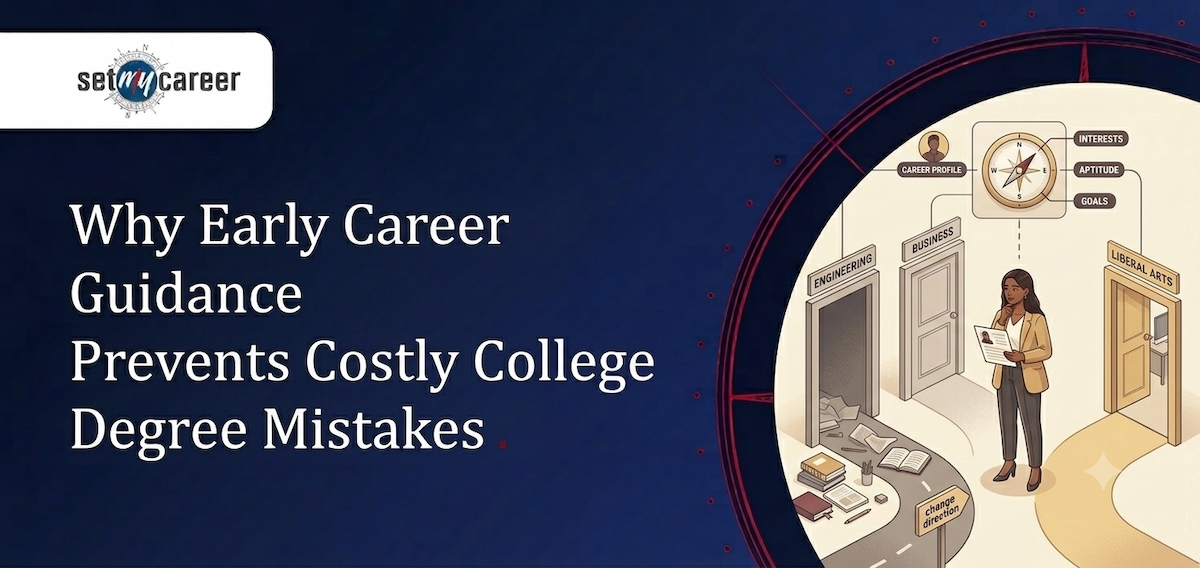
Choosing a college degree is one of the most significant financial and personal decisions you will ever make. Yet, many students commit to a major before truly understanding their strengths, interests, or the reality of the job market. This often leads to changed majors, wasted tuition, and graduating into a field that does not fit. It is completely normal to feel overwhelmed by these choices, but you do not have to navigate this path alone or leave your future to guesswork.
This is where early career guidance plays a vital role. By taking the time to explore your unique personality, skills, and long-term goals before submitting college applications, you can make an informed choice with confidence. Professional guidance helps you align your academic path with a career that genuinely excites you, saving your family from costly tuition mistakes and setting you up for a smoother, happier transition into the professional world.
In this article, we will break down why starting this process early is the smartest investment you can make for your future. You will discover practical ways to identify your natural strengths, understand how to research real-world industry trends heading into 2026, and learn how personalized counseling can help you choose the right degree with absolute clarity. Let's explore how you can take control of your career journey today.
What is Career Guidance and Why is it Necessary?
Career guidance is a structured developmental process that helps individuals identify their personal strengths, skills, and interests. By using data-driven tools and professional counseling, this practice enables students to make informed decisions about their academic pathways, college major selection, and future professional opportunities with confidence.
Making choices about high school streams or university applications without clear direction can result in misaligned academic paths. Professional guidance changes the approach from reactionary to proactive. Rather than choosing paths based on superficial trends or peer pressure, students acquire objective insights into their cognitive strengths and psychological profiles, enabling structured and long-term planning.
The Importance of Early Career Guidance for Students
Starting early offers a distinct advantage. High school students who receive early assistance can select specific high school electives and participate in extracurricular activities that match their future ambitions. This approach builds a cohesive portfolio that appeals to elite universities and prospective employers.
The table below highlights the difference between starting early versus waiting until academic missteps occur:
| Criteria | Early Career Guidance | Delayed / Reactionary Action |
|---|---|---|
| Decision-Making Basis | Objective psychometric data and interest analysis | Unsystematic choices influenced by peer trends |
| Financial Efficiency | Targeted college spending with minimal major changes | Increased risk of extra semesters and wasted tuition |
| Portfolio Readiness | Cohesive profile built through aligned activities | Scattered or generic resume with weak specialization |
Bridging the Gap with Education Counseling
Professional education counseling acts as a bridge between academic potential and industry reality. Experienced counselors analyze academic histories alongside personal traits to match students with suitable institutions and fields. This comprehensive approach offers clarity across multiple levels:
- Academic Stream Alignment: Matching high school subject selection with future university entry requirements.
- Skill Assessment: Identifying cognitive gaps early enough to address them through supplementary courses.
- Institutional Selection: Evaluating colleges based on structural fit, research facilities, and historical placement records.
- Financial Optimization: Pinpointing scholarship opportunities aligned with the student's verified profile.
How Career Guidance Helps Students Choose the Right Major
Career guidance helps students choose the right major by aligning their innate cognitive abilities and personality traits with real-world industry demands. This methodical approach eliminates guesswork, reduces the risk of changing degrees mid-course, and ensures that financial investments in higher education yield sustainable career returns.
Selecting a major is not simply about choosing a subject a student finds interesting. It requires balancing interest, ability, and market viability. When students ignore this balance, academic burnout and career mismatch often follow. Structured planning tools help manage this decision rationally.
The Mechanics of College Major Selection
Professional planning services utilize advanced psychometric assessments to evaluate a student's cognitive profile, personality traits, and career interests. These results are then mapped against real-world professions to identify pathways with high growth potential, especially looking toward the evolving job markets of 2026 and beyond.
| Dominant Personality Trait | Recommended College Major Focus | Prospective Career Sectors (2026) |
|---|---|---|
| Analytical & Empirical | Data Science, Computational Mathematics | Predictive Analytics, Machine Learning |
| Empathetic & Interpersonal | Psychology, Behavioral Economics | Human Resources, Counseling, Public Health |
| Creative & Technical | Human-Computer Interaction, Digital Architecture | User Experience Design, Spatial Computing |
| Systematic & Process-Oriented | Operations Management, Logistics Engineering | Supply Chain Architecture, Sustainable Manufacturing |
Developing Career Readiness for the 2026 Job Market
As automation and emerging technologies reshape the professional landscape, academic credentials alone are no longer sufficient. Developing career readiness requires a proactive strategy that translates theoretical learning into practical skills. High schoolers and college students must master several key competencies to remain competitive:
- Data Literacy: The ability to read, analyze, and communicate with data across non-technical industries.
- Interdisciplinary Versatility: Developing skill sets that cross traditional disciplinary boundaries, such as bio-informatics or tech-policy.
- Cross-Cultural Collaboration: Operating productively in remote, diverse, and globally distributed team environments.
- Adaptive Resilience: Continually updating skills in response to shifting industry workflows and technological changes.
The Role of Academic Advising in Career Planning
Academic advising serves as a roadmap that connects immediate classroom performance with long-term professional objectives. By working closely with advisors, students select coursework, build necessary skill sets, and secure extracurricular opportunities that directly support their chosen career paths, fostering a smoother transition into the workforce.
Advising ensures that students do not just complete graduation requirements, but build a strategic transcript. An advisor coordinates academic performance with career expectations, ensuring the student's transcript demonstrates rigorous preparation for their chosen field.
Integrating Career Guidance for High Schoolers
Starting career guidance for high schoolers ensures they can begin building competitive applications early. Highly selective universities look for focused preparation, rather than general participation. A structured timeline helps students build an authentic narrative for their college applications:
- Grade 9 (Exploration): Exploration of interests and identification of fundamental academic strengths through light testing.
- Grade 10 (Profiling): Formal psychometric profiling to narrow down potential academic streams and elective choices.
- Grade 11 (Experiential): Targeted participation in internships, summer camps, or specialized projects matching the chosen profile.
- Grade 12 (Application): Final college major selection, application strategy, and essay drafting aligned with academic goals.
A Comparison of Mentorship and Academic Advising
While academic advising focuses on coursework and curriculum alignment, comprehensive professional counseling takes a broader approach. Understanding the differences between these types of support helps families choose the right service:
| Feature | Academic Advising | Professional Career Counselling | Industry Mentorship |
|---|---|---|---|
| Primary Objective | Degree completion and course compliance | Holistic life design and career-path identification | Real-world insight into specific roles |
| Methodology Used | Curriculum audits and course mapping | Psychometric assessments and career matching | Informal sharing and networking |
| Engagement Scope | Short-term, semester-by-semester planning | Long-term career readiness and mapping | Informal, relationship-based interactions |
Building a Future-Proof Path: Practical Steps for Students
Students today face a fast-changing academic landscape, but systematic planning helps manage this change. Success comes from taking structured, daily actions that align current studies with future opportunities. By focusing on developmental milestones, families can move forward with confidence.
How Career Guidance Helps Students Overcome Modern Challenges
Many students encounter challenges like academic fatigue, difficulty choosing streams, and conflicting family expectations. Structured career support helps resolve these issues by using objective data to guide discussions and decision-making.
| Common Challenge | Symptom or Risk | Career Guidance Intervention |
|---|---|---|
| Academic Overwhelm | Burnout due to selecting mismatched subjects | Aptitude testing to identify natural cognitive strengths |
| Conflicting Expectations | Disagreements between parent preferences and student interests | Objective, third-party counseling to find balanced paths |
| Underemployment Risk | Graduating with low-demand degrees and general skills | Analyzing job market trends to target high-growth areas |
Strategic Milestones for Career Readiness
Building long-term professional preparedness is a gradual process. Students can track their progress using several key milestones to ensure they remain on track for graduation and beyond:
- Aptitude Assessment: Take verified, scientifically validated profiling tests by Grade 10 or early Grade 11.
- Skills Inventory: Review tech-literacy and communication skills annually to find and fill any developmental gaps.
- Experiential Learning: Complete at least one job-shadowing project or volunteer assignment before starting university.
- Network Building: Connect with alumni working in target fields to gather practical information and build professional relationships.
Conclusion: Secure Your Future with Career Guidance
Choosing a college major is one of the most significant financial and emotional decisions you or your child will ever make. Walking into this high-stakes choice without a clear plan often leads to expensive course corrections, academic stress, and career dissatisfaction later on. Seeking professional career guidance early allows you to align personal strengths, interests, and long-term goals with the right educational pathways, saving valuable years and resources.
You do not have to navigate this complex process alone. Investing in structured support today ensures that the time, effort, and money spent on higher education lead directly to a fulfilling and successful professional life.
Take the guesswork out of your future. Connect with the expert advisors at SetMyCareer today to build a clear, customized roadmap tailored to your unique potential. Book your personalized career guidance session now and make your next step with absolute confidence.