






Quick Summary
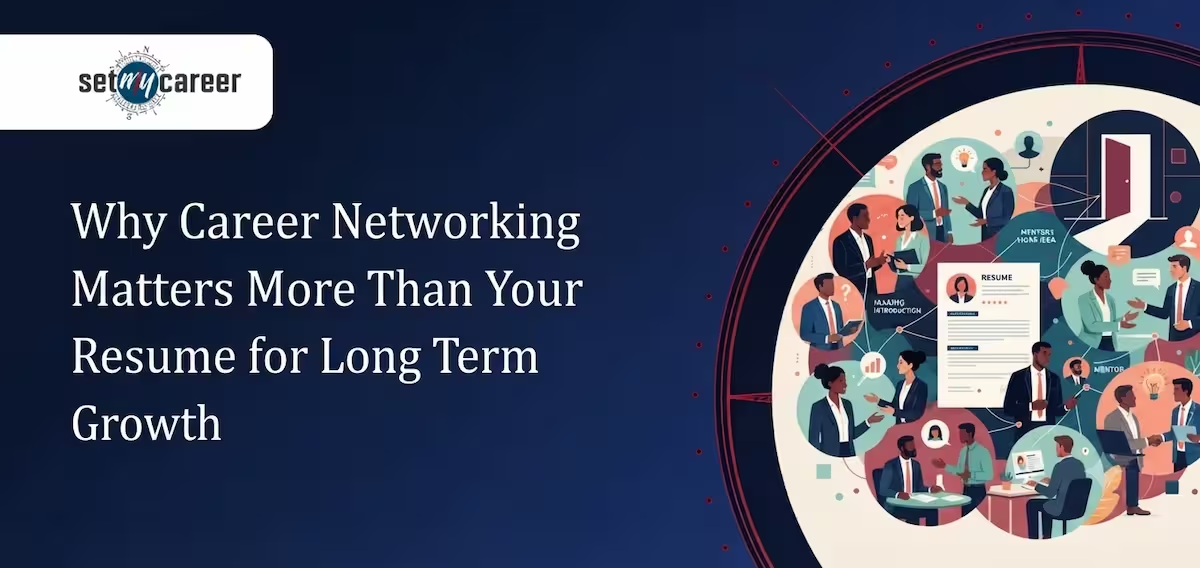
While a polished resume is a great start, building genuine relationships through career networking is the most effective way to unlock the hidden job market and fuel long-term professional growth. By focusing on curiosity and mutual support, you can naturally gain valuable industry insights, find mentors, and discover unadvertised opportunities that align with your unique strengths. At SetMyCareer, we are here to support you with personalized guidance and practical strategies, empowering you to connect with confidence and build a successful, fulfilling career.
Introduction
You have likely spent hours perfecting your resume, tweaking every bullet point to make sure your skills shine. While a polished resume is important to get your foot in the door, it only tells part of your story. The truth is, most career-defining opportunities do not find you through an online job board. Instead, they come through the relationships you build. This is where active career networking becomes your most powerful asset for long-term professional growth.
At SetMyCareer, we work with students, parents, and professionals daily, and we consistently see how a strong professional circle opens doors that a simple piece of paper cannot. Navigating the job market in 2026 requires more than just submitting applications; it requires building meaningful connections with people who can advocate for you. In this guide, you will learn why building a genuine network is the ultimate key to sustainable success and how you can start cultivating these relationships naturally, even if you are just starting out.
By shifting your focus from simply collecting job offers to building mutually beneficial relationships, you set yourself up for continuous growth, mentorship, and unexpected opportunities. Let's look at how you can transition from a passive job-seeker to a well-connected professional who stands out in any industry.
What is Career Networking?
Career networking is the active process of building, nurturing, and maintaining mutually beneficial relationships with other professionals. This collaborative practice helps individuals exchange valuable industry insights, uncover unadvertised job opportunities, secure expert guidance, and establish supportive connections that foster continuous professional growth across diverse business sectors.
Understanding this concept is the first step toward transforming how professionals approach career transitions and skill-gap analysis. Many people mistakenly view networking as a transactional exchange—simply passing out business cards or asking for immediate job referrals. True career networking focuses on mutual value, where both parties share knowledge, support, and resources over time.
By establishing these relationships early, students, parents planning their children's education, and working professionals can gain first-hand insights into industry trends. This proactive approach helps demystify various career paths and ensures that educational or training investments align with real-world industry demands.
The Primary Benefits of Career Networking in Modern Industries
Active relationship building serves as the cornerstone of long-term professional development. Relying solely on public employment portals often limits visibility, as hundreds of applicants compete for the same automated listings. Developing strong industry contacts bypasses these bottlenecks by fostering credibility and trust before an official vacancy is even announced.
Unlocking the Hidden Job Market
A substantial portion of executive and specialized roles are never advertised publicly. Companies frequently prefer to hire through internal recommendations or trusted professional channels to reduce recruitment risks and onboarding times. Building a structured network positions candidates directly in front of hiring managers, converting passive job seekers into highly sought-after prospects.
| Feature | Traditional Job Applications | Network-Driven Job Searches |
|---|---|---|
| Average Response Rate | Low (often under 5-10% due to automated tracking systems) | High (direct human interaction and personal recommendation) |
| Access to Roles | Limited to public postings and highly saturated markets | Unlocks unadvertised positions and internal talent pipelines |
| Trust Building | Based solely on a resume and cover letter | Established through existing professional relationships |
| Feedback Loop | Rarely provided, leading to job-search frustration | Direct, constructive feedback from industry peers |
Accelerating Professional Development and Skill Acquisition
Interacting with established leaders provides clarity regarding necessary competencies and emerging sector shifts. These discussions highlight specific skill gaps, enabling professionals to pursue targeted certifications or academic pathways rather than guessing what employers want. The benefits of career networking include:
- Access to Insider Knowledge: Learn about upcoming technological adoptions and organizational restructuring before they hit the news.
- Aptitude-Based Planning: Gain external validation on whether specific roles align with your natural strengths and cognitive styles.
- Enhanced Visibility: Establish yourself as an engaged, curious professional within your chosen field.
- Career Transition Support: Receive guidance on how to translate transferable skills when moving between different industries.
How to Start Career Networking from Scratch
For many students and early-career professionals, initiating these connections can feel intimidating. However, learning how to start career networking is a structured process that can be mastered with clear steps and consistent practice. Success lies in shifting from a self-serving mindset to one centered on curiosity and learning.
Building Your Core Profile and Identifying Industry Contacts
Before reaching out to others, it is necessary to establish a clear professional identity. This begins with an updated digital presence that highlights your genuine interests, current skills, and academic achievements. Once this foundation is in place, you can strategically map out potential contacts within your target organizations.
| Phase | Actionable Objective | Expected Outcome |
|---|---|---|
| 1. Profile Optimization | Align your online bios and summaries with your specific industry focus and skills. | A credible digital footprint that validates your outreach. |
| 2. Target Mapping | Identify 10-15 professionals working in roles or companies you admire. | A focused list of high-value industry contacts to contact. |
| 3. Personalized Outreach | Draft brief, customized messages focusing on their career journey, not job openings. | Initial conversations and scheduled informational interviews. |
Initiating Meaningful Outreach and Informal Mentorship
When contacting new industry contacts, focus on asking for advice, insight, or information rather than employment. This low-pressure strategy often leads to informal mentorship, providing you with continuous guidance and advocacy over time. To ensure these initial discussions are fruitful, prepare structured discussion points beforehand.
- Prepare Thoughtful Questions: Focus on their career trajectory, industry challenges, and recommendations for newcomers.
- Respect Their Time: Keep initial meetings to a strict fifteen-to-twenty-minute limit, whether virtual or in person.
- Offer Value First: Share an interesting industry report or offer to assist with minor tasks if appropriate.
- Follow Up Systematically: Send a thank-you note within twenty-four hours, referencing a specific piece of advice they shared.
Career Networking for Introverts: Strategies for Quiet Success
What are the Best Networking Techniques for Introverted Professionals?
The best networking techniques for introverted professionals focus on individual interactions, deliberate preparation, and written communication. By utilizing platforms like LinkedIn for initial outreach, requesting relaxed informational interviews, and attending smaller, targeted industry gatherings, introverts can build deep, meaningful connections without experiencing social exhaustion.
Introversion is often misunderstood as a disadvantage in professional spaces. In reality, introverted individuals possess natural strengths—such as active listening, deep observation, and thoughtful analytical processing—that make them exceptionally skilled at building deep, long-term professional relationships. By focusing on quality over quantity, introverts can construct powerful circles without pretending to be extroverted.
To maximize these natural capabilities, introverts should adopt highly focused, low-stimulus strategies. Instead of attending large, noisy mixers, focus on structured, smaller environments where deep conversations can thrive naturally. Consider implementing these targeted approaches:
- One-on-One Informational Coffee Chats: Focus your energy on individual meetings where you can ask deep questions and listen intently.
- Leverage Written Communication: Use well-crafted emails and LinkedIn messages to initiate contact, giving you time to formulate your thoughts.
- Participate in Niche Forums: Join specialized online groups or professional associations aligned with your exact technical interests.
- Volunteer for Industry Events: Taking on an active role, such as registration or speaker coordination, provides a structured reason to speak with attendees.
Integrating Networking into Your Broader Job Search Strategy
A balanced job search strategy does not rely on a single method. Instead, it weaves relationship-building directly into daily activities, ensuring that application submissions and personal outreach support one another. This integrated approach dramatically increases your hiring potential and helps you secure roles that offer genuine cultural and professional alignment.
| Career Stage | Primary Networking Channel | Strategic Goal |
|---|---|---|
| Student / Recent Graduate | Alumni networks, academic clubs, and entry-level career fairs | Explore career paths, secure internships, and find informal mentorship. |
| Mid-Level Professional | Industry-specific associations, panels, and digital forums | Share expertise, stay updated on market trends, and transition roles. |
| Senior / Executive Leader | Speaking engagements, board memberships, and peer advisory groups | Form strategic partnerships, recruit top talent, and build industry legacy. |
To ensure consistency, structure your weekly schedule to dedicate specific blocks of time to both application submissions and direct outreach. Over time, this systematic habit ensures that you are never starting from scratch when a sudden career transition or industry shift occurs.
Your Next Step: Prioritizing Career Networking
While a well-crafted resume is essential to showcase your qualifications, it only tells part of your story. True career longevity and growth come from the connections you build along the way. Strategic career networking does more than help you find your next job; it introduces you to mentors, uncovers hidden opportunities, and provides a reliable support system when you navigate career transitions.
Building a professional network does not have to feel overwhelming or transactional. It starts with simple, genuine conversations driven by curiosity and a mutual desire to learn. By shifting your focus from "what can I get" to "how can we connect," you build a reputation as a collaborative, proactive professional who is ready for long-term growth.
If you are unsure where to start or feel hesitant about reaching out to others, you do not have to figure it out alone. At SetMyCareer, our experienced advisors can help you build a personalized strategy to approach career networking with confidence and authenticity. Get in touch with us today, and let us help you map out a clear path to sustainable career success.