

Quick Summary
Preparing for a job interview can feel overwhelming, but practicing with a professional mock interview is the most effective way to ease your anxiety and build genuine confidence. These realistic simulations act as a safe dress rehearsal, helping you master verbal communication, refine your body language, and learn how to handle unexpected questions with ease. By identifying your blind spots early and receiving tailored feedback from SetMyCareer's expert coaches, you can confidently turn your preparation into a successful job offer.
Introduction
Walking into a job interview can feel incredibly nerve-wracking, whether you are a recent graduate looking for your first job or an experienced professional aiming for a major career transition. You might have an impressive resume and the perfect qualifications, but translating those achievements into a confident conversation under pressure is a completely different challenge. That is why practicing with a professional mock interview is so critical—it acts as a realistic dry run that closely mirrors the actual hiring environment.
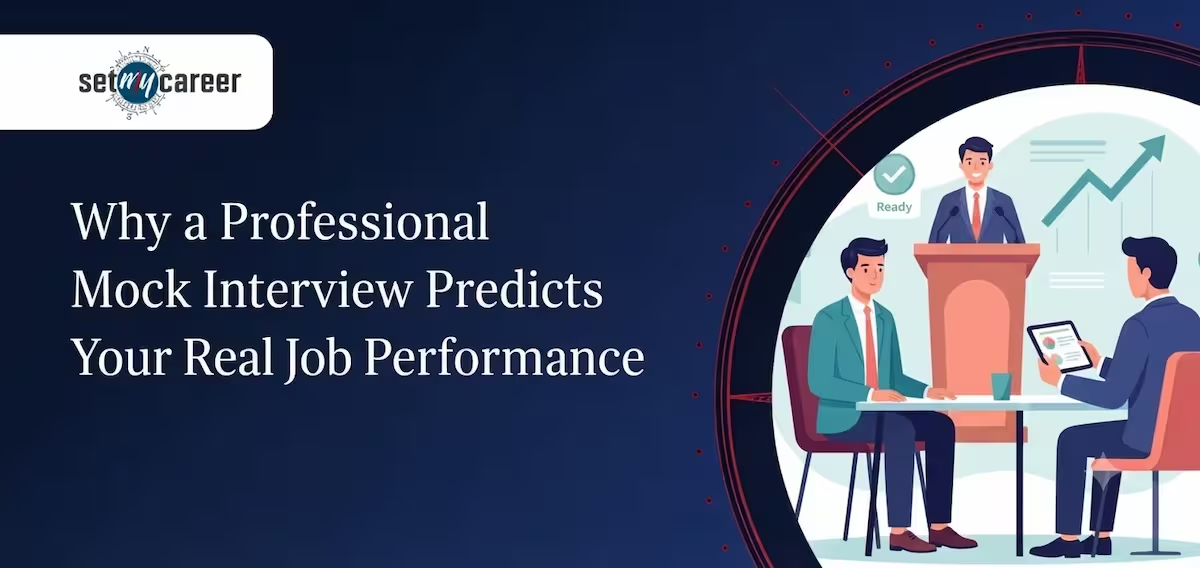
A structured mock interview does much more than just help you rehearse your answers; it serves as a highly accurate predictor of your real-world job performance. By simulating the exact pressure, question formats, and behavioral assessments used by top recruiters in 2026, it reveals how you handle unexpected challenges, communicate your value, and think on your feet. Understanding your performance in a safe, constructive environment allows you to pinpoint your blind spots and build genuine confidence before the high-stakes day arrives.
This guide explains the practical reasons why these simulated sessions are so effective at predicting hiring outcomes. You will discover how targeted, expert feedback can transform your presentation skills, help you manage anxiety, and give you the competitive edge needed to secure your next role. Let us explore how you can use this practical tool to turn your preparation into a successful job offer.
What is a Mock Interview and How Does It Work?
A mock interview is a realistic simulation of a job interview designed to replicate the pressure, format, and environment of an actual hiring session. It allows candidates to practice answering targeted questions, receive feedback on their performance, and refine their overall presentation before meeting potential employers.
These structured practice sessions replicate real-world scenarios with high accuracy. Professional career advisors or industry specialists design these simulations to evaluate how candidates respond under pressure. By utilizing historic question banks, behavior rubrics, and current recruitment trends, these practice runs recreate the exact tone, pacing, and difficulty level of top-tier corporate evaluations.
Participating in a structured trial run provides a realistic comparison to the actual hiring process, as detailed in the comparative analysis below:
| Evaluation Area | Mock Interview Setting | Actual Job Interview |
|---|---|---|
| Primary Objective | Skill assessment, identifying weaknesses, and structured improvement. | Candidate selection and final employment offers. |
| Consequences of Errors | Opportunities for real-time correction and constructive learning. | Risk of immediate rejection or missed career opportunities. |
| Feedback Mechanism | Immediate, detailed performance analysis and actionable advice. | Often limited to a standard acceptance or rejection notification. |
By treating these practice runs as real evaluation days, candidates establish a psychological baseline. This helps individuals understand how they process information, manage time, and articulate their thoughts under professional scrutiny. Transitioning from passive preparation to active verbal practice helps ensure that academic achievements and technical competencies translate into a cohesive professional narrative.
The Core Benefits of a Mock Interview for Career Readiness
Engaging in structured practice before an actual meeting provides candidates with a significant competitive advantage in today's crowded job market. The benefits of a mock interview go far beyond simple question rehearsal, transforming how candidates present their unique value proposition to recruiters. By identifying knowledge gaps early, professionals can refine their technical and behavioral responses to better align with employer expectations.
This systematic approach to preparation equips candidates with several indispensable advantages:
- Objective Assessment: Receives an unbiased evaluation of existing skill sets and communication patterns.
- Structured Response Formulation: Enhances the ability to organize thoughts logically using proven communication frameworks.
- Familiarity with Modern Formats: Builds comfort with diverse evaluation styles, including panel, technical, and behavioral assessments.
- Contextual Adaptability: Prepares candidates to transition smoothly between different industry requirements and team dynamics.
Reducing Interview Anxiety Through Exposure
Experiencing high levels of interview anxiety can cause even the most qualified candidates to lose focus and struggle with clarity. Simulating the high-stress environment of a live interview panel helps normalize the situation, reducing cognitive overload during the actual evaluation. Through repeated exposure, candidates learn to control physical stress markers and maintain composure under questioning.
The table below highlights common psychological barriers and how targeted simulation strategies help mitigate them:
| Anxiety Trigger | Behavioral Impact | Mock Interview Mitigation Strategy |
|---|---|---|
| Unexpected Questions | Long pauses, stammering, or off-topic responses. | Teaching structured frameworks to formulate answers quickly. |
| Intimidating Panelists | Loss of focus and decreased confidence. | Simulated panels that build comfort with diverse audience dynamics. |
| Strict Time Limits | Rushed, incomplete, or disorganized explanations. | Timed practice runs to improve natural pacing and conciseness. |
Polishing Verbal Communication Skills and Body Language
Strong communication skills and professional body language are just as influential as technical qualifications. In many cases, how a candidate delivers an answer is just as impactful as the content of the response. Simulated sessions track non-verbal cues that candidates often overlook, such as eye contact consistency, physical posture, and unnecessary hand gestures.
To establish a highly polished professional presence, candidates should focus on several key communication and behavioral markers:
- Eye Contact: Maintaining consistent visual engagement to project transparency and confidence.
- Physical Posture: Sitting erect yet relaxed to demonstrate attentiveness and leadership readiness.
- Vocal Pacing: Avoiding rapid speech by incorporating deliberate pauses to emphasize key metrics.
- Non-Verbal Gestures: Eliminating repetitive, distracting physical habits that indicate nervousness.
How Constructive Feedback Transforms Your Performance
Receiving direct, objective guidance after a trial run is the most rapid way to improve performance. Unlike generic online tips, constructive feedback addresses personal communication patterns and highlights specific professional blind spots. This targeted evaluation helps candidates adjust their strategies in real-time, correcting errors before they can impact an actual hiring decision.
The transition from a raw, unpolished performance to an exceptional presentation depends on addressing common development areas:
| Identified Behavioral Issue | Direct Impact on the Recruiter | Corrective Action and Strategy |
|---|---|---|
| Overusing Filler Words | Projects hesitation, uncertainty, and a lack of preparation. | Practicing intentional pauses to organize thoughts calmly. |
| Vague Responses | Fails to demonstrate actual competency or quantifiable impact. | Adopting the STAR method (Situation, Task, Action, Result) strictly. |
| Unfocused Career Narratives | Creates doubts regarding professional commitment and clarity. | Drafting a logical progression highlighting transferable skills. |
To turn professional suggestions into lasting improvements, candidates should follow a methodical review process:
- Documenting Feedback: Note every criticism and recommendation immediately following the session.
- Reviewing Recordings: Analyze audio or video playback to objectively assess physical habits and speech patterns.
- Isolating Key Weaknesses: Focus on correcting one major issue at a time rather than trying to fix everything at once.
- Executing Repeated Trials: Schedule follow-up practice runs to ensure that corrective adjustments have become natural.
Where to Get Mock Interviews for Professional Success
Candidates can access mock interviews through professional career counseling services, university placement departments, certified industry mentors, and specialized online practice platforms. Utilizing a balanced mix of these structured resources ensures an optimal preparation environment that combines specialized technical evaluation with comprehensive behavioral feedback.
Identifying the most suitable preparation path depends on an individual's current career stage and specific professional goals. Whether preparing for a transition into a leadership role or entering the job market after graduation, selecting the right preparation format is essential for maximizing success.
Evaluating Mock Interview Practice Online and Offline Options
Choosing the right environment depends on individual learning preferences, career goals, and the format of the upcoming hiring process. While offline sessions mimic physical boardroom settings, mock interview practice online options offer unmatched flexibility and rapid scheduling. Evaluating these formats helps candidates invest their time and resources wisely.
The table below provides a detailed comparison of standard preparation methods to assist in making an informed choice:
| Preparation Format | Key Advantages | Inherent Limitations | Primary Target Audience |
|---|---|---|---|
| Online Simulated Platforms | High convenience, rapid booking, and diverse industry expert pools. | Less focus on physical boardroom dynamics and handshakes. | Remote job seekers and busy working professionals. |
| In-Person Advisory Centers | Realistic physical setting and precise evaluation of physical cues. | Requires commuting, higher costs, and rigid scheduling. | Executive candidates and corporate leadership roles. |
| Peer-to-Peer Networks | Low cost, high collaboration, and easily accessible. | Potential lack of objective, high-level industry expertise. | University students and early-stage career explorers. |
When choosing a preparation partner or platform, candidates should look for services that align closely with their industry-specific requirements. Evaluating service providers based on clear, professional criteria helps ensure a high-quality practice experience:
- Evaluator Experience: Verify that the advisor has direct experience in the target industry.
- Feedback Quality: Ensure the service offers written, analytical rubrics rather than generic verbal advice.
- Customization Options: Confirm that the session can be tailored to mirror a specific company's hiring process.
- Technology Integration: Look for platforms that provide high-definition recordings and performance metrics for self-review.
Conclusion: Step into Your Next Interview with Confidence
Facing a major job interview can feel overwhelming, but you do not have to walk into the room unprepared. A professional mock interview acts as a clear mirror, showing you exactly how you handle pressure, structure your answers, and present your skills. By replicating the actual conditions of your upcoming meeting, you can identify your blind spots and build the authentic confidence needed to stand out to hiring managers.
Think of this preparation as a dress rehearsal for your career. Instead of learning from mistakes during the actual hiring process—where the stakes are incredibly high—a structured practice run allows you to refine your approach in a safe, constructive environment. It is the most effective way to bridge the gap between knowing your value on paper and proving it in person.
Ready to turn your next job application into a successful job offer? At SetMyCareer, our experienced career coaches provide realistic mock interview sessions tailored to your specific industry and career goals. We help you sharpen your communication, handle difficult questions with ease, and project the professionalism employers want to see. Book your mock interview session today and take the next step toward your career goals with absolute certainty.