






Planning your career trajectory often feels like a monumental task. Between navigating shifting job markets, acquiring new skills, and figuring out what actually brings you fulfillment, the process can easily become overwhelming. However, building a comprehensive career strategy is one of the highest-leverage activities you can undertake for your professional future.
Career counselling provides a simple guide to effective career planning for individuals.
In this guide, we will explore the core components of effective career management. We will break down what career planning actually entails, why it is essential for long-term success, and how to execute it systematically. From understanding the core objectives of career selection to building a smart, adaptable career progression plan, this framework will help you transition from simply holding a job to actively directing your professional life.
What Is Career Planning?
Career planning is the continuous, strategic process of identifying your professional objectives and mapping out a realistic path to achieve them. It requires a deep evaluation of your inherent skills, interests, and core values, followed by the alignment of those traits with viable career options in the market.
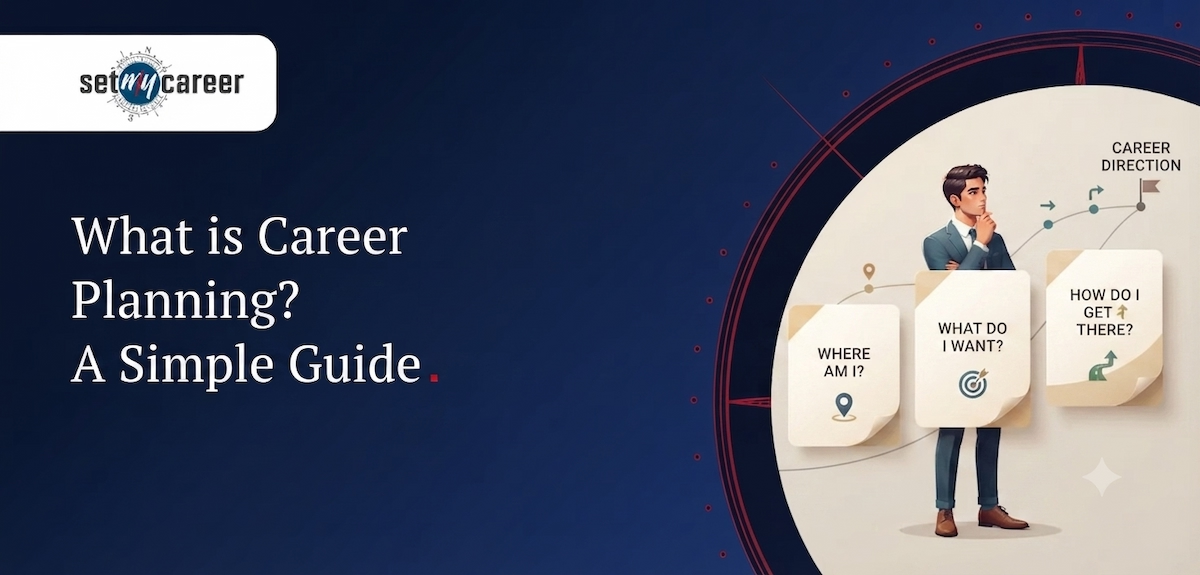
Far beyond simply applying for your next role, career planning is about constructing a long-term vision for your working life. It demands that you ask yourself foundational questions, such as:
- What specific types of work bring me genuine fulfillment and energy?
- What technical and soft skills must I acquire to remain competitive?
- What is my target salary, title, and work environment for the next five to ten years?
This process is not exclusive to recent graduates or active job seekers. Whether you are stepping into your very first role, aiming for an executive promotion, or considering a complete industry pivot, a career plan acts as your navigational blueprint.
Why Strategic Career Planning Matters
Without a defined strategy, many professionals fall into the "default path"—drifting from one opportunity to the next based on convenience rather than intent. While this can occasionally lead to happy accidents, it more frequently results in career plateaus, professional burnout, and a deep sense of being stuck in an unfulfilling loop.
The primary objectives of career planning are designed to prevent this drift by returning control to the individual. A well-constructed strategy provides clarity, enabling you to:
- Make data-driven career decisions: You evaluate new opportunities based on how well they serve your long-term goals, rather than just their immediate salary or prestige.
- Guide your professional development: You know exactly which certifications, courses, or experiences are worth your time and financial investment.
- Ensure alignment: You actively seek out organizations and roles that match your personal values, strengths, and desired working conditions.
- Maintain consistent growth: A structured progression plan prevents stagnation by setting clear benchmarks for your advancement.
Ultimately, a documented career plan transforms professional uncertainty into actionable direction.
How to Decide on a Career Path
One of the most intimidating hurdles in professional development is simply figuring out how to choose a career in the first place. With thousands of potential paths and heavy societal pressure, decision paralysis is common. Fortunately, you can break this down into a manageable, structured process.
Start With Rigorous Self-Reflection
Begin by auditing your own traits. Identify your natural strengths, established interests, and non-negotiable core values. What kind of complex problems do you actually enjoy solving? Do you thrive in highly collaborative environments, or do you produce your best work in deep, independent focus? Understanding your baseline is the first requirement of any successful career choice.
Explore the Market and Industry Trends
Once you understand your own preferences, investigate how they intersect with the real-world job market. Research growing industries and specific job roles that align with your personality. Look closely at day-to-day responsibilities, long-term growth trajectories, and the future viability of the industry to ensure you are entering a field with sustainable demand.
Align With Your Lifestyle Goals
A career does not exist in a vacuum; it funds and shapes your life. Consider how different professions interact with your desired lifestyle. Think critically about the level of income you require, the work-life balance you expect, and whether a role offers the geographic flexibility (such as remote work) that you might desire.
Test the Waters Before Committing
You do not have to guess if a career is right for you. Look for low-risk ways to test your interest in a specific field before making a massive pivot. This can include taking on side projects, applying for internships, job shadowing, volunteering, or conducting informational interviews with senior professionals currently working in your target role.
Career Selection: Making the Right Choice
Career selection is the critical turning point where exploration transitions into commitment. It involves choosing a specific profession or industry niche that not only leverages your current abilities but also provides ample room for future mastery and financial growth.
It is important to remember that optimal career selection is rarely about finding a flawless, "perfect" job. Instead, it is about identifying a high-potential intersection between what you are naturally good at, what you find engaging, and what the market is willing to pay for. Once you have made this calculated selection, you can begin engineering a plan to ascend within that specific field.
The Core Steps in Career Planning
To organize your ambitions into realistic, actionable goals, follow this proven sequential framework.
1. Conduct a Comprehensive Self-Assessment
Perform an honest inventory of your current professional standing. Document your hard skills, soft skills, significant achievements, and areas requiring improvement. Understand exactly what you bring to the table.
2. Perform Thorough Career Research
Dive deep into your chosen field. Map out the standard hierarchy of roles, understand the mandatory qualifications for your next desired position, and identify the key thought leaders and networking hubs within the industry.
3. Establish SMART Career Goals
Define both short-term (1–3 years) and long-term (5–10 years) objectives. Ensure these goals are Specific, Measurable, Achievable, Relevant, and Time-bound. Examples include obtaining a specific management certification by Q3 or securing a Director-level title within four years.
4. Develop a Career Progression Plan
This document acts as your step-by-step operational manual. It bridges the gap between where you are currently and where you intend to go, outlining the exact skills to learn, projects to lead, and relationships to build.
5. Take Decisive Action
A plan is useless without execution. Begin immediately working toward your defined milestones. Update your resume, enroll in necessary training programs, apply for stretch roles internally, and actively expand your professional network.
6. Review, Reflect, and Recalibrate
Industries evolve rapidly, and your personal priorities will shift over time. Schedule a formal review of your career plan every six to twelve months to ensure your daily actions still align with your overarching goals. Adjust your trajectory as needed.
Understanding the Career Planning Process as a Continuous Cycle
It is a common misconception that career planning is a singular event you complete upon graduating from university. In reality, it is a continuous, iterative cycle of reflection, decision-making, and execution. As you gain experience, learn new technologies, and witness shifts in the global economy, your strategic plan must adapt.
The lifecycle of career management follows this continuous loop:
- Assess your current market value and job satisfaction.
- Explore newly emerging roles and lateral opportunities.
- Plan the tactical steps required to reach the next tier of your profession.
- Act on that plan through upskilling and aggressive networking.
- Evaluate the outcomes, learn from the data, and repeat the cycle.
Embracing this cyclical process ensures you remain proactive, adaptable, and highly competitive, regardless of economic conditions.
Career Progression: What It Actually Looks Like
Career progression refers to the tangible advancement and professional growth you experience over time. Historically, this was viewed strictly as climbing a vertical corporate ladder. Today, progression is far more dynamic. It can involve moving into upper management, transitioning into a highly specialized individual contributor role, or even laterally shifting into an entirely new, high-growth industry.
Key indicators of healthy career progression include:
- Securing formal promotions and title advancements.
- Taking on higher-stakes projects and increased organizational responsibilities.
- Measurably enhancing your technical and leadership skills.
- Expanding your sphere of influence and professional network.
- Earning higher compensation, equity, or better benefits.
- Transitioning into roles that offer greater autonomy and better align with your long-term vision.
Creating Your Career Progression Plan
If a career plan is the overarching strategy, your career progression plan is the tactical checklist. It is a highly personalized document outlining the exact requirements for your next major professional leap.
To build an effective progression plan, ensure you clearly document the following elements:
- Current Baseline: A brutally honest assessment of your current role, salary, and skill set.
- The Target Position: The exact job title, company tier, or income level you are aiming for next.
- The Skill Gap: The specific qualifications, software proficiencies, or leadership experiences you currently lack to secure that target role.
- The Action Timeline: Hard deadlines for when you will complete specific courses, update your portfolio, or begin submitting applications.
- The Support System: A list of mentors, industry peers, or internal advocates who can provide guidance, referrals, and feedback along the way.
By compartmentalizing massive career goals into structured, bite-sized action items, you eliminate overwhelm and drastically increase your likelihood of success.