





Planning a career requires more than just updating a resume when looking for a new job. In an evolving global employment market, having a clear directional strategy helps save time, minimize professional friction, and enable confident decisions. One of the most effective tools for achieving this clarity is a career map.
Career counselling helps individuals create a career map to visualize their professional journey.
A career map serves as a personal strategic framework, outlining where you stand today, where you intend to go, and the exact steps required to bridge the gap. Whether navigating the competitive job markets of tech hubs like Bangalore and San Francisco, or shifting industries within global business centers like Dubai, London, and Toronto, a career map provides a concrete blueprint. Using a dedicated career planner to organize goals and track milestones ensures you remain accountable to your long-term vision.
What Is a Career Map?
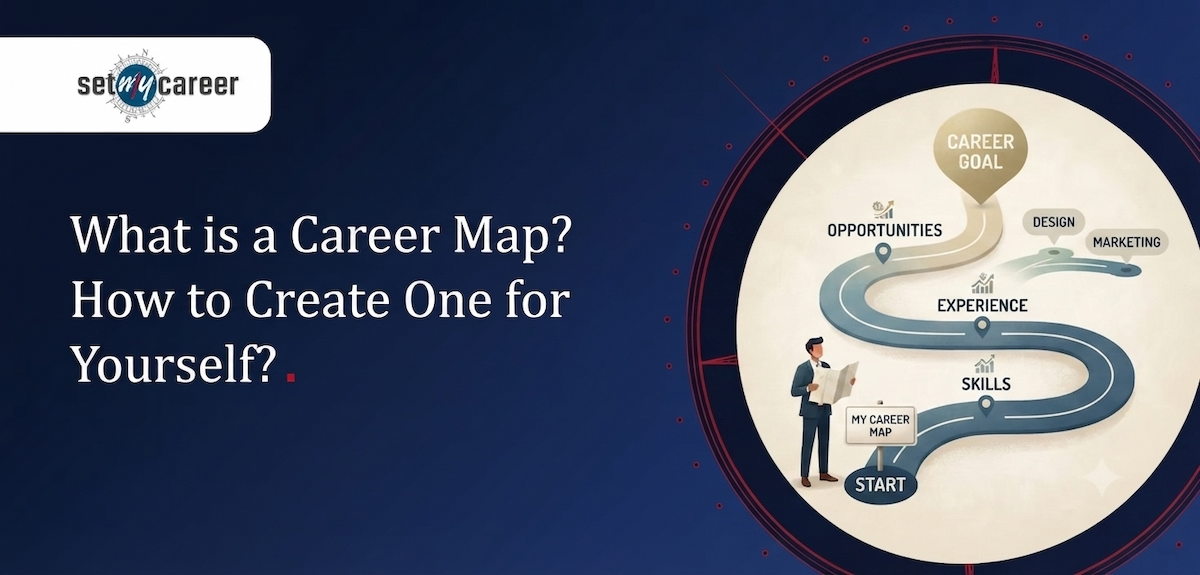
A career map is a structured, forward-looking plan that aligns your current professional status with your long-term occupational goals. Rather than drifting reactively from one opening to another, mapping allows you to proactively steer your advancement.
A comprehensive career map integrates several core elements:
- Current Baseline: A clear assessment of your present job title, core competencies, and foundational experience.
- Long-Term Target: Specific roles, responsibilities, or leadership levels you aim to achieve in the future.
- Skill Gap Analysis: The precise identification of certifications, technical proficiencies, soft skills, and educational qualifications needed to advance.
- Incremental Timelines: Realistic, time-bound intervals designated for achieving intermediate milestones.
Think of it as a professional GPS: you define the destination, and the map outlines the optimal routes, potential detours, and necessary checkpoints along the way.
Why Is a Career Map Crucial for Long-Term Success?
The foundation of any successful career strategy is thorough self-assessment. Without a plan, professionals frequently find themselves stuck in roles that offer little growth or engagement, simply because they haven't mapped out their next move.
Implementing a career map offers distinct strategic advantages:
- Objective Clarity: It removes ambiguity from your professional life, giving you a definitive target to aim for every day.
- Strategic Direction: It filters out distractions, helping you turn down opportunities that look lucrative but ultimately derail your primary goals.
- Sustained Motivation: Breaking down a 10-year goal into smaller benchmarks makes progress visible, sustaining momentum.
- Data-Driven Decision Making: When faced with an unexpected promotion, job offer, or industry shift, you can objectively evaluate if it aligns with your map.
Who Should Create a Career Map?
Career mapping is not reserved solely for corporate executives; it provides immense value at every professional stage.
Students and Recent Graduates: A map guides your academic focus, helping you select internships, elective courses, and initial entry-level roles that directly feed into your target field.
Mid-Career Professionals: Working executives can use a map to engineer their next promotion, transition from technical execution to strategic leadership, or safely pivot into an entirely new sector.
Freelancers and Remote Workers: Independent professionals benefit heavily from mapping to scale their service offerings, raise command rates, acquire high-value skills, and build sustainable client pipelines without traditional corporate ladders.
How to Create Your Own Career Map: A Step-by-Step Framework
Building a functional career map requires systematic execution. The following framework can be adapted to any industry or geographic location.
Step 1: Conduct a Comprehensive Self-Assessment
Before plotting a route, you must understand your current baseline. Evaluate your core strengths, technical skills, and workplace values. Ask yourself what specific tasks give you a sense of achievement and where you see your industry heading over the next decade. If you are based in a tech-centric ecosystem like Bangalore, your assessment might focus heavily on AI tools, software methodologies, or digital product management. If you are in Delhi or Chicago, your focus might land on financial frameworks, supply chain logistics, or corporate education systems.
Step 2: Define Your Ultimate Career Target
Identify your target destination with precision. Avoid vague goals like "I want to be a manager." Instead, define the specific function, industry, and scale of the role. For example, a clear target looks like: "Transition from a Customer Support Associate to a Senior Product Manager within a high-growth SaaS enterprise in Dubai." Your target does not have to be limited to a single job title; it can encompass a cluster of related leadership roles within a chosen ecosystem.
Step 3: Break the Journey Down into Actionable Milestones
Plot the intermediate steps required to move from your current baseline to your ultimate target. This phase typically involves bridging the skills gap. Identify the specific certifications required—such as PMP for project managers, Google Analytics for digital marketers, or specialized coding credentials for engineers. Look for opportunities to lead cross-functional projects in your current role, attend targeted networking events, or seek out professional career counseling services to refine your approach.
Step 4: Establish Realistic Timelines
Assign flexible yet structured timeframes to each phase of your development. This prevents stagnation and maintains momentum. For example, you might allocate three months to earn a technical certification, nine months to secure an internal lateral transfer, and two years to build the leadership experience required for an executive role. Structured timelines are especially useful in fast-moving commercial hubs where market demands shift quickly.
Step 5: Implement a Career Planner to Track Growth
A career map is a living strategy that must be actively managed using a career planner. Whether you prefer a digital system like Trello or Notion, a dedicated spreadsheet, or a physical journal, your planner should serve as a daily dashboard. Use it to log key achievements, document feedback from mentors, track ongoing upskilling modules, and review your overarching trajectory at regular quarterly intervals.
Real-World Application: Career Mapping in Action
To visualize how this works, let's examine a hypothetical career map for a finance graduate based in a competitive business hub like Mumbai.
| Career Stage | Core Activity / Focus Area | Target Timeline |
| Current Position | Securing an entry-level internship at a boutique financial firm. | Immediate (0–3 Months) |
| Skill Upskilling | Mastering advanced financial modeling, Excel macros, and Tableau. | Months 3–6 |
| Mid-Term Step | Transitioning to a full-time Junior Analyst role at a mid-sized firm. | Months 6–12 |
| Long-Term Objective | Achieving a Senior Financial Analyst position at a multinational corporation. | Years 2–3 |
By mapping this out, the professional avoids taking random roles in unrelated sectors, ensuring every year of employment compounds their expertise.
Common Pitfalls to Avoid in the Mapping Process
When engineering your career path, ensure you avoid these standard strategic mistakes:
- Maintaining Vague Targets: General goals yield general results. Be specific about the skills, responsibilities, and industries you want to operate in.
- Ignoring Local Market Realities: Job markets are highly regional. A strategy that works perfectly in the creative sectors of London may need significant adaptation in the industrial frameworks of Munich or Singapore.
- Treating the Map as Fixed: Industries evolve, and personal passions change. Review and recalibrate your career map every six to twelve months to ensure it still reflects your values.
- Rushing the Progression: Sustainable career growth requires building foundational expertise. Treat your map as a long-term compound investment rather than a sprint.
Conclusion: Taking Control of Your Professional Trajectory
Developing a career map is one of the most proactive steps you can take to safeguard your professional future. It transforms career development from a series of random events into a deliberate, structured journey. Whether you are operating in high-growth tech hubs, navigating traditional corporate finance environments, or building an independent remote business, visual clarity remains your greatest competitive advantage. Begin by evaluating your current strengths, defining a specific destination, and utilizing a career planner to manage your trajectory step by step. Your professional path is yours to engineer—start building it today.