



Quick Summary
Navigating major career decisions can feel overwhelming, but professional guidance removes the guesswork by replacing uncertainty with data-driven clarity. Through scientific psychometric testing and personalized development roadmaps, you can easily identify your natural strengths, bridge critical skill gaps, and align your goals with real-world market opportunities. Partnering with SetMyCareer empowers you to navigate transitions with absolute confidence, turning career stagnation into a rewarding, future-proof professional journey.
Introduction
Choosing your next job can feel like standing at a massive crossroads. With so many different industries, job titles, and paths to choose from, it is completely natural to feel overwhelmed and uncertain about your next move. Making a major career decision without a clear strategy often leads to frustration, making you feel stuck in roles that do not truly fit your unique potential or long-term goals.
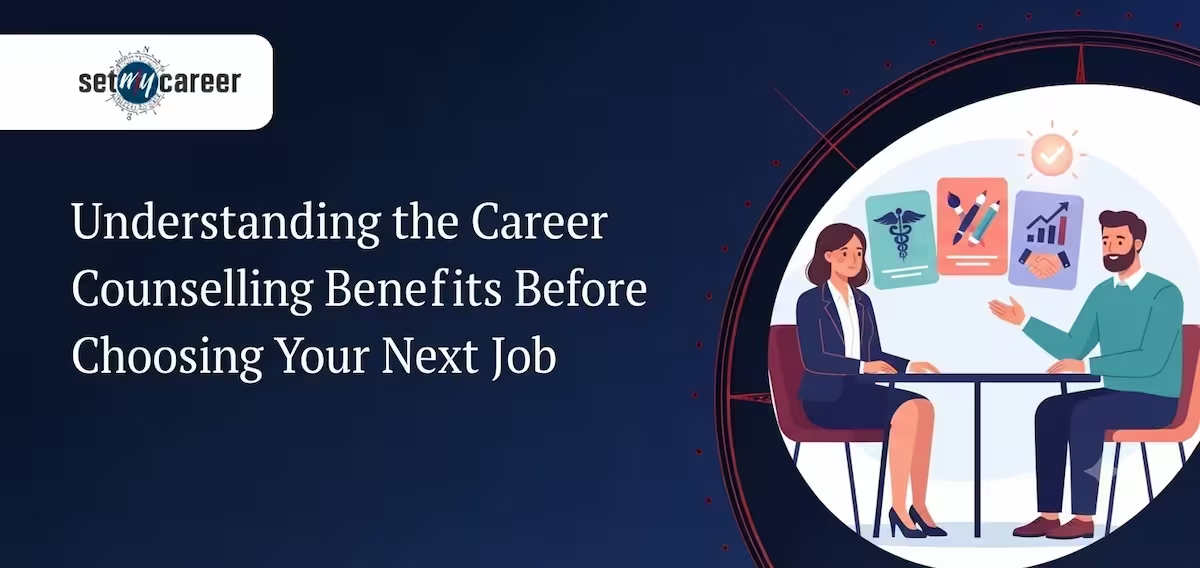
This is where understanding the career counselling benefits can completely change how you navigate your professional journey. Professional guidance is not just about taking simple personality tests; it is about gaining a deep, clear understanding of your strengths and aligning them with realistic market opportunities. Whether you want to climb the ladder in your current field or transition to something entirely new, expert career counselling gives you the clarity and confidence to make decisions based on real insights, not guesswork.
In this guide, you will learn how professional guidance helps you uncover hidden strengths, map out a clear action plan, and prepare for long-term success. If you are planning your next steps for 2026, having a trusted partner to guide you ensures that your next job is not just a quick paycheck, but a meaningful step toward a fulfilling career.
What Are the Benefits of Career Counselling?
The benefits of career counselling include gaining clear self-awareness, identifying hidden personal strengths, and building highly structured career pathways. Through personalized expert guidance, individuals align their unique talents with realistic market opportunities, reducing professional dissatisfaction and accelerating long-term career growth with absolute strategic clarity.
When individuals make educational or professional decisions based purely on trends or peer influence, they often face stagnation and disengagement. Professional guidance actively counters this risk by utilizing objective evaluation methodologies. By assessing cognitive preferences, behavioral tendencies, and baseline skills, individuals obtain a clear understanding of where they can perform most effectively. This scientific approach helps candidates select academic streams, transition to modern roles, or reposition themselves within their current industries with minimized risk.
1. Clear Self-Assessment Through Psychometric Testing
Scientific self-assessment forms the core foundation of a successful professional journey. Standard self-reflection often falls prey to personal bias, situational frustrations, or unrealistic self-expectations. Utilizing specialized, validated instruments ensures an objective evaluation of cognitive strengths, emotional drivers, and occupational interests. Through structured psychometric testing, candidates gain deep insight into how their core capabilities correspond with concrete vocational requirements.
This diagnostic assessment measures multiple internal dimensions to ensure no critical factor is overlooked. The comprehensive evaluation typically covers several major domains:
- Cognitive Aptitude: Evaluation of logical reasoning, numerical capabilities, verbal skills, and spatial problem-solving capacities.
- Personality Traits: Identification of baseline behavioral patterns, work styles, stress tolerance levels, and interpersonal preferences.
- Core Interests: Analysis of vocational preferences based on established models to match personal passion with functional roles.
- Work Values: Determination of cultural preferences, such as independence, collaborative setups, leadership expectations, or stability.
The output of these assessments serves as a baseline for all subsequent development planning. Rather than relying on trial-and-error, candidates use objective data to narrow down potential pathways, avoiding the emotional and financial drain of incompatible career pursuits.
| Assessment Type | Key Metrics Evaluated | Practical Career Application |
|---|---|---|
| Aptitude Profiling | Numerical, verbal, abstract, and logical reasoning scores. | Determines readiness for analytical, technical, or creative roles. |
| Behavioral Assessment | Team collaboration tendencies, leadership style, and adaptability. | Identifies ideal cultural environments and management potential. |
| Interest Inventory | Alignment with realistic, investigative, artistic, social, or enterprising tasks. | Matches specific job roles to raw personal engagement drivers. |
2. Building Targeted Professional Development Paths
A data-driven assessment is only as valuable as the execution strategy built upon it. Building structured professional development paths translates assessment findings into actionable, milestone-based career roadmaps. Experienced advisors look beyond immediate job placement to structure long-term growth trajectories that anticipate industry changes, emerging technological trends, and changing global market demands.
This planning framework turns abstract career goals into highly manageable steps. A customized development roadmap typically details several critical structural phases:
- Skill Gap Mitigation: Identifying concrete technical or soft skill deficiencies and recommending targeted courses, certifications, or workshops.
- Academic Progression: Selecting appropriate degree tracks, specialized diplomas, or vocational training opportunities.
- Experiential Milestones: Specifying required hands-on experiences, including internships, shadowing programs, or cross-functional enterprise projects.
- Strategic Mentorship: Developing plans to connect with industry experts and build sustainable professional networks.
With this roadmap in place, individuals maintain focus and avoid distractions. Instead of responding passively to random job listings, professionals actively steer their development toward high-value, sustainable target roles.
Why Do I Need Career Counselling for Career Growth?
Career counselling is necessary because it removes guesswork, helps resolve career stagnation, and matches skills to highly realistic professional roles. It provides the diagnostic testing tools and objective feedback required to successfully transition between different industries or select academic streams without wasting valuable time or financial resources.
Many individuals reach points in their career where growth plateaus, work feels uninspiring, or industry changes threaten job stability. During these moments, relying solely on self-reflection can create a circular pattern of frustration. Professional support acts as an external check, providing objective validation of capabilities and pointing out overlooked job market opportunities. This supportive intervention ensures that changes are executed strategically, preserving career capital while opening up new avenues for professional growth.
1. Resolving Career Alignment Strategies
Persistent job dissatisfaction often stems from poor alignment rather than a lack of effort or competence. When individual talents, personality profiles, and day-to-day workplace tasks are poorly matched, burnout and underperformance naturally follow. Implementing deliberate career alignment strategies allows professionals to systematically restructure their career paths, ensuring their daily efforts align with their natural cognitive strengths.
Through expert intervention, candidates can pinpoint where their current roles fall short. This process helps determine whether a professional needs a lateral transfer, a complete industry change, or a redefined set of responsibilities within their current organization. By resolving these structural misalignments, professionals can recover their drive and build long-term career momentum.
| Misaligned Scenario | Core Underlying Issue | Counselling Alignment Strategy | Expected Career Outcome |
|---|---|---|---|
| An analytical thinker stuck in a high-pressure, unstructured sales environment. | Personality mismatch with day-to-day job demands, causing persistent stress. | Identify technical or operational analyst roles within similar industries. | Improved productivity, decreased daily work anxiety, and clearer advancement paths. |
| A highly collaborative team player working in isolated, remote software production. | Isolation from social and relational drivers, leading to rapid disengagement. | Transition toward project management, product owner roles, or agile coaching. | Increased leadership contribution, higher job satisfaction, and optimized retention. |
| An experienced specialist experiencing career plateauing in a legacy business sector. | Market stagnation combined with underutilized advanced leadership qualities. | Assess transferable skills for lateral entry into growing, modern industries. | Renewed opportunities for growth, income improvement, and future-proof career positioning. |
2. Overcoming Skill Gaps and Career Transitions
Stepping into a new professional domain can be intimidating, especially when transitioning between entirely different industries or moving into high-level leadership. Without expert guidance, candidates often struggle to translate their existing skills, leaving them vulnerable to younger competitors or failing to impress hiring managers. Structured transition strategies help identify high-value transferable skills and outline concrete plans to quickly bridge necessary skill gaps.
Through expert consultation, professionals map out their current skills against their target roles. This process helps identify and address the most common skill gaps that hinder career growth:
- Leadership Competency Gaps: Building team management skills, strategic planning abilities, and executive presence for senior roles.
- Modern Technical Tools: Acquiring high-priority software, programming language, data analytics, or platform-specific proficiencies.
- Strategic Communication: Developing advanced persuasion, high-stakes negotiation, and cross-functional collaboration skills.
- Industry-Specific Certifications: Identifying and pursuing credentials required to clear automated application screening systems.
This clear plan allows professionals to focus their time and training budgets exclusively on the qualifications that offer the highest return on investment. Instead of collecting random certificates, candidates acquire the exact credentials needed to establish immediate credibility in their new target field.
| Transition Barrier | Standard Risk | Career Counselling Intervention | Long-term Result |
|---|---|---|---|
| Unclear Transferable Skills | Rejected applications due to CVs that appear irrelevant to recruiters. | Translating past operational accomplishments into industry-neutral value metrics. | Increased callback rates from diverse, high-growth employers. |
| Credential Deficits | Wasting time and money on low-value online certifications. | Directing candidates toward globally recognized, high-ROI industry accreditations. | Rapid recognition of authority and expertise in new professional networks. |
| Interview Performance Anxiety | Inability to articulate value effectively under pressure during interviews. | Conducting targeted mock interviews and structured behavioral response training. | High-confidence presentations that secure competitive compensation offers. |
Understanding the Value of Professional Career Guidance
The value of professional career guidance lies in receiving unbiased expert advice backed by scientific assessments rather than peer pressure. It provides structured clarity, improves self-confidence, and outlines actionable steps, allowing individuals to make data-driven career choices that ensure sustainable income and personal satisfaction over a lifetime.
Relying on well-meaning advice from friends or family can sometimes lead to biased decisions, as they may not fully understand modern job markets, emerging industries, or objective testing methodologies. Professional career consulting addresses this gap by offering a neutral, evidence-based perspective. This structured approach helps individuals ground their aspirations in real market trends, helping them build sustainable, long-term careers.
1. Long-Term Vocational Guidance Benefits
The long-term vocational guidance benefits extend far beyond securing an immediate job placement. Engaging with a structured guidance process builds career adaptability, enabling individuals to navigate future market shifts, organizational restructurings, and economic downturns with resilience.
Professional guidance instills a systematic approach to career decision-making. Over a multi-decade journey, this foundation helps professionals continuously evaluate their paths, proactively identify upskilling needs, and recognize when to pivot. By learning to view career progression as a dynamic, manageable journey, individuals avoid stagnation and maintain long-term career growth.
| Performance Metric | Unguided Career Path | Guided Career Path (SetMyCareer Model) |
|---|---|---|
| Income Growth (10-Year Horizon) | Slow, reactive, and dependent on standard internal tenure increments. | Accelerated through planned promotions and strategic lateral steps. |
| Job Market Resilience | High vulnerability to sudden economic shifts and industry layoffs. | Protected by transferable skills and proactive continuous learning. |
| Workplace Satisfaction | Moderate to low, often accompanied by chronic stress and burnout. | High, as day-to-day tasks align with natural strengths and interests. |
2. Making Informed Decisions in a Changing Job Market
Modern employment trends are changing rapidly, driven by technological evolution, automated workflow solutions, and new organizational models. Making career plans based on outdated assumptions can leave professionals stranded in declining industries. Accessing professional guidance ensures that career plans are informed by current, high-quality labor market intelligence and data-driven insights.
Professional career guidance relies on real-time market data to guide decision-making. Advisors evaluate multiple key trends to help candidates plan their paths:
- Growth Projections for Target Sectors: Analyzing five-year demand projections to identify growing industries and avoid declining fields.
- Skill Obsolescence Risk Assessment: Identifying tasks likely to be automated and proactively planning transitions to secure human-centric roles.
- Regional Demand Variations: Matching career goals with actual geographic or remote-work hub locations.
- Compensation Benchmarking: Evaluating realistic compensation rates to ensure fair negotiation during transitions.
Having access to this market intelligence takes the guesswork out of career planning. Instead of reacting to changes, candidates can proactively position themselves in growing sectors, building rewarding, future-proof careers.
Empower Your Career Decisions Today
Choosing a new job is about more than just updating your resume; it is about finding a path where you can truly thrive. Understanding the career counselling benefits before making your next move ensures that you do not leave your future to chance. By aligning your natural strengths with real-world market opportunities, you can step into your next role with absolute clarity and purpose.
You do not have to navigate these challenging decisions alone. Professional career guidance provides you with the personalized insights, practical strategies, and supportive encouragement needed to make transitions smoother and more rewarding. It transforms confusion into a structured, achievable action plan that matches your unique goals.
Ready to take control of your professional journey with confidence? Book a personalized session with SetMyCareer today, and let our expert advisors help you experience the full career counselling benefits to secure a job you will truly love.