




Quick Summary
Navigating your academic and professional journey doesn't have to be a stressful guessing game. By leveraging scientific psychometric evaluations and expert career counselling, you can easily unlock your natural strengths and align them with high-growth market demands. Partnering with SetMyCareer empowers you to make highly informed decisions, avoid costly educational detours, and transition into your next professional phase with absolute confidence and peace of mind.
Introduction
Choosing a career path or making a professional transition can feel like standing at a major crossroads with too many signs pointing in different directions. Whether you are a student trying to pick the right college major, a parent wanting to support your child's future, or a young professional feeling stuck in your current role, the pressure to make the "perfect" choice is real. It is completely normal to feel overwhelmed by the sheer number of options, but you do not have to figure it out through guesswork.
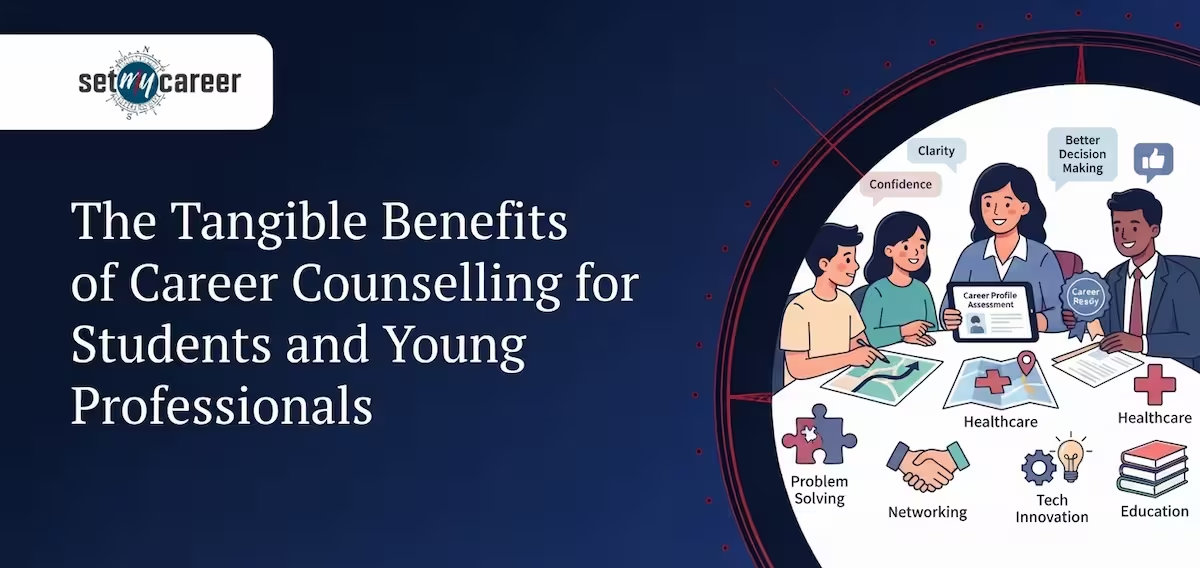
This is where professional guidance makes a lasting difference. Understanding the tangible benefits of career counselling helps you shift from a state of uncertainty to one of clear direction. Structured career guidance goes far beyond simple advice; it uses reliable, data-driven insights and personalized assessments to map your unique strengths, interests, and values to realistic, fulfilling career paths.
In this guide, we will share how expert counseling helps you build confidence, streamline your educational choices, and avoid costly missteps. You will discover practical, actionable insights to help you make informed decisions today, ensuring you are fully prepared to navigate and succeed in the job market of 2026.
What Are the Benefits of Career Counselling?
The benefits of career counselling include precise self-assessment, structured goal setting, and objective path design. It empowers individuals to align their natural talents with evolving market demands, reducing unnecessary educational expenses, accelerating job search timelines, and establishing long-term professional satisfaction through data-driven, strategic planning.
When individuals attempt to map out their professional futures independently, they often rely on subjective opinions, societal pressures, or limited personal networks. Professional intervention introduces scientific objectivity into this decision-making process. By leveraging standardized psychometric evaluations, career guidance professionals analyze cognitive abilities, personality traits, and situational preferences. This comprehensive evaluation ensures that choices are not based on fleeting trends but on enduring personal attributes.
Furthermore, professional career guidance bridges the gap between academic preparation and industry expectations. It provides students and professionals with an understanding of emerging roles, changing skill requirements, and geographic market shifts. Instead of pursuing generic qualifications, individuals learn to target specific certifications, internships, and skill sets that enhance their marketability. This targeted approach prevents the accumulation of student debt for irrelevant degrees and helps avoid years of vocational dissatisfaction.
| Decision-Making Factor | Unassisted Career Planning | Assisted Career Counselling |
|---|---|---|
| Information Source | Anecdotal advice, social media trends, and family expectations. | Standardized psychometric diagnostics and global market intelligence. |
| Skill Matching | Trial-and-error approach, leading to frequent career changes. | Scientific analysis of cognitive strengths and behavioral traits. |
| Academic Planning | General stream selection without specific long-term integration. | Targeted curriculum mapping aligned with high-growth sectors. |
| Financial Efficiency | High risk of costly degree switches and extended graduation timelines. | Optimized educational investment with high vocational alignment. |
Understanding the value of structured intervention requires looking at the core dimensions evaluated during professional counselling. These dimensions include:
- Cognitive Aptitude: Measuring spatial, numerical, verbal, and logical reasoning to determine natural areas of technical or creative proficiency.
- Behavioral Profiling: Assessing personality patterns to identify workplace environments where the individual is most likely to thrive.
- Value Alignment: Aligning professional choices with personal goals, such as autonomy, leadership, financial stability, or creative expression.
- Market Relevancy: Matching individual profiles with current global hiring realities, automation trends, and emerging industrial niches.
Why Get Career Counselling: Addressing the Importance of Career Guidance
Securing professional guidance provides objective clarity, mitigates the risk of career misalignment, and saves valuable time. By analyzing skill sets and personal interests systematically, individuals gain the necessary tools to make informed academic and vocational decisions that align with industry realities.
The modern workplace changes at a rate that makes traditional career advice obsolete. Emerging fields like artificial intelligence, green technology, and hybrid operations require a blend of skills that did not exist a decade ago. Consequently, relying on advice from previous generations can lead to outdated career strategies. Seeking professional guidance is necessary because it offers access to specialized expertise, real-time market data, and personalized strategic pathways.
Without structured guidance, many individuals experience career stagnation, where they feel locked into a specific path due to inertia or fear of change. Professional advice helps identify transferable skills, allowing individuals to pivot between industries without starting over from scratch. This systematic evaluation reduces the anxiety associated with professional transitions and builds the confidence needed to pursue competitive career opportunities.
1. Identifying Strengths through Aptitude Testing
Aptitude testing serves as the foundation of modern career evaluation. Unlike school examinations that test memorization, aptitude tests evaluate natural cognitive strengths and problem-solving styles. These assessments highlight an individual’s potential to learn specific skills, revealing abilities that may not be apparent in standard academic settings.
For example, a student might struggle with rote memorization in science classes but score exceptionally high in spatial reasoning and logical deduction. In an unassisted scenario, this student might dismiss technical careers entirely. However, a professional evaluation would identify these underlying strengths, pointing them toward fields like spatial design, architecture, or systems engineering. By focusing on natural abilities, the individual can pursue a path where learning feels natural and rewarding.
These diagnostics also identify areas for improvement. Understanding cognitive limitations allows individuals to choose careers that do not depend heavily on their weaker skills, or to proactively develop those skills before entering the job market. This self-awareness is essential for preventing early career burnout and setting realistic expectations for professional growth.
2. Building a Roadmap for Stream and Major Selection
The choice of high school streams and university majors is one of the most critical financial and educational decisions a family can make. Misalignment at this stage often leads to wasted academic years, expensive tuition fees for abandoned degrees, and a stressful start to professional life. Professional guidance simplifies this process by translating an individual’s profile into concrete academic roadmaps.
Rather than picking popular or high-status majors without a clear plan, students receive a step-by-step path detailing exactly what to study, which electives to choose, and which certifications will supplement their degree. This targeted planning ensures that every course taken contributes directly to their career readiness, making them highly competitive candidates upon graduation.
| Academic Phase | Primary Strategic Focus | Role of Career Counselling |
|---|---|---|
| Secondary School (Grades 9-10) | Stream selection (e.g., Science, Commerce, Humanities) | Aptitude profiling to identify broad interest areas and learning strengths. |
| Higher Secondary (Grades 11-12) | Major selection and entrance exam preparation | Detailed evaluation to match profiles with specific academic majors and target universities. |
| Undergraduate Study | Internship mapping and skill specialization | Assessing industry gaps to select professional certifications and build an entry-level portfolio. |
3. Navigating Career Transitions with Confidence
For mid-career professionals, career transitions present unique challenges. The decision to switch fields often involves balancing financial responsibilities with the desire for greater fulfillment. Undergoing a professional evaluation helps transition-seeking professionals manage these risks systematically by analyzing how their existing skills can be applied to new areas.
Professional advisors help identify skill gaps and recommend targeted educational paths, such as micro-credentials or executive certifications, avoiding the need for a full academic reset. This focused approach minimizes income loss during the transition period. Additionally, it helps professionals position themselves effectively to recruiters by framing their past experience in a way that highlights its relevance to the new industry.
Structured career transitions generally involve several essential steps, including:
- Transferable Skill Audit: Documenting analytical, communication, and managerial competencies that apply across different sectors.
- Market Feasibility Analysis: Evaluating the demand, compensation rates, and growth potential of the targeted industry.
- Skill Gap Mitigation: Designing a tailored educational plan to acquire technical or administrative qualifications quickly.
- Strategic Positioning: Updating professional profiles and resume narratives to highlight transition readiness and cross-functional value.
The ROI of Career Counselling: Tangible Value and Outcomes
Measuring the return on investment (ROI) of career counselling requires looking at both immediate educational savings and long-term career earnings. When individuals select their academic majors and initial job roles based on data-driven assessments, they avoid the costly trial-and-error cycle that many young professionals experience. The initial cost of professional guidance is minor compared to the price of extended college enrollments, repeated stream changes, or years spent in low-paying, unaligned roles.
Furthermore, early career satisfaction contributes directly to faster salary growth. Professionals who are well-suited to their roles perform better, receive faster promotions, and are less likely to experience periods of unemployment. By building a clear career strategy from the start, individuals position themselves in high-value roles where their strengths are recognized and rewarded, resulting in significantly higher lifetime earnings.
| Financial/Career Risk Area | Without Professional Guidance | With Data-Driven Career Guidance |
|---|---|---|
| College Graduation Timeline | Average of 5 to 6 years due to major changes or academic probation. | Graduation on schedule within 3 to 4 years through aligned academic planning. |
| Tuition and Academic Fees | High costs associated with redundant courses and uncompleted majors. | Optimized spending focused on necessary credentials and degrees. |
| Early Career Unemployment | Extended job searches lasting 6 to 12 months after graduation. | Faster job placement through targeted networking and aligned portfolios. |
| Annual Salary Progression | Below-average raises due to low engagement and mismatched skills. | Accelerated promotions and salary growth driven by high performance. |
Determining the Long-Term Financial and Emotional Return
The emotional and psychological benefits of career counselling are just as significant as the financial returns. Constant career uncertainty can lead to chronic stress, anxiety, and feelings of inadequacy. Conversely, having a clear, actionable plan provides peace of mind and allows individuals to focus their energy on executing their goals rather than worrying about the future.
When professionals operate in roles that match their natural strengths and interests, they experience higher levels of engagement and job satisfaction. This alignment reduces burnout, improves mental well-being, and supports a healthier work-life balance. Over a decades-long career, this emotional stability is essential for maintaining both professional motivation and personal happiness.
Evaluating long-term career returns involves assessing several key metrics:
- Reduced Job Hop Frequency: Staying with organizations longer to secure internal promotions, rather than constantly changing jobs due to dissatisfaction.
- Minimized Educational Debt: Avoiding expensive loans for degree programs that do not lead to viable career opportunities.
- Enhanced Skill Development: Concentrating professional development budgets on high-yield skills that directly support career progression.
- Improved Quality of Life: Lowering work-related stress to support better overall physical and mental health.
What to Expect from Professional Career Advice and Expert Support
Engaging with professional career advice should not be confused with casual mentoring. A structured, scientific process is used to translate an individual’s profile into a clear professional roadmap. From the initial consultation, individuals undergo a systematic journey that combines validated diagnostics with expert interpretation, ensuring that every recommendation is supported by objective data.
Rather than receiving generic advice or pre-packaged recommendations, clients work through a customized plan tailored to their specific career stage. This structured process ensures that both immediate academic decisions and long-term career plans are handled with professional rigor, leaving nothing to chance.
Modern Career Counselling Methodology for 2026
The career guidance process in 2026 combines advanced digital tools with experienced human insight. This methodology uses psychometric assessments, market forecasting tools, and personalized coaching to build dynamic, flexible career plans that help individuals adapt to ongoing industry changes.
| Methodology Phase | Key Activities Involved | Deliverables Provided |
|---|---|---|
| Phase 1: Diagnostic Assessment | Taking comprehensive psychometric, behavioral, and interest-based evaluations. | A detailed, multidimensional profile highlighting key cognitive strengths and behavioral traits. |
| Phase 2: Expert Interpretation | One-on-one sessions with a certified career advisor to discuss diagnostic results. | A refined career outlook report identifying viable, high-potential industries. |
| Phase 3: Roadmapping | Mapping out specific academic degrees, certification pathways, and target roles. | A step-by-step career path detailing immediate and long-term action items. |
| Phase 4: Ongoing Strategy | Periodic reviews to assess progress, adapt to market shifts, and refine skills. | Updated goals and resources to ensure continuous alignment with changing job markets. |
The journey through an elite career guidance program typically involves several phases:
- Comprehensive Psychometric Evaluation: Taking online assessments that evaluate cognitive abilities, interests, work styles, and motivations.
- Personalized Feedback Sessions: Meeting with professional advisors to interpret assessment results and connect them to real-world opportunities.
- Targeted Skill Planning: Designing a customized educational plan that highlights essential skills, internships, and certifications.
- Career Readiness Support: Getting practical assistance with resume building, interview preparation, and job search strategies tailored to the target industry.
Conclusion
Navigating your education and career path can feel overwhelming, but you do not have to make these life-defining decisions in isolation. Understanding the tangible benefits of career counselling is the first step toward transforming confusion into absolute clarity. By partnering with a knowledgeable advisor, you gain a deeper understanding of your natural strengths, identify high-growth industries, and build a practical roadmap tailored to your goals. It is an investment in your confidence, saving you years of trial and error.
Your professional journey is too important to leave to chance. At SetMyCareer, we are committed to helping you discover the right direction through personalized, data-driven guidance. Book your career counselling session today and take the first confident step toward a successful, fulfilling future.