





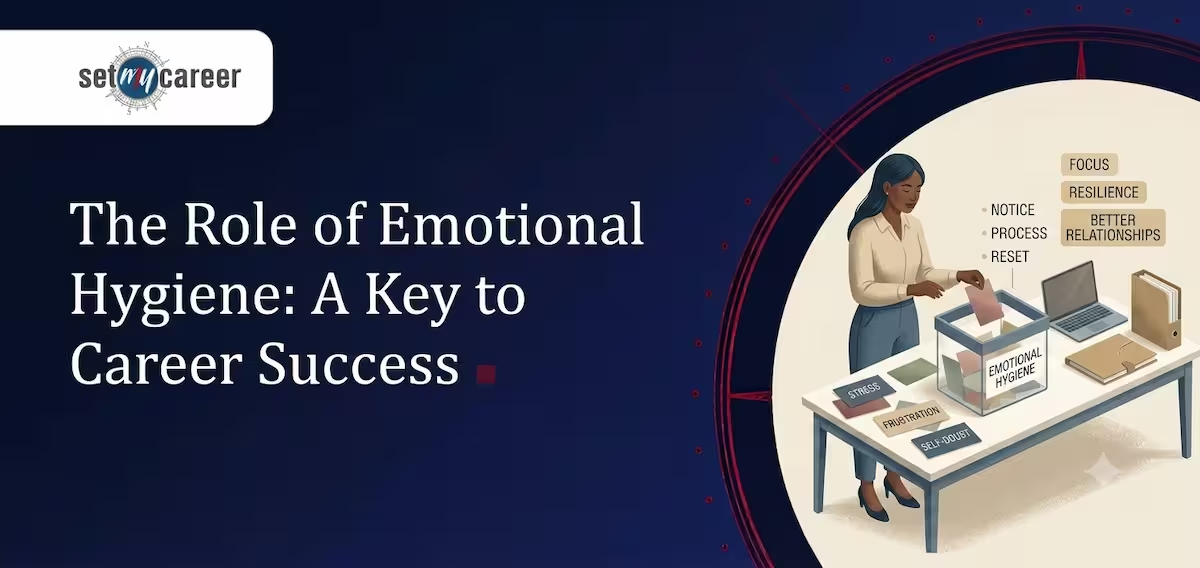
The post-pandemic era fundamentally shifted how we view mental health, redefining what we prioritize when it comes to our families, our personal time, and our work-life balance. We are now acutely aware of how quickly burnout can derail a promising career and how deeply our emotional state impacts our professional output.
Career counselling emphasizes the importance of emotional hygiene for long-term career success.
With this heightened awareness comes a more challenging question: what exact steps do we take next? Identifying the problem is only half the battle. If you are struggling to balance career ambitions with personal well-being, the first and most critical step is mastering the concept of emotional hygiene.
What Exactly Is Emotional Hygiene?
Just as physical hygiene requires daily attention to keep our bodies healthy, emotional hygiene involves the deliberate, regular maintenance of our mental and psychological welfare. It is the practice of actively managing your emotional state rather than reacting only when you reach a breaking point.
Key practices for maintaining strong emotional hygiene include:
- Daily self-audits: Checking in on your thoughts and moods to objectively assess your emotional state before it dictates your behavior.
- Intentional destressing: Engaging in enjoyable, active hobbies rather than relying on the passive, numbing effect of mindless social media scrolling.
- Prioritizing connection: Making dedicated, quality time for loved ones, whether through face-to-face meetings or intentional phone calls.
- Centering practices: Utilizing mindfulness, meditation, or expressive arts to ground yourself during chaotic work weeks.
- Nutritional support: Consuming nutrient-dense foods that stabilize blood sugar and support cognitive function, not just physical health.
- Consistent movement: Engaging in regular physical activity. Even short, 15-minute sessions of movement can effectively process stress hormones.
- Sleep tracking: Securing a minimum of 8 hours of quality rest and monitoring your sleep patterns for better recovery.
- Limiting depressants: Refraining from coping mechanisms that ultimately harm mental health, such as excessive smoking or alcohol consumption.
Connecting Emotional Wellness With Career Success
To better understand emotional health, consider a simple analogy: think of your emotional capacity as a smartphone battery. Over time, heavy use drains the battery, and eventually, the phone requires a deliberate recharge. The exact same principle applies to our emotional capacity. If we expect to perform at a high level professionally, we must intentionally recharge ourselves daily.
You might occasionally wonder, “I work the exact same eight hours every day, so why do I feel entirely depleted on a Tuesday but perfectly fine on a Thursday?” You are certainly not alone in this experience.
Returning to the phone analogy, we know that certain applications drain a battery much faster than others. Furthermore, apps running silently in the background consume significant energy without us realizing it. Our minds and bodies function in a remarkably similar way.
Even if your physical hours remain constant, the type of work you execute matters. High-stakes decision-making, navigating office politics, or managing a crisis are mentally expensive tasks that drain your "battery" faster than routine administrative work. Additionally, personal stressors—financial worries, family obligations, or health concerns—act like those background apps, silently draining your mental energy throughout the workday. On days when your mental load is unusually high, your body requires extra rest and targeted care to recover.
How Emotional Hygiene Drives Professional Growth
There is a direct, undeniable link between practicing good emotional hygiene and achieving sustained career success. Here is how prioritizing your mental state directly improves your professional output:
- Enhanced Executive Function: Taking dedicated time for stress management activities has been clinically shown to improve concentration, sharpen decision-making, and increase overall workplace efficiency.
- Boundary Setting: Establishing firm boundaries between work and personal time—and preventing late-night emails from creeping into family hours—dramatically improves long-term mental resilience.
- Burnout Prevention: Unmanaged emotions, particularly anger or chronic anxiety, rapidly accelerate burnout. Studies indicate that taking intentional "micro-breaks" to process emotions throughout the day helps prevent long-term systemic exhaustion.
- Improved Leadership Skills: Recognizing your own emotional triggers provides invaluable self-insight. Leaders with high emotional intelligence and self-awareness are significantly better equipped to motivate teams and navigate complex interpersonal dynamics.
- Increased Innovation: Mindfulness practices sharpen focus and organizational skills. Furthermore, professionals who report high levels of mindfulness consistently demonstrate greater workplace creativity and problem-solving abilities.
Navigator’s Note: A Message to Parents and Caregivers
For parents aiming to ensure their children's future academic and professional success, active participation in their emotional well-being is non-negotiable. Caregivers must realize that sustaining a child's mental health requires investments beyond academic tutoring. Children desperately need to develop cognitive, non-cognitive, and real-world emotional regulation skills to function well and build fulfilling lives in the future.
To help model this behavior, try integrating these quick resets into your family routine:
- Take a 20-minute walk outdoors completely free of digital distractions.
- Journal about specific stressors to move them out of your head and onto paper.
- Listen to calming acoustic or instrumental music during high-stress moments.
- Practice deep, diaphragmatic breathing for 10 focused minutes.
- Enjoy a warm cup of herbal tea to force a moment of physical stillness.
Integrating Emotional Wellness While Building a Demanding Career
As career counselors work with high-achieving professionals, a recurring challenge emerges: how does one actually find the time for emotional wellness when work demands seem infinite? Even individuals who understand the value of these tools struggle to implement them into packed schedules. Here is practical guidance for navigating the most common obstacles to blending career growth with emotional health:
“How can I make time for myself when my job demands so much of my day?”
Many professionals struggle with this because their work-life boundaries are non-existent. Often, the root issue isn't a lack of time, but a deep-seated fear of workplace conflict. Pushing back against after-hours requests or declining non-essential weekend work will cause initial discomfort. However, you must weigh that temporary discomfort against the long-term cost of losing precious time with yourself and your family. Your overall happiness and mental stability are valid metrics of success.
“If I just grind and work hard now, can't I relax and enjoy life later?”
While the "hustle culture" mentality is understandable, enduring intense, prolonged stress without respite fundamentally alters your mental health and can permanently weaken your immune system. Will driving yourself into the ground today actually allow you to enjoy the fruits of your labor in a decade, or will you simply arrive at your goal too exhausted to appreciate it? Hard work must be balanced with deliberate recovery to remain sustainable over a multi-decade career. Celebrate small victories and take frequent mini-breaks to keep your professional spark alive.
“Even when I set strict boundaries, I still end up staying late at the office.”
Realistically, certain projects or seasonal pushes will occasionally require longer hours. As long as this overworking is the exception rather than the rule, daily prioritization and the occasional self-care day can restore balance. However, if chronic overworking slowly creeps into your daily routine, it points to unhealthy workplace habits or inefficient time management. Resolving these issues—whether through aggressive lifestyle changes or professional career counseling—is critical for your long-term productivity. If your week is unusually demanding, it inherently calls for an equal or greater investment in weekend recovery.
The Takeaway
You might be diligently following all the advice above, setting boundaries, and prioritizing sleep, yet still find yourself chronically procrastinating, battling imposter syndrome, or failing to perform at your highest professional level. Take a deep breath—it is entirely human to hit these walls.
However, persistent career friction often indicates that there is a deeper, unaddressed issue regarding your professional alignment or emotional health. Attempting to force your way through it rarely works. Speaking with a professional can help you deconstruct these roadblocks constructively and objectively.
Whether you are facing a specific career challenge, navigating a difficult transition, or simply trying to build a healthier relationship with your work, mental health and career professionals are ready to facilitate your growth. Do not let burnout dictate your professional narrative—reach out to the experts at SetMyCareer to get your journey toward a balanced, fulfilling career started today.