




Quick Summary
Stepping into a new professional chapter doesn't mean starting over from scratch; instead, it is about unlocking the power of your transferable skills to build a future you love. By aligning your unique strengths with growing job market trends and pursuing targeted, flexible reskilling pathways, you can confidently transition into a fulfilling role without losing your hard-earned career equity. If you are ready to navigate this exciting pivot with clarity and ease, SetMyCareer is here to support you with expert, personalized guidance and actionable steps for long-term success.
Introduction
Thinking about a career transition can feel both exciting and incredibly overwhelming. You might worry that changing paths means throwing away your hard-earned experience, taking a massive pay cut, or starting all over again from the bottom. It is completely natural to feel hesitant, but the truth is, you do not have to discard your professional history to build a future you love.
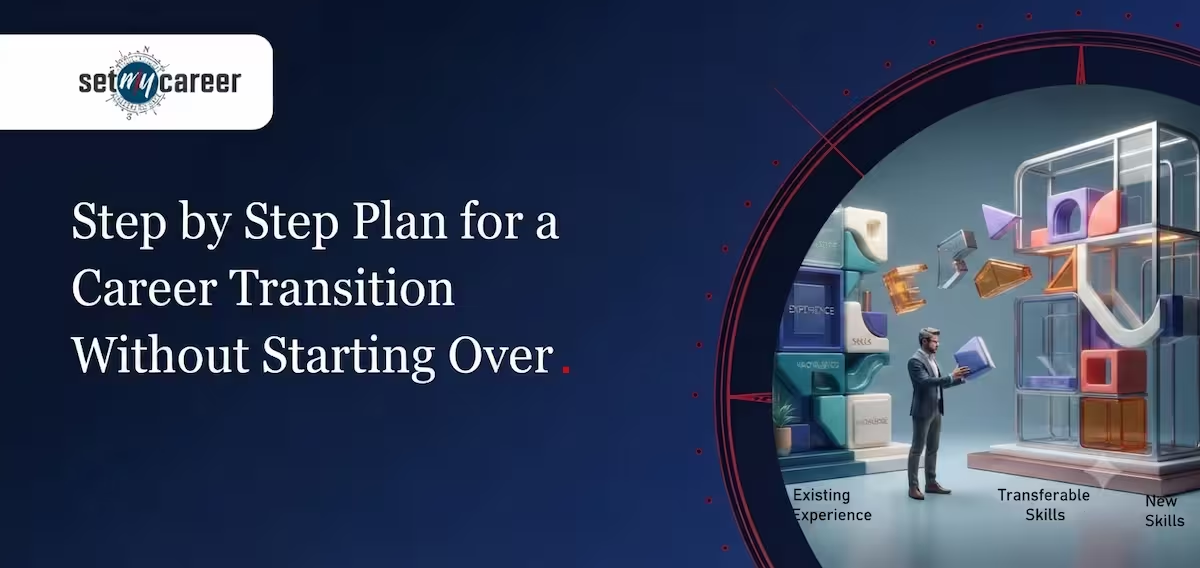
Your past work, achievements, and professional skills are highly valuable assets. The secret to a successful career transition lies in identifying your transferable skills—the strengths you already have that easily apply to a new industry or role. By mapping out these existing strengths, you can confidently pivot into a fresh field without losing the career equity you have spent years building.
In this guide, we will walk you through a practical, step-by-step plan to navigate your career transition smoothly and strategically. You will learn how to identify your unique transferable skills, close any knowledge gaps without earning a completely new degree, and position your resume to attract employers in your target field. Let us take the first step toward a fulfilling new career path together.
Understanding the Career Transition Process
A career transition is the process of shifting from one professional field, industry, or occupational role to another. Unlike a simple job change within the same domain, this progression involves adopting new responsibilities, acquiring distinct technical knowledge, and applying existing capabilities in entirely fresh organizational contexts.
Many individuals confuse a basic job change with a complete occupational shift. When moving to a different company to perform the same function, a professional is merely seeking a new work environment. However, a complete transition requires rewriting one's professional narrative and translating past achievements to resonate with a completely different target audience. This path can feel intimidating, but structured planning turns the perceived risk into a highly manageable and rewarding growth phase.
The table below highlights the primary differences between these two career moves, helping candidates evaluate their current career objectives:
| Feature | Standard Job Change | Strategic Career Transition |
|---|---|---|
| Core Focus | Incremental progression, better compensation, or a change in company culture. | Structural shift in industry focus, functional role, or professional identity. |
| Skill Application | Direct application of existing technical skills and industry-specific tools. | Leveraging core transferable strengths paired with intentional skill development. |
| Learning Curve | Moderate adjustment to new internal tools, team dynamics, and workflows. | Significant integration of new domain concepts, terminology, and standards. |
| Long-term Objective | Immediate optimization of current career trajectory and title. | Alignment with long-term professional values, passions, and market trends. |
Identifying the Catalyst for Your Career Pivot Strategy
Developing a successful career pivot strategy begins with understanding the specific reasons behind the desire for change. Acting on impulsive frustration often leads to lateral moves that do not solve root issues. Instead, candidates must analyze whether their professional dissatisfaction stems from their specific employer, their day-to-day functional duties, or their overall industry direction.
Recognizing the indicators that point toward a strategic career pivot helps prevent hasty decisions and encourages proactive, goal-oriented planning. The following list outlines the clear signs that an individual is ready for a structural change rather than a simple change of scenery:
- Skill Underutilization: Feeling that primary talents, intellectual strengths, and leadership capacities remain systematically untapped in the current industry.
- Market Stagnation: Observing that the current industry faces structural decline due to automation, shifting consumer demands, or evolving economic patterns.
- Value Misalignment: Realizing that personal ethics, lifestyle preferences, and long-term values no longer match the culture or demands of the sector.
- Lack of Vertical Progression: Reaching a career ceiling where additional promotions do not offer genuine professional growth or intellectual satisfaction.
By identifying these internal and external catalysts, professionals can build an intentional plan that addresses specific gaps in their professional satisfaction, ensuring their next move is sustainable, rewarding, and structured for growth.
How to Make a Career Transition Step-by-Step
Making a successful career transition requires a structured approach focused on self-assessment, targeted skill development, and strategic networking. Professionals must evaluate their current assets, research target industry demands, build necessary capabilities, and align their professional branding to demonstrate clear value to potential hiring managers in the new field.
Without a step-by-step framework, the transition process can feel disorganized, leading to unfocused job applications and frequent rejection. To avoid this, candidates should treat their transition like an executive project. By breaking down the transition into manageable milestones, candidates maintain motivation while building the professional credibility needed to win opportunities in their chosen sector.
Conducting a Thorough Transferable Skills Analysis
The foundation of any structural change is a systematic transferable skills analysis. This process involves stripping away industry-specific jargon from past accomplishments to reveal the underlying core capabilities that remain highly valuable in any business context. For instance, managing a classroom as a teacher directly translates into managing project stakeholders, organizing workflows, and facilitating corporate communication in a corporate environment.
To help visualize this translation process, the table below illustrates how everyday responsibilities in one sector easily transform into high-value assets for another:
| Core Strength | Previous Industry Context | New Target Field Application |
|---|---|---|
| Instructional Delivery & Public Speaking | Delivering daily classroom lectures to students. | Facilitating corporate onboarding programs or training corporate clients. |
| Quantitative Assessment & Analytics | Evaluating student performance data and standardized test trends. | Analyzing business metrics, employee performance, or user engagement. |
| Stakeholder Relations | Managing sensitive parent-teacher conferences and school board communications. | Managing corporate client expectations, conflict resolution, and account strategy. |
| Resource Allocation | Structuring classroom budgets and designing annual curriculum timelines. | Managing project scopes, budget allocations, and agile development cycles. |
Conducting this analysis requires a structured, step-by-step approach. By documenting past experiences systematically, candidates can convert vague background summaries into persuasive, value-driven portfolios:
- Audit Professional History: List every major project, role, and achievement from past positions without filtering for relevance.
- Extract Core Strengths: Identify the universal abilities utilized in those achievements, such as data analysis, cross-functional leadership, conflict resolution, or process optimization.
- Translate Industry Terms: Replace specialized jargon with universal business terms (e.g., change "lesson plan preparation" to "content strategy and project design").
- Validate with Target Job Descriptions: Compare the translated list against real job advertisements in the new industry to ensure alignment with active requirements.
Exploring Targeted Reskilling Options
Once the transferable skills analysis is complete, candidates will likely identify gaps between their current skill set and the requirements of their target field. Addressing these gaps does not necessarily require returning to school for a multi-year degree. Instead, professionals can explore highly focused, cost-effective reskilling options that demonstrate their initiative and technical proficiency to potential employers.
The table below provides a comprehensive comparison of modern learning pathways, allowing switchers to select the format that best fits their schedule, financial plan, and target sector:
| Reskilling Pathway | Average Timeline | Primary Value Proposition | Best Suited For |
|---|---|---|---|
| Micro-credentials & Certifications | 1 to 3 Months | Affordable, flexible, and targeted verification of specific software or technical skills. | Validating single competencies like Salesforce, Google Analytics, or Scrum. |
| Technical & Creative Bootcamps | 3 to 6 Months | Intensive, practical curriculum with portfolio building and job placement assistance. | Rapid entry into tech roles like data science, UX design, or software engineering. |
| Executive & Continuing Education | 6 to 12 Months | Prestigious institutional backing with a focus on advanced business strategy and leadership. | Experienced managers looking to step into cross-functional administrative positions. |
By pairing existing strengths with these targeted educational credentials, career switchers build a balanced profile. They show employers that they possess both the maturity of an experienced professional and the updated knowledge of a modern industry practitioner.
Career Transition Advice for Mid Career Professionals
Mid-career transitions demand a specialized strategy that leverages accumulated leadership, industry wisdom, and project management experience. Successful professionals focus on minimizing compensation drops by targeting roles where their mature decision-making capabilities and past accomplishments provide immediate operational value, balancing new learning with established strategic expertise.
For individuals with ten or more years of experience, the idea of changing direction can feel particularly risky. Mid-career professionals often have established financial responsibilities, making a total drop in seniority or salary highly impractical. However, by taking a calculated approach, mid-career professionals can execute a lateral transition into a new industry, entering at a comparable level of responsibility and avoiding the need to start over at an entry-level position.
Evaluating Current Job Market Trends
Before launching a career transition advice for mid career plan, professionals must research current job market trends. Understanding which sectors are growing and which are consolidating allows candidates to target areas with high hiring demand. This market-driven approach helps minimize transition times and ensures that efforts are focused on sustainable, long-term industries.
The table below maps major modern macroeconomic shifts to the expanding industries and specific transferable skills that are highly valued in today's job market:
| Macroeconomic Trend | Expanding Business Sectors | High-Demand Skill Sets |
|---|---|---|
| Digital Transformation & AI Integration | Enterprise Software, Cloud Computing, Cybersecurity | Process automation, platform implementation, cross-functional project coordination. |
| Shift Toward Sustainable Business | Clean Energy, Green Tech, Environmental Compliance | Regulatory reporting, resource planning, supply chain management, risk mitigation. |
| Emphasis on Customer Retention | Subscription Services, EdTech, Healthcare Tech | Relationship management, client success metrics, user onboarding, retention strategies. |
| Rise of Distributed Teams | Remote Infrastructure, Digital Operations | Agile methodology, async communication design, virtual team leadership. |
Aligning a transition with these major market shifts helps candidates present themselves as valuable solutions to an organization's modern business challenges, rather than just job seekers looking for a change.
Planning a Successful Career Transition Without Starting From Scratch
Planning a successful career transition as an experienced professional requires combining networking, strategic personal branding, and targeted positioning. Instead of relying solely on public job boards—where automated systems might filter out resumes lacking traditional backgrounds—candidates should focus on building personal relationships with key decision-makers in their target industry.
By shifting focus toward direct outreach and strategic positioning, candidates can bypass initial automated screenings and present their unique, multi-industry value proposition directly to hiring managers. The following list outlines the key steps to executing this targeted strategy:
- Rebrand Professional Identity: Rewrite resume summaries and social media profiles to highlight universal management, strategic planning, and operational strengths rather than past industry-specific titles.
- Conduct Informational Interviews: Connect with professionals in the target field to gather direct insights about their day-to-day work, industry challenges, and key hiring criteria.
- Build a Proof-of-Work Portfolio: Create case studies, mock projects, or strategic plans that demonstrate an immediate ability to solve problems typical of the target role.
- Leverage Existing Networks: Reach out to former colleagues, vendors, and clients, letting them know how past skills can be applied to solve challenges in the new target sector.
With a clear strategy, a structured understanding of transferable skills, and a commitment to ongoing learning, professionals can turn their transition from an intimidating challenge into a systematic, rewarding next step in their career journey.
Your Path to a Successful Career Transition
Making a career transition does not mean discarding years of hard work to start from scratch. Your past experiences, soft skills, and professional insights are valuable assets that can set you apart in a new field. By identifying your transferable skills, filling key knowledge gaps, and building a targeted networking strategy, you can pivot into a role that truly aligns with your goals and values.
Changing your professional path is a significant decision, and it is completely normal to feel uncertain about the journey ahead. You do not have to navigate this process alone. A structured, step-by-step approach can remove the guesswork and help you move forward with clarity and peace of mind.
If you are ready to plan your career transition but want expert guidance tailored to your unique background, SetMyCareer is here to support you. Book a personalized counseling session with our expert advisors today, and let us help you map out a clear, actionable plan to reach your professional goals without starting over.