




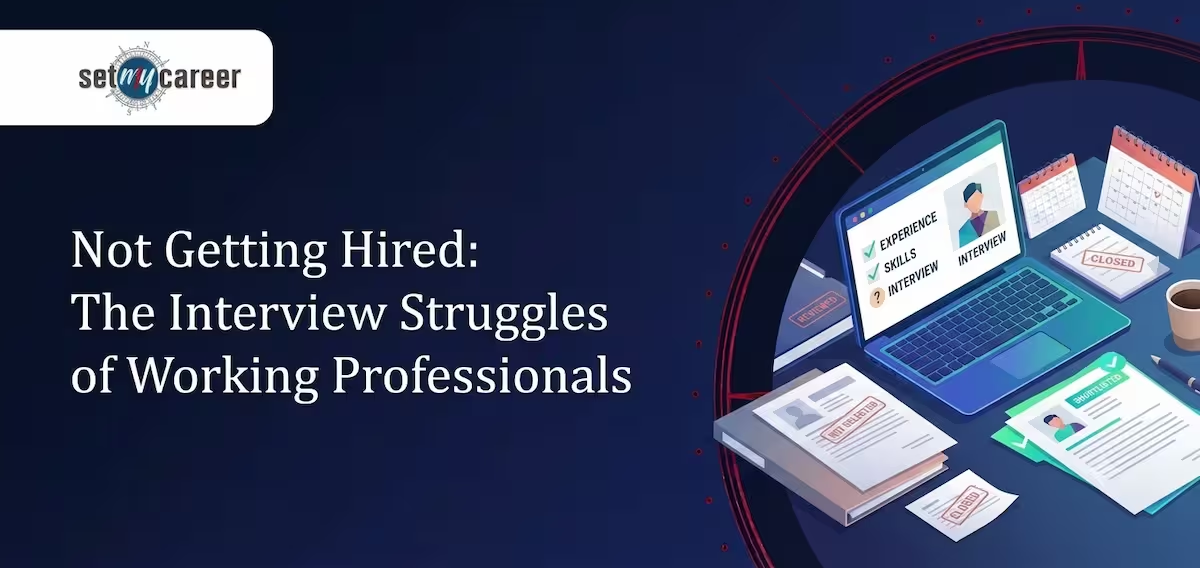
Receiving an interview invitation is an exciting milestone, but getting a rejection email after multiple rounds is frustrating—especially when you know you have the exact skills and background required for the role. If you have ever walked away from an interview feeling confident, only to be passed over for another candidate, you are far from alone. Many working professionals reach a plateau in their careers simply because they struggle to navigate the modern interview process.
Years of industry experience do not automatically translate into strong interviewing skills. You might find it challenging to summarize a decade of accomplishments into a two-minute answer, struggle to frame past failures constructively, or freeze under pressure during high-stakes behavioral questions. When you cannot communicate your true value, even the most impressive resume falls short.
Cracking a professional job interview is a distinct skill set—one that can be systematically learned, practiced, and mastered. This guide breaks down the root causes behind why experienced candidates miss out on job offers and outlines eight actionable strategies to help you communicate your expertise, project confidence, and land your next career-defining role.
10 Common Reasons Experienced Professionals Struggle in Job Interviews
Even highly accomplished mid-career and senior professionals make critical missteps during the hiring process. Identifying where your approach may be falling short is the first step toward fixing it.
- Surface-Level Company Research: Skimming the company’s "About Us" page an hour before the meeting is no longer enough. Failing to understand an organization's business model, current market pressures, competitors, and strategic direction makes it difficult to explain how you will add value from day one.
- Focusing on Duties Instead of Quantifiable Impact: Listing your daily responsibilities instead of highlighting measurable business outcomes is a common mistake. Interviewers want to know how you increased revenue, optimized processes, led teams, or cut costs—not just what was written in your past job descriptions.
- Relying on Outdated Interview Techniques: Recruitment practices evolve rapidly. Relying on generic, scripted answers or relying solely on past accomplishments without connecting them to modern industry challenges can make your skill set appear outdated.
- Low Confidence and Unmanaged Stress: High-stakes interviews trigger anxiety. When stress takes over, candidates tend to speak too fast, ramble, or sound hesitant. This can cause hiring managers to doubt your ability to handle high-pressure scenarios on the job.
- Treating the Interview as an Interrogation Rather Than a Conversation: Candidates often focus so heavily on answering questions correctly that they forget to build a genuine rapport with the interviewer. Failing to establish a warm, professional connection makes it harder to assess mutual cultural fit.
- Unstructured Responses to Behavioral Questions: Questions that begin with "Tell me about a time when..." are designed to evaluate your problem-solving logic. Without a structured framework like the STAR method (Situation, Task, Action, Result), responses quickly become disorganized and lose the interviewer’s attention.
- Overconfidence and Underestimating the Competition: Assuming that your impressive background guarantees an offer often leads to under-preparation. In competitive hiring markets, a less experienced candidate who prepares meticulously will regularly outperform a seasoned expert who relies on charm alone.
- Failing to Tailor Answers to the Specific Role: Giving generic responses that could apply to any company signals a lack of genuine interest. Hiring managers need to see a direct link between your specific skill set and their immediate pain points.
- Practicing in Isolation Without Constructive Feedback: Rehearsing answers in your head is entirely different from speaking them aloud. Skipping mock interviews means missing out on crucial feedback regarding your tone, body language, and answer clarity.
- A Disjointed or Confusing Career Narrative: If you cannot clearly explain your career moves, industry pivots, or long-term professional goals, interviewers may view your trajectory as unfocused or question your long-term commitment to the role.
8 Proven Strategies to Ace Your Next Job Interview
Transitioning from a qualified applicant to the chosen candidate requires a deliberate, strategic approach. Incorporate these eight practices into your preparation routine to elevate your interview performance.
1. Conduct 360-Degree Company and Industry Research
Move beyond basic company facts. Study recent press releases, quarterly earnings reports, product launches, and industry news. Analyze the executive team's background on LinkedIn and read employee reviews on platforms like Glassdoor to gauge company culture. When you demonstrate a clear understanding of the company's current opportunities and pain points, you position yourself as a strategic partner rather than just another job seeker.
2. Master the STAR Method to Quantify Accomplishments
Structure your behavioral responses using the STAR framework to keep your answers concise and compelling:
- Situation: Briefly set the scene and provide necessary context (15% of your answer).
- Task: Explain the core challenge or objective you needed to address (15% of your answer).
- Action: Detail the specific steps you took, emphasizing your personal contribution and decision-making logic (50% of your answer).
- Result: Share the final outcome, using specific metrics, percentages, or financial figures whenever possible (20% of your answer).
3. Shift the Dynamic: Treat the Interview as a Strategic Business Meeting
Reframe the interview in your mind. Rather than viewing it as an evaluation where you must prove yourself, approach it as a collaborative discussion between two industry professionals evaluating a potential partnership. Listen actively, ask clarifying questions, and engage thoughtfully. This subtle mindset shift reduces performance anxiety and naturally projects executive presence.
4. Prepare Insightful, Value-Driven Questions for the Hiring Team
The questions you ask at the end of an interview reveal as much about your expertise as the answers you provide. Avoid basic questions about vacation policies or salary during early rounds. Instead, ask strategic questions such as:
| Question Type | Example Question | Strategic Purpose |
| Performance Expectations | "What would success look like in this role during the first 90 days?" | Shows immediate focus on delivering results and aligning with team goals. |
| Strategic Challenges | "What is the biggest operational hurdle currently facing this team?" | Identifies pain points where you can immediately offer targeted solutions. |
| Culture & Leadership | "How does leadership support professional development and cross-functional collaboration?" | Evaluates management style and long-term career growth potential within the organization. |
5. Refine Your Body Language and Non-Verbal Presence
First impressions form within seconds. Whether your interview is in-person or virtual, maintain strong eye contact, sit up with an open posture, and use natural hand gestures to emphasize key points. For virtual interviews, test your camera angle, lighting, and audio equipment well in advance. Ensure your background is clean and professional so the focus remains entirely on you.
6. Participate in Realistic Mock Interviews with Expert Feedback
Rehearsing out loud is critical for refining your delivery. Conduct mock interviews with mentors, peers, or professional career counselors who can provide objective, actionable feedback. Practice speaking concisely, eliminating filler words ("um," "like," "you know"), and adjusting your tone to sound confident and approachable.
7. Develop a Cohesive, Authentic Career Narrative
Connect the dots of your professional journey into a clear, compelling story. Explain why you made specific career choices, what each experience taught you, and how every step led you to the position you are interviewing for today. A clear narrative demonstrates self-awareness, intentionality, and long-term vision.
8. Execute a Strategic Follow-Up Strategy
Within 24 hours of your interview, send a personalized thank-you email to every person on the interview panel. Go beyond a generic template. Express gratitude for their time, reference a specific topic discussed during the conversation, and briefly reinforce how your background directly addresses a key need mentioned during the interview. This keeps you top-of-mind and reinforces your professionalism.
Conclusion: Turning Interview Setbacks into Career Growth
Failing to land a job after an interview can be discouraging, but every setback offers valuable data to refine your approach. Interviewing is a distinct professional skill, and like any other expertise, it sharpens with deliberate practice, structured preparation, and self-awareness.
By conducting deep research, structuring your accomplishments with measurable metrics, and projecting authentic executive presence, you can transform job interviews from intimidating hurdles into strategic career opportunities. If you want targeted support to refine your interview technique, leverage professional guidance. Personalized career counseling for working professionals can provide the exact feedback, tools, and strategies you need to unlock your potential, navigate hiring processes with ease, and secure your next ideal role with confidence.