



Quick Summary
Navigating your career journey can feel overwhelming, but professional career counseling helps you look beyond your first paycheck to build a fulfilling, lifelong path. By using data-driven psychometric assessments and market intelligence, structured guidance empowers you to align your natural strengths with high-demand roles. This proactive approach not only boosts your long-term job satisfaction and earning potential but also secures your financial stability against market changes. At SetMyCareer, we are here to support you with personalized career roadmaps so you can take your next professional steps with absolute confidence.
Introduction
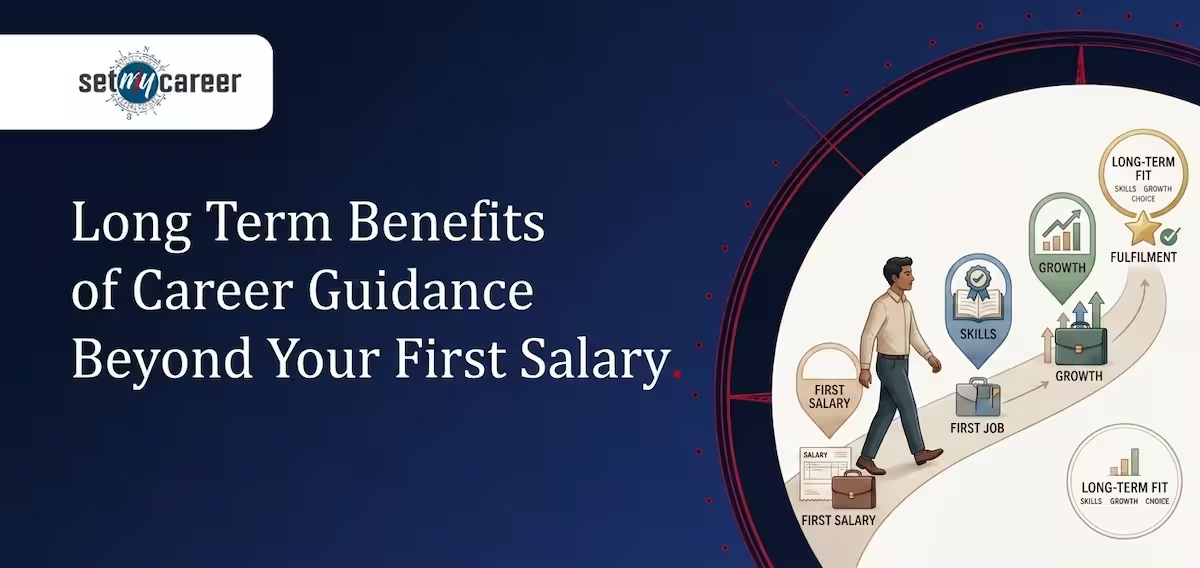
When you are starting your career journey or planning a transition, it is natural to focus entirely on landing your first job. We often measure success by the starting salary, the initial job title, or the immediate perks. However, your career is a lifelong journey, not just a single destination. The choices you make today will shape your professional growth, financial stability, and personal happiness for decades to come.
This is why understanding the long-term benefits of career guidance is so important. Professional counseling does more than just help you choose a college major or polish your resume; it provides you with a personalized roadmap for your entire professional life. By helping you discover your natural strengths, core values, and long-term goals, expert guidance empowers you to make strategic decisions that lead to lasting job satisfaction and steady career progression.
In this guide, we will look beyond the first paycheck to explore how career counseling sets you up for enduring success. You will discover how structured guidance helps you avoid costly career detours, develop highly adaptable skills, and build the confidence to navigate industry changes over time. Let’s explore how investing in your career path today creates a foundation for a fulfilling and prosperous future.
What is Career Guidance and Why Does It Matter?
Career guidance is a structured process that helps individuals understand their personal strengths, interests, and abilities to make informed educational and occupational choices. This professional support matters because it aligns individual potential with viable market opportunities, reducing career dissatisfaction and ensuring long-term financial security.
For decades, the standard approach to employment involved accepting the first available job offer and remaining within that specific domain for as long as possible. Today, the professional landscape is far more complex, requiring a structured methodology to make sense of shifting industry demands. Professional counseling provides individuals with the scientific tools, psychometric assessments, and objective evaluations required to analyze their capabilities objectively. By relying on data-driven insights rather than peer pressure or family expectations, candidates can establish a sustainable career trajectory from the very beginning.
Understanding why career guidance matters involves looking at the long-term patterns of professional displacement. When individuals enter fields without assessing their cognitive alignment, they often experience early burnout or plateau quickly. Systematic guidance minimizes these risks by offering a realistic preview of different industries, educational pathways, and role expectations.
| Aspect | Unassisted Career Planning | Structured Career Guidance |
|---|---|---|
| Decision Basis | Based on trend-following, peer choices, or immediate salary perceptions. | Based on psychometric profiling, aptitude testing, and market trends. |
| Skill Acquisition | Random collection of credentials without a clear integration plan. | Targeted skill development focused on addressable industry gaps. |
| Risk of Detours | High likelihood of shifting fields, leading to lost time and tuition. | Low risk due to early validation of interests and academic capabilities. |
| Adaptability | Vulnerable to technological disruptions and sudden market shifts. | Equipped with transferable skills and a flexible professional roadmap. |
The Core Pillars of Professional Counseling
Professional counseling is not merely an advice session; it is an evidence-based practice built upon specific, verifiable methodologies. These pillars work together to transform ambiguous ambitions into concrete, executable strategies for students and mid-career professionals alike.
- Psychometric Evaluation: Utilizing validated assessment tools to measure cognitive abilities, behavioral preferences, and occupational interests accurately.
- Market Intelligence Integration: Analyzing real-time macroeconomic trends, hiring patterns, and emerging technologies to ensure chosen paths remain viable over the next decade.
- Aptitude-to-Role Mapping: Systematically comparing an individual's natural learning speed and problem-solving styles with the specific operational demands of targeted industries.
- Actionable Roadmapping: Defining clear academic milestones, certification requirements, and networking strategies necessary to transition smoothly from preparation to employment.
The Long-Term Benefits of Career Guidance for Students and Professionals
The decision to seek professional guidance yields compounded returns over several decades. Rather than offering a temporary fix for immediate unemployment, structured advisory services establish a framework for lifelong adaptability, career satisfaction, and financial security.
For students, early intervention prevents the common trap of selecting academic streams based solely on superficial prestige. It ensures that the substantial financial investment made in higher education directly translates into marketable capabilities. For working professionals, ongoing guidance acts as a career audit. It helps them identify when their current skills are losing value in the marketplace and guides them through calculated transitions before their roles become redundant.
Strategic Career Planning for Sustainable Growth
Strategic career planning is the practice of treating one's career as an evolving business portfolio. Instead of reacting defensively to organizational restructurings or economic downturns, professionals who employ structured guidance can anticipate shifts and position themselves to benefit from them.
This proactive approach relies heavily on comprehensive future career growth planning. By analyzing the life cycles of different sectors, individuals can transition from declining industries to expansion sectors with minimal disruption to their earning power. This strategic foresight ensures that professionals are always moving toward opportunity rather than waiting for structural changes to force their hand.
| Planning Phase | Primary Objective | Key Deliverable |
|---|---|---|
| Phase 1: Discovery | Identify natural cognitive advantages and baseline intellectual interests. | Comprehensive Aptitude and Personality Profile. |
| Phase 2: Targeting | Match personal profile data against growing industrial sectors. | Shortlist of Three Viable Long-Term Career Sectors. |
| Phase 3: Acquisition | Acquire target credentials and specialized skill sets systematically. | Educational Roadmap and Certification Timeline. |
| Phase 4: Optimization | Refine professional positioning and build strategic industry connections. | Polished Professional Portfolio and Networking Strategy. |
To successfully execute future career growth planning, professionals must adopt a structured sequence of milestones. This ensures that career progression is measured by skill acquisition and market demand rather than simple years of service.
- Annual Skill Audits: Conducting yearly reviews of current competencies against changing job description requirements in the target sector.
- Three-Year Industry Horizon Scan: Monitoring major technological integrations, regulatory updates, and funding rounds within the industry to identify new specializations.
- Network Diversification: Building meaningful professional relationships outside of one's immediate team or organization to maintain external market awareness.
- Continuous Portfolio Building: Documenting tangible projects, case studies, and quantifiable business outcomes rather than merely updating a list of job duties.
Skill Development for Income and Market Relevancy
High-quality career advice shifts the focus from simply obtaining degrees to targeted skill development for income maximization. In the modern economy, employers prioritize specific, verifiable skills over generic academic credentials. Career guidance helps professionals identify which skills command a premium and which are rapidly becoming commoditized.
By focusing on high-value skill development, individuals can systematically increase their hourly value and consulting leverage. This targeted upskilling prevents the exhausting cycle of working longer hours to achieve modest pay increases, replacing it with a value-based compensation model.
| Skill Category | Development Strategy | Direct Income Impact |
|---|---|---|
| Core Technical Skills | Focused certification programs and hands-on laboratory or project work. | Establishes baseline eligibility for entry-level and intermediate professional roles. |
| Niche Domain Expertise | Deep study of industry-specific applications, edge cases, and systemic challenges. | Enables premium consulting rates and commands high-level specialist salaries. |
| Operational Leadership | Mentorship, project coordination, agile methodology mastery, and management training. | Facilitates transitions into executive leadership and corporate decision-making positions. |
How Career Counseling Impacts Job Satisfaction and Pay
Career counseling directly improves job satisfaction and pay by matching an individual’s unique cognitive abilities with high-demand industry roles. This targeted alignment ensures professionals secure positions that offer both personal fulfillment and competitive compensation, leading to sustained productivity and regular salary advancements over time.
The correlation between career alignment and lifetime compensation is well-documented. When an individual operates within their zone of natural capability, their performance metrics naturally exceed those of unguided peers. This superior performance translates directly into faster promotions, higher performance bonuses, and stronger leverage during annual salary reviews.
Aligning Personal Values with Corporate Roles
True job satisfaction and pay optimization are not mutually exclusive. Instead, they represent two sides of the same coin. When professionals find alignment between their personal values and their daily operational duties, their motivation remains intrinsic, driving high performance and resulting in natural career progression.
Professional counseling helps candidates identify these underlying value systems and filter out corporate environments that do not align with them. This compatibility assessment prevents the cognitive dissonance that often leads to quiet quitting or premature resignations.
- Aptitude Harmony: Matching daily workload complexity with the individual's comfortable processing speed and cognitive strengths.
- Cultural Synchronicity: Aligning personal communication preferences with the organization’s management style and operating philosophies.
- Purpose Integration: Ensuring the organization's overarching market objectives do not conflict with the individual's ethical framework.
- Work-Life Integration: Designing a career path that respects personal boundaries, family obligations, and long-term wellness goals.
Career Guidance for Financial Stability and Wealth Creation
A structured approach to employment acts as a stabilizing force during macroeconomic volatility. Utilizing career guidance for financial stability ensures that an individual's primary source of income is diversified, resilient, and highly protected against market disruptions.
Financial stability is not achieved by chance; it requires deliberate, proactive structural design. Professional guidance equips candidates with the techniques needed to evaluate compensation models, negotiate benefits, and recognize when a sector is entering a structural decline.
| Financial Risk Factor | Potential Economic Impact | Counseling Countermeasure |
|---|---|---|
| Automation of Core Tasks | Sudden layoff or significant reduction in hourly wages. | Transitioning to human-centric, analytical, and strategic leadership roles. |
| Industry Stagnation | Inability to secure annual raises; flat lifetime earning curves. | Cross-training into high-growth, adjacent technology or service fields. |
| Single-Skill Dependency | Complete loss of employability if a specific tool becomes obsolete. | Building a diverse portfolio of fundamental problem-solving competencies. |
Choosing the Right Professional Development Advice
In an information-dense landscape, finding high-quality professional development advice can be challenging. Many individuals struggle to separate temporary market hypes from sustainable, scientifically validated career insights.
To ensure long-term career growth, candidates must evaluate potential advisors based on their methodologies, diagnostic tools, and long-term track records. Trustworthy guidance relies on robust assessments and objective market trends rather than simplistic, one-size-fits-all recommendations.
Evaluating Guidance Programs and Frameworks
When assessing different career advisory options, it is essential to look for structured, multi-dimensional frameworks that analyze the whole individual rather than focusing solely on educational credentials.
- Validity of Diagnostic Tools: Ensure the service uses scientifically verified, standardized psychometric assessments rather than simple online quizzes.
- Industry Expertise of Counselors: Confirm that advisors possess direct experience and up-to-date knowledge within modern corporate environments.
- Customization Level: Avoid programs that offer generic, templated career suggestions based purely on high-level academic degrees.
- Post-Assessment Roadmap Support: Choose advisors who provide actionable, step-by-step transition plans and ongoing progress monitoring.
Investing in Your Lifelong Career Journey
Your first paycheck is an exciting milestone, but it is only the starting line of a decades-long journey. While a good starting salary is a great short-term win, the true benefits of career guidance lie in the long-term clarity, adaptability, and fulfillment it brings. Professional counseling helps you build a strong foundation of self-awareness, allowing you to make proactive choices, navigate industry shifts, and avoid the costly mistakes of trial-and-error career planning.
Career decisions can often feel overwhelming, but you do not have to figure everything out on your own. By seeking structured support early on, you gain the tools to manage transitions smoothly, climb the professional ladder with confidence, and find deep satisfaction in your daily work.
At SetMyCareer, we are committed to helping you discover a path that aligns with your natural strengths and future goals. Contact us today to schedule your personalized counseling session and take the first step toward a rewarding, sustainable career.