




Quick Summary
Unlocking the hidden job market begins with mastering LinkedIn networking, a powerful strategy that allows you to bypass traditional application filters and connect directly with key industry decision-makers. By optimizing your profile with targeted keywords and sending personalized, value-driven messages, you can easily turn digital connections into rewarding, real-world mentorships and unadvertised career opportunities. Navigating career transitions can feel overwhelming, but the experts at SetMyCareer are here to empower you with the personalized guidance and practical tools needed to take your next professional step with absolute confidence.
Introduction
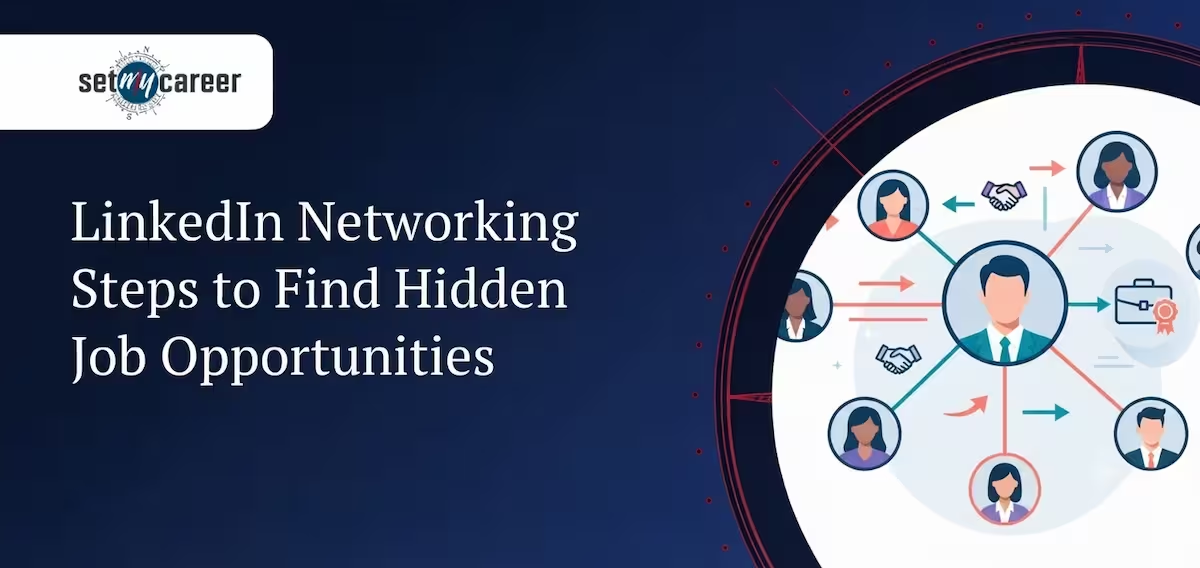
Searching for a job can often feel overwhelming, especially when you realize that a vast majority of open positions are never advertised on traditional job boards. This is what career experts call the hidden job market, and unlocking it requires a different approach. By mastering linkedin networking, you can connect directly with decision-makers and discover career opportunities that others do not even know exist.
At SetMyCareer, we understand that reaching out to professionals online can feel intimidating, whether you are a recent graduate taking your first steps or an experienced professional planning a career transition in 2026. That is why we have broken down the process into practical, easy-to-follow steps. This guide will show you how to optimize your profile for visibility, write message templates that actually get responses, and build genuine professional relationships.
You do not need to be an expert self-promoter to make this work. With a clear strategy and a supportive approach, you can build a professional circle that actively helps you reach your long-term goals. Let us look at the practical steps you can take today to transform your linkedin networking efforts into real career opportunities.
What is LinkedIn Networking?
LinkedIn networking is the strategic practice of connecting with industry professionals, recruiters, and peers on the platform to build mutually beneficial relationships. This process allows individuals to exchange industry insights, uncover unadvertised job openings, seek career guidance, and establish long-term professional credibility within their chosen fields.
In the modern job market, traditional job applications often fall short. A significant portion of hiring occurs through direct referrals and professional recommendations. By understanding how to use linkedin networking, candidates can bypass traditional application filters and establish direct communication channels with decision-makers. This approach is highly effective for students determining their career trajectory and seasoned professionals planning a major career transition.
Why Building a Professional Network Matters for Career Growth
A robust network serves as an active safety net and a source of continuous professional development. When individuals rely solely on job boards, they miss out on the collaborative conversations that lead to bespoke role creation. Through structured networking, professionals gain access to real-time industry trends, internal company cultures, and potential skill-gap analyses that are not documented in standard job descriptions.
For those undergoing career changes, engaging with professionals in the target field offers a realistic look at the daily responsibilities and required competencies. This interaction helps align personal aptitude with actual market demands, ensuring that future career decisions are based on solid, practical information rather than assumptions.
Step 1: Laying the Foundation with LinkedIn Profile Optimization
Before launching any outreach campaign, ensuring that your digital presence is polished and professional is a necessary first step. A complete and strategically designed profile acts as an interactive resume that validates your expertise the moment a connection views your page.
What is LinkedIn Profile Optimization?
LinkedIn profile optimization is the process of completely updating and strategically structuring a personal profile to maximize visibility in search results. By incorporating target industry keywords, high-quality imagery, and clear career achievements, professionals make it simple for recruiters and hiring managers to discover their talent.
Without a fully optimized profile, outreach messages are far less effective. When an industry professional receives a connection request, their first action is to review the sender's profile. If the profile appears incomplete or lacks a clear focus, the likelihood of engagement drops significantly. The following table outlines the key elements required to build a strong profile foundation:
| Profile Section | Optimization Goal | Key Action Item |
|---|---|---|
| Headline | Define professional brand & key skills | Use specific industry keywords and your target job title instead of generic statements like "Student" or "Looking for opportunities". |
| Summary / About | Tell your professional story | Outline your career journey, core technical competencies, and your career-decision driving forces in three concise paragraphs. |
| Experience | Provide proof of impact | Quantify accomplishments using metrics and align your responsibilities with the skills demanded in your target industry. |
| Skills & Endorsements | Validate technical expertise | List at least fifteen highly relevant skills and seek endorsements from former colleagues or academic advisors. |
Crafting a Headline that Defines Your Professional Brand
Your headline is the most visible piece of real estate on your profile. It follows your name in search results, comment sections, and connection requests. Rather than listing a standard job title, use this space to clearly articulate your professional brand and the specific value you bring to your field.
For example, instead of a simple headline like "Software Engineer," a more optimized approach would be: "Software Engineer | Specializing in Cloud Infrastructure & Microservices | AWS Certified." This tells recruiters exactly what you do and what systems you specialize in within seconds.
To establish a compelling profile that captures the attention of industry decision-makers, consider these fundamental steps:
- Select a Professional Portrait: Use a high-resolution headshot with neutral lighting and professional attire to build immediate trust.
- Design a Custom Banner Image: Upload a background image that reflects your industry, such as a clean workspace, a code repository, or a graphic representing your field.
- Write an Action-Oriented Summary: Draft a summary that clearly explains your professional mission, your key achievements, and the specific industries you aim to support.
- Incorporate Relevant Keywords: Audit target job postings for recurring terms and weave those exact phrases into your headline, skills section, and job descriptions.
Step 2: Developing an Effective LinkedIn Outreach Strategy
Building a network requires more than sending random connection requests to high-profile individuals. A structured linkedin outreach strategy ensures that every conversation is purposeful, respectful of the recipient's time, and designed to foster mutual professional respect over the long term.
Balancing Cold Outreach and Warm Introductions
An effective outreach strategy utilizes a combination of direct outreach and warm introductions. Leveraging existing relationships is often the easiest entry point into a new company or industry. However, when those avenues are unavailable, systematic cold outreach allows you to expand your reach into completely new professional circles.
Understanding when and how to deploy each method is a core skill of modern professional networking. The table below highlights the practical differences and best use cases for both approaches:
| Outreach Type | Key Definition | Ideal Scenario for Use | Expected Engagement Level |
|---|---|---|---|
| Warm Introduction | Connecting through a shared acquaintance, common academic institution, or mutual professional group. | Seeking internal referrals or looking for deep insights into a specific company's cultural landscape. | High (favorable response rates due to established mutual trust). |
| Cold Outreach | Initiating contact with an industry professional with whom you share no previous direct connection. | Targeting niche experts, exploring new industries, or executing a comprehensive career transition. | Moderate (highly dependent on message personalization and profile relevance). |
Best Practices for Engaging Recruiters and Industry Leaders
When reaching out to senior professionals or recruiters, brevity and clarity are essential. These individuals receive dozens of messages daily, meaning that vague or overly demanding requests are often ignored. Your strategy must focus on low-friction requests, such as asking for a brief text-based insight rather than demanding a thirty-minute phone call right away.
To maximize the efficiency of your outreach efforts, focus on the following foundational tactics:
- Research Before Reaching Out: Review the prospect's recent posts, articles, or career history to find a genuine point of shared interest.
- Lead with Value or Curiosity: Ask a specific, thoughtful question about their career journey or an industry trend they recently commented on.
- Keep the Initial Message Short: Limit connection notes to under 300 characters to ensure they are easy to read and digest on mobile devices.
- Follow Up with Patience: Give contacts at least one week to respond before sending a polite, low-pressure follow-up message.
Step 3: Mastering LinkedIn Networking Message Examples
The words you select for your initial message determine whether a connection request is accepted or archived. Utilizing structured linkedin networking message examples allows you to maintain professional standards while tailoring your message to fit your specific career situation.
Message Frameworks for Career Changers and Students
Whether you are a student exploring your first career stream or a professional managing a complex career pivot, your messaging should reflect your current situation with honesty and a desire to learn. People are generally willing to help those who demonstrate genuine curiosity and respect for their expertise.
The following templates offer structured, highly effective formats for initiating professional conversations across various scenarios:
| Outreach Scenario | Primary Strategic Focus | Practical Message Template |
|---|---|---|
| Alumni Connection | Shared educational background and institutional pride. | "Hello [Name], I noticed we both graduated from [University] and you now work in [Industry]. I am exploring career pathways in this field and would value your perspective on how the industry has evolved. Would you be open to a brief exchange here?" |
| Informational Interview | Respectful inquiry regarding a professional's career trajectory. | "Hello [Name], I came across your insightful post on [Topic] and highly respect your work at [Company]. I am currently conducting a skill-gap analysis for a transition into [Role] and would highly appreciate ten minutes of your time for career advice." |
| Recruiter Outreach | Direct alignment of skills with an active job vacancy. | "Hello [Name], I recently applied for the [Job Title] role at [Company]. Given my background in [Key Skill], I wanted to briefly connect to express my enthusiasm and confirm my application was received. Thank you for your time." |
How to Customize Your Messages for Maximum Response Rates
Copy-and-paste templates are easily recognized and often ignored by experienced professionals. While using templates is helpful for structure, every message must contain personalized elements that prove you have thoroughly reviewed the recipient's background. This minor investment of time dramatically increases your response rates.
To ensure your communications consistently resonate with recipients, make sure to avoid these common outreach mistakes:
- Avoid Asking for a Job Immediately: Requesting a job referral in your very first message destroys trust and creates an uncomfortable dynamic.
- Do Not Send Long Blocks of Text: Avoid overwhelming your contact with your entire resume in a single, unstructured message.
- Do Not Use Generic Flattery: Skip generic phrases like "I want to add you to my professional network" and instead highlight a specific piece of their work.
- Avoid Neglecting Your Inbox: Check your messages daily so you can respond promptly when a professional takes the time to reply to your inquiry.
Step 4: Transforming Connections into Career Opportunities
An accepted connection request is simply the beginning of the networking process. The true value of linkedin networking lies in how you cultivate those connections over time, transforming casual online interactions into real-world career opportunities, mentorships, and internal job referrals.
Identifying Career Transitions and Skill-Gap Analysis
For those standing at a career crossroads, whether selecting an academic stream or planning a transition into a new industry, networking acts as a powerful tool for self-assessment. By speaking with active professionals, you can perform a highly accurate skill-gap analysis, comparing your current capabilities against the actual requirements of your desired role.
This process ensures that your career-decision planning is grounded in current market realities, saving you months of misaligned job search efforts. The table below details how to align your networking objectives with your specific career development stage:
| Career Phase | Primary Networking Objective | Practical Implementation Strategy |
|---|---|---|
| Stream Selection / Student | Explore academic pathways and daily job realities. | Connect with young alumni to learn which university courses and certifications actually proved beneficial in their early career. |
| Mid-Career Transition | Verify transferable skills and close technical gaps. | Engage with team leads in your target field to identify the software, methodologies, or certifications that are currently prioritized. |
| Executive Advancement | Build strategic alliances and establish industry authority. | Participate in high-level discussions, share case studies, and connect with peer executives to discuss global industry trends. |
Moving Conversations from the Digital Space to Real-World Mentorship
The ultimate goal of digital networking is to transition the conversation off the platform. Whether through a short video call, a phone conversation, or an in-person meeting, these direct interactions are where genuine professional bonds are forged.
Once an individual agrees to a brief discussion, prepare three targeted questions that demonstrate your industry knowledge and commitment. Following the conversation, send a personalized thank-you note highlighting a specific piece of advice they shared. This reinforces your professionalism and lays the groundwork for a lasting professional relationship.
To systematically convert new connections into active supporters of your professional journey, utilize these consistent engagement habits:
- Interact with Their Content: Regularly read, like, and leave insightful comments on your target contacts' LinkedIn posts.
- Share Relevant Industry Resources: Send articles, research papers, or industry news that aligns with their documented interests or current projects.
- Provide Periodic Career Updates: Keep your mentors and advocates updated on your progress, especially if you implemented a piece of advice they provided.
- Offer Value Before Asking for Help: Look for opportunities to support their initiatives, share their open roles, or connect them with others in your network.
Conclusion: Turn Connections into Career Opportunities
Finding unadvertised roles requires shifting your approach from traditional job hunting to active relationship building. By optimizing your profile, sharing helpful insights, and reaching out to industry peers with genuine curiosity, you transform your digital presence. Effective linkedin networking is a gradual process that yields long-term rewards, helping you access the vast job market that never makes it to public job boards.
Taking these first steps can feel intimidating, especially if you are transitioning careers or just starting out. Remember that every industry leader was once looking for a way to break in. Start small by connecting with a few professionals in your target field and sending personalized, thoughtful messages focused on learning rather than asking for a job.
If you want to accelerate your job search and need personalized guidance to build an outstanding professional brand, SetMyCareer is here to help. Our experienced career coaches can guide you through every step of your linkedin networking journey, helping you communicate your value clearly and confidently. Contact us today to schedule a personalized guidance session and take the next step toward your professional goals.