



Quick Summary
Finding your ideal professional direction doesn’t have to be a guessing game when you use a scientifically backed career path finder to map your unique strengths, interests, and personality traits. By combining reliable psychometric assessments with a practical skill-gap analysis, you can confidently navigate academic stream selections or major career transitions. At SetMyCareer, we are here to support you every step of the way, transforming these personalized insights into a clear, actionable roadmap for long-term success.
Introduction
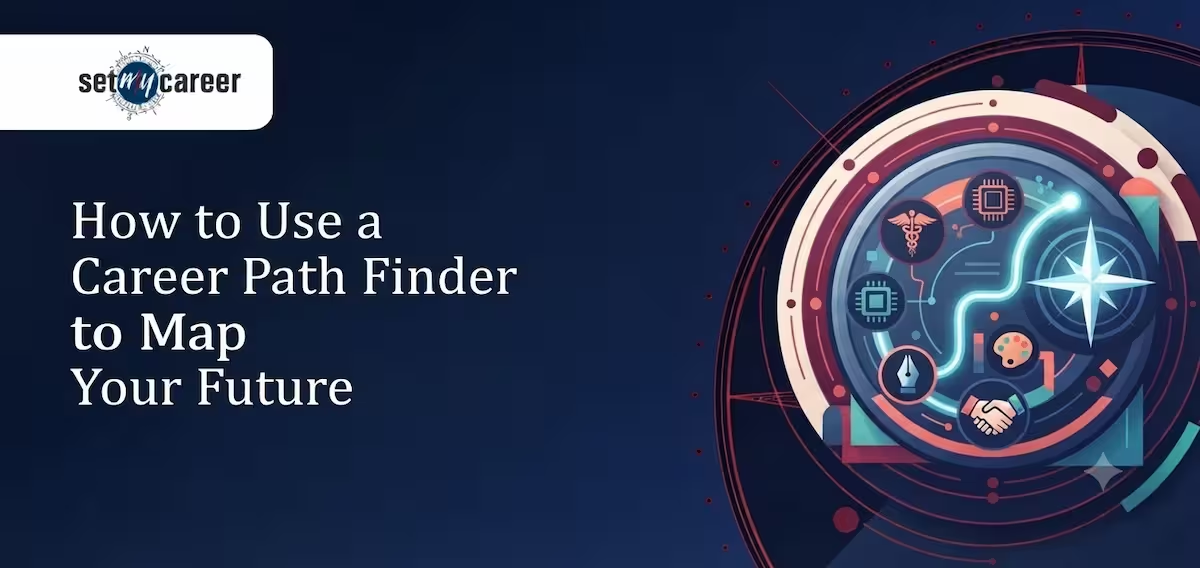
Choosing the right direction for your professional life can feel like navigating a maze without a map. Whether you are a student selecting your first college major, a working professional considering a fresh transition, or a parent helping your child evaluate future choices, the sheer volume of options can quickly feel overwhelming. You do not have to rely on guesswork or trial and error to figure out your next move. Using a reliable career path finder offers a structured, personalized way to connect your unique interests, strengths, and values with clear, achievable career goals.
An effective assessment tool goes far beyond basic online quizzes; it provides practical clarity on where you are most likely to thrive in today's evolving job market. In this guide, you will learn exactly how to use a career path finder to evaluate your potential and map out your future step by step. We will walk you through understanding your assessment results, researching matched industries, and building an actionable roadmap so you can make your next decisions with total confidence.
What Is a Career Path Finder and How Does It Work?
A career path finder is an evaluation tool designed to analyze an individual's skills, interests, personality traits, and values to recommend suited professional avenues. By utilizing data-driven algorithms, it matches personal attributes with real-world industry requirements to simplify long-term career planning.
Making career decisions based on intuition alone can lead to mismatch between personal expectations and daily workplace realities. A structured assessment replaces subjective assumptions with objective evaluation techniques. By mapping personal attributes against established industry competencies, individuals gain clarity regarding which environments allow them to perform at their best.
Modern career guidance platforms move beyond basic questionnaires. They synthesize behavioral psychology, cognitive aptitude measurement, and economic trends into a unified framework. This multi-layered approach ensures that recommended options reflect both personal preference and market demand, giving students and professionals a dependable foundation for decision-making.
Core Components of a Career Mapping Tool
An effective career mapping tool evaluates multiple dimensions of an individual rather than relying on a single data point. Understanding these core components clarifies why structured guidance is far more reliable than informal advice:
- Aptitude Evaluation: Measures innate problem-solving abilities, numerical reasoning, spatial awareness, and verbal capabilities to determine technical suitability for specific fields.
- Interest Inventory: Maps preferences against proven occupational models, identifying work environments and task types that foster long-term engagement.
- Personality Profile: Assesses interpersonal styles, stress management, work ethic, and decision-making preferences to predict workplace cultural fit.
- Work Values Matrix: Clarifies primary motivators, such as work-life balance, financial growth, autonomy, public service, or continuous innovation.
How Psychometric and Aptitude Testing Drive Job Matching
The core mechanism of any advanced job matching process is psychometric analysis. Psychometrics measures psychological attributes objectively, translating abstract tendencies into standardized data points. When combined with aptitude testing, these instruments establish a clear baseline of what an individual enjoys doing and what they can execute efficiently.
| Assessment Dimension | Primary Measurement Focus | Impact on Career Matching |
|---|---|---|
| Numerical & Analytical Aptitude | Data interpretation, quantitative reasoning, logic | Identifies readiness for finance, engineering, data analytics, and research roles. |
| Verbal & Spatial Reasoning | Language comprehension, structural visualization | Determines suitability for law, marketing, architecture, and design fields. |
| Occupational Preferences (RIASEC) | Realistic, Investigative, Artistic, Social, Enterprising, Conventional | Aligns daily work activities with psychological preference patterns. |
| Workplace Personality Traits | Conscientiousness, adaptability, emotional stability | Predicts performance stability in high-pressure or collaborative team environments. |
Types of Career Path Finder Assessments
Career path finder assessments range from introductory online interest inventories to comprehensive psychometric evaluations. These tools serve different stages of life, helping high school students select academic streams, college graduates identify entry-level roles, and experienced professionals plan strategic industry transitions effectively.
Selecting the correct evaluation format depends heavily on the user's current career stage and immediate decision-making goals. A student choosing high school subjects requires a different framework than a mid-career professional seeking to pivot into an executive leadership role. Matching the assessment methodology to the user's specific life stage ensures that the findings produce relevant, practical direction.
Online Career Path Finder Test Options for Students and Professionals
Taking an online career path finder test provides rapid access to data-backed guidance. However, different tests serve distinct user demographics and objective outcomes:
- High School & Stream Selection Assessments: Tailored for secondary school students to determine academic streams (Science, Commerce, or Humanities) based on emerging aptitudes and interests.
- Undergraduate & Major Selection Assessments: Focused on matching student profiles with specialized degree programs, vocational certifications, and prospective entry-level job markets.
- Mid-Career Transition Assessments: Designed for working professionals looking to leverage transferable skills, change industries, or advance into specialized management tracks.
- Executive & Leadership Profiling: Focused on strategic decision-making styles, organizational management capacity, and long-term career positioning.
Evaluating Psychometric vs. Skill-Based Frameworks
While psychometric instruments assess long-term behavioral preferences and cognitive potential, skill-based frameworks measure current technical competencies. A thorough assessment strategy balances both perspectives to provide a realistic roadmap.
| Feature Criteria | Psychometric Frameworks | Skill-Based Frameworks |
|---|---|---|
| Primary Focus | Innate potential, personality traits, and underlying interest patterns | Existing technical knowledge, software proficiency, and practical experience |
| Adaptability | High long-term stability; results remain valid across changing industries | Dynamic; requires continuous updates as technologies and tools evolve |
| Best Application | Early career discovery, academic stream selection, and major career changes | Immediate job application readiness, skill-gap analysis, and role optimization |
| Strategic Goal | Uncovering long-term satisfaction and natural performance capability | Identifying immediate upskilling needs for near-term hiring requirements |
How to Use a Career Path Finder to Make Informed Decisions
To use a career path finder effectively, complete the evaluation with honest responses, review the generated occupational matches, and research corresponding industry growth trends. Integrating these assessment findings with objective labor market data allows individuals to create realistic, achievable professional goals.
Step 1: Taking an Online Career Path Finder Test Objectively
The accuracy of any online career path finder test depends directly on the authenticity of the input provided. When completing an evaluation, candidates should respond based on actual preferences and consistent behaviors rather than ideal expectations or external pressures from peers and parents.
Rushing through questions or overthinking scenarios can skew scoring metrics. Responding instinctively yields the most accurate reflection of personal traits. Setting aside dedicated, distraction-free time ensures that the generated report accurately mirrors genuine potential.
Step 2: Interpreting Your Personal Career Assessment Results
Receiving an assessment report can feel overwhelming if one does not know how to analyze the findings. Rather than focusing solely on top job titles, individuals should examine the underlying logic of their results:
- Primary Competency Clusters: Identify recurring themes across logic, communication, or spatial skills that point toward broad professional sectors.
- Dominant Interest Motifs: Review high-scoring occupational environments to understand whether analytical, creative, or administrative settings align with your work preferences.
- Secondary Career Matches: Examine alternative career suggestions, as these often highlight versatile avenues that blend secondary interests with secondary aptitudes.
- Developmental Areas: Take note of lower-scoring competencies that may require targeted training or skill acquisition before pursuing specific career trajectories.
Step 3: Aligning Strengths with the Occupational Outlook
A career path match must be cross-referenced with macroeconomic facts. Evaluating the occupational outlook of recommended fields prevents individuals from preparing for declining industries or oversaturated markets. True career stability exists at the intersection of individual capability and market demand.
| Self-Assessment Finding | Labor Market Indicator | Strategic Action Step |
|---|---|---|
| High Analytical Aptitude + Data Interest | Strong market growth in Artificial Intelligence & Data Science | Pursue specialized degrees or certifications in statistical computing and data engineering. |
| High Creative Aptitude + Spatial Reasoning | Expanding demand for UI/UX Design and Digital Media Creation | Build a practical project portfolio demonstrating user-centered design principles. |
| High Social Interest + Verbal Reasoning | Consistent demand in Healthcare, HR, and Institutional Counseling | Develop skills in organizational psychology, public speaking, or clinical studies. |
| High Enterprising Traits + Strategic Thinking | Evolving needs in Product Management and Business Operations | Combine foundational business education with hands-on project leadership experience. |
Best Career Path Finder Tools and Frameworks
The best career path finder tools combine validated psychometric metrics, dynamic market analytics, and structured guidance frameworks. These platforms empower individuals by transforming abstract behavioral insights into clear career options, transparent occupational outlook data, and well-defined skill acquisition requirements for success.
Features of Top-Tier Student Counseling Framework Tools
Educational institutions and modern guidance platforms rely on a robust student counseling framework to help young learners discover their path early. Key characteristics of industry-leading counseling tools include:
- Multidimensional Testing Batteries: Comprehensive evaluations combining personality profiling, numerical ability, spatial reasoning, and verbal comprehension.
- Stream & Degree Alignment: Direct translation of student aptitude scores into concrete academic stream selections and university major recommendations.
- Interactive Scenario Modeling: Simulation features allowing students to explore daily tasks and long-term earnings potential across various fields.
- Counselor Integration Capabilities: Features enabling professional career advisors to review diagnostic data and offer personalized, human guidance.
Comparing Professional Career Planning Platforms
Different planning tools cater to different career milestones. Evaluating platforms based on methodology and depth helps users select the resource best suited to their current needs.
| Platform Category | Primary Target Audience | Key Methodology | Primary Outcome Provided |
|---|---|---|---|
| Academic Guidance Systems | Class 9-12 students | Aptitude and interest mapping matched against educational boards | Clear stream selection and targeted entrance exam strategies |
| Higher Education Planners | Undergraduate candidates | Big Five personality metrics and academic performance tracking | Targeted degree selection and specialization roadmaps |
| Professional Pivot Tools | Mid-career professionals | Transferable skill audit combined with industry growth analytics | Strategic lateral transition strategies and targeted upskilling pathways |
Translating Your Career Path Finder Results into an Action Plan
Translating career assessment results into an action plan requires identifying specific skill gaps, setting structured milestones, and pursuing targeted development opportunities. Converting directional matches into practical steps ensures a structured, manageable path toward long-term academic choices or professional career transitions.
Conducting Skill-Gap Analysis for Your Matched Roles
Once assessment results highlight top occupational matches, compare existing capabilities against industry standards. This process, known as a skill-gap analysis, systematically reveals where further learning or practical experience is necessary.
Begin by researching job descriptions for target roles across leading industry portals. Categorize required qualifications into technical skills, soft skills, and credentialing requirements. Comparing these lists against current capabilities highlights exact development priorities, removing guesswork from upskilling efforts.
Building a Strategic Roadmap for Stream Selection or Career Transition
A reliable roadmap translates long-term goals into time-bound milestones. Whether choosing high school streams or planning a complex industry pivot, dividing the journey into structured phases ensures sustained progress:
Phase 1: Academic & Skill Foundation (Months 1–6)
Focus on core competencies. For students, this means finalizing academic stream choices (such as Science with Mathematics, Commerce with Informatics, or Humanities with Psychology) and building strong fundamentals. For professionals, this phase involves enrolling in specialized certifications or online courses to bridge identified technical gaps.
Phase 2: Practical Application & Portfolio Development (Months 7–12)
Apply theoretical knowledge through practical application. Complete real-world projects, participate in academic competitions, seek internships, or contribute to cross-functional initiatives at work. Establishing measurable proof of capability strengthens applications for both higher education programs and competitive employment roles.
Phase 3: Industry Engagement & Execution (Months 13+)
Connect with mentors, participate in professional associations, and engage with career counselors to refine application materials. Structured preparation, backed by psychometric diagnostic data, empowers candidates to pursue academic programs and professional positions with complete confidence in their long-term potential.
Your Next Steps to Career Clarity
Finding the right professional direction does not have to be a guessing game. A reliable career path finder acts as a personal roadmap, turning uncertainty into a clear, structured plan. By matching your unique interests, strengths, and personality traits with real-world industries, this tool helps you narrow down your choices and focus on paths where you can truly thrive.
While a digital tool provides the data, your journey is uniquely yours. Combining these insights with personalized, expert guidance ensures you make decisions with absolute confidence. Whether you are a student choosing a college major, a graduate entering the job market, or a working professional planning a transition, you do not have to navigate these choices alone.
Ready to take control of your professional future? Try our career path finder today to discover the industries and roles that best fit your potential. At SetMyCareer, our experienced career counselors are ready to help you interpret your results and build a practical, step-by-step plan for long-term success. Let us help you take the next step with confidence.