




Quick Summary
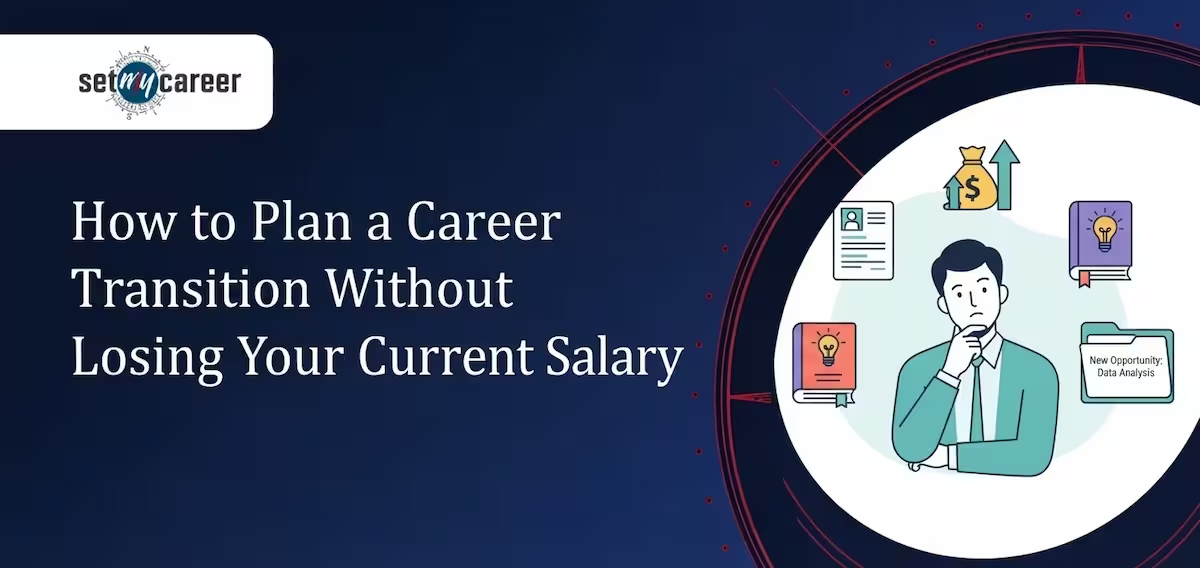
Making a successful career transition does not mean starting over from scratch or risking your hard-earned financial security. By taking a strategic, stepped approach, you can map your valuable transferable skills, gain modern expertise while working, and translate your achievements to attract top hiring managers. At SetMyCareer, we are here to support you with a clear career transition checklist and personalized counselling, empowering you to confidently step into a rewarding new field while protecting your peace of mind.
Introduction
Thinking about a career transition can feel both exciting and deeply stressful. You might know exactly what industry you want to move into, but the fear of starting from scratch—and losing your hard-earned financial security—often holds you back. It is a very common dilemma: how do you pursue a more fulfilling professional path when you have financial responsibilities, bills, and a family to support?
The good news is that you do not have to sacrifice your current salary to pivot your professional life. By treating your career transition as a strategic, step-by-step process rather than a sudden, risky leap, you can leverage your existing skills, build new networks, and secure a lateral or even higher-paying role in your target field.
In this guide, you will learn how to identify your transferable skills, bridge your knowledge gaps while working your current job, and target roles that value your unique combination of experience. With the right planning and structured guidance, you can confidently take control of your professional future and step into a rewarding new field without compromising your financial peace of mind.
Understanding the Dynamics of a Successful Career Transition
What is a Career Transition and Why Do Professionals Seek It?
A career transition is the process of shifting from one professional role, industry, or sector to another. Professionals seek this change to align their daily work with evolving personal values, find intellectual growth, resolve ongoing burnout, or secure sustainable long-term financial advancement.
Many professionals experience a moment in their career when their daily responsibilities no longer align with their career aspirations or intellectual interests. This disconnect is particularly common mid-career, where individuals find themselves locked into operational tracks chosen years prior. To establish a clear path forward, understanding the core reasons driving this desire for change is valuable. Key motivations typically include:
- Evolving Personal Values: A shift in individual priorities, such as seeking roles with greater social impact, ethical alignment, or improved flexibility.
- Technological Adaptation: The desire to transition away from industries facing automation or stagnation toward highly resilient modern sectors.
- Intellectual Burnout: Reaching a structural ceiling where daily responsibilities become repetitive and offer minimal learning opportunities.
- Aptitude Realignment: Discovering that one's natural strengths, such as analytical strategic planning or creative design, are underutilized in a current operational role.
The Myth of Starting Over from Scratch
One of the most persistent anxieties surrounding a mid career switch is the belief that changing directions means throwing away years of hard work and accepting an entry-level position with entry-level pay. This perspective overlooks the cumulative value of professional maturity, management acumen, and operational wisdom. When executing a career pivot, a professional does not enter the market as a recent graduate; rather, they enter as an experienced specialist who is adjusting their focus.
For instance, an operations manager moving from corporate logistics into technical project management does not need to learn how to lead a team, balance a budget, or manage stakeholder expectations from the ground up. Those core leadership competencies are already established. The transition only requires adapting these existing capabilities to new workflows, methodologies, and terminology. By recognizing and presenting your background as a powerful asset, you can confidently target lateral, high-value positions that maintain your financial safety net.
Mapping Your Transferable Skills for a Strategic Career Pivot
How Do Transferable Skills Facilitate a Career Pivot?
Transferable skills facilitate a career pivot by serving as a functional bridge between unrelated industries. These core abilities such as data analysis, project coordination, and client communication allow professionals to prove value to new employers without needing to acquire entirely new foundational expertise.
To construct a viable path into a new industry, it is helpful to look past specific job titles and focus on the underlying functional competencies required to perform the work. Employers value candidates who bring a fresh perspective, provided they can quickly demonstrate competency in foundational areas. These foundational skills generally fall into several core categories:
- Analytical Capabilities: Data interpretation, systematic problem-solving, budgeting, and performance metrics tracking.
- Leadership and Management: Resource allocation, team development, timeline management, and cross-functional coordination.
- Communication Skills: Client relationship management, technical writing, public presentation, and cross-departmental alignment.
- Operational Agility: Systems thinking, process optimization, risk mitigation, and organizational change management.
How to Map Your Professional Experience to a New Domain
To successfully communicate your potential to hiring managers, you must systematically match your historical achievements with the performance demands of your target sector. This alignment helps recruiters see how your background fits their specific business objectives. The table below illustrates how diverse professional backgrounds translate directly into in-demand modern roles:
| Current Role | Target Role | Core Transferable Skills | Business Value Demonstrated |
|---|---|---|---|
| High School Teacher | Corporate Trainer / L&D Specialist | Curriculum design, instructional delivery, group facilitation, student assessment | Speeds up employee onboarding and improves organizational performance metrics. |
| Retail Store Manager | Customer Success Specialist | Inventory oversight, team leadership, dispute resolution, client retention | Reduces customer churn, manages client accounts, and drives repeat business. |
| Financial Auditor | Compliance Operations Analyst | Risk assessment, quantitative analysis, process optimization, regulatory reporting | Minimizes operational risk and ensures strict adherence to changing industry standards. |
| Healthcare Administrator | Operations Project Manager | Resource scheduling, regulatory compliance, process mapping, vendor relations | Optimizes workflows, reduces operational waste, and delivers complex projects on time. |
By defining your career history in terms of cross-functional capabilities, you remove the limitations of your previous job title. The objective is to make it easy for a hiring manager in your target industry to recognize that you already possess the capabilities needed to solve their business challenges.
Designing a Mid-Career Switch Strategy Without Financial Risk
The Stepped Transition: Balancing Your Current Job and Skill Acquisition
Executing a successful mid career switch does not require a dramatic, high-risk leap of faith. The most secure method involves a stepped approach, where you maintain your current role and income stream while systematically building targeted skills and domain knowledge in your free hours. This balanced approach protects your household finances while allowing you to test your interest in the new field before making a full-time commitment.
The first step in this process is identifying the specific knowledge gaps between your current skill set and your target role. This gap analysis allows you to invest your time and educational budget in areas that will deliver the highest return on investment. The table below outlines common upskilling options, helping you evaluate which pathway best matches your personal schedule and career goals:
| Upskilling Method | Time Commitment | Cost Range | Practical Value / Job Market Relevance |
|---|---|---|---|
| Professional Certifications (e.g., PMP, Salesforce, Google Certs) | 2 to 4 months | Low to Moderate | Highly recognized by recruitment teams; validates specific functional competencies. |
| Industry-Specific Bootcamps (e.g., Coding, UX/UI, Data Analytics) | 3 to 6 months | Moderate to High | Provides hands-on project experience and builds a practical portfolio of work. |
| Self-Paced Online Courses (e.g., Coursera, Udemy, LinkedIn Learning) | Highly Flexible | Low | Excellent for building conceptual foundations and testing initial interest in a subject. |
| Part-Time University Diplomas / Micro-Credentials | 6 to 12 months | High | Offers deep institutional credibility and structured networking opportunities. |
Focusing on targeted learning prevents you from becoming overwhelmed by unnecessary coursework. By dedicating a few hours each week to systematic skill building, you can steadily build the qualifications and confidence required to make a competitive transition.
What is a Career Transition Checklist?
A career transition checklist is a structured operational roadmap that outlines every necessary phase of a professional pivot. This document organizes tasks such as financial budgeting, skills acquisition, portfolio development, networking outreach, and resume optimization into manageable, chronological milestones to prevent career disruption.
Working from a clear plan helps reduce the anxiety of a major professional change by breaking the process down into clear, manageable steps. Following a structured career transition checklist ensures that you cover all practical bases before you begin applying for roles:
- Establish a Financial Runway: Review your household budget and build an emergency fund covering three to six months of expenses to provide peace of mind during your job search.
- Conduct a Skill Gap Analysis: Compare your current capabilities against job postings in your target field to pinpoint the exact technical skills or certifications you need.
- Create a Learning Schedule: Dedicate specific weekly hours to structured upskilling, ensuring you make consistent progress without burning out at your current job.
- Build a Practical Portfolio: Assemble clear proof of your new skills through personal projects, volunteer work, or freelance assignments that demonstrate your ability to deliver value.
- Revise Your Professional Brand: Update your resume, LinkedIn profile, and cover letters to highlight your transferable skills and new credentials.
- Engage in Structured Networking: Connect with professionals in your target field through informational interviews to gain industry insights and learn about unadvertised roles.
Implementing an Effective Job Search Strategy for Your New Field
Translating Your Resume for Hiring Managers in Your Target Industry
When transitioning into a new industry, submitting a standard resume that focuses heavily on previous industry jargon can cause hiring managers to overlook your application. To capture their attention, you must translate your career achievements into the terms and metrics valued in your target field. This process helps recruiters immediately understand how your past performance translates into future success on their team.
The key to this translation is focusing on business outcomes rather than industry-specific tasks. The table below demonstrates how to rephrase classic professional achievements to align with standard corporate expectations in other sectors:
| Legacy Industry Language | Target Field Equivalent Language | Strategic Business Value Demonstrated |
|---|---|---|
| "Managed a classroom of 30 high school students and designed daily lesson plans." | "Coordinated stakeholder cohorts, designed structured instructional programs, and drove engagement metrics." | Demonstrates training development, group management, and structured communication. |
| "Handled high-volume customer complaints and processed refunds at the service counter." | "Resolved complex client escalations, optimized customer experience, and secured account retention." | Highlights conflict resolution, customer retention, and process improvement. |
| "Prepared weekly ledger entries and managed internal departmental budget records." | "Executed financial data auditing, validated system integrity, and managed resource allocations." | Emphasizes data analysis, financial accuracy, and resource optimization. |
| "Supervised hospital shift scheduling and ensured clinical supply rooms were stocked." | "Managed resource distribution, optimized supply chain workflows, and minimized operational downtime." | Showcases logistics management, workflow optimization, and cost-efficiency. |
Updating your professional documents in this manner ensures your application stands out during the initial screening process, helping you land interviews even without direct industry experience.
Networking and Informational Interviewing to Build Domain Credibility
A successful job search strategy relies heavily on building genuine relationships within your target industry. Traditional job boards are highly competitive, especially for career changers whose resumes might not fit standard keyword filters. Connecting directly with professionals in your desired field can help you uncover hidden opportunities and gain valuable industry insights.
Informational interviewing is a powerful, low-pressure approach to learning about a new industry. By asking professionals about their day-to-day work, you gain inside knowledge that can help you stand out in future interviews. The table below outlines a structured approach to identifying and reaching out to key contacts:
| Target Audience | Communication Goal | Outreach Channel | Key Discussion Topic |
|---|---|---|---|
| Peer-Level Professionals (Currently working in your target role) | Understand daily workflows, tooling, and common challenges in the position. | LinkedIn Messaging | Daily routines, recommended software tools, and skills needed for success. |
| Hiring Managers and Team Leads | Identify operational challenges and skills gaps on their team. | Industry Meetups or Webinars | Upcoming industry shifts, team challenges, and ideal candidate attributes. |
| Talent Acquisition Recruiters | Introduce your profile and learn about upcoming hiring trends. | Professional Email Outreach | Skills in high demand and typical hiring timelines for the sector. |
Implementing these mid career transition tips allows you to build professional credibility and create a supportive network. By focusing on learning and relationship-building rather than simply asking for a job, you can position yourself as a highly motivated, capable candidate who is ready to succeed in your new field.
Your Path to a Successful Career Transition
Navigating a career transition while protecting your financial stability requires a thoughtful, step-by-step strategy. By identifying your transferable skills, upskilling gradually, and networking strategically, you can step into a new role without sacrificing the financial security you have worked hard to build. It is entirely possible to grow professionally while maintaining your peace of mind.
Remember, you do not have to make this journey alone. Professional guidance can help you map out a clear, low-risk path tailored to your unique strengths and goals. If you are ready to explore your options and plan your next move with absolute clarity, our expert career counsellors are here to support you.
Take the first step toward your new future today. Contact SetMyCareer to schedule a personalized consultation, and let us help you design a transition plan that aligns with both your professional dreams and your financial goals.