





Quick Summary
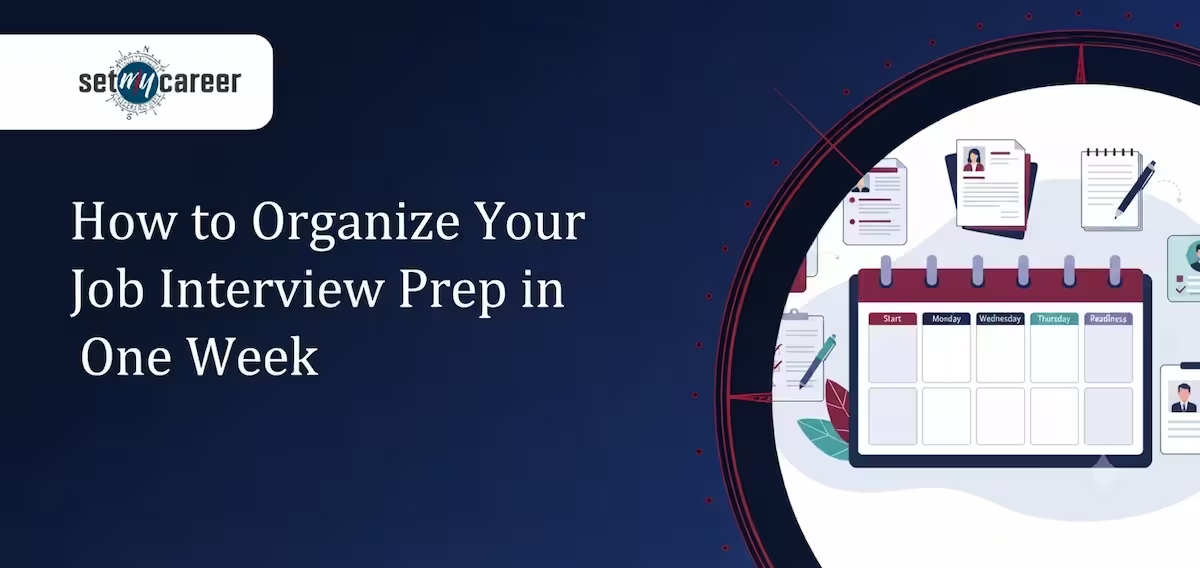
Preparing for a crucial interview in just one week can feel overwhelming, but a structured 7-day roadmap transforms anxiety into calm confidence by breaking your preparation into manageable daily steps. By focusing on targeted company research, mastering the STAR method for behavioral questions, and testing your technical setups, you can naturally showcase your unique problem-solving skills. At SetMyCareer, our dedicated team is always here to support your journey with personalized career guidance and realistic mock interviews to help you take the next step in your career with absolute confidence.
Introduction
Landing an interview is exciting, but realizing you only have seven days to prepare can trigger instant anxiety. It is completely normal to feel overwhelmed when faced with a ticking clock, but you do not need weeks of endless studying to succeed. With a structured approach, seven days is actually the perfect amount of time to build your confidence, sharpen your answers, and present your best self to potential employers.
Effective job interview prep is not about memorizing scripts; it is about organizing your time to focus on what truly matters. By breaking your preparation down into manageable daily steps, you can easily replace panic with preparation. This guide provides a realistic, day-by-day roadmap designed to help you maximize your time, understand what hiring managers are looking for in 2026, and walk into your meeting feeling completely ready.
Over the next seven days, you will learn how to research the company efficiently, structure your career stories naturally, and handle high-pressure questions with ease. We will guide you through what to focus on each day so you can stop guessing and start taking action. Let’s take this journey step by step and get you ready to land that role.
What is the optimal approach for step by step job interview prep?
Step by step job interview prep involves a structured, daily routine that breaks down company analysis, story mapping, and practice runs into manageable segments. This organized strategy prevents cognitive overload, builds authentic confidence, and ensures you systematically address resume gaps, behavioral scenarios, and technical requirements before meeting your prospective employer.
An unstructured preparation plan often leads to counterproductive cramming, which increases anxiety and dilutes the quality of your responses. Spreading your preparation over a seven-day window allows your brain to process information, refine career narratives, and commit key details to memory. This systematic timeline is designed to build momentum, taking you from basic discovery to polished, high-performance delivery.
Day 1: Systematic Company Research and Goal Alignment
Beginning your journey requires a deep dive into the targeted organization. True company research goes far beyond skimming the homepage or reviewing their product catalog. You must understand the company's financial standing, market position, corporate culture, and current organizational pain points to position yourself as the ideal solution.
Start by examining the company's annual report, recent press releases, and leadership profiles on professional networks. Look for recurring themes, such as an expansion into new markets, a shift in product development, or a commitment to sustainability. Understanding these goals allows you to align your skills directly with their current strategic needs during the upcoming conversations.
| Research Focus Area | Primary Information Sources | Key Elements to Identify |
|---|---|---|
| Business Goals & Strategy | Annual reports, investor presentations, news articles | New product lines, target demographics, expansion plans |
| Company Culture & Values | Corporate blog, social media channels, employee reviews | Core behaviors, collaborative style, community involvement |
| Industry Standing & Competitors | Market research papers, industry publications, competitor sites | Market share, unique selling propositions, market challenges |
Additionally, review the job description line by line. Highlight recurring keywords, required technical tools, and soft skills mentioned in the posting. This analysis acts as a blueprint, showing you exactly which aspects of your professional background you must highlight throughout the coming week.
Day 2: Thorough Resume Review and Experience Mapping
A rigorous resume review ensures you can speak fluently about every single line item on your application. Hiring managers often ask for specific details regarding projects completed years ago, so you must refresh your memory on the exact metrics, methodologies, and outcomes of your past work.
As you review your employment history, look for any potential red flags that an interviewer might question. This includes employment gaps, frequent career transitions, or shifts in industries. Instead of avoiding these areas, prepare clear, positive explanations that show your growth, adaptability, and proactive learning during these periods of transition.
- Quantify past achievements: Replace vague descriptions with specific metrics, such as revenue growth percentages, time saved, or team sizes managed.
- Verify project details: Recall the specific software, frameworks, or strategies utilized to execute projects listed on your resume.
- Identify transferable skills: Highlight competencies from previous roles that directly address the specific requirements of the new position.
- Formulate brief explanations: Craft concise, positive summaries explaining your career transitions or decision-making processes.
By the end of this step, you should have a list of five to six major career achievements that demonstrate your technical abilities and leadership qualities. These scenarios will serve as the foundation for the structured stories you will develop next.
How to prepare for job interview storytelling and behavioral queries?
To prepare for job interview behavioral queries, you must structure past professional experiences into clear narratives using a proven framework. This method allows you to explain complex projects, emphasize your individual contributions, and demonstrate practical problem-solving abilities directly aligned with the target position's core competencies.
Modern hiring teams rely on past performance as a primary indicator of future success. They assess how you handle conflict, manage tight deadlines, and navigate professional setbacks. Instead of improvising your answers, which can lead to unfocused rambling, you should use a clean, structured storytelling model to keep your responses concise and impactful.
Day 3: Mastering Behavioral Questions with the STAR Method
Answering behavioral questions successfully requires a formulaic approach that highlights your logic and problem-solving skills. The star method is the standard framework for constructing clear, results-oriented professional stories. This framework ensures you provide sufficient context without losing the listener's attention.
STAR stands for Situation, Task, Action, and Result. When structuring your narratives, you must dedicate the majority of your response to the Action and Result stages, as these show your direct impact on the business. Frame your answers around common behavioral themes, such as overcoming team conflict, handling project failures, or leading complex initiatives under tight deadlines.
| STAR Step | Core Purpose | Key Questions to Answer |
|---|---|---|
| Situation | Set the scene and provide context | What was the company, the project, or the challenge you faced? |
| Task | Define your specific responsibility | What was your objective, and what was expected of you in this scenario? |
| Action | Explain your steps and strategy | How did you approach the challenge, and what specific skills did you use? |
| Result | Highlight the measurable outcome | What was the positive business impact, and what did you learn? |
Practice speaking these stories aloud, aiming for a delivery time of under two minutes per answer. This keeps your communication engaging, direct, and aligned with what busy hiring panels appreciate most.
Day 4: Formulating Smart Questions for the Interviewing Panel
An interview is a two-way street designed to help both parties determine if the partnership is mutually beneficial. Asking insightful questions at the end of the meeting demonstrates your engagement, strategic thinking, and genuine interest in the company’s future success.
Avoid basic questions that could easily be answered by looking at the company’s website. Instead, focus on high-value topics such as team dynamics, performance metrics, department goals, and potential growth challenges. This shows that you are already thinking like a member of the team and are eager to contribute.
- Operational questions: "What does a typical day look like for someone in this role, and how does the team collaborate on key projects?"
- Performance questions: "What specific metrics will be used to measure success in this position over the first ninety days?"
- Strategic growth questions: "How is the department planning to adapt to the recent industry shift toward automated tools?"
- Company culture questions: "How does the leadership team foster professional development and support continuous learning?"
Write down these questions in a professional notebook. Bringing them to your session shows organization and ensures you collect the critical information needed to make an informed career decision later.
Day 5: Conducting Mock Interviews and Refining Body Language
With your content organized, you must practice presenting it clearly and professionally. Mock interviews help you adjust your pacing, reduce filler words, and refine your non-verbal communication, which is just as important as the words you choose.
Ask a trusted colleague, career mentor, or friend to conduct a mock run using the questions you have prepared. If you are practicing alone, record your responses on video. Watch the playback to assess your posture, eye contact, and overall pacing, ensuring you come across as confident, friendly, and engaged.
Pay close attention to your vocal delivery. Speak at a moderate pace, use purposeful pauses to emphasize important points, and keep your tone warm and conversational. This practice helps reduce performance anxiety and helps you speak more naturally when the pressure is on.
What is the best strategy for last minute job interview prep?
The best strategy for last minute job interview prep focuses on practical logistics, technical verification, and brief confidence-boosting reviews rather than cramming new information. Ensuring software functions properly, organizing professional attire, and reviewing your core achievement stories will stabilize performance anxiety during the final forty-eight hours.
The final two days of your preparation should be dedicated to eliminating unexpected surprises. Technical glitches, late arrivals, or wardrobe issues can disrupt your focus and impact your performance. Managing these logistics early allows you to enter your meeting with a clear, composed, and confident mindset.
Day 6: Perfecting Technical Setup and Logistical Checklists
For virtual meetings, your technology is your first impression. A technical failure can disrupt the schedule and create unnecessary stress. Set aside time on Day 6 to thoroughly test all equipment, connection speeds, and software versions to ensure everything functions perfectly.
Choose a quiet, well-lit space with a clean, professional background. Position your camera at eye level, configure your lighting to sit in front of you rather than behind you, and test your microphone in a real-world setting. If you are meeting in person, map out your travel route, account for potential traffic delays, and aim to arrive exactly ten to fifteen minutes early.
| Component | Pre-Interview Check Actions | Backup Plan / Recovery Strategy |
|---|---|---|
| Internet Connection | Run a speed test; verify connection stability | Set up a mobile hotspot as an alternate connection |
| Platform Software | Download and update the meeting application | Keep the browser-based login link accessible |
| Audio Equipment | Test external microphone clarity and volume levels | Keep a pair of wired earbuds nearby as a backup |
| Documentation | Print physical copies of your resume and reference sheet | Keep digital PDF copies easily shareable via email |
This technical and logistical preparation keeps you organized and focused on your presentation, preventing minor details from distracting you on the big day.
Day 7: Final Review and Mindset Calibration
The final day is about resting, building confidence, and mentally preparing for the conversation. Avoid trying to memorize new facts or rewriting your stories, as this can lead to overthinking. Instead, review your structured notes, look over the key research points you gathered on Day 1, and focus on maintaining a positive outlook.
Visualization is a powerful tool for reducing anxiety. Take a few minutes to imagine yourself walking into the room or joining the video call, greeting the panel warmly, answering questions calmly, and wrapping up the meeting with ease. Remind yourself of the hard work and preparation you have put in over the past week.
- Review key points gently: Read through your STAR framework stories and company notes once or twice to keep them fresh.
- Prepare your outfit early: Select and iron professional attire that aligns with the company's dress code.
- Prioritize rest: Aim for seven to eight hours of quality sleep to ensure you remain alert and focused.
- Maintain perspective: Frame the meeting as a professional conversation between two peers, rather than a rigid interrogation.
By following this methodical, seven-day roadmap, you turn a stressful challenge into a structured, manageable path to success. You have done the research, organized your experience, and polished your delivery—now you are ready to walk in and present your best self.
Conclusion: Ready to Ace Your Interview?
Preparing for a crucial meeting in just seven days might feel overwhelming, but a structured daily plan makes it completely manageable. By breaking down your job interview prep into focused, daily steps—from researching the company's core values to practicing your storytelling—you build the genuine confidence needed to stand out. Remember, recruiters are not looking for rehearsed perfection; they want to see your real-world problem-solving skills and how your unique strengths align with their team.
You do not have to navigate this high-stakes preparation alone. If you want to polish your responses, practice with realistic mock sessions, or need expert guidance to align this opportunity with your long-term goals, SetMyCareer is here to support you. Connect with our experienced career counselors today to fine-tune your approach and walk into your next interview with absolute confidence.