
Quick Summary
Having multiple passions is a wonderful strength, and you can easily turn your diverse interests into a rewarding future by learning how to blend them into a viable career option. By using a structured career decision-making matrix, you can objectively align your unique talents with market demands in high-growth interdisciplinary fields. At SetMyCareer, we are here to support you with personalized career counselling and data-driven insights to help you design a flexible career roadmap with absolute confidence.
Introduction
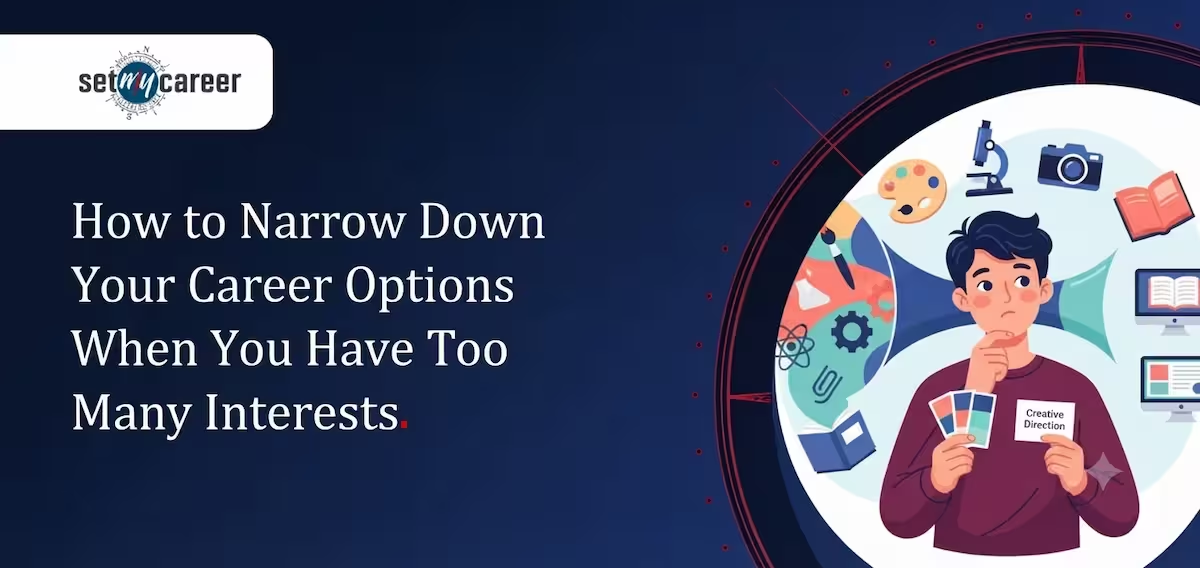
If you find yourself passionate about graphic design, psychology, writing, and technology all at the same time, you are not alone. Having multiple interests is a wonderful strength, but it can also make choosing between various career options feel completely overwhelming. You might worry that picking one path means abandoning your other passions, which often leads to decision paralysis and stress about making the wrong choice.
At SetMyCareer, we understand that your career path does not have to be a straight, rigid line. The secret is learning how to organize your diverse interests, identify your core strengths, and align them with realistic opportunities in the job market. In this guide, we will show you how to evaluate your career options using practical, step-by-step strategies that honor your multi-passionate nature rather than forcing you into a box.
You will learn how to distinguish between a fulfilling hobby and a viable career, use data-driven self-assessments to find your unique skill intersection, and build a flexible professional roadmap designed for 2026 and beyond. Let's take the anxiety out of your decision-making process and transform your wide-ranging interests into your greatest career asset.
Understanding Your Multi-Passionate Career DNAWhat is a Multi-Passionate Career Path?
A multi-passionate career path is a professional trajectory where an individual integrates multiple diverse interests, skills, or industries instead of focusing on a single specialized track. This approach allows professionals to build flexible careers that leverage unique combinations of expertise, such as blending technology with creative writing.
Rather than following a single, linear trajectory, individuals with diverse interests often thrive when combining different skillsets. Modern organizations increasingly seek professionals who can bridge the gap between creative execution and logical analysis. Recognizing this potential is the first step toward finding fulfilling career options.
The Difference Between a Hobby and a Viable Career Option
Determining how to choose between career options requires a clear assessment of what brings personal joy versus what generates sustainable income. While a hobby provides immediate relaxation and creative expression, a viable career option must demonstrate market demand and financial feasibility. Strategic planning helps clarify where a personal passion overlaps with professional viability.
| Evaluation Criteria | Hobby Profile | Career Option Profile |
|---|---|---|
| Primary Purpose | Personal relaxation, creative outlet, and stress relief. | Economic sustainability, professional growth, and market contribution. |
| Monetization Potential | Occasional or irregular revenue with no systematic business structure. | Consistent, predictable revenue streams aligned with industry standards. |
| Market Demand | Driven entirely by personal interest without needing external approval. | Supported by documented hiring demands and consumer needs. |
| Skill Assessment | Evaluated based on personal satisfaction and enjoyment. | Measured by professional certifications, client feedback, and output standards. |
To evaluate whether an interest can transition into a viable professional track, consider these indicators:
- Market demand: Research whether employers are actively hiring for this specific skill set or combination.
- Monetization potential: Analyze if clients or organizations are willing to pay standard market rates for this output.
- Skill scalability: Ensure the ability can be structured, refined, and improved through professional training or certification.
- Long-term interest: Confirm the field offers continuous learning opportunities to prevent professional stagnation and boredom.
How to Choose Between Career Options: A Structured Framework
What is a Career Decision Making Matrix?
A career decision making matrix is a structured tool that helps individuals evaluate and rank different career options based on specific personal criteria. By scoring factors such as interest alignment, financial viability, work-life balance, and growth potential, decision makers can objectively identify their most promising professional pathways.
Using an objective framework helps remove emotional bias from the decision-making process. It allows individuals to view potential career pathways through a balanced lens, matching internal skills with market realities rather than relying on guesswork.
Steps to Evaluate and Filter Your Career Pathways
Implementing a systematic approach prevents choice paralysis. By evaluating different options sequentially, candidates can narrow down their choices logically and build confidence in their selected direction.
| Framework Step | Core Objective | Actionable Deliverable |
|---|---|---|
| 1. Inventory Creation | List all potential interests and skills without initial judgment. | A comprehensive master list of potential career pathways. |
| 2. Weighting Criteria | Assign priority scores to personal values like salary, balance, and learning. | A customized list of decision priorities scaled from 1 to 5. |
| 3. Score Analysis | Evaluate each career option against the weighted criteria. | A prioritized list of fields ranked by overall compatibility. |
| 4. Feasibility Check | Validate top-performing paths against industry trends and training costs. | A short-list of two or three highly viable, actionable paths. |
When filtering potential pathways, applying realistic filters is essential for success. These factors help determine which career options are sustainable over time:
- Financial viability: Investigate the median salary, starting compensation, and earning growth potential within the industry.
- Skill alignment: Compare existing competencies against the entry requirements of the chosen field to identify learning gaps.
- Lifestyle compatibility: Evaluate typical working hours, remote flexibility, and average travel requirements of the industry.
- Industry longevity: Ensure the sector is growing rather than declining due to automation and technological changes.
Exploring Different Career Options and Their Modern Intersections
High-Growth Fields for Multi-Passionate Individuals
Exploring different career options often reveals that the most exciting opportunities lie at the intersection of traditional industries. For example, individuals who love both psychology and technology frequently find success in modern, interdisciplinary fields. These roles value cognitive diversity and lateral thinking.
| Interdisciplinary Intersection | Target Career Roles | Required Skill Combination | Estimated Growth Outlook |
|---|---|---|---|
| Technology + Art | UX/UI Designer, Creative Technologist | Visual design, coding basics, user research, wireframing. | High (driven by digital product development). |
| Psychology + Business | Consumer Behavior Analyst, HR Strategist | Data analysis, human behavior models, marketing strategy. | Steady (focused on workplace culture and consumer trends). |
| Writing + Technology | Technical Writer, UX Writer | Complex tool understanding, clear communication, copyediting. | High (rising need for clear software documentation). |
| Science + Policy | Environmental Consultant, Bioethicist | Scientific literacy, policy analysis, corporate governance. | Very High (accelerated by regulatory changes). |
Alternative Career Paths That Blend Diverse Skillsets
For those who do not wish to be confined to a singular job description, alternative career paths offer excellent avenues. These roles require a hybrid mindset and reward those who can synthesize information from varied sources. This approach shifts the focus from narrow specialization to valuable multi-disciplinary expertise.
- Technical Product Management: Combines software engineering knowledge with business strategy, user psychology, and market placement.
- Instructional Design: Blends educational theory, creative writing, and multimedia technology to build training materials for diverse audiences.
- Environmental, Social, and Governance (ESG) Consulting: Integrates scientific research, public policy analysis, and corporate financial strategy.
- UX Research: Fuses psychological research methodologies, quantitative data analysis, and digital product design trends.
Job Market Analysis and Building a Future-Proof Roadmap
What are the Best Career Options for the Future?
The best career options for the future are those that sit at the intersection of emerging technologies, human-centric skills, and sustainable practices. Industries like artificial intelligence, renewable energy, healthcare analytics, and digital experience design offer strong growth opportunities and long-term professional stability for evolving job markets.
Conducting a thorough job market analysis is a primary step in identifying sustainable paths. Understanding which industries are receiving investment helps individuals align their skills with long-term hiring demands, ensuring their skills remain highly valued.
Creating Your Flexible Career Roadmap for 2026 and Beyond
A long-term career strategy should not be rigid. Instead, developing a flexible career roadmap allows individuals to adapt to technological changes and evolving economic landscapes while staying true to their primary strengths.
| Roadmap Phase | Recommended Timeline | Main Objective | Key Actions Required |
|---|---|---|---|
| Phase 1: Exploration | Months 1 - 3 | Discover intersections and assess core skills. | Take aptitude assessments and conduct informational interviews. |
| Phase 2: Validation | Months 4 - 6 | Test the chosen career options in low-risk scenarios. | Complete micro-credentials and pursue small freelance projects. |
| Phase 3: Integration | Months 7 - 12 | Build a professional presence in the selected field. | Develop a multidisciplinary portfolio and update professional profiles. |
| Phase 4: Optimization | Ongoing | Refine skills and adapt to changing market requirements. | Engage with professional career counselling and expand active networks. |
To maintain career agility and relevance over the next decade, prioritize these professional development strategies:
- Develop a portfolio of transferable skills: Focus on universally valuable areas like data literacy, communication, and project management.
- Commit to continuous micro-learning: Utilize targeted short courses and industry-recognized certifications to stay updated on emerging tools.
- Build a diverse professional network: Connect with specialists across different fields to discover hybrid opportunities before they are advertised.
- Engage with professional career counselling: Seek expert guidance to align personal profiles with real-world market opportunities and bypass confusion.
Finding Clarity in Your Career Journey
Having a wide range of interests is a wonderful trait, but it should not keep you stuck in indecision. Exploring your career options does not mean you have to abandon your passions. Instead, it is about finding a viable path where your unique skills, values, and interests intersect. By taking a structured approach, testing different fields, and prioritizing your goals, you can turn your curiosity into a fulfilling professional path.
You do not have to figure this out entirely on your own. It is completely normal to feel overwhelmed when faced with so many choices. Having professional, objective guidance can help you cut through the noise and make decisions with genuine confidence.
At SetMyCareer, we help you map out your passions and align them with real-world opportunities. Our experienced career counsellors use personalized guidance and reliable insights to help you filter your career options and build a clear, actionable roadmap. Book a career counselling session today, and let us help you turn your diverse interests into a successful, focused future.