




Quick Summary
Successfully navigating a midlife career transition does not mean starting from scratch; instead, it requires strategically auditing your transferable skills and committing to targeted reskilling and upskilling. By implementing structured career change planning—including constructing a three- to six-month financial runway and rebranding your professional identity with a modern hybrid resume format—professionals can confidently pivot into new industries. Utilizing professional vocational guidance further mitigates financial and seniority risks, ensuring your transition yields both personal fulfillment and long-term security.
Introduction
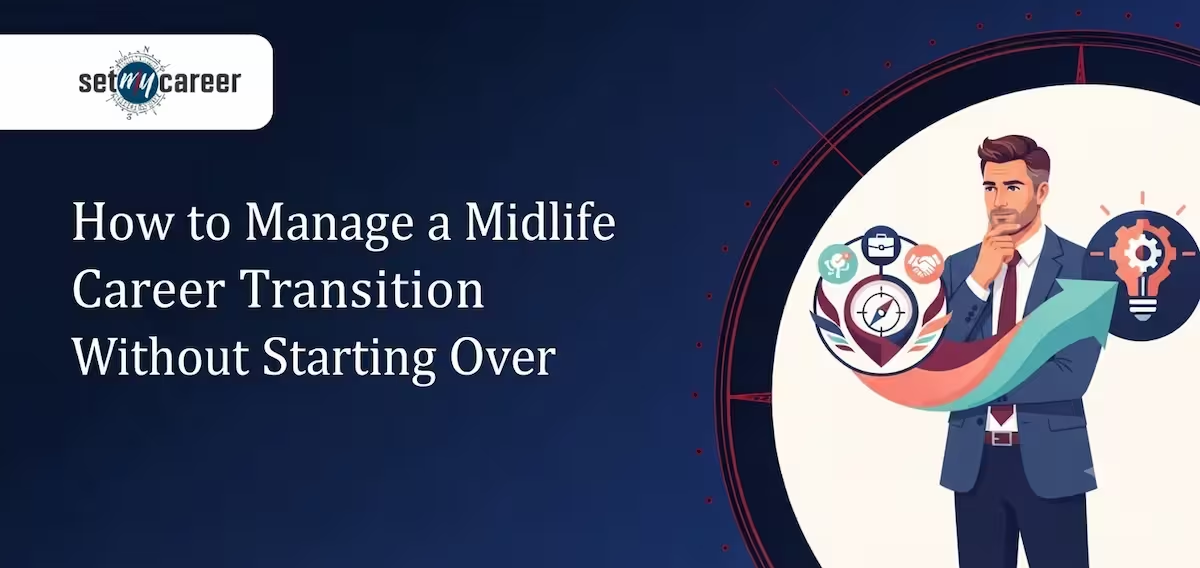
Feeling stuck or unfulfilled in your current role after years of hard work is incredibly common, but the thought of making a career transition in midlife can feel terrifying. You might worry about losing your hard-earned seniority, taking a massive pay cut, or having to compete with younger graduates just entering the job market. It is completely natural to feel overwhelmed by these doubts, but changing your path does not mean throwing away your valuable years of experience.
At SetMyCareer, we have helped thousands of professionals navigate this exact turning point with clarity and confidence. The secret to a successful career transition without starting from scratch lies in identifying your transferable skills—those core strengths like leadership, project management, and problem-solving that are highly valuable in any industry. By strategically leveraging the expertise you already possess, you can step into a new, more fulfilling role without taking steps backward.
In this guide, you will discover practical, step-by-step strategies to map out your next move with confidence. We will show you how to audit your professional strengths, identify growing industries that align with your interests, and rebrand your resume to stand out to employers in 2026. You deserve a career that brings you both satisfaction and security, and you already have the foundation to build it.
What is a Career Transition?
A career transition is the strategic process of shifting from one professional role, industry, or vocational field to another. This intentional movement relies heavily on leveraging core competencies, pursuing targeted skill development, and aligning personal career goals with sustainable, long-term opportunities in the modern job market.
Unlike a simple lateral job move within the same department, this shift involves redefining your professional identity. It often requires individuals to translate existing knowledge into unfamiliar industrial domains, creating a reliable bridge between past accomplishments and future professional aspirations.
| Feature | Standard Job Change | Career Transition |
|---|---|---|
| Scope of Change | Same industry, similar job title, and comparable day-to-day duties. | New industry, different functional role, or completely new professional domain. |
| Skill Reliance | Direct application of existing specialized technical capabilities. | Heavy reliance on portable competencies combined with targeted learning. |
| Learning Curve | Minimal; standard adjustment to company-specific workflows. | Moderate to high; requires adaptation to new industry cultures and tools. |
Understanding this distinction helps professionals set realistic milestones. Transitioning does not mean erasing history; rather, it represents a structural redeployment of a professional asset portfolio.
Essential Career Transition Steps for Adults
Executing a shift in focus during midlife requires systematic execution rather than impulsive action. Following structured career transition steps for adults ensures that professional changes are sustainable, secure, and aligned with practical market opportunities.
Step 1: Auditing Your Transferable Skills
The first major phase involves a thorough diagnostic evaluation of existing capabilities. These portable assets, known as transferable skills, form the bedrock of any successful industry pivot. Identifying these core competencies allows professionals to enter new markets with established credibility rather than starting completely from scratch.
By documenting past operational achievements, professionals uncover hidden strengths that hold immense value across diverse sectors. These core competencies generally fall into several distinct categories:
- Operational Leadership: Experience in managing cross-functional teams, directing project lifecycles, and allocating operational budgets effectively.
- Analytical Problem Solving: The ability to diagnose systemic inefficiencies, synthesize complex data sets, and implement corrective measures.
- Strategic Communication: Mastery of stakeholder management, public presentation, negotiation, and cross-departmental alignment.
- Technical Adaptability: Proficiency with enterprise resource systems, software suites, or data-driven methodologies that translate across sectors.
Step 2: Committing to Reskilling and Upskilling
While portable capabilities provide a solid baseline, bridging the knowledge gap requires a dedicated focus on reskilling and upskilling. This process ensures that candidates acquire the specific technical capabilities, certifications, and industry-specific tools demanded by modern hiring managers.
| Development Path | Core Objective | Typical Execution Format | Primary Benefit |
|---|---|---|---|
| Upskilling | Enhancing existing skills to meet modern technical demands. | Advanced certifications, specialized workshops, and short courses. | Increases efficiency and authority within adjacent career fields. |
| Reskilling | Acquiring completely new skills for a different functional role. | Professional diplomas, micro-credentials, and industry-focused bootcamps. | Bridges functional gaps, qualifying candidates for entirely new industries. |
By choosing the correct education track, professionals save significant time. Combining existing professional wisdom with modern technical capabilities makes transitional candidates uniquely competitive in the workforce.
Step 3: Comprehensive Career Change Planning
A career pivot is rarely successful without structured, deliberate career change planning. A comprehensive roadmap details concrete actions, financial buffers, networking strategies, and realistic timelines, transforming an intimidating life event into a series of manageable daily milestones.
- Market Analysis Phase: Investigating target industries to identify hiring trends, average compensation bands, and required credentials.
- Financial Runway Construction: Establishing a financial buffer equivalent to three to six months of expenses to ease transitional pressures.
- Strategic Networking Phase: Connecting with industry professionals through informational interviews to uncover hidden hiring opportunities.
- Iterative Application Phase: Tailoring outreach materials to match target industry demands rather than submitting generic resumes.
Mid Career Transition Advice: Overcoming Common Roadblocks
Midlife career shifts come with unique structural pressures, such as family responsibilities, financial liabilities, and established professional status. Taking a calculated approach to these challenges helps maintain stability while pursuing a more satisfying professional path.
Mitigating Financial and Seniority Risks
A common fear among mature professionals is the loss of status or compensation. Solid mid career transition advice focuses on finding positions where previous sector expertise adds strategic value to the new employer, helping to prevent entry-level placements.
| Risk Factor | Potential Challenge | Mitigation Strategy |
|---|---|---|
| Compensation Reduction | New roles may initially offer lower starting base salaries. | Negotiate compensation based on the broader strategic value of past leadership experience. |
| Loss of Seniority | Starting fresh can place professionals in junior-level operational teams. | Target hybrid or consultative roles that bridge old industry knowledge with new processes. |
| Skill Obsolescence | Technological advancements may make legacy skills feel outdated. | Focus on modern methodology certifications and apply them to proven industry frameworks. |
By approaching these challenges with strategic patience, professionals find that companies appreciate the maturity, emotional intelligence, and problem-solving capabilities that only decades of workplace experience can cultivate.
Leveraging Vocational Guidance for Targeted Results
Attempting to manage a major shift alone often results in wasted energy, confusion, and prolonged periods of unemployment. Accessing professional vocational guidance clarifies options, utilizes scientific aptitude assessments, and helps candidates construct a highly effective roadmap.
Professional advisory programs provide objective support systems that keep candidates accountable and aligned. Career guidance programs typically provide several key interventions:
- Aptitude Assessment: Identifying cognitive strengths and natural inclinations to find roles that offer long-term satisfaction.
- Skill Gap Mapping: Outlining the exact training paths required to enter target roles without wasting time on redundant courses.
- Rebranding Strategies: Restructuring resumes and online profiles to immediately appeal to recruiters in the target industry.
- Targeted Placement Assistance: Connecting candidates to specialized networks and recruiters open to non-traditional career paths.
How to Make a Career Transition in Today's Market
Succeeding in today's recruitment landscape requires modern search strategies and an updated approach to personal branding. Understanding how to make a career transition means moving beyond standard job application portals and actively shaping how potential employers view your talent.
Rebranding Your Professional Identity
The traditional resume focuses heavily on chronological history, which can highlight an unconventional background as a weakness. Transitioning professionals must shift to functional or hybrid presentation formats that focus attention on cross-functional capabilities and business outcomes rather than job titles alone.
| Resume Component | Traditional Chronological Format | Modern Hybrid/Functional Format |
|---|---|---|
| Summary Statement | Highlights years of experience in a single specific industry. | Emphasizes core transferable capabilities and target role alignment. |
| Experience Layout | Lists work history chronologically with heavy industry-specific jargon. | Groups achievements by core skill areas, showing strategic relevance to the new field. |
| Education & Certifications | Lists original degrees at the bottom of the document. | Highlights recent upskilling and modern industry certifications near the top. |
This targeted restructuring immediately communicates relevance to hiring managers, showing them exactly how past achievements translate into solutions for their current operational challenges.
Beyond written profiles, proactive relationship-building remains a highly effective strategy for secure pivots. Building connections outside of traditional channels helps bypass automated screening algorithms:
- Engage in Micro-Communities: Join specialized forums, professional associations, and localized meetups related to the target industry.
- Conduct Informational Interviews: Connect with established practitioners to learn about the realities of their daily operations.
- Contribute to Industry Discussions: Share insights, case studies, or thoughts on industry trends on platforms like LinkedIn to build authority.
- Seek Mentorship: Identify experienced guides within the target field who can offer localized, actionable advice.
Taking the Next Step in Your Career Transition
Navigating a midlife career transition can feel overwhelming, but it is important to remember that you are not starting from scratch. Over the years, you have built a rich portfolio of transferable skills, professional wisdom, and valuable relationships. This transition is not about erasing your past; it is about strategically leveraging your experience to step into a role that truly aligns with your current goals and values.
With a structured plan, realistic expectations, and a clear focus on your strengths, you can successfully pivot into a fulfilling new field without losing the ground you have already gained. Trust in your experience, embrace the learning curve, and move forward with confidence.
If you are ready to map out your next move but want expert guidance to ensure you make the right choices, SetMyCareer is here to support you. Our experienced counselors provide personalized, data-driven guidance to help you navigate your career transition smoothly and confidently. Contact us today to schedule a one-on-one session and begin your next professional chapter with clarity.