



Quick Summary
Waking up to a career that no longer inspires you can feel overwhelming, but entering your 30s is actually the golden window for a strategic career pivot. You are not starting from scratch; instead, you can leverage your valuable transferable skills and utilize affordable micro-credentials to transition smoothly without losing your financial stability or professional standing. By following a structured 90-day transition blueprint and accessing the hidden job market, you can confidently realign your professional path with your true passions—and SetMyCareer is here to guide you every step of the way.
Introduction
Turning 30 often brings a wave of self-reflection, especially about your professional life. If you find yourself waking up dreading the workweek, you might be seriously contemplating a career change at 30. However, the fear of losing the professional status, salary, and stability you worked so hard to build in your twenties can make you feel completely stuck. It is natural to hesitate, but wanting a new path does not mean you have to throw away your hard-earned experience and start over from scratch.
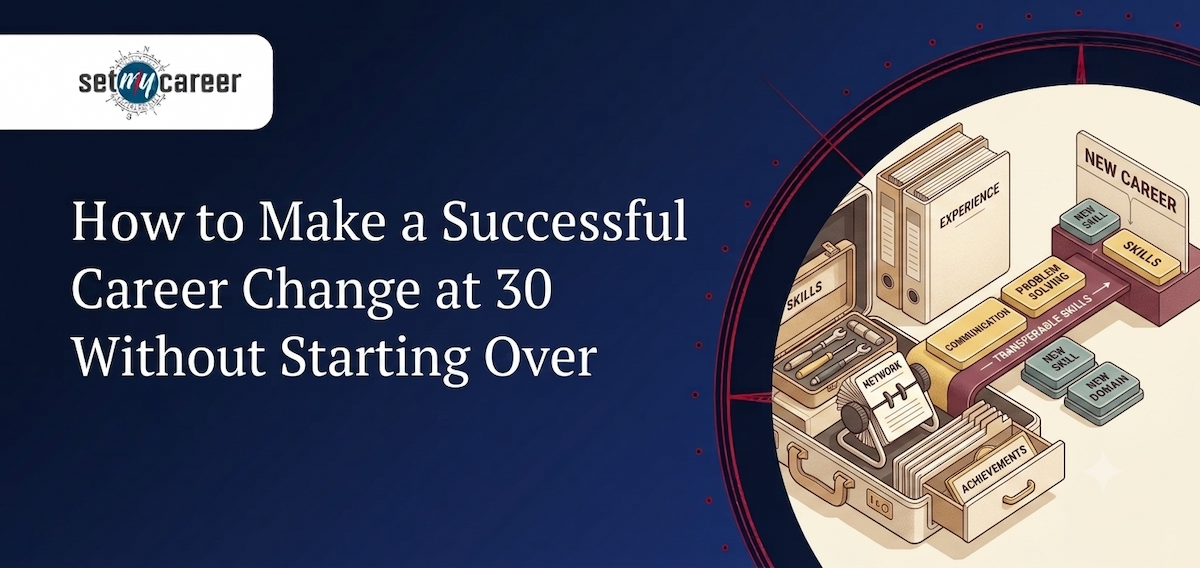
The truth is, you are not starting from zero. At this stage of your life, you possess a rich reservoir of transferable skills—such as project management, leadership, and problem-solving—that are highly valuable in almost any industry. Making a career change at 30 is not about resetting your progress; it is about strategically pivoting your existing skills into a field that genuinely excites you. With decades of active working life still ahead, this is actually the ideal window to align your daily work with your true strengths and long-term goals.
In this guide, we will share a practical, step-by-step roadmap to help you transition fields smoothly without taking a massive pay cut or spending years back in college. You will discover how to audit your professional assets, close critical skill gaps through micro-credentials, and position your unique background as an advantage to new employers. Let's explore how you can make your next professional chapter your most rewarding one yet.
Why 30 is the Golden Window for a Career Change (Without Starting Over)
Debunking the 'Too Late' Myth: Why Your 30s are Your Greatest Asset
Your 30s are your greatest asset because you combine the energy of youth with proven professional maturity. Unlike fresh graduates, you possess a rich foundation of communication, problem-solving, and project management skills that allow you to adapt immediately and add immediate value to any new organization.
By the time professionals reach their thirties, they have developed a keen understanding of workplace dynamics, emotional intelligence, and cross-functional collaboration. These are not traits that can be taught in a classroom; they are forged through years of actual workplace experience. Employers increasingly value these mature competencies over purely technical knowledge, which can be acquired quickly through targeted training.
Overcoming the Sunk Cost Fallacy of Your 20s Career Choice
Many individuals hesitate to make a career change at 30 due to the sunk cost fallacy. This psychological trap convinces people to stay in an unsatisfying field simply because they have already invested years of study and work into it. However, remaining on an unfulfilling path out of obligation to past decisions only compounds the professional dissatisfaction over time.
The experience built during your twenties is never wasted. Whether you worked in retail management, corporate finance, or creative design, you acquired foundational capabilities that can be repositioned. Acknowledging that past choices served their purpose allows you to make objective decisions about your future without feeling like you are discarding your history.
The Math of a 30-Something Pivot: You Have 35+ Working Years Left
Consider the professional timeline mathematically. Most individuals begin their careers around age 22 and retire around 65 or 70. At age 30, you have only completed about eight years of work, leaving at least 35 years of active professional life ahead. You are essentially at the starting line of your professional journey.
Pivoting now ensures that the vast majority of your career is spent in a field that matches your natural strengths and values. It is a highly rational calculation to spend a few months restructuring your trajectory to maximize satisfaction and earning potential for the next three and a half decades.
| Professional Attribute | The Twenties Phase | The Thirties Phase (The Golden Window) |
|---|---|---|
| Core Focus | Trial and error, skill exploration, basic workplace adaptation | Strategic alignment, leadership development, targeted contribution |
| Decision Making | Often influenced by external pressure or default choices | Driven by self-awareness, personal values, and data |
| Professional Network | Limited, peer-focused, and transactional | Established, diverse, and capable of providing warm introductions |
| Value Proposition | High enthusiasm, low functional experience | Proven accountability, strategic thinking, refined soft skills |
The 'No-Reset' Framework: Auditing Your Portable Career Capital
Identifying Your High-Value Transferable Skills
High-value transferable skills are professional capabilities, such as leadership, financial management, and data analysis, that apply across different industries. Identifying these skills requires evaluating your past achievements to extract core talents that directly address the operational challenges and strategic goals of your target industry.
To successfully execute this transition, conducting a formal transferable skills analysis is an excellent first step. This process involves listing every major achievement from your past positions and breaking them down into their fundamental competencies. For example, if you successfully managed a store opening, your underlying skills include project scheduling, vendor negotiation, budget management, and team leadership.
Translating Your Past Experience into Your New Industry's Language
A primary challenge of shifting fields is that different industries use different terminologies for the same basic concepts. A successful transition requires thorough resume restructuring, which involves translating your historical achievements into the specific terminology used by hiring managers in your target field.
If you are transitioning from education to corporate training, terms like "lesson planning" should be reframed as "curriculum design," and "classroom management" should become "stakeholder engagement." This alignment ensures that applicant tracking systems and recruiters immediately recognize your capability to perform the role, despite your non-traditional background.
How to Position Your 'Non-Traditional' Background as an Unfair Advantage
When switching industries at 30 years old, your unique background is not a weakness; it is a competitive advantage. Organizations often suffer from groupthink when they hire candidates with identical career histories. By entering a new field with an alternative perspective, you offer fresh problem-solving approaches that others might overlook.
For instance, a former healthcare worker pivoting into software product management brings invaluable, real-world empathy and deep operational knowledge of clinical workflows. This domain expertise allows them to design better products than a traditional product manager who has never stepped foot in a hospital. Emphasize how your distinct background helps you solve problems differently and more effectively.
- Operational Leadership: The ability to organize teams, set clear milestones, and deliver projects on schedule.
- Data-Driven Decision Making: Experience analyzing metrics, managing budgets, and translating raw data into actionable business growth strategies.
- Client Relationship Management: Proficiency in managing stakeholder expectations, resolving conflicts, and building long-term institutional trust.
- Cross-Functional Collaboration: A track record of working effectively with diverse departments to achieve unified organizational objectives.
Strategic Upskilling: How to Fill Skills Gaps Without Going Back to College
Targeted Micro-Credentials and Certifications vs. Costly Degrees
Entering a new field does not require spending years of your life and thousands of dollars on a traditional university degree. The modern employment market highly values specific, verified competencies. Targeted micro-credentials and industry-standard certifications allow you to establish credibility quickly and affordably.
For instance, if you are pivoting into digital marketing, acquiring recognized certifications from established platforms holds substantial weight. These credentials show employers that your knowledge is current, practical, and directly applicable to their day-to-day business operations.
Building a 'Proof of Work' Portfolio to Bypass Entry-Level Requirements
To bypass entry-level experience requirements, you must show, rather than tell, what you can do. A "proof of work" portfolio is a curated collection of practical projects that demonstrate your ability to solve real business problems in your target industry.
If your goal is to transition into data analytics, do not just list SQL on your resume. Build a public repository containing clear analyses of open-source datasets, complete with clean visualizations and actionable business recommendations. This physical proof of your capabilities makes formal experience requirements far less important to progressive hiring managers.
Leveraging Free and Low-Cost Industry-Specific Resources
The barrier to high-quality education has never been lower. Aspiring professionals can utilize online learning platforms, open-source projects, and industry playbooks to build functional knowledge at their own pace. This self-directed learning shows potential employers that you have high initiative and excellent self-management skills.
- Massive Open Online Courses (MOOCs): Structured programs from top-tier universities offering specialized tracks in technical and business disciplines.
- Professional Association Libraries: Accessing white papers, webinars, and industry reports to understand current industry trends and vocabulary.
- Open-Source Contribution: Collaborating on public projects to gain practical experience and receive feedback from seasoned industry experts.
- Technical Documentation: Direct study of software manuals, regulatory guidelines, and standard operating procedures relevant to your target role.
| Factor | Traditional University Degree | Targeted Micro-Credentials |
|---|---|---|
| Time Investment | 2 to 4 Years | 3 to 6 Months |
| Financial Cost | High tuition and associated debts | Low to moderate registration fees |
| Curriculum Focus | Broad, academic, and theoretical framework | Highly specific, technical, and tool-focused |
| Flexibility | Fixed schedules, often requiring full-time attendance | Self-paced, designed for working professionals |
The Internal Pivot: Changing Roles Without Changing Companies
How to Pitch a Lateral Move to Your Current Employer
Pitching a lateral move requires demonstrating how your institutional knowledge benefits the new department while resolving an existing business need. You present a structured proposal showing how your familiarity with company systems reduces onboarding time and allows you to deliver faster results than an external hire.
When presenting this to leadership, position the move as a win-win scenario. Highlight how your deep understanding of your current department's workflows will improve collaboration with the new department, breaking down organizational silos and increasing overall efficiency.
Shadowing and Cross-Department Collaboration Strategies
Before making a formal request, build organic relationships with the department you wish to join. Volunteer for cross-functional committees or offer to help on projects where your current team and the target team overlap. This approach gives you firsthand exposure to their daily work and challenges.
Informal job shadowing is another highly effective strategy. Spending a few hours a week observing their workflow helps you learn their tools, processes, and team dynamics, which makes you a highly competitive candidate when an internal opening occurs.
Minimizing Financial and Professional Risk Through Internal Mobility
Internal mobility is one of the safest ways to make a major career transition. Changing fields inside an organization where you have already earned trust and respect significantly reduces the risks associated with starting a new job.
Your salary, retirement contributions, and benefits typically remain stable during an internal move. Additionally, if the new role presents unforeseen challenges, you still have an established reputation and a supportive network within the company to help you adjust.
- Identify Shared Projects: Look for initiatives that require cooperation between your current team and your target team.
- Express Transparent Interest: Discuss your long-term career goals with your current manager during performance reviews to gain their support.
- Propose a Trial Period: Offer to split your working hours between both departments for a limited time to ensure a smooth transition.
- Document Your Value: Clearly outline how your internal transition will help solve problems for both departments.
Mid-Career Networking: Leveraging Maturity Over Entry-Level Hustle
Conducting High-Yield Informational Interviews with Decision Makers
Informational interviews are highly focused, peer-to-peer conversations designed to gather industry insights and build professional relationships. These discussions should focus on learning about industry trends, challenges, and talent requirements, rather than asking for a job directly.
To implement successful professional networking strategies, target mid-to-senior level managers who have decision-making authority. Ask thoughtful questions about their daily responsibilities, industry trends, and skill requirements. This mature, collaborative approach builds genuine professional respect, which often leads to job opportunities when roles open up.
Revamping Your LinkedIn Profile to Attract Target-Industry Recruiters
Your LinkedIn profile serves as your digital professional brand. If your profile still reflects your old career path, recruiters in your new target industry will overlook you. Update your headline, summary, and experience sections to highlight your transferable skills and new focus.
Draft a compelling headline that bridges your past experience with your new direction. Your profile summary should tell a clear story of why you are pivoting and highlight the unique perspective you bring to the table, ensuring you stand out to search algorithms and recruiters.
The 'Warm Introduction' Strategy: Accessing the Hidden Job Market
A significant percentage of open positions are filled through internal referrals before they are ever posted publicly. Accessing this hidden job market requires moving past cold online applications and focusing on warm introductions through your existing network.
Reach out to former colleagues, university classmates, and professional acquaintances to let them know about your transition. Share your specific target roles and ask if they can connect you with anyone in those fields. A warm recommendation from a trusted mutual contact is incredibly powerful for securing interviews.
| Outreach Method | Primary Objective | Key Benefit | Typical Response Rate |
|---|---|---|---|
| Warm Introductions | Secure a trusted referral or internal recommendation | Bypasses initial resume screening processes | High (60% - 80%) |
| Informational Interviews | Gather industry intelligence and build relationships | Creates lasting professional advocates | Moderate (30% - 50%) |
| Direct LinkedIn Outreach | Connect directly with hiring managers or recruiters | Puts your qualifications right in front of decision makers | Low to Moderate (15% - 25%) |
Financial Engineering for a Painless Career Transition
Calculating Your Financial Runway and Minimum Viable Income
Calculating your financial runway involves totaling your liquid savings and dividing it by your monthly essential expenses. Your minimum viable income is the lowest net salary required to cover these necessary costs, ensuring professional decisions are made from strategic choice rather than immediate financial panic.
Before launching a mid career pivot, review your household budget in detail. Categorize your expenses into essential needs and non-essential wants. Knowing your exact minimum viable income allows you to evaluate job offers in your new field with confidence, making it easier to accept opportunities that offer excellent long-term growth even if they come with a temporary pay cut.
How to Negotiate a Mid-Level Salary When Pivoting Fields
Many candidates assume that transitioning to a new field means accepting an entry-level salary, but this is rarely necessary for a professional in their 30s. You should negotiate a mid-level salary by highlighting your proven management and operational experience.
Focus the conversation on your ability to deliver immediate value without needing basic workplace training. Emphasize that while your technical tools may be new, your leadership, strategic thinking, and client management skills are highly developed and ready to be put to work.
Handling the Transition Phase: Side Hustles vs. Temporary Bridge Roles
Managing the financial transition between careers requires a practical strategy. Depending on your personal situation and financial obligations, you can choose to build your skills through side hustles or take on a temporary bridge role.
A side hustle allows you to test your new career path and build a portfolio while keeping the security of your full-time job. Alternatively, a temporary bridge role in your target industry gets you through the door, provides immediate hands-on experience, and helps you build a network while you work toward your ultimate target role.
| Strategic Variable | The Side Hustle Approach | The Temporary Bridge Role |
|---|---|---|
| Financial Stability | High (Full-time primary income is maintained) | Moderate to Low (Variable or lower hourly wages) |
| Speed of Skill Growth | Gradual (Limited to evening and weekend hours) | Rapid (Full immersion in the target industry) |
| Industry Networking | Limited (Primarily remote or digital interaction) | High (Direct, daily contact with active professionals) |
| Burnout Risk | High (Working double shifts across different roles) | Low to Moderate (Singular professional focus) |
Your 90-Day Step-by-Step Transition Blueprint
Phase 1 (Days 1-30): Deep Research and Skill Mapping
The first month of your transition focuses on gathering data, researching potential fields, and identifying your transferable assets. If you are exploring how to transition career at 30, begin by looking into the best career change at 30 ideas that align with your natural strengths, interests, and salary goals.
Use this initial phase to study job postings in your target field. Note the software, methodologies, and soft skills that appear most frequently. Compare these requirements with your current skill set to map out exactly what you need to learn, ensuring your upskilling efforts are highly targeted and efficient.
Phase 2 (Days 31-60): Asset Building and Targeted Upskilling
With a clear map of your skill gaps, dedicate the second month to active learning and rebuilding your professional assets. Focus on completing micro-credentials, taking relevant courses, and building portfolio projects that prove your capabilities.
This is also the perfect time to complete your resume and update your LinkedIn profile. Shift the language of your past experiences to highlight your transferable skills, ensuring your profile is highly attractive to recruiters in your new target industry.
Phase 3 (Days 61-90): High-Impact Outreach and Strategic Applying
The final phase of your 90-day plan shifts the focus to outreach and applying for roles. Use your updated professional assets to start reaching out to your network, conducting informational interviews, and applying for targeted roles.
Avoid sending out generic applications. Instead, customize your resume for each target role, highlighting how your unique background solves their specific challenges. Combine these applications with personal outreach to hiring managers to maximize your chances of landing interviews.
- Weekly Skill Auditing: Dedicate three hours every weekend to review your upskilling progress and adjust your learning plan as needed.
- Targeted Recruiter Outreach: Identify and connect with at least five specialized recruiters in your target industry every week.
- Portfolio Updates: Regularly add your latest work, case studies, and certifications to your portfolio to keep it fresh and relevant.
- Interview Preparation: Practice behavioral interviewing techniques, focusing on explaining your career transition clearly and confidently.
Embracing Your Career Change at 30 with Confidence
Making a career change at 30 is not about erasing your past decade of hard work or starting over from the bottom of the ladder. Instead, it is a strategic redirection of the valuable skills, professional maturity, and industry insights you have already built. With more than three decades of your working life still ahead, you are in a prime position to build a professional path that truly aligns with your goals and values.
By mapping your transferable skills, filling specific knowledge gaps without costly degrees, and using targeted networking, you can navigate this transition smoothly. You do not have to make blind leaps of faith or compromise your financial stability to find career fulfillment.
If you are ready to turn your transition plans into a clear, personalized roadmap, we are here to support you. Book a career counseling session with SetMyCareer today, and let us help you design a practical strategy to transition into your next professional chapter with absolute confidence.