




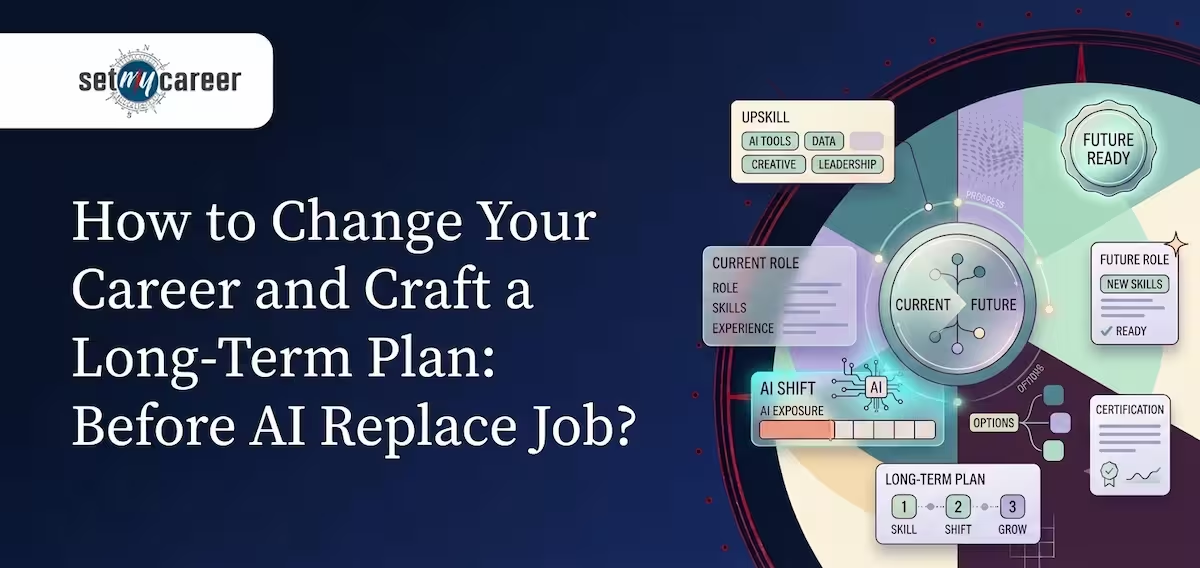
Thinking about a career pivot is inherently stressful, and the rapid deployment of artificial intelligence across industries only adds to that anxiety. You might feel stalled in your current role, or perhaps you are finally ready to pursue a path that genuinely aligns with your core interests. Naturally, watching algorithms and automation tools take over tasks previously handled by humans raises a critical question: how do you ensure your next professional move remains secure?
It is entirely normal to feel overwhelmed by the shifting dynamics of the modern job market. New technologies emerge almost daily, fundamentally altering how organizations operate. However, instead of letting these changes paralyze your decision-making, you can use this transitional period to take calculated control of your professional trajectory. By targeting the right industry and crafting a deliberate transition plan, you can set yourself up for sustainable, long-term success—even in a highly tech-driven economy.
The reality is that artificial intelligence still struggles with uniquely human traits. Capabilities like complex problem-solving, emotional intelligence, strategic empathy, and creative leadership remain incredibly difficult to automate. By understanding the true impact of artificial intelligence on jobs and proactively planning your career shift, you can effectively future-proof your livelihood. This guide outlines actionable strategies to help you navigate a career change confidently and build a resilient long-term plan.
Strategic Steps for a Successful Career Transition
Shifting from one profession to another requires more than just updating your resume. It demands research, self-awareness, and a willingness to adapt. Here are practical steps to ensure a smooth and successful transition into your new path.
Reflect on Your Core Career Goals
Before making any sudden moves, take the time to evaluate why you want to leave your current field. Are you seeking greater personal fulfillment, a higher salary ceiling, or a healthier work environment? Pinpointing your exact motivations will anchor your decision-making process. Whether you are navigating a career change at 30, a career change at 40, or looking for a post-retirement pivot, clearly defining your end goal is the foundation of a successful transition.
Assess Your Transferable Skills and Strengths
You rarely start from scratch when changing careers. Identify the capabilities you have developed in your current role that translate seamlessly into your target industry. Competencies such as project management, cross-functional communication, conflict resolution, and strategic leadership are universally valuable. Mapping out your existing strengths not only boosts your confidence but also helps you clearly articulate your value proposition to hiring managers in a completely new sector.
Research Potential Career Paths Thoroughly
Immerse yourself in the realities of the industries you are considering. Look beyond basic job titles to understand daily responsibilities, market growth projections, and compensation benchmarks. Review current job descriptions to identify exact skill requirements. Utilize platforms like LinkedIn, industry-specific forums, and professional networking groups to gather ground-level insights about where your target field is heading over the next decade.
Acquire Necessary Skills and Certifications
If your desired role requires technical knowledge you currently lack, prioritize targeted education. You do not necessarily need to return to university for a multi-year degree. Look into specialized bootcamps, online certification programs, and professional workshops that offer intensive, practical training. While building technical proficiency, remember that soft skills—such as adaptability and critical thinking—are equally vital for standing out as an external candidate.
Cultivate an Industry-Specific Network
Professional networking is often the deciding factor in a successful career shift. Start connecting with established professionals in your target sector. Attend local industry meetups, participate in webinars, and engage meaningfully with thought leaders on social media. Do not hesitate to request brief informational interviews; most professionals are happy to share their experiences. These conversations frequently uncover unadvertised job openings and provide invaluable guidance on how to navigate the industry.
Customize Your CV and Online Presence
Your resume and LinkedIn profile must tell a cohesive story about where you are going, not just where you have been. Tailor your professional summary and experience sections to highlight the transferable skills most relevant to your new goals. A well-structured CV writing approach involves using the specific terminology and keywords prevalent in your target industry, ensuring your application successfully passes through Applicant Tracking Systems (ATS) and resonates with human recruiters.
Consider Fractional Work, Internships, or Volunteering
Gaining hands-on experience is one of the fastest ways to validate your new career choice while building out your resume. Seek out freelance projects, skills-based volunteering opportunities, or even adult internships. Taking on short-term consulting or contract roles allows you to demonstrate your commitment to the field, build a tangible portfolio, and establish professional credibility before applying for full-time positions.
Prepare a Financial Runway
A major career pivot often involves a temporary dip in income, particularly if you are entering a new field at a slightly lower seniority level. Audit your current financial situation and build a safety net. Consider reducing discretionary spending, saving three to six months of living expenses, or maintaining a side income during the transition. Establishing a financial runway provides the peace of mind necessary to evaluate job offers carefully rather than accepting the first available option out of desperation.
Build Resilience for Inevitable Challenges
Pivoting into unknown territory requires thick skin. You will likely face initial rejections, steep learning curves, and moments of self-doubt. Expect these hurdles and view them as part of the normal transition process rather than signs of failure. Maintaining a resilient, positive mindset is critical. Celebrate the small victories—such as landing a preliminary interview or mastering a new software tool—to maintain your momentum.
Seek Professional Career Guidance
You do not have to navigate this complex process alone. Partnering with a career coach or professional mentor provides you with objective feedback and tailored strategies. Experts can help you identify blind spots in your plan, refine your interview techniques, and keep you accountable to your timeline, significantly reducing the friction involved in changing industries.
How to Future-Proof Your Career Against AI Disruption
Preparing for an economy heavily influenced by automation means shifting your focus from easily repeatable tasks to complex, human-centric problem-solving. Here is how you can build a long-term strategy that thrives alongside technological advancement.
Monitor Industry Shifts and Technological Trends
Make it a habit to track how automation is specifically being deployed within your profession. Subscribe to industry journals, follow key technologists, and participate in forward-looking professional communities. Understanding which tasks are actively being automated allows you to pivot your focus toward the strategic, higher-level responsibilities that machines cannot handle.
Double Down on Skills That AI Cannot Replicate
Artificial intelligence excels at processing vast amounts of data, pattern recognition, and generating formulaic content. It fails at nuance. Focus intensely on developing skills that require a human touch: complex negotiations, empathetic leadership, ethical decision-making, and creative innovation. Roles that rely heavily on relationship-building, emotional intelligence, and contextual judgment remain highly insulated from automation.
Develop a T-Shaped Professional Profile
A "T-shaped" professional possesses deep expertise in one specific area (the vertical bar of the T) while maintaining a broad, working knowledge of several adjacent disciplines (the horizontal bar). By expanding your skill set across different functions—such as a marketing expert who also understands basic data analytics and product design—you become highly adaptable. This cross-functional versatility makes you invaluable to employers navigating unpredictable market changes.
Establish Agile, Long-Term Career Milestones
Determine where you want to position yourself in five, ten, or fifteen years, but remain flexible on how you get there. Break your ultimate career objective into smaller, actionable phases. Setting adaptable long-term goals ensures you remain focused on continuous growth, allowing you to easily adjust your trajectory when disruptive technologies alter your industry's landscape.
Diversify Your Professional Network
While networking within your specific niche is important, future-proofing requires building relationships across multiple industries. Connect with professionals in tech, finance, human resources, and operations. A diversified network exposes you to broader market trends, introduces you to distinct problem-solving frameworks, and provides a much wider safety net if your primary industry experiences sudden contraction.
Target Sectors Highly Resistant to Automation
If job security is your primary concern, explore fields that inherently demand human interaction, physical dexterity, or complex subjective reasoning. Healthcare, specialized education, mental health services, advanced trades, and high-level corporate strategy are heavily dependent on the human element. Positioning yourself within or adjacent to these sectors drastically reduces your risk of displacement.
Cultivate a Mindset of Lifelong Learning
The days of relying on a single degree for a forty-year career are over. The most effective defense against obsolescence is an insatiable curiosity. Embrace lifelong learning as a core professional habit. Remain open to experimenting with the very AI tools that seem threatening; learning how to direct, manage, and optimize artificial intelligence actually transforms you from a potential casualty of automation into an indispensable asset.
Conclusion
Navigating a career transition during an era of rapid technological advancement requires deliberate strategy, resilience, and a willingness to continuously evolve. While artificial intelligence is undoubtedly reshaping the global workforce, it is also clearing the path for roles that prioritize genuine human ingenuity. By actively staying informed, intentionally developing irreplaceable soft skills, and setting clear, adaptable goals, you can build a professional life that not only survives technological disruption but actively thrives alongside it.
If you are ready to take control of your professional future but feel unsure of where to begin, you do not have to chart the course alone. Reach out to the experts at SetMyCareer. We specialize in providing the personalized guidance, tactical planning, and industry insights you need to successfully execute your career pivot and achieve your most ambitious long-term goals.