





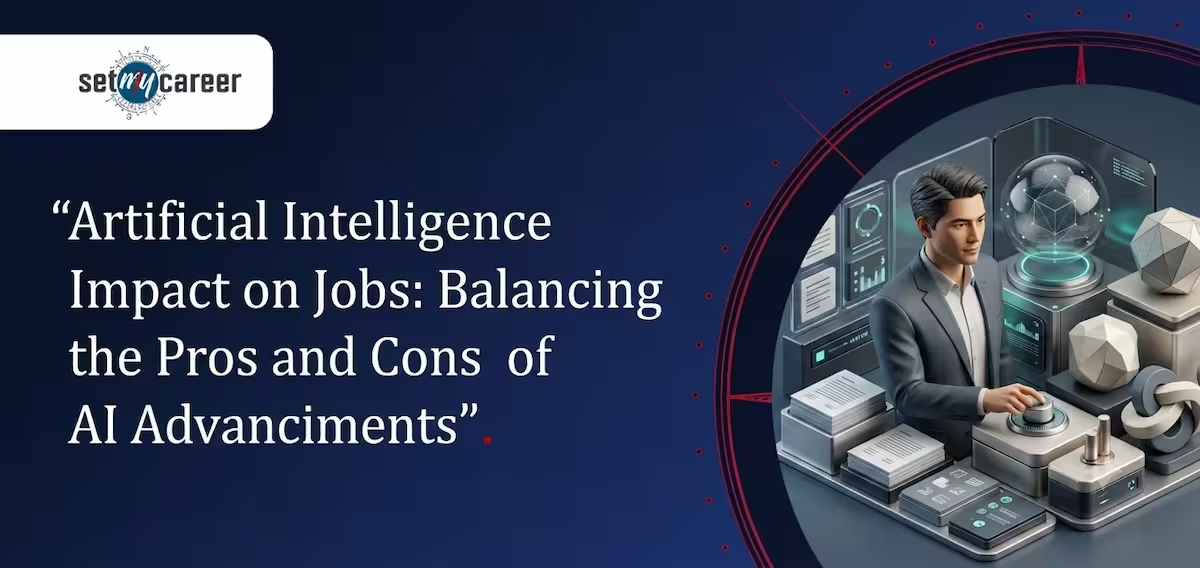
Picture a world where machines handle all of our routine tasks—it sounds like a futuristic dream, but it is rapidly becoming our daily reality. As artificial intelligence (AI) becomes deeply integrated into the modern workplace, its impact on global employment has become one of the most pressing concerns of our time. While AI brings undeniable benefits, such as unprecedented efficiency and rapid innovation, it also introduces complex challenges that cannot be ignored.
Career counselling helps professionals adapt to the artificial intelligence impact on jobs and future-proof their careers.
The defining question for today's workforce is: Will AI replace our jobs, or will it create a new era of unprecedented professional opportunities? The answer is not a simple yes or no. According to the World Economic Forum’s Future of Jobs Report 2025, AI and related technological shifts are projected to displace 92 million jobs globally by 2030. However, this same disruption is expected to create 170 million new roles—resulting in a net positive of 78 million jobs. Let’s explore the advantages, the risks, and exactly how artificial intelligence is reshaping the modern job market.
In this comprehensive guide, we will dive into both sides of the AI debate. We will examine the potential risks—such as immediate job displacement and a widening global skills gap—that accompany rapid technological advancement. But the narrative is not solely about loss. We will also explore the massive opportunities AI creates, from entirely new career categories to enhanced human productivity. While some tasks will be automated, jobs that require deep empathy, complex critical thinking, and nuanced decision-making remain firmly out of reach for current AI capabilities. By understanding the artificial intelligence impact on employment, you can take proactive steps to prepare for an AI-driven future.
Artificial Intelligence and Jobs: What You Need to Know
At its core, Artificial Intelligence (AI) involves the creation of advanced computer systems capable of performing tasks that historically required human cognition. These tasks range from learning from past data and understanding natural human language to identifying complex patterns and making autonomous decisions. AI is not a single tool; it is a broad collection of underlying technologies—including machine learning, natural language processing (NLP), and robotics—all working in tandem to simulate human capabilities.
When analyzing its impact on employment, AI acts as a dual force: it is simultaneously a massive job creator and a powerful disruptor. Artificial intelligence excels at taking over routine, repetitive, and data-heavy tasks. This automation frees human workers to focus their energy on creative, strategic, and high-level problem-solving activities. For instance, AI algorithms can process massive spreadsheets, handle basic customer support queries via chatbots, and execute complex logistical calculations far faster and more accurately than humanly possible.
However, this efficiency inevitably means that certain jobs will become obsolete as AI systems grow more sophisticated. Roles heavily reliant on repetitive manual tasks or routine data processing are currently at the highest risk of automation. Yet, this displacement is counterbalanced by the creation of entirely new professional fields. We are seeing a surge in demand for AI ethics developers, prompt engineers, data scientists, and cybersecurity specialists. The secret to surviving this transition lies in adaptability—specifically, committing to lifelong learning and aggressively developing the skills that complement, rather than compete with, machines.
Balancing the Pros and Cons of AI in the Workplace
To fully grasp how AI will alter the professional landscape, we must weigh its distinct advantages against its inherent risks. Below is a breakdown of the primary benefits and drawbacks of AI integration.
| Pros of Artificial Intelligence | Cons of Artificial Intelligence |
| Increased Efficiency and Productivity | Job Displacement and Sector Losses |
| Significant Cost Reductions | Widening Global Skills Gap |
| Enhanced, Data-Driven Decision-Making | Privacy and Ethical Concerns |
| Creation of Advanced Tech Jobs | Dangerous Over-Reliance on Technology |
| Accelerated Innovation and Growth | Risk of Algorithmic Bias and Costly Mistakes |
The Key Advantages of AI for Businesses and Employees
The rapid adoption of AI across industries is driven by its ability to drastically improve how organizations operate. Here is a closer look at the primary benefits:
- Increased Efficiency and Productivity: AI excels at handling high-volume tasks with remarkable speed and flawless accuracy. By acting as a tireless digital assistant that works around the clock, AI eliminates administrative bottlenecks, allowing human employees to dedicate their time to high-value, strategic initiatives.
- Cuts Operational Costs: By automating routine workflows, AI helps companies significantly reduce operational overhead. When fewer human hours are spent on repetitive tasks, businesses can optimize their labor budgets, reinvest in growth, and potentially lower prices for end consumers.
- Enhanced Decision-Making: Human leaders can only process a limited amount of information at once. AI systems can instantly analyze vast, complex datasets to identify hidden trends, forecast market shifts, and optimize supply chains, enabling executives to make highly informed, data-backed choices.
- New Job Creation: While the media often focuses on job losses, the AI boom is actively creating millions of highly paid roles. The demand for machine learning engineers, AI compliance managers, and data analysts is skyrocketing, effectively birthing an entirely new sector of the global economy.
- Innovation and Growth: From accelerating pharmaceutical drug discovery to personalizing digital learning platforms, AI acts as a catalyst for human innovation. It is fundamentally transforming business models and allowing companies to create products that were previously thought impossible.
The Disadvantages and Risks of AI in Employment
Despite its remarkable potential, deploying artificial intelligence without careful consideration introduces severe economic and ethical risks:
- Job Displacement and Losses: AI’s operational efficiency poses a direct threat to workers in routine, administrative, and predictable manual roles. While preparing for job interviews and building a strong personal brand can help individuals navigate these shifts, the reality of sector-wide displacement remains a valid concern for millions of workers.
- Widening Skills Gap: As AI reshapes the labor market, a severe mismatch is emerging between the skills employers desperately need and the skills the current workforce actually possesses. This reality highlights the urgent need for workers to cultivate irreplaceable soft skills—such as complex communication, emotional intelligence, and adaptable problem-solving.
- Privacy and Ethical Concerns: To function effectively, AI models require massive amounts of data, much of which is deeply personal. This raises alarming concerns regarding data privacy, surveillance, and corporate overreach. Furthermore, there is an ongoing debate about the ethical implications of allowing machines to make decisions that profoundly impact human lives.
- Over-Reliance on Technology: As organizations hardwire AI into their core operations, they risk becoming entirely dependent on these systems. If a critical AI network fails, experiences a cyberattack, or hallucinates bad data, the resulting disruption could instantly cripple a business's ability to function.
- Risk of Bias and Mistakes: An AI system is only as objective as the data used to train it. If historically biased data is fed into an algorithm, the AI will inevitably produce biased, discriminatory results. This is particularly dangerous when AI is utilized in sensitive areas like corporate hiring, loan approvals, or criminal justice profiling.
Conclusion: Navigating the AI-Driven Job Market
The way artificial intelligence affects employment is undeniably complex, presenting a dynamic mix of unprecedented opportunities and distinct socioeconomic challenges. While it is true that AI will automate certain routine roles, it is equally true that it will act as a massive engine for productivity, paving the way for millions of new, highly specialized career paths. The technological shift is already underway, and resisting it is no longer a viable professional strategy.
Thriving in this new era requires a shift in mindset. Rather than viewing AI as a direct competitor, successful professionals will learn to leverage it as a powerful collaborative tool. By staying informed about industry trends, actively upskilling, and cultivating the deeply human traits that machines cannot replicate, you can confidently secure your place in the future of work.
If you are feeling uncertain about how these technological shifts will impact your specific career trajectory, you do not have to figure it out alone. SetMyCareer is dedicated to supporting professionals through complex industry transitions. Reach out to our experts today to discover actionable strategies to future-proof your skill set and remain highly competitive in an ever-evolving, AI-driven job market.