





Quick Summary
Finding your dream job today requires shifting from passive applications to a proactive job search strategy focused on targeted networking, LinkedIn optimization, and navigating automated screening systems. The absolute key to standing out is integrating structured mock interviews early in your routine, which helps you manage anxiety and clearly articulate your professional value. Whether you are a recent graduate or an experienced professional, active preparation combined with personalized career counseling will empower you to confidently unlock hidden opportunities and secure your next great role.
Introduction
Searching for a new job can often feel overwhelming and exhausting. You might spend hours tailoring resumes and sending out applications, only to feel like you are sending your qualifications into a void. In 2026, relying solely on traditional application methods is no longer enough. To secure the role you want, you need a modern job search strategy that goes beyond submitting forms and focuses on building real-world readiness and confidence.
The most effective way to elevate your preparation is by making mock interviews the foundation of your plan. Instead of treating practice interviews as a final checklist item after you get a callback, integrating them early in your routine prepares you for the unexpected. Practicing with experts or peers helps you refine your communication, manage interview anxiety, and clearly articulate the value you bring to a prospective employer.
In this guide, we will walk you through how to build a practical, results-driven job search strategy centered around structured practice. You will learn how to gather constructive feedback, tackle difficult questions with ease, and walk into your next interview feeling fully prepared. Let's take the stress out of your career journey and help you land your next great opportunity with confidence.
What is an Effective Job Search Strategy?
An effective job search strategy is a structured, proactive plan that combines target employer research, networking, online profile optimization, and continuous interview practice. Instead of passively applying to random postings, this systematic approach helps job seekers align their unique skills with actual market demands to secure optimal career opportunities.
Traditional job hunting often relies on high-volume, low-effort submissions on public job boards. While simple, this approach often yields minimal responses, leading to frustration and burnout. A modern blueprint shifts the focus from quantity to quality, prioritizing target company alignment, skill-gap analysis, and intentional relationship building.
| Strategy Dimension | Traditional Approach | Modern Job Search Strategy |
|---|---|---|
| Primary Method | Mass applying to public job boards | Targeted networking and referral acquisition |
| Application Volume | High quantity, generic resumes | Low quantity, highly tailored documents |
| Focus Area | Passive waiting for job openings | Active engagement with the hidden job market |
| Preparation Style | Reviewing notes right before an interview | Consistent mock interviews and skill alignment |
The Hidden Job Market: Moving Beyond Traditional Portals
A significant portion of professional opportunities is never advertised publicly. Accessing this hidden job market requires active outreach, intentional relationship building, and structured communication. By establishing professional rapport before an official opening exists, candidates position themselves as the preferred choice when hiring needs arise.
Leveraging Networking for Unadvertised Roles
Direct outreach to industry professionals and decision-makers bypasses traditional gatekeepers. To build an active professional circle, candidates can implement several structured actions:
- Identify and follow industry leaders, hiring managers, and potential peers at target organizations.
- Request brief informational interviews focused on industry insights rather than immediate employment.
- Participate in specialized professional associations, webinars, and local industry conferences.
- Share relevant industry insights, articles, and commentary to demonstrate domain expertise.
LinkedIn Optimization: Attracting Recruiters Naturally
A strong digital profile acts as a continuous, inbound recruiting tool. Proper linkedin optimization ensures that a candidate's profile appears in recruiter search results for relevant target positions.
| Profile Section | Optimization Action | Expected Benefit |
|---|---|---|
| Headline | Incorporate target job titles and primary skill keywords. | Higher visibility in recruiter search indexes. |
| About Summary | Detail key career achievements, core skills, and career direction. | Clear positioning of professional value proposition. |
| Experience | Use metric-driven achievement statements rather than task lists. | Demonstrates tangible business impact to hiring teams. |
| Skills Section | List a minimum of twenty verified industry competencies. | Improves profile ranking on LinkedIn Recruiter tools. |
Overcoming the Applicant Tracking System (ATS)
Most enterprise-level organizations utilize automated software to screen incoming applications before a human recruiter ever reviews them. Understanding how an applicant tracking system evaluates resumes is key to ensuring an application successfully passes through the initial screening phase.
System optimization involves aligning resume terminology with the specific requirements detailed in the target job description. This does not mean copying the posting verbatim, but rather translating career accomplishments into the language the software is programmed to recognize. This is one of the most practical steps when learning how to improve job search conversion rates.
- Utilize standard professional fonts such as Arial, Calibri, or Times New Roman to ensure readability.
- Avoid utilizing complex graphics, tables, text boxes, or headers/footers which can confuse parsing systems.
- Integrate specific hard skills and software competencies directly from the target job posting.
- Save and submit the application document as a clean PDF or Microsoft Word format as specified by the system.
Integrating Mock Interviews into Your Daily Routine
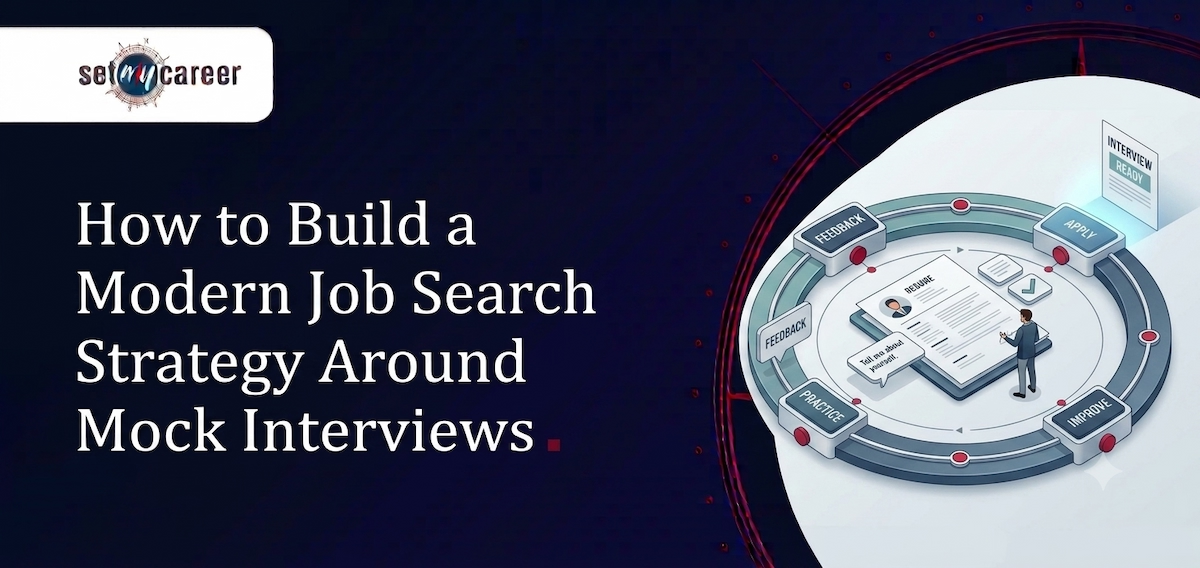
True interview readiness is not developed overnight. Integrating mock interviews early in the job search process transforms standard preparation into an active feedback loop, ensuring candidates can articulate their value clearly and confidently.
Simulating Real-World Interview Scenarios
Practicing in a simulated environment helps candidates manage psychological pressure and refine non-verbal communication cues. By mimicking the structure of panel interviews, technical evaluations, or behavioral assessments, individuals build the cognitive stamina required for multi-stage hiring processes.
Gathering and Implementing Constructive Feedback
Practice alone is insufficient without targeted evaluation. Candidates should seek structured feedback from experienced career mentors, industry peers, or certified career advisors to identify communication blind spots and refine their storytelling methodology.
| Evaluation Area | Potential Blind Spot | Strategic Correction |
|---|---|---|
| Response Structure | Providing overly long, unstructured answers. | Adopt the STAR method (Situation, Task, Action, Result). |
| Tone & Delivery | Sounding overly rehearsed or robotic. | Focus on conversational storytelling with natural pauses. |
| Value Articulation | Focusing on responsibilities instead of achievements. | Quantify outcomes using metrics, percentages, and revenue indicators. |
| Body Language | Fidgeting or avoiding eye contact during video calls. | Practice conscious posture adjustments and look directly at the camera. |
Structured Blueprints: Tailoring Your Approach
Different stages of a professional career require unique adjustments to the overall search framework. Recognizing whether a candidate needs a foundational introduction to the market or a strategic career transition plan dictates the daily actions they must take.
Job Search Strategy for Graduates
Applying a tailored job search strategy for graduates requires a heavy focus on demonstrating potential, academic achievements, and transferable skills. Without extensive professional histories, entry-level candidates must leverage academic projects and internships to build credibility.
- Highlight capstone projects, academic research, and leadership roles within student organizations.
- Leverage university alumni networks to secure informational interviews and initial career mentoring.
- Create a digital portfolio showcasing practical coding, design, writing, or analytical projects.
- Target entry-level rotation programs and internships that offer clear structured pathways to full-time roles.
Effective Job Search Strategy Tips for Experienced Professionals
Experienced professionals must pivot their focus toward industry leadership, strategic business impact, and specialized domain expertise. At this career stage, the search process should center on high-value networking and direct outreach to executive recruiters.
- Position the professional brand around solving complex, department-level business challenges.
- Re-engage past professional colleagues, clients, and industry partners to uncover senior leadership needs.
- Participate actively in panel discussions, write thought-leadership articles, or speak at professional events.
- Structure the resume to show clear progression, strategic foresight, and team leadership achievements.
| Phase | Weekly Core Activities | Target Outcome |
|---|---|---|
| Phase 1: Foundation | Resume tailoring, LinkedIn optimization, target list creation | Ready assets for distribution |
| Phase 2: Outreach | Direct messaging on LinkedIn, requesting informational interviews | 3-5 exploratory conversations |
| Phase 3: Execution | Participating in mock interviews, submitting targeted applications | Continuous adjustment based on feedback |
| Phase 4: Finalization | Formal interview stages, negotiation preparation | Securing and evaluating employment offers |
Take Control of Your Career Journey
Building a modern job search strategy is about shifting from passive applying to active preparation. While polishing your resume and expanding your network are essential steps, your ability to articulate your value under pressure is what ultimately wins over employers. Mock interviews transform the way you present your professional story, helping you identify blind spots, manage anxiety, and refine your answers before you ever step into a real interview room.
You do not have to navigate this transition alone. Career planning can feel overwhelming, but breaking it down into actionable steps—like practicing with industry experts—builds the quiet confidence you need to succeed. When you integrate realistic feedback into your job search strategy, you stop hoping for a great opportunity and start actively preparing to claim it.
Ready to sharpen your interview skills and fast-track your career goals? At SetMyCareer, our experienced mentors are here to guide you through personalized mock interviews and tailored career counseling. Book a session with us today, and let us help you turn your next interview into a job offer.