




Quick Summary
Choosing your high school stream after the 10th grade is a pivotal milestone that should inspire excitement rather than cause family anxiety. By aligning your unique aptitude profile with flexible hybrid subject combinations and evolving 2026 job market trends, you can confidently design a rewarding, future-ready academic path. As your trusted career partner, SetMyCareer helps you balance personal passions with parental expectations through scientific psychometric assessments and personalized counseling, transforming overwhelming decisions into a clear, collaborative roadmap for success.
Introduction
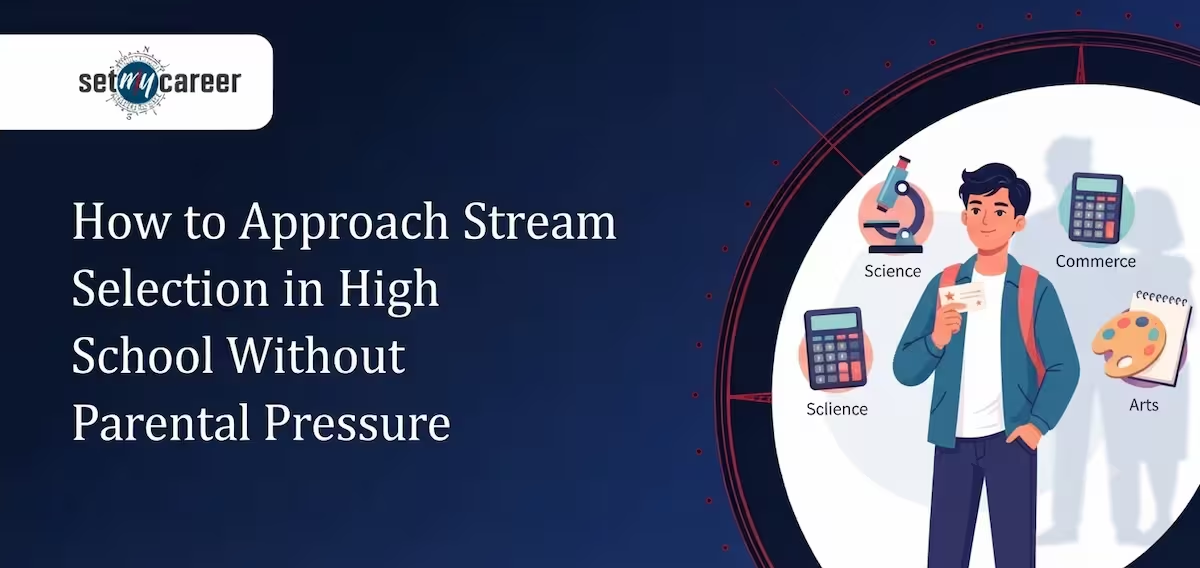
Choosing your high school subjects is one of the first major decisions you will make for your future, but the process can quickly become stressful when parental expectations clash with your own interests. It is completely normal to feel torn between wanting to make your parents proud and wanting to follow your own academic passions. This phase of stream selection should be an exciting exploration of your potential, not a source of constant family tension or anxiety.
At SetMyCareer, we believe that the right path is one that aligns your natural strengths and interests with realistic, long-term career opportunities. Balancing your personal goals with your family's expectations requires a structured, objective approach rather than emotional arguments. By focusing on reliable self-assessment and clear, factual communication, you can navigate this transition smoothly and build a solid foundation for your higher education.
This guide will help you approach stream selection with confidence and clarity. You will learn practical strategies to identify your true academic strengths, research evolving career trends leading into 2026, and have constructive, stress-free conversations with your parents. With the right tools and guidance, you can make an informed decision that honors your ambitions while keeping your family supportive and aligned with your goals.
What is the Stream Selection Process After 10th?
The stream selection process after 10th is a systematic evaluation where students choose a specific academic track such as Science, Commerce, or Humanities. This structured selection process aligns a student's current classroom performance with their long-term professional ambitions and natural academic strengths.
The transition from general school subjects to specialized studies represents a significant milestone in your education. Instead of studying a broad range of general subjects, students begin to specialize in areas that match their future ambitions. This step is more than choosing textbooks; it establishes the foundational skills needed for college and future jobs. Successfully executing this process requires structured self-reflection, research, and objective assessments to avoid picking a pathway based solely on temporary trends or peer pressure.
Understanding Your Aptitude Profile
An aptitude profile is a detailed measurement of a student's cognitive capabilities, reasoning skills, and problem-solving patterns. Understanding these traits helps identify the areas where a student will naturally excel without feeling constantly overwhelmed. Rather than guessing based on test scores, a structured assessment highlights specific strengths that can be matched to the correct academic track. Developing a clear understanding of these natural patterns is an essential first step before choosing any high school program.
- Verbal Reasoning: Measures how effectively a student understands, analyzes, and communicates complex ideas using language.
- Numerical Ability: Identifies proficiency in mathematical calculation, quantitative reasoning, and abstract logical structures.
- Spatial Association: Assesses the capacity to visualize, rotate, and manipulate objects and patterns mentally.
- Logical Analysis: Evaluates the ability to find patterns, make deductions, and solve problems systematically.
Evaluating Academic Strengths vs. Career Interests
Many students experience a clear gap between their academic interests and their actual performance capabilities. For instance, a student may be deeply interested in space exploration but struggle with advanced mathematics. Recognizing this difference allows students to build realistic plans. It helps them balance their favorite topics with the subjects they are naturally good at, making high school a more balanced and encouraging experience. Balancing these elements reduces academic stress and sets up a realistic path toward higher education.
How to Choose the Right Stream and Subject Combinations
To choose the right stream, students must analyze their natural academic performance, long-term career goals, and daily study preferences. This choice involves selecting core and elective subjects that align with specific college requirements, professional aspirations, and personal capabilities to ensure a balanced academic experience.
Deciding how to choose the right stream requires looking closely at both the core streams and modern elective options. Today, education systems offer more flexibility, allowing students to design unique combinations that support multi-disciplinary careers. This flexibility means students can customize their academic journey to match their specific skills and professional interests. Investigating these options thoroughly helps prevent the mismatch of coursework and future career goals.
The Core Streams: Science, Commerce, and Arts
Historically, students chose from three main paths. While modern frameworks are more flexible, these traditional groupings still form the foundation of high school curricula. Understanding the core expectations of each stream helps narrow down the primary academic direction.
| Academic Stream | Core Subjects Included | Primary Cognitive Strengths Needed | Long-Term Academic Pathways |
|---|---|---|---|
| Science (Medical/Non-Medical) | Physics, Chemistry, Mathematics, Biology | Analytical thinking, spatial reasoning, quantitative logic | Engineering, Medicine, Biotechnology, Pure Sciences |
| Commerce | Accountancy, Business Studies, Economics | Numerical aptitude, financial logic, systemic planning | Finance, Business Administration, Chartered Accountancy |
| Humanities / Arts | History, Political Science, Psychology, Sociology | Verbal reasoning, critical comprehension, creative thinking | Law, Psychology, Journalism, Public Policy, Design |
Customizing Your Subject Combination Choice
In modern schools, choosing a subject combination choice is no longer restricted to rigid categories. Students can now blend subjects across disciplines, such as studying humanities alongside mathematics, to build a unique academic foundation. This hybrid approach allows students to prepare for newer, highly sought-after careers that value both creative and technical skills.
| Primary Focus Area | Hybrid Subject Combination | Target Modern Industry | Key Academic Advantage |
|---|---|---|---|
| Analytical Humanities | History, Economics, Mathematics | Public Policy, Econometrics, Urban Planning | Combines qualitative analysis with strong quantitative tools |
| Creative Technology | Computer Science, Fine Arts, English Literature | UI/UX Design, Game Development, Digital Media | Bridges the gap between technical execution and visual strategy |
| Scientific Business | Biology, Chemistry, Business Studies | Healthcare Administration, Pharmaceutical Management | Provides scientific knowledge paired with operational skills |
Effective Career Planning After 10th for Future Readiness
Effective career planning after 10th involves connecting high school academic choices with future university courses and career goals. By mapping subjects to emerging job markets, students can systematically build the specific skills, qualifications, and industry knowledge required for long-term professional growth and employment stability.
High school selection is directly linked to career planning after 10th. Every subject a student takes acts as a stepping stone to specific university courses and professional opportunities. By aligning these choices with future job market needs, students can ensure their high school studies build a strong, relevant foundation for their future careers. Waiting until graduation to plan for your career can limit your options and cause unnecessary stress.
Aligning Your Stream with Modern Academic Pathways
An academic pathway is the structured journey from high school subjects to undergraduate courses and professional fields. Aligning these steps early on ensures students do not accidentally close off future college options. This planning provides a clear roadmap, reducing confusion and helping students stay focused on their long-term academic and career goals.
| Academic Pathway | Recommended High School Stream | Undergraduate Majors | Emerging Specializations (2026 and Beyond) |
|---|---|---|---|
| Technological Innovation | Science (Non-Medical) with Computer Science | B.Tech, BCA, BS in Data Science | Artificial Intelligence, Quantum Computing, Cyber Security |
| Corporate Strategy & Finance | Commerce with Applied Mathematics | B.Com, BBA, Bachelor of Economics | FinTech Operations, Risk Management, Quantitative Economics |
| Behavioral & Social Sciences | Humanities with Psychology or Economics | BA in Psychology, BA in Sociology | Behavioral Economics, Corporate Counseling, Human-AI Collaboration |
Preparing for the Evolving Job Market of 2026
Looking ahead to 2026, the job market is changing rapidly due to new technologies and global economic shifts. Traditional jobs are adapting, and new fields are appearing that require a mix of analytical skills, creative thinking, and technical ability. Preparing for these trends early ensures your high school subject selection remains valuable and relevant in the future.
- Interdisciplinary Integration: Technology is merging with fields like healthcare, finance, and the creative arts, creating new professional opportunities.
- Data-Driven Decision Making: Organizations across all sectors are using analytics, making quantitative reasoning skills highly valuable.
- Sustainability Practices: Growing environmental focus is creating demand for professionals in green energy, sustainable finance, and resource management.
- Human-Centric Roles: Skills like empathy, communication, and strategic planning remain essential, especially in automated industries.
Practical Tips for High School Stream Selection and Parent Alignment
Aligning family expectations during high school stream selection requires a clear focus on objective academic data, natural student strengths, and industry trends. Families can resolve disagreements by using structured career guidance, clear communication, and diagnostic assessments rather than relying on emotional arguments or outdated advice.
The process of high school stream selection can sometimes cause tension within families. Parents often want stability, security, and prestige, while students may want to explore their personal passions and newer career options. Balancing these perspectives requires open, respectful, and organized communication to find a path that works for everyone. Making decisions based on reliable information helps keep the focus on the student's long-term growth and success.
Constructive Communication Strategies for Families
To make the decision process easier, families should use specific tips for high school stream selection designed to encourage open and healthy discussion. This helps reduce stress and ensures that everyone feels heard. A collaborative approach helps turn a stressful period of transition into a positive experience that brings the family closer together.
- Schedule Dedicated Family Meetings: Set aside a quiet, specific time to talk about school choices without the distraction of daily routines.
- Present Structured Research: Share written information, including job trends, university options, and course requirements, rather than relying on assumptions.
- Focus on Strengths Over Status: Focus on the student's actual performance and interests, rather than choosing a path just for prestige.
- Discuss Costs and Practical Options: Have open conversations about college costs, study timelines, and future career opportunities.
Leveraging Objective Data and Career Counselling
Working with professional career services can help resolve family disagreements by providing neutral, expert guidance. SetMyCareer offers diagnostic tools and counselling to help families make decisions based on clear, reliable data. This objective support helps remove emotion from the discussion, allowing families to focus on the student's natural skills and academic potential.
| Point of Potential Family Conflict | Subjective Family Perspective | Objective Data Solution | Strategic Family Outcome |
|---|---|---|---|
| Career Security Concerns | Believing that only Engineering or Medicine guarantees a stable income. | Presenting updated market reports and growth trends in alternative fields. | Reduces parent anxiety by showing reliable, diverse career options. |
| Academic Capability Discrepancy | Expecting a student to excel in a stream because of family tradition. | Reviewing results from standardized aptitude profile assessments. | Protects the student from burnout by choosing a path that fits their skills. |
| Unfamiliarity with New Fields | Viewing modern professions as risky or temporary choices. | Analyzing established university courses and industry demand for new roles. | Builds confidence in modern, multidisciplinary career paths. |
Using a structured framework helps ensure that high school subject choices are based on proven abilities rather than guesswork. The specialized counselling services at SetMyCareer provide a reliable foundation for making these important decisions. By working together with professional guides, families can build a clear, confident path forward.
- Psychometric Evaluation: Standardized testing to assess a student's cognitive abilities, learning styles, and behavioral traits accurately.
- Personalized Counselling Sessions: Guided discussions that help align the student's personal goals with parent expectations.
- Custom Roadmaps: Clear, step-by-step academic plans that guide students through high school and college preparation.
Taking the Right Step Forward in Your Stream Selection
Choosing your high school path is one of the first major decisions you will make for your future. It is completely normal to feel anxious, especially when trying to balance your own interests with the expectations of your parents. Remember, stream selection is not about choosing between your dreams and your family's wishes. Instead, it is about finding a collaborative path built on open communication, realistic research, and your unique strengths.
When you approach this decision with reliable facts and a clear understanding of your abilities, you turn a stressful family discussion into a constructive planning session. You do not have to carry the weight of this decision alone or rely on guesswork to plan your academic journey.
If you want to approach your stream selection with absolute clarity and ease parental worries, expert guidance can make all the difference. At SetMyCareer, we help you discover your true potential through scientific career assessments and personalized counselling. Speak with our friendly advisors today to map out a clear, confident path toward your goals.