






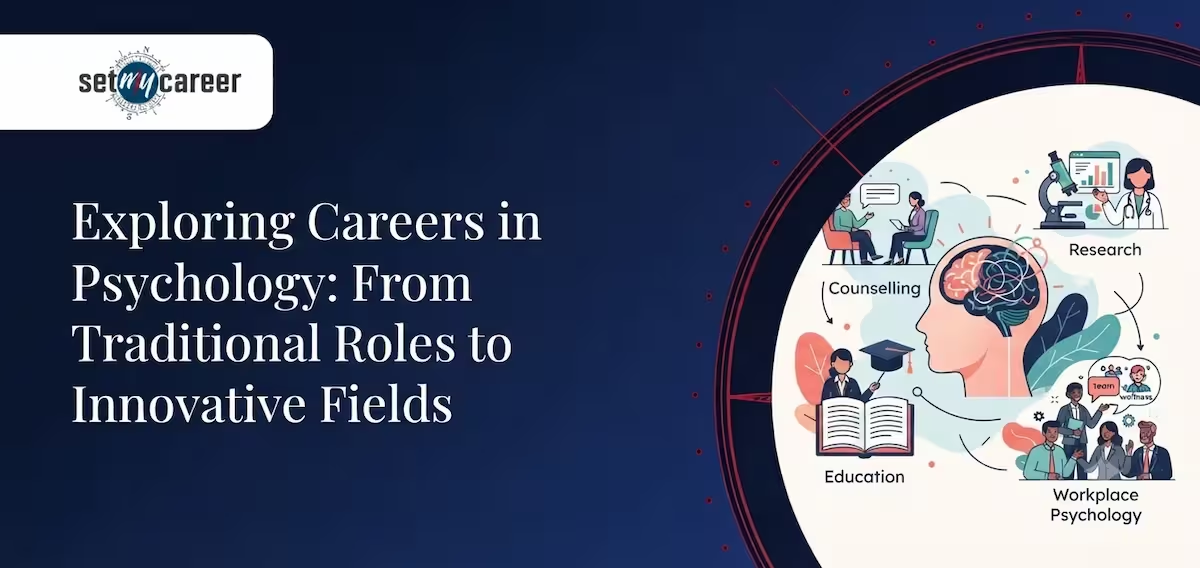
To many people outside the field, psychology remains an elusive and slightly mystical discipline. When you tell someone you study human behavior, you are often met with a mix of apprehension and awe, followed closely by the inevitable question: “Can you read my mind?” Regardless of your actual specialization, society often projects a very specific image onto you—that of a healer holding the answers to life's most complex personal questions.
Exploring careers in psychology reveals diverse career options after graduation for psychology majors.
If this aligns with your current perception of the field, prepare to broaden your horizons. Psychology has evolved far beyond the classic image of the Freudian couch, where a patient speaks into the void while an analyst scribbles mysterious notes. Today, it is a dynamic, highly versatile science that intersects with almost every aspect of the human experience. From traditional clinical practices to cutting-edge interdisciplinary research, the field offers a diverse array of career paths. Let’s explore the many fascinating directions a background in psychology can take you.
Traditional Branches of Psychology: The Classic Career Paths
Clinical Psychology
If the various branches of psychology were a family, clinical psychology would be the foundational anchor. These professionals focus on diagnosing, managing, and treating mental health disorders ranging from moderate anxiety to severe psychiatric conditions. If you are exploring how to become a clinical psychologist, be prepared for a rigorous academic journey. These experts typically work in hospitals, private practices, and rehabilitation centers, utilizing evidence-based therapies to help individuals regain control over their mental well-being.
Psychological Counseling
Counseling psychologists are the highly empathetic, approachable professionals who help people navigate the inevitable challenges of daily life. Rather than focusing on severe mental illnesses, they assist individuals in managing acute stress, overcoming relationship hurdles, and navigating major career transitions. They provide a structured, supportive environment where clients can develop healthy coping mechanisms and work through personal crises.
Educational Psychology
Educational psychologists specialize in the science of how humans learn. Working primarily within school systems and educational institutions, they ensure that instructional methods align with cognitive development. They are the experts who figure out why a student might struggle with traditional mathematics but display exceptional spatial reasoning, ultimately helping educators design more inclusive and effective teaching strategies.
Industrial-Organizational (I-O) Psychology
For those drawn to the corporate world, industrial-organizational psychology applies behavioral science to the workplace. I-O psychologists are essentially experts in organizational behavior, tasked with optimizing employee productivity, improving workplace culture, and designing effective training programs. They utilize data-driven insights to help companies function smoothly and keep employees satisfied and engaged.
Forensic Psychology
If you are fascinated by the intersection of human behavior and the legal system, forensic psychology is a highly compelling path. These professionals evaluate the mental competency of defendants, provide expert testimony in court, and assist law enforcement in understanding the psychological motives behind criminal behavior. It requires a sharp analytical mind and a deep understanding of legal frameworks.
Health Psychology
Health psychology operates on the biopsychosocial model, studying how mental states, emotional well-being, and social factors directly impact physical health. These professionals advocate for preventative care and help patients manage chronic illnesses. Whether designing public health campaigns to reduce smoking or helping a patient adhere to a difficult medical regimen, health psychologists prove that the mind and body are deeply connected.
Sports Psychology
Professional athletics requires immense physical talent, but peak performance is largely a mental game. Sports psychologists work directly with athletes to conquer performance anxiety, improve focus, and build mental resilience. They are the unseen strategists behind many championship-winning teams, helping competitors channel pressure into elite performance.
Neuropsychology
For those fascinated by the intricate architecture of the human brain, neuropsychology offers a challenging and rewarding career. This specialty focuses on the precise relationship between brain function and behavior. Neuropsychologists conduct comprehensive cognitive assessments and design rehabilitation programs for individuals suffering from traumatic brain injuries, strokes, or neurodegenerative conditions like dementia.
Developmental Psychology
Human beings are constantly evolving, and developmental psychology studies this exact process across the entire lifespan. From early childhood language acquisition to the cognitive shifts associated with aging and retirement, developmental psychologists decode the physical, emotional, and intellectual changes we experience as we grow older.
Social Psychology
We are fundamentally social creatures, and social psychology examines how our thoughts, feelings, and behaviors are influenced by the presence of others. These researchers explore complex concepts like implicit bias, group dynamics, conformity, and interpersonal attraction, explaining everything from organizational leadership to why individuals succumb to peer pressure.
Emerging Fields in Psychology: New Frontiers and Innovations
Psychology is rapidly expanding beyond traditional therapy and research roles, adapting to the complexities of modern society. As the scope of psychology in India and across the globe continues to widen, entirely new specializations are coming to the forefront.
Cyberpsychology
As our lives move increasingly online, cyberpsychologists study the psychological impact of digital environments. They investigate how social media influences self-esteem, the cognitive effects of screen time, and the underlying behavioral drivers of online anonymity and cyberbullying. They are the experts figuring out exactly why digital platforms are so incredibly habit-forming.
Environmental Psychology
Environmental psychology investigates the profound ways our physical surroundings shape our mood, productivity, and overall well-being. These professionals collaborate with urban planners and architects to design spaces that promote mental health—whether that means integrating natural light into corporate offices or creating sustainable, community-friendly urban layouts.
Consumer Psychology
Consumer psychology lives at the intersection of behavioral science and marketing. These experts analyze the emotional and cognitive factors that drive purchasing decisions. By understanding how brand messaging, pricing psychology, and store layouts influence behavior, they help companies design highly effective marketing strategies.
Positive Psychology
While traditional psychology often focuses on treating illness, positive psychology focuses on human flourishing. This branch scientifically examines concepts like resilience, gratitude, subjective well-being, and intrinsic motivation. It is the rigorous study of what makes life meaningful and how individuals can cultivate lasting happiness.
Psychology in Artificial Intelligence
As machines become more sophisticated, the field of AI psychology explores human-computer interaction. Psychologists in this sector help design ethical algorithms, refine the emotional intelligence of virtual assistants, and ensure that AI systems interact with humans in ways that are safe, intuitive, and psychologically sound.
Military Psychology
Military personnel operate under extreme psychological pressure. Military psychologists focus on operational readiness, trauma prevention, and the treatment of PTSD. They provide essential mental health support to active-duty service members and play a critical role in helping veterans successfully reintegrate into civilian life.
Aviation Psychology
The aviation industry relies heavily on human performance, making aviation psychology a vital field. These specialists study the cognitive load of pilots, design safer cockpit interfaces, and develop crew resource management protocols to ensure flight crews can remain calm, communicative, and effective during high-stress emergencies.
Public Policy Psychology
Public policy psychologists use behavioral data to design better societal systems. By applying principles of behavioral economics and social psychology, they help governments implement "nudges"—small changes in how choices are presented—that encourage populations to make healthier, safer, and more financially sound decisions.
Criminal Psychology
Often confused with forensic psychology, criminal psychology specifically focuses on understanding the minds, motives, and behavioral patterns of offenders. These professionals are frequently involved in criminal profiling, threat assessment, and designing effective rehabilitation programs within the correctional system.
Rehabilitation Psychology
Rehabilitation psychologists assist individuals adjusting to life-altering physical disabilities, chronic pain, or severe injuries. They provide the emotional and cognitive support necessary to help patients regain their independence, proving that psychological care is a critical component of physical recovery.
Interdisciplinary Psychology: Where Science Meets Creativity
Psychology does not exist in a vacuum; its principles can be applied to almost any industry. These highly creative, interdisciplinary paths offer unique career opportunities.
Behavioral Economics
Blending psychology with finance, behavioral economics explores why people consistently make irrational financial decisions. These experts study everything from stock market panics to why consumers willingly pay a premium for specific brands, challenging the traditional idea that humans act solely out of rational self-interest.
Psychoinformatics
For those with a talent for technology, psychoinformatics merges behavioral science with data analytics. By analyzing large datasets from smartphones, wearables, and social media platforms, these professionals can identify early warning signs of mental health crises and model behavioral trends on a massive scale.
Music Therapy
Music therapy utilizes the neurological impact of rhythm and melody to achieve clinical goals. Operating as a specialized form of expressive arts therapy, it is highly effective in treating emotional trauma, improving motor function in neurological patients, and reducing anxiety in clinical settings.
Cultural Psychology
Cultural psychology examines how cultural traditions, societal norms, and language deeply influence human cognition and behavior. It ensures that psychological research and therapeutic practices are not culturally biased, offering a more global, inclusive understanding of the human mind.
Gaming Psychology
The multibillion-dollar video game industry relies heavily on psychological principles. Gaming psychologists study player motivation, reward systems, and the cognitive effects of interactive media. They help developers design engaging experiences while also researching the potential risks of gaming addiction.
EdTech Psychology
Educational technology requires more than just good coding; it requires an understanding of cognitive load. EdTech psychologists optimize digital learning platforms, ensuring that the user interface and content delivery align with how the human brain actually acquires and retains new information.
Space Psychology
As humanity prepares for long-duration space travel, space psychology is becoming increasingly relevant. These specialists study the psychological effects of extreme isolation, confinement, and high-stakes environments, ensuring that astronaut crews can maintain their mental health and team cohesion during extended missions.
Educational Requirements: How to Build a Career in Psychology
Now that we have explored the vast range of available career options, it is important to understand the educational roadmap required to get there.
- Undergraduate Programs: Earning a BA or BSc in Psychology serves as your foundational starting point. These programs cover essential psychological theories, research methodologies, and statistical analysis. While most universities accept students from various academic backgrounds, a strong foundation in the sciences or humanities is highly beneficial.
- Postgraduate Programs: To specialize in a particular field, you will need to pursue an MA or MSc in Psychology. This stage of education narrows your focus into specific niches—such as clinical, organizational, or counseling psychology—and typically requires practical internships, practicums, and comprehensive research projects.
- Advanced Degrees and Licensure: For highly regulated roles like clinical psychology, neuropsychology, or academia, advanced degrees are mandatory. Depending on your region, this may involve earning an M.Phil, Psy.D., or Ph.D., followed by state or national licensing exams (such as RCI registration in India) to legally practice as a licensed psychologist.
Conclusion
Pursuing a career in psychology presents a world of professional possibilities. The field has evolved far beyond the confines of traditional therapy, offering dynamic roles in technology, business, law, and environmental design. Whether you are deeply drawn to clinical practice, fascinated by the neurological mechanics of the brain, or eager to apply behavioral science to emerging technologies, there is a specialization that aligns with your specific interests.
Because the scope of psychology—especially in rapidly developing markets like India—is expanding at such a rapid pace, navigating your options can feel overwhelming. Choosing the right specialization requires careful consideration of your strengths, academic interests, and long-term professional goals. If you are uncertain about which path suits you best, seeking professional career counseling and guidance can provide the clarity you need to make an informed decision. Step into the multifaceted world of psychology, and start building a career that makes a tangible impact.