
Quick Summary
Navigating today's dynamic job market requires a proactive approach to learning, where adopting targeted skill development strategies helps you bridge the gap between where you are and where you want to be. By understanding whether you need upskilling to advance in your current field or reskilling to transition into a new role, you can make clear, confident decisions without feeling overwhelmed. Taking small, consistent steps will yield massive long-term growth, and the expert team at SetMyCareer is always here to provide the personalized guidance and data-driven insights you need to map out your ideal path.
Introduction
Choosing the right path or advancing in your professional life often comes down to one crucial factor: building the right abilities at the right time. It is completely natural to feel uncertain about which qualifications or strengths to focus on next. Whether you are a student preparing for your first job, a graduate stepping into the job market, or an experienced professional planning a career transition, staying competitive requires a practical and manageable plan.
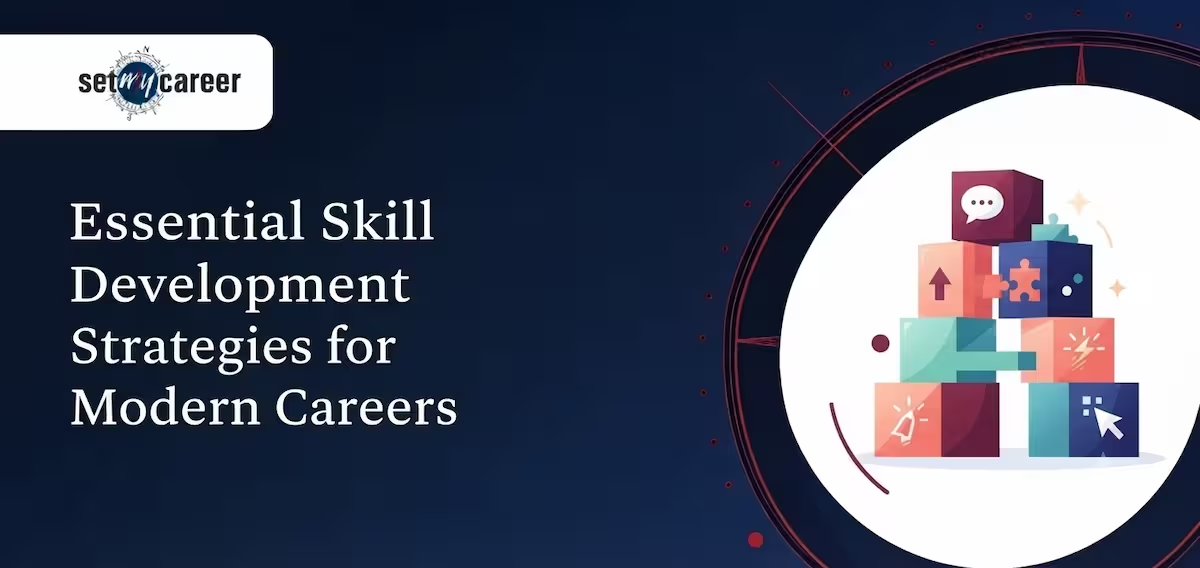
Adopting effective skill development strategies allows you to take control of your career journey with clarity and confidence. Instead of trying to learn everything at once, focusing on targeted upskilling helps you bridge the gap between where you are today and where you want to be. Parents guiding their children and professionals seeking growth can both benefit from a structured approach that balances core technical capabilities with essential soft skills needed for 2026 and beyond.
This guide breaks down clear, research-backed steps to help you identify critical skill gaps, select the right learning resources, and apply your new knowledge directly to your goals. By aligning your learning habits with your personal strengths, you can make informed decisions that build long-term confidence and open doors to meaningful career opportunities.
Understanding Skill Development Strategies in the Modern Job Market
Implementing structured skill development strategies transforms educational and career pursuits from reactive tasks into a proactive roadmap. Professionals and students who approach skill acquisition systematically can identify emerging market requirements early, avoiding the anxiety of sudden qualification deficits. Rather than pursuing random certifications, establishing clear learning goals aligned with professional aspirations ensures every study hour contributes directly to meaningful advancement.
The Difference Between Upskilling and Reskilling
Upskilling involves expanding an individual's current capabilities to perform advanced duties within their existing career path. Reskilling focuses on teaching entirely new capabilities to enable a transition into a different job role. Both practices help individuals adapt to changing workforce demands and technological advancements.
Understanding the distinction between upskilling reskilling helps individuals select the correct educational path
Taking Charge of Your Professional Growth
Building a successful career is no longer about standing still after earning a degree. It requires a commitment to continuous learning and adaptability. By implementing structured skill development strategies—such as setting clear learning goals, seeking mentorship, and leveraging hands-on projects—you can keep pace with industry changes and open doors to new opportunities.
Choosing where to focus your energy can feel overwhelming, especially with so many skills competing for your attention. Remember that you do not have to figure it all out overnight. Small, consistent steps in upgrading your capabilities will yield significant long-term results for your professional journey.
If you are unsure which skills will make the greatest impact on your career path, you do not have to navigate this journey alone. Our experienced counselors are here to help you identify your strengths and map out personalized skill development strategies aligned with your goals. Reach out to SetMyCareer today to book a personalized guidance session and build a clear, confident plan for your future.