





Quick Summary
Navigating your professional journey in 2026 and beyond doesn't have to feel overwhelming when you replace reactive job hunting with proactive career planning. By combining scientific self-assessments with targeted market research and clear milestones, you can easily build a flexible roadmap tailored to your unique strengths. Taking control of your professional development with personalized, data-backed guidance from SetMyCareer empowers you to transition smoothly and step into your future with complete confidence.
Introduction
Thinking about your future can feel both exciting and overwhelming. Whether you are a student choosing your first college major, a graduate searching for your first job, or an experienced professional aiming for a meaningful transition, finding the right direction requires more than just luck. True satisfaction and success come from a deliberate strategy. That is where structured career planning comes in, helping you turn confusion into clarity by aligning your unique strengths with real-world opportunities.
At SetMyCareer, we believe that your professional path should not be left to chance. In this guide, we break down the essential steps to build a sustainable plan that prepares you for the evolving job market of 2026 and beyond. You will learn how to assess your skills honestly, explore viable industries, set realistic milestones, and adapt to changes with confidence. Our focus is on practical, factual, and actionable advice that gives you the reliable tools needed to make informed decisions.
Taking control of your future is one of the most empowering choices you can make. By following this step-by-step process, you will gain a clear roadmap for long-term growth and the confidence to navigate every career transition smoothly. Let us take that first step together and start building a career path that genuinely reflects your goals and potential.
Why Is Career Planning Essential for Long-Term Success?
Career planning provides a structured roadmap that aligns an individual's unique skills, values, and interests with sustainable employment opportunities. By establishing clear milestones, it minimizes professional uncertainty, optimizes resource allocation for skill acquisition, and ensures long-term adaptability in a rapidly changing global labor market.
Historically, individuals selected professional routes based on immediate geographical opportunities or familial expectations. In modern economic climates, however, the landscape changes far too quickly for passive decision-making. Developing a comprehensive strategy acts as a buffer against industry volatility and sudden automation. By anticipating market shifts, professionals position themselves to seize opportunities rather than reacting to sudden changes in panic.
When students understand the importance of career planning early, they avoid the costly mistake of selecting academic streams that do not align with their natural cognitive strengths. Similarly, mid-career professionals who engage in systematic career pathing can transition between roles without losing compensation or momentum. Structured planning builds a bridge between aspiration and daily execution, ensuring that effort is spent efficiently.
| Feature | Reactive Job Seeking | Proactive Career Planning |
|---|---|---|
| Primary Trigger | Job loss, sudden dissatisfaction, or external economic pressure. | Structured self-assessment and long-term goal setting. |
| Decision-Making Process | Rushed, based on immediate financial needs or available openings. | Deliberate, based on skill alignment and growth potential. |
| Skill Development | Ad-hoc learning initiated only when required by a specific task. | Continuous, targeted professional development and pathing. |
| Market Resilience | Vulnerable to unexpected industry shifts and technological layoffs. | Highly adaptable with clear contingency options and robust networks. |
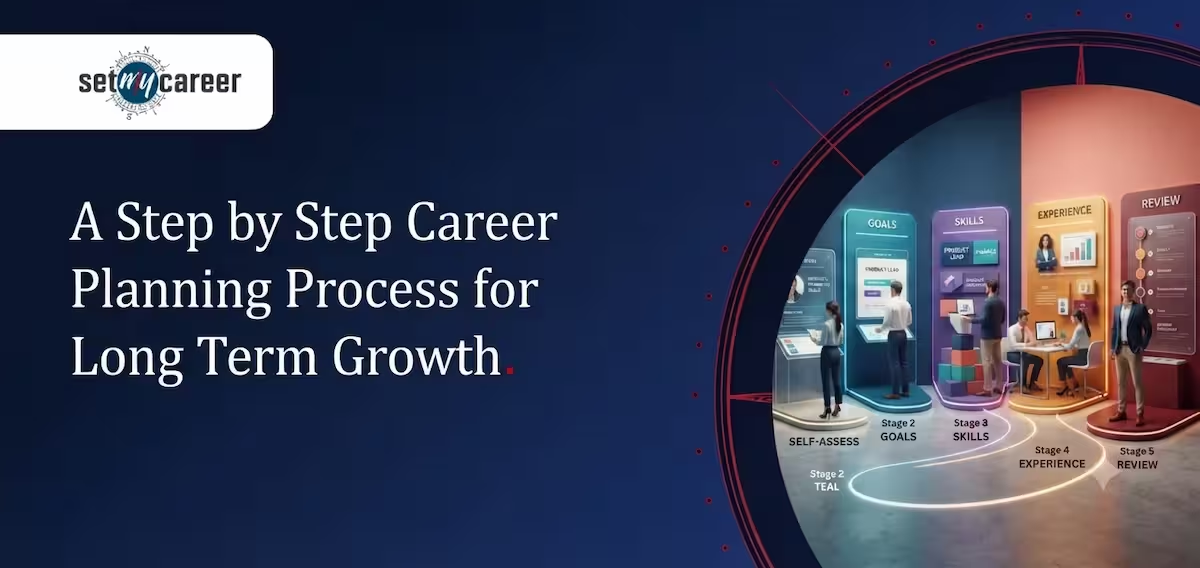
The Core Steps of a Structured Career Planning Process
Approaching career development requires a systematic methodology. Rather than viewing the professional journey as a single, permanent choice, individuals should treat it as an ongoing project divided into clear, manageable phases. By following these steps, both students and experienced professionals can ensure their decisions are backed by reliable data and personal readiness.
Step 1: Self-Assessment and Aptitude Evaluation
A successful trajectory begins with an honest self-assessment. Without understanding individual cognitive abilities, interests, and personality traits, any plan risks directing talent toward unsuitable environments. Utilizing scientific psychometric testing and professional guidance helps uncover hidden capabilities that standard academic tests might overlook.
- Clarity on Natural Aptitudes: Uncovers analytical, creative, or technical strengths that indicate high-performance potential in specific fields.
- Alignment of Core Values: Ensures the working environment matches personal expectations, such as work-life balance, collaborative cultures, or autonomy.
- Risk Mitigation: Minimizes the likelihood of academic burnout or career stagnation by identifying mismatch areas before committing resources.
- Informed Educational Choices: Helps high school and college students select the most productive academic streams, degrees, and specialized elective courses.
Step 2: Industry Research and Market Alignment
Once internal strengths are identified, the next step involves mapping those traits to the external job market. This step is a cornerstone of career planning steps for students, as it bridges the gap between theoretical interest and commercial viability. Researching growth sectors, looking forward to emerging demands in 2026 and beyond, prevents individuals from investing time in declining industries.
- Government Labor Statistics: Review official employment outlooks to identify industries and job roles projected to experience high growth rates.
- Industry-Specific Whitepapers: Read annual reports published by leading consulting firms to understand how technology shifts manual roles into analytical ones.
- Professional Association Portals: Explore resources provided by dedicated networks to understand the credentials and experiences valued by employers.
- Informational Interviews: Connect with established professionals to gain practical, unvarnished insights into daily responsibilities and workplace cultures.
Step 3: Setting Career Milestones and Objectives
With self-knowledge and market intelligence secured, the planning process shifts toward goal setting. Defining clear career milestones prevents professionals from feeling aimless or overwhelmed. These milestones must be structured across short-term, medium-term, and long-term horizons to keep daily efforts connected to major life objectives.
| Milestone Type | Timeframe | Primary Focus Areas | Typical Outcomes |
|---|---|---|---|
| Short-Term | 0 to 12 Months | Skill acquisition, certifications, internships, academic stream alignment. | Immediate entry-level placement or specialized educational path selection. |
| Medium-Term | 1 to 3 Years | Niche specialization, building a professional network, gaining autonomy. | Promotion to mid-level roles, lateral shifts, or initial team management. |
| Long-Term | 3 to 5+ Years | Leadership development, industry influence, strategic planning. | Executive positioning, thought leadership, or starting an independent business. |
How to Write a Career Plan: A Step-by-Step Guide
Writing a career plan requires documenting specific professional objectives, outlining skill-building activities, identifying potential mentors, and establishing concrete timelines. This structured document serves as a personal guide, converting long-term professional development goals into manageable, daily actions that keep individuals accountable throughout their careers.
Drafting this document requires moving from abstract aspirations to written commitments. A physical or digital career plan acts as a living contract with oneself. It must be updated regularly to reflect changes in personal interests or macroeconomic conditions. A robust framework consists of several distinct, highly structured modules.
- The Career Vision Statement: A brief declaration of the ultimate professional destination, outlining the desired impact and sector focus.
- Skill-Gap Analysis: A comprehensive assessment comparing current capabilities against the ideal requirements of the target role.
- Educational Strategy: A list of academic degrees, professional certifications, or boot camps required to bridge those identified skill gaps.
- Networking Action Plan: A tactical schedule detailing mentors to contact, professional conferences to attend, and digital communities to join.
- Contingency Planning: A clear alternative path to execute if market conditions, personal health, or financial circumstances change.
Once these modules are outlined, the plan must be organized chronologically. Utilizing a structured grid helps visualize the progression over a multi-year horizon, ensuring steady, measured momentum.
| Year Plan | Objective | Key Actions Required | Evaluation Metric |
|---|---|---|---|
| Year 1 | Establish Industry Foundations | Complete core industry certification; secure an entry-level position. | Certification badge earned and employment contract signed. |
| Year 2-3 | Develop Niche Expertise | Engage in specialized corporate projects; seek a senior mentor. | Successful project delivery and positive peer performance reviews. |
| Year 4-5 | Transition to Leadership | Enroll in management training; spearhead cross-functional teams. | Internal promotion achieved or strategic external hire offer received. |
Integrating Professional Development and Career Pathing
Long-term professional success relies heavily on continuous enrichment and structured career pathing. While initial planning establishes the destination, career pathing defines the step-by-step progression within specific organizations or fields. When aligned with continuous skill enhancement, individuals maintain a competitive advantage regardless of market disruptions.
| Aspect | Technical Career Pathing | Management Career Pathing |
|---|---|---|
| Core Focus | Deep subject matter expertise, system architecture, and technical execution. | People leadership, strategic operations, and budget allocation. |
| Key Competencies | Advanced analytical skills, tool mastery, complex problem-solving. | Emotional intelligence, conflict resolution, project coordination. |
| Typical Job Titles | Principal Architect, Senior Specialist, Lead Consultant. | Department Director, Operations Manager, Chief Executive. |
Achieving consistent progression within these paths demands proactive upskilling. Rather than relying solely on employer-provided training programs, ambitious individuals should construct their own professional enrichment frameworks to remain agile and valued.
- Micro-Credentialing: Pursuing bite-sized, industry-recognized digital credentials in emerging technologies or specialized methodologies.
- Cross-Functional Collaboration: Volunteering for projects outside one's immediate department to build comprehensive business awareness.
- Mentorship Acquisition: Actively seeking guidance from senior professionals while simultaneously mentoring junior peers to reinforce leadership skills.
- Active Industry Contribution: Writing informative articles, speaking at local panels, or contributing to collaborative projects to build personal authority.
Conclusion: Take Charge of Your Career Planning
Effective career planning is not a one-time task you complete and forget. It is a continuous process of self-discovery, skill-building, and periodic adjustment that evolves as you grow. By taking structured steps today, you build a reliable roadmap for long-term professional success and personal satisfaction. It is completely natural to feel uncertain about your next steps, but having a clear, flexible plan allows you to navigate transitions with confidence and clarity.
You do not have to map out this journey alone. At SetMyCareer, our experienced advisors are ready to support you through every stage of your career planning process. Whether you are a student exploring your options, a recent graduate, or a professional looking to make a meaningful transition, we provide the personalized, data-backed guidance you need to move forward. Reach out to us today to book a career counselling session and take the first step toward building a successful path that truly fits your goals.