






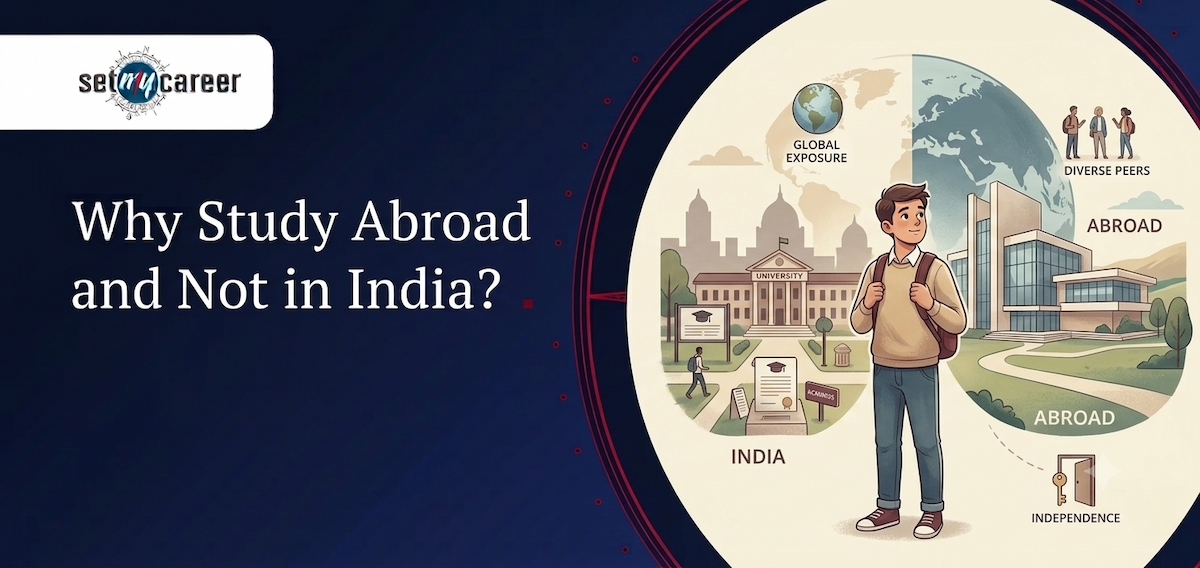
Stepping into a university lecture hall where critical thinking takes precedence over rote memorization can redefine your entire educational journey. For thousands of Indian students each year, pursuing higher education abroad is far more than earning a degree—it is an investment in global exposure, personal independence, and long-term career mobility. However, deciding to move overseas for studies involves weighing significant financial, personal, and professional factors.
Understanding career options after graduation helps students decide between studying abroad or in India.
Understanding how international academic programs compare with Indian higher education helps clarify whether studying abroad aligns with your long-term ambitions.
Indian vs. Foreign Education: Key Differences
The academic structure in India differs fundamentally from systems in popular study destinations like the United States, United Kingdom, Canada, Australia, and Germany. While Indian institutions traditionally emphasize deep theoretical foundations and exam-based evaluations, foreign universities prioritize practical application, continuous assessment, and independent research.
Here is how the two educational approaches compare across core areas:
| Feature | Indian Education System | Foreign University System |
| Academic Focus | Theory-heavy learning with strong focus on standardized testing | Application-based learning through projects, case studies, and lab work |
| Curriculum Flexibility | Structured, fixed course pathways with limited elective options | Interdisciplinary options allowing students to combine diverse subjects |
| Assessment Style | High-stakes mid-term and final examinations | Continuous evaluation via essays, presentations, group work, and quizzes |
| Industry Connection | Concentrated primarily in top-tier institutes (IITs, IIMs, NITs) | Direct industry integration, co-op terms, and mandatory internships |
Curriculum & Teaching Approach
Indian higher education often relies on prescribed syllabi that leave little room for interdisciplinary study. A student pursuing engineering in India, for instance, rarely gets the opportunity to take accredited courses in psychology, fine arts, or business management alongside their core degree.
Foreign universities structure their programs around credit systems. This gives students the freedom to customize their degree, choose specialized electives, and even double-major across completely different faculties. Classes emphasize debate, critical analysis, and collaborative problem-solving over passive listening.
Practical vs. Theoretical Learning
In many Indian colleges, success depends heavily on memorizing textbooks and performing well in end-of-semester exams. While this builds strong foundational knowledge, it sometimes leaves graduates unprepared for the practical demands of the workplace.
International degree programs integrate practical application into the core grade. Students work on real-world industry briefs, conduct independent field research, write policy papers, and present findings directly to faculty and corporate partners. This hands-on training ensures you graduate with a portfolio of work rather than just a mark sheet.
Infrastructure & Research Facilities
Access to advanced research infrastructure in India is largely concentrated within premier government-funded institutions. Outside these top-tier colleges, laboratory equipment, library databases, and technological tools can be limited.
Leading international universities invest heavily in academic infrastructure. Students gain access to state-of-the-art research laboratories, specialized software, massive digital archives, and incubation centers designed to help turn student ideas into startup ventures.
Skill Development & Employability
Technical knowledge alone is no longer enough to secure top roles in competitive global markets. Foreign academic programs actively train students in soft skills—such as cross-cultural communication, public speaking, negotiation, and professional networking.
Through mandatory internships, campus leadership roles, and group projects, students develop the practical adaptability that global employers look for during recruitment.
Why Do Students Choose Foreign Universities Over Indian?
The decision to study abroad is rarely made on impulse. It is usually driven by specific structural challenges within the domestic education system combined with the unique advantages offered by international institutions.
Limited Seats in Top Indian Universities
India produces millions of high school and college graduates every year, but the capacity of top-tier domestic institutions has not kept pace with demand. Qualifying exams like JEE, NEET, and CAT feature acceptance rates often well below 1% to 2%.
This intense competition means thousands of exceptionally talented students miss out on premier Indian seats by tiny fractions of a percentile. Applying to foreign universities provides an alternative route to a world-class education where admissions decisions consider your overall profile rather than a single entrance test score.
Outdated Curriculum Standards
Updating academic curricula in large public educational frameworks can be a slow administrative process. As a result, syllabus content in several Indian universities lags behind rapid industry developments in fields like artificial intelligence, renewable energy, digital marketing, and biotechnology.
International universities review and refresh their course material regularly in collaboration with industry advisory boards. Learning current methodologies ensures your skills remain relevant the moment you enter the job market.
Better Research & Innovation Opportunities
Countries such as the US, Germany, Canada, and the UK allocate substantial budget portions to university research grants. Undergraduates and postgraduates alike get opportunities to assist senior professors on funded research initiatives, co-author academic papers, and present at international conferences.
Higher Pay & Global Job Prospects
Graduating from a globally recognized university opens doors to international job markets where starting compensation packages are often significantly higher than entry-level salaries in India. Even if you choose to return home, Indian multinationals and global corporations place a high premium on candidates with international credentials and foreign work experience.
Exposure to Global Perspectives
Sharing a lecture hall with classmates from dozens of different countries challenges your assumptions and broadens your worldview. Navigating different cultural norms, communication styles, and viewpoints builds global awareness—a trait that is essential for long-term leadership in multinational organizations.
What Are the Benefits of Studying Abroad?
Beyond academic credentials and improved earning potential, living and studying in a foreign country shapes your personal character in ways a domestic university experience rarely can.
Cultural Exposure & Personal Growth
Moving away from your home comfort zone forces you to build self-reliance quickly. From managing a monthly household budget and cooking your own meals to navigating local transport and lease agreements, living abroad instills a lasting sense of independence and maturity.
Quality Education & Faculty Access
International universities frequently employ faculty members who are active industry practitioners, published researchers, and leading experts in their fields. Learning directly from professionals who are actively shaping their industries provides valuable insights into real-world trends and practices.
Enhanced Career Prospects
Having an international degree on your resume signals to recruiters that you possess initiative, cross-cultural adaptability, and the confidence to succeed in unfamiliar environments. These traits make foreign-educated graduates strong candidates for leadership development programs and global postings.
Scholarships & Financial Aid
While tuition fees at foreign institutions can be high, numerous funding options exist to offset costs. International students can apply for merit-based scholarships, departmental grants, research assistantships, and tuition waivers offered directly by universities or government bodies like the Commonwealth or Chevening programs.
Networking & Global Connections
The friendships and professional relationships you build during your studies form the core of an international network. Your alumni network becomes an invaluable resource for job referrals, business partnerships, and career advice throughout your professional life.
Top Reasons Why Students Opt for International Education
Planning your international education requires looking closely at how foreign study aligns with your career goals, financial budget, and personal timeline.
Higher Acceptance Rates Across Quality Institutions
Because foreign admissions committees evaluate candidates holistically—taking into account academic transcripts, statement of purpose (SOP), letters of recommendation (LORs), extra-curricular achievements, and standardized test scores—your chances of admission are not dictated by a single bad exam day.
Access to Cutting-Edge Technology & Fields
If you want to specialize in emerging sectors like quantum computing, sustainable architecture, biomedical engineering, or data science, foreign universities offer specialized degree programs and lab facilities that may not yet exist in India.
Work While Studying Opportunities
Most popular study-abroad destinations permit international students to work part-time—typically up to 20 hours per week during academic terms and full-time during semester breaks. On-campus jobs, teaching assistantships, and retail roles help cover day-to-day living expenses while teaching valuable time-management skills.
Global Recognition & Post-Study Work Pathways
A degree accredited by recognized international bodies is valid worldwide. Furthermore, countries like Canada, Australia, the UK, and Germany offer post-study work visas that allow international graduates to stay and gain professional work experience for several years after finishing their studies.
Conclusion
Deciding between studying in India and pursuing an international degree comes down to your personal career aspirations, academic interests, and financial readiness. While staying in India offers proximity to home and lower upfront costs, studying abroad provides a transformative experience that combines rigorous practical learning, cultural diversity, and direct access to global job markets.
Navigating university selection, standardized testing, documentation, and visa requirements can feel overwhelming without structured guidance. Working with experienced education advisors helps you map out a clear plan tailored to your profile.
If you are ready to explore your global education options, SetMyCareer offers personalized counseling to help you choose the right program, build a strong application, and navigate every step of your study abroad journey. Reach out to our expert team today to plan your path forward with confidence.