




Remember that initial rush of excitement? The thrill of finally landing your first professional job right out of college, or diving headfirst into a brand-new career path. In that moment, everything probably felt incredibly clear. You had a plan, a steady paycheck, and a future full of promise.
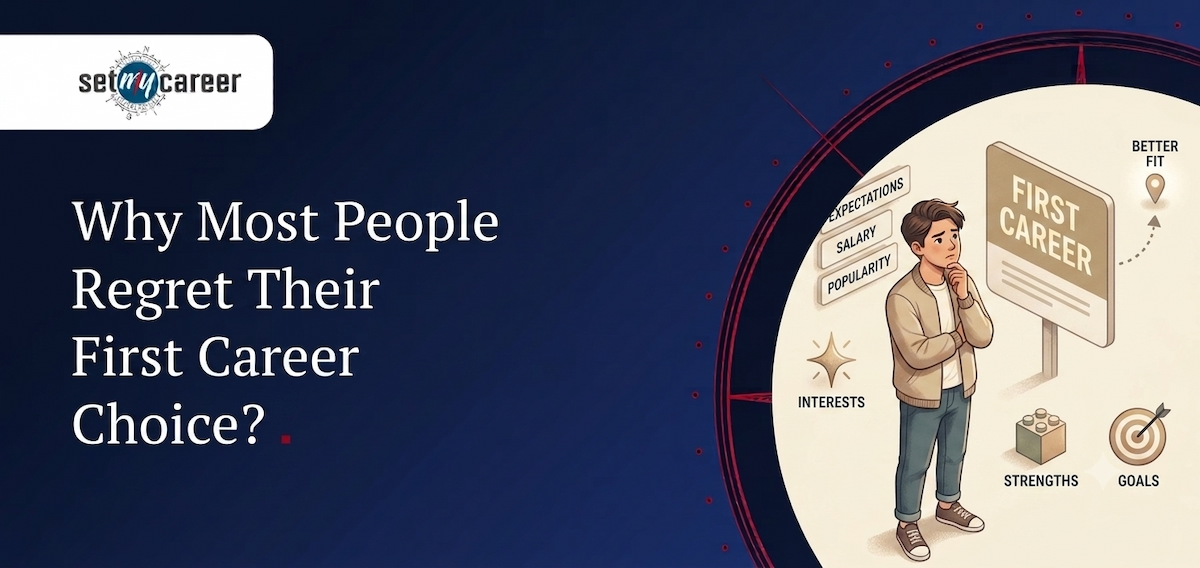
Many people regret their first career choice because they lacked proper career counselling during decision-making.
But then, often months or a few years down the line, a quiet question begins to creep in: Is this really what I want to do with the rest of my life?
If that thought has been lingering in your mind, or if you are just starting your professional journey and already wondering what else is out there, you are exactly where you need to be. Professional disillusionment is incredibly common, yet rarely talked about openly. We are going to explore why those early career choices frequently lead to unexpected doubts, how to navigate the feelings of regret, and what this realization truly means for your next move.
Why So Many Professionals Feel Disconnected From Their First Career
The Weight of Misguided Advice and Outside Expectations
There is a unique kind of frustration that comes with realizing you might have built a career based on someone else's blueprint. Looking back, you might catch yourself thinking, "I really complicated my trajectory by listening to the wrong people."
It is a difficult pill to swallow, but almost everyone goes through this. We often follow well-intentioned advice from parents, professors, friends, or even societal trends, only to discover later that their version of success does not align with our own. It can be deeply discouraging to feel as though you have compromised your own potential by trying to check boxes on a path that was never truly yours.
The Immense Pressure Behind Early Career Decisions
When you look closely at that initial career decision—usually made in your late teens or early twenties—it felt like a permanent, defining moment. Young adults face immense pressure to choose a lifelong path before they have even had a chance to figure out who they are.
We are told to pick a major, secure an internship, and lock in a career track that will dictate our financial and personal future. For many, the realization that this chosen path is a poor fit is not a slow, gradual awakening. Instead, it hits like a sudden turning point, leaving you feeling trapped by a decision you made when you barely had any real-world experience.
The Gap Between Academic Theory and Workplace Reality
External influences play a massive role in shaping our early ambitions. You might have been steered toward a "stable" or "prestigious" industry, even if it actively conflicted with your natural strengths. The fear of disappointing your family or falling behind your peers is a powerful motivator, often overriding your intuition.
Furthermore, university lectures, textbooks, and campus career fairs only provide a sanitized, theoretical glimpse into a profession. The reality of daily deliverables, corporate structure, office politics, and the actual grind of the work is vastly different from the academic ideal. It is entirely normal to be drawn to the idea of a specific job, only to realize the practical reality drains your energy.
Why Your First Career Choice Was Not a Mistake
Reframing Regret: Why This Phase is Essential
If you are nodding along, carrying that familiar pang of regret about your professional background, here is the most crucial takeaway: what you are feeling is completely normal. In fact, it is a necessary part of long-term career development.
You might be internally labeling your first job as a "bad decision," a "waste of time," or a massive misstep. But what if it was exactly the opposite? Every single moment of frustration, every tedious project, and every realization of what you dislike is actually vital data. This experience is helping you build a much clearer picture of where you actually belong.
The Good News: Your Experience is Highly Transferable
Your first career choice is rarely your final destination. The modern workforce is highly dynamic, and career pivots are now the standard rather than the exception. Think of your current role not as a life sentence, but as a crucial stepping stone.
You have gained foundational skills you could not have learned in a classroom. Navigating difficult conversations, managing deadlines, understanding organizational behavior, and advocating for yourself are universal competencies. You now know precisely what you do not want in a job—and that clarity is invaluable. Your skills are not wasted; they are simply waiting to be repurposed in an environment that genuinely aligns with your goals.
Taking the Next Step When You Feel Stuck
Second-guessing your professional identity after realizing your first career is not "the one" can be incredibly isolating. Trying to untangle your options, update your resume for a pivot, and figure out your true calling all on your own often leads to analysis paralysis.
If you take away one piece of advice, let it be this: do not let your past experiences hold your future hostage. When you feel professionally stuck, the smartest move you can make is to seek objective, experienced guidance.
There are dedicated professionals—career mentors, coaches, and counselors—whose entire job is to help you connect the dots. They can help you identify your transferable skills, clarify your core values, and map out a realistic, achievable path forward. Investing in focused support is never a sign of failure; it is a strategic, proactive step toward a more fulfilling life.
Conclusion
Carrying the weight of career regret or feeling like you have wasted valuable time is a heavy burden, but you do not have to carry it forever. Countless professionals have stood exactly where you are right now and successfully leveraged their early missteps into highly rewarding careers.
While advice from well-meaning friends and family is comforting, it is often filtered through their own biases and fears. When you are ready to make a meaningful transition, you need an approach tailored entirely to your unique strengths and ambitions. Exploring dedicated career counseling and professional guidance is often the catalyst that turns a period of confusion into a clear, confident step toward the future you actually want.