

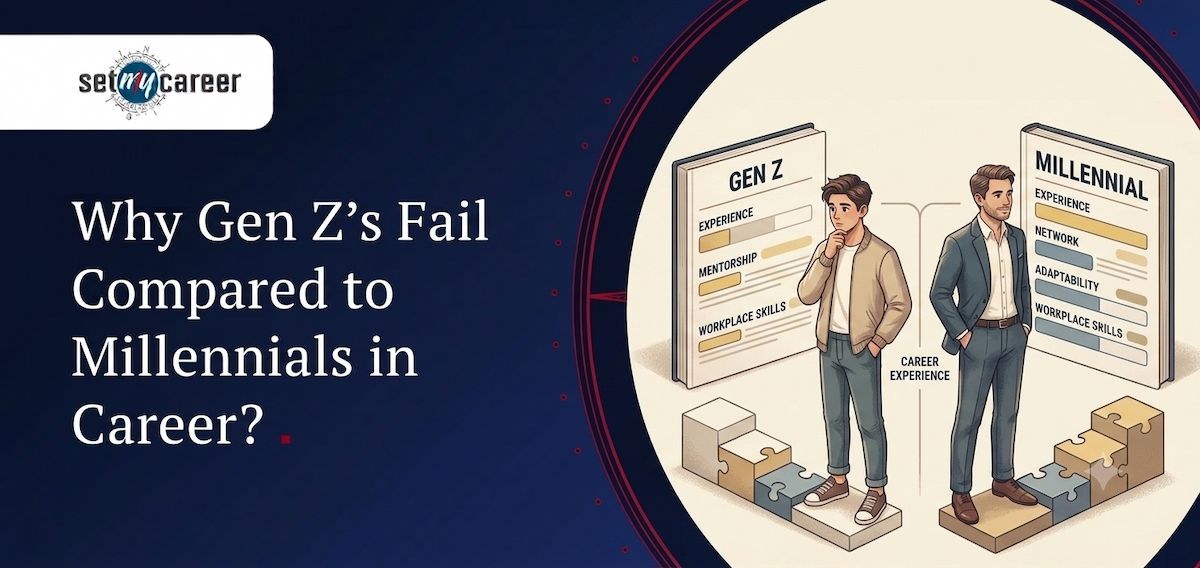
When millennials were taking their first steps into the professional world, the landscape looked entirely different. Life before the widespread adoption of remote work, hyper-curated Instagram feeds, and endless online comparisons offered a simpler, albeit flawed, path. They refined their resumes, attended face-to-face interviews, and absorbed workplace norms through daily, in-person immersion.
Contrast that with the journey of Generation Z. A significant portion of this demographic launched their careers from their childhood bedrooms during a global pandemic. They rely on YouTube tutorials for tactical job skills and navigate an overwhelming flood of career advice online. Yet, despite having unprecedented access to information, many report feeling profoundly lost, disconnected, and stalled in their professional growth.
Understanding the friction between Gen Z’s expectations and the reality of the modern workplace is critical for both young professionals and the companies trying to hire them. So, why exactly is this generation facing such distinct hurdles compared to their millennial predecessors?
Understanding the Career Gap: What’s Holding Gen Z Back?
1. The Expectation of Accelerated Success
There is a pervasive belief among many young professionals that significant wealth, a massive following, or executive status should be achieved by the age of 25. Algorithms constantly feed them content highlighting peers who have supposedly built seven-figure businesses or achieved geographic freedom seemingly overnight.
Reality, however, operates on a much slower timeline. Millennials generally entered the workforce with the understanding that career progression required years of steady, incremental growth. When Gen Z encounters the inevitable friction and slow pacing of a traditional career path, it often triggers disappointment and anxiety, leading to premature departures from otherwise promising roles.
2. High Digital Fluency vs. Limited In-Person Experience
As true digital natives, Gen Z possesses an unmatched comfort level with emerging technologies, software platforms, and digital communication. However, a screen cannot fully replicate the nuances of a physical office. Because of the pandemic and the shift to remote work, many missed out on traditional internships and the subtle "osmosis" of office life.
Millennials built foundational soft skills simply by being in the room—listening to a manager negotiate on a call, observing how colleagues handle conflict, or chatting before a meeting starts. Without these organic learning opportunities, Gen Z candidates often struggle to navigate the unwritten rules of corporate environments.
3. Navigating Social Media-Driven Career Expectations
Historically, young adults sought career guidance from parents, university professors, or industry professionals. Today, a large segment of Gen Z turns to lifestyle influencers and content creators for advice. The danger lies in the curation: what appears glamorous online rarely reflects the unglamorous grind behind it.
Chasing the aesthetic of being a startup founder, a digital nomad, or a full-time creator without understanding the inherent financial risks and relentless effort required can lead to rapid burnout. Millennials largely avoided this specific trap, deriving their career blueprints from tangible, real-world examples rather than algorithm-driven fantasies.
4. The Double-Edged Sword of Frequent Job-Hopping
Gen Z deeply values purpose, ethical leadership, and continuous growth. These are excellent traits, but they can sometimes manifest as chronic job-hopping. Moving from one company to another every few months prevents an employee from seeing projects through to completion, learning from their failures, or developing deep expertise.
Leaving a role at the first sign of boredom or stress stunts professional development. While millennials also normalized changing jobs to boost salaries, they typically stayed long enough to master their core responsibilities. Gen Z candidates must learn the strategic value of enduring temporary discomfort to build a solid track record.
5. Managing Mental Health and Workplace Anxiety
To their credit, Gen Z has shattered the stigma surrounding mental health in the workplace. They are incredibly vocal about their needs. However, this heightened awareness coincides with a deeply anxious period in history, marked by economic instability, political polarization, and a 24/7 news cycle.
This underlying baseline of anxiety makes it difficult for many young professionals to maintain focus and resilience in high-pressure roles. If a work environment feels misaligned, they are quick to step away. Employers frequently mistake this self-preservation for a lack of work ethic, creating a massive disconnect between management and young talent.
6. Redefining Work-Life Boundaries
Advocating for a healthy work-life balance is one of Gen Z's greatest contributions to corporate culture. Yet, the line between healthy boundaries and a desire for immediate comfort is occasionally blurred. Expecting maximum flexibility, reduced workloads, and remote autonomy from day one—especially in rigorous industries—can severely limit career trajectory.
Millennials generally entered the system, learned its mechanics, and then slowly pushed for cultural changes as they moved into management. Career growth inherently involves periods of intense effort and uncomfortable learning curves that cannot always be bypassed.
7. The Gap in Core Interpersonal Skills
While an applicant might be able to code a website or manage complex digital workflows, their ability to deliver a persuasive presentation, de-escalate an upset client, or accept constructive criticism might be lacking. Interpersonal skills are the glue that holds teams together.
Because so many early-career interactions happened through Slack or Zoom, Gen Z has had fewer opportunities to practice reading body language and navigating real-time, face-to-face conflict. Companies are now having to actively train young hires on communication fundamentals that previous generations absorbed naturally.
8. Decision Fatigue in a Hyper-Connected World
Having limitless options sounds ideal, but the paradox of choice often leads to paralysis. Gen Z has access to thousands of online courses, boot camps, remote job boards, and alternative career paths. This overwhelming volume of choices frequently results in decision fatigue.
Instead of committing to one path and mastering it, young professionals may constantly pivot, hoping the next opportunity will feel perfect. Millennials faced a more linear, restricted job market, which forced them to pick a lane and stick with it long enough to gain traction.
9. The Disconnect in Professional Mentorship
Mentorship is the cornerstone of career development. Unfortunately, hybrid and fully remote models have severely damaged the organic mentor-mentee relationship. You cannot easily pull a senior leader aside for a quick coffee chat when you only see them through a screen for scheduled 30-minute blocks.
Without accessible mentors to demystify office politics, advocate for their promotions, and provide context during difficult projects, Gen Z employees can easily feel isolated and unsupported, stunting their confidence and long-term loyalty to a company.
10. Starting a Career During Economic Instability
It is impossible to analyze Gen Z’s career struggles without acknowledging the macroeconomic reality. They are attempting to launch independent lives during a period characterized by severe inflation, an inaccessible housing market, and rolling layoffs in previously stable sectors like tech and finance.
While millennials faced the devastating 2008 recession, many were already integrating into the workforce. Entering a volatile market fresh out of college fosters a sense of insecurity. It makes young workers hesitant to take creative risks, leaving them feeling trapped in survival mode rather than growth mode.
11. The Pressure to Build a Personal Brand Early
The rise of platforms like LinkedIn has created an environment of toxic productivity. Gen Z faces immense pressure to not only perform well at their day jobs but also to maintain a "personal brand," launch side hustles, and broadcast thought leadership by age 22.
The belief that simply doing good work is no longer enough can quickly lead to imposter syndrome. Millennials did not face this intense, public pressure to stand out early in their careers, allowing them the quiet space needed to make mistakes and learn away from the public eye.
12. The Growing Skills Gap Between Education and Employment
The modern workplace evolves at a breakneck pace, and traditional higher education is struggling to keep up. Many Gen Z graduates leave university with an expensive degree but lack the specific software proficiency, agile project management skills, or industry knowledge that modern employers demand.
While this academic disconnect is not a new phenomenon, the speed of technological advancement makes the gap feel significantly wider today. The frustration of doing everything "right" in school only to be told you lack required experience is a heavy burden for recent graduates to carry.
Conclusion
Generation Z is navigating a deeply complex, rapidly shifting professional landscape. Yes, they face distinct challenges—from a lack of organic mentorship to the anxiety-inducing pressure of social media comparison. But they also bring unprecedented strengths to the table. Their digital fluency, insistence on mental health awareness, and refusal to accept toxic workplace norms are actively reshaping corporate culture for the better.
Bridging the gap requires patience from both sides. Employers must be willing to train for the soft skills that remote learning failed to provide, and Gen Z must recognize that sustainable career growth requires time, resilience, and a willingness to lean into discomfort.
If you are feeling overwhelmed by the modern job market or unsure of your next professional step, you do not have to navigate it alone. SetMyCareer is dedicated to helping you translate your unique skills into a meaningful, sustainable career. Whether you need strategic guidance, interview preparation, or clarity on your long-term goals, connect with our experts today to build a future you are truly confident in.